Organized & Compiled: Deep Tide TechFlow
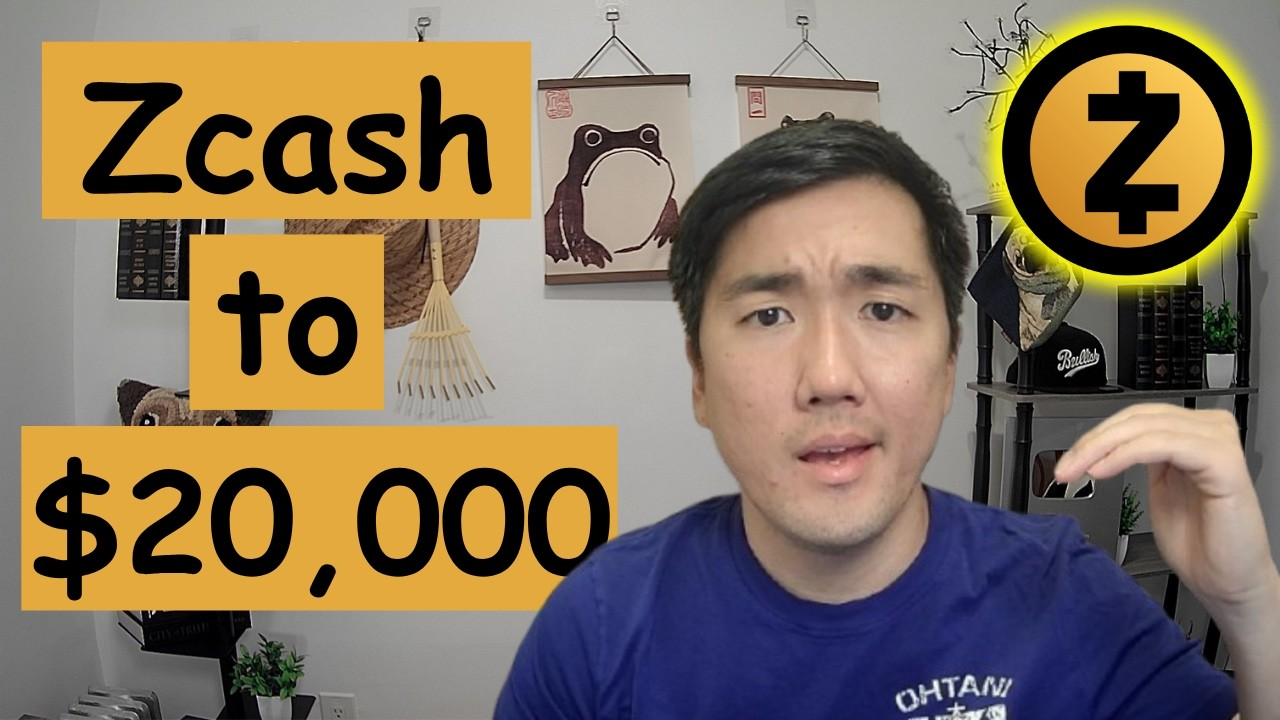
Guest / Speaker: Taiki Maeda
Podcast Source: Taiki Maeda YouTube channel (HFA Research)
Broadcast Date: September 18, 2026
Duration: About 32 minutes (32:26)
Assets: Zcash (ZEC), Bitcoin (BTC), Litecoin (LTC), Bitcoin Cash (BCH), Hyperliquid (HYPE), LIT (Lider), Ethereum (ETH), Solana (SOL)
Disclosure: Taiki Maeda holds positions in Zcash (ZEC), Hyperliquid (HYPE), LIT, etc., and some are leveraged; all target prices and multiples mentioned in the video are his personal judgment and do not constitute investment advice. Deep Tide TechFlow is only compiling content and does not constitute any buy or sell recommendations. Prices mentioned in the text (e.g., ZEC $800→$1,500, BTC $100k, etc.) are based on the recording point (September 2026) and should be referenced to the current market.
Key Points Summary
- We are at the early stage of a raging bull market: Taiki believes that this is not a bear market at all, but the starting stage of a bull market. The market presents a “K-shaped recovery,” where most altcoins go to zero, while a few assets create their own independent bull markets (like HYPE, LIT), “winners average down winners, losers average down losers.”
- ZEC is a severely undervalued "privacy version of BTC": Zcash is currently about 1.8% to 1.9% of BTC market cap, and Taiki believes it could be repriced to 10%/20%/30%; it is more differentiated compared to BCH and LTC, and is ahead on the quantum roadmap compared to “ossified” BTC.
- How is $20,000 calculated?: In a bear market scenario, ZEC = 5% of BTC market cap × BTC $100k ≈ $5,000; in a bull market scenario = 20% × $100k = $20,000; during a frenzy peak, it could even reach 30% to 50%. “Zcash is two cycles behind Bitcoin; BTC has reached $20k two cycles ago, why can't ZEC?”
- Fundamentals are the price itself (reflexivity): The larger Zcash's shielded pool, the stronger its privacy; the higher the price, the more wealth the shielded pool can accommodate, and the better the product is. If ZEC breaks $1,000 and stands at 1% of BTC market cap, it represents for Taiki a “crossing the chasm, the parabola is just starting.”
- Early heavy bets, later reduction: Perceived risk is the highest when actual risk is the lowest (everyone still holds cash and is afraid to buy); Taiki suggests taking the most risk in the first 10% to 30% phase of the bull market and reducing positions when everyone calls for the bull market's return.
- Take profits using “next 2x rule”: Based on ZEC/BTC market cap ratio, 1%→2% (completed in two weeks) is very easy, 2%→4% is not hard, 4%→8% starts to become difficult (8% is the first profit-taking point, LTC reached 8% back then); Taiki's first target range is 3% to 4% of BTC market cap, and at that point, reduce leverage and leave cash, while holding the spot position for long-term capital gains.
- Trading style is “long hitting rate” player: It is better to have high concentration, strong belief, and strict risk control rather than high win rate with small positions. “Put all your eggs in one basket and watch it closely. Be a courageous pig.” Winners average down winners, and never catch falling knives that average down losers.
Exciting Views Summary
- About the bull market: “I still see a lot of negative emotions on the timeline, bear market? Where? My eyes may not work well, but I really don’t see it. We are at the early stage of a raging bull market.”
- About ZEC positioning: “Zcash is an alternative store of value asset to Bitcoin. Bitcoin has become ossified, which is both an advantage and a disadvantage; Zcash's developer community is willing to upgrade to tackle quantum computing.”
- About $20k: “With BTC at $100k, if ZEC occupies 20%, that’s $20,000. Is that really crazy? BTC has been to $20k two cycles ago, why can’t ZEC?”
- About reflexivity: “The more Zcash rises, the more useful it becomes; the price itself is the fundamental. This is exactly the same as Bitcoin.”
- About taking profits: “From 4% to 8% you start to struggle, and LTC reached 8% back then. So 8% might be the first profit-taking point, and there will usually be a wave of correction after that.”
- About risk: “The highest perceived risk is actually the lowest risk, because everyone is still holding cash, scared to buy.”
- About trading philosophy: “Put all your eggs in one basket and watch it closely. Being a courageous pig requires guts.”
Main Text
1. Bull Market Mobilization: We are at the early stage of a raging bull market
At the beginning of the video, Taiki first injected a “bull market booster.” Taiki still sees a lot of negative sentiments on the timeline, bear market? Where? But when he looks around, he only sees spot holders and fundamental investors in a bull market. Hyperliquid is about to hit three figures, Zcash was at $800 two weeks ago, now approaching $1,500, LIT was below $1 a few months ago, and now it’s $5.
Taiki's core judgment is: we are currently in a “K-shaped recovery,” where most altcoins will go to zero, and only a few assets will have their own independent bull markets that can succeed without relying on BTC's rise. Projects like HYPE and LIT, which dedicate most of their revenue and profits back to the tokens, are typical examples.
Taiki also jokes about himself: there’s a saying called the “Taiki Maeda curse” on Twitter, suggesting that whenever Taiki is bullish on a coin, it will drop 30%; however, recently when Taiki took a photo with LIT founder Vlad, LIT actually rose by 20%, breaking the curse. Are you still bearish?
2. The Bullish Logic of Zcash: The Undervalued "Privacy Version of BTC"
Taiki believes that Zcash is one of the biggest winners of this cycle. He first provided a general direction: ZEC can increase by 5 to 10 times.
The logical chain is: Bitcoin was criticized early on for three points: programmability, scalability, and privacy; ETH and SOL solved the first two points and thus skyrocketed, while Zcash focuses mainly on privacy. As the market matures, the narrative surrounding privacy will only grow stronger; two years from now, three years from now, will people care about privacy? Of course. Additionally, the concern over quantum computing stealing Satoshi’s coin decreases Bitcoin's attractiveness as a long-term hold, while Zcash clearly leads on the quantum roadmap compared to BTC.
The key data is: Zcash currently accounts for about 1.8% to 1.9% of BTC market cap, and Taiki believes this can be repriced to 10%/20%/30%. Bitcoin is ossified, which is an advantage and a disadvantage; Zcash represents a developer community willing to upgrade in response to challenges such as quantum computing.
3. Price Target: Why $20,000 Is Not Crazy
Taiki brings out historical references:
- LTC peaked at 8% of BTC market cap and maintained a range of 3% to 6% for about a year;
- BCH once touched 40% of BTC (spike), but the real range was around 10% to 20% for nearly a year, with the market sincerely believing BCH was worth about 15% of BTC;
- Similar to physical goods: silver is about 13% of gold's market cap.
Taiki's target range:
- Bear market scenario: ZEC = 5% of BTC market cap. If BTC reaches $100k, ZEC ≈ $5,000, “Is that crazy? LTC reached 8% back then, so ZEC at 5% isn’t outrageous.”
- Bull market scenario: ZEC = 20% of BTC market cap. If BTC reaches $100k, ZEC = $20,000.
- Frenzy peak: 20%/30%/40% are all possible; Taiki even doesn’t rule out 50%, just “don’t be too much of a moon boy.”
Taiki draws an analogy: everyone says Zcash is two cycles behind Bitcoin, but didn’t BTC also reach $20k two cycles ago? Why can’t ZEC reach $20k?
4. Fundamentals Are the Price Itself: Reflexivity of the Shielded Pool
Zcash has two types of addresses: public addresses (like BTC, anyone can see the balance) and shielded addresses (after entering the shielded pool mixer, subsequent actions can’t be traced).
The crucial observation is: in the past year, the amount of ZEC in the shielded pool has only increased, and the price has only risen. Moreover, the larger the shielded pool, the stronger the privacy; when the pool has only $100 million, if a billionaire wants to hide $10 million (1% of their net worth), it means exposing themselves. But as the pool grows larger with increasing prices, it can accommodate higher net worth individuals. That is to say, the higher the price, the more wealth the shielded pool can protect, the better the product, more users, higher prices, which is reflexivity. The more Zcash rises, the more usable it becomes; the price itself is the fundamental, and this is exactly the same as Bitcoin.
Taiki believes that if ZEC breaks $1,000 and stands at 1% of BTC market cap, it means it has crossed the chasm; the real parabola is just beginning. Once reasonable BTC maximalists start shifting 1% to 10% of their positions from BTC to ZEC, marginal funding will continuously push the price higher. Of course, he also reminds that ZEC will likely surge one wave in the future before dropping 80% to 90%, so one must think clearly about taking profits.
5. Understanding and Monetizing Risk: Early Heavy Bets, Later Position Reduction
Taiki throws out a counterintuitive viewpoint: when perceived risk is the highest, actual risk is the lowest. Because when everyone thinks it’s dangerous, people hold cash and are afraid to buy back, the market hasn’t fully entered; when BTC breaks $90k, and everyone yells that the bull market is back, and increases leverage to enter, it is actually time to reduce positions.
Taiki's operational philosophy: bear the most risk in the first 10% to 30% of the bull market and gradually reduce risk exposure afterward. Taiki himself does this; he leveraged when ZEC was low, and although it has risen now and validated his trade, he also felt uncomfortable because he used leverage, and a month ago nobody was buying, so he must discipline himself to take profits.
6. How to Take Profits on ZEC: The Next 2x Rule
Because this is a narrative-driven asset without cash flow, timing buying and selling is extremely difficult. Taiki's framework is “the next 2x rule,” looking at how difficult it is for the ZEC/BTC market cap ratio to rise with each step:
- 1% → 2%: very easy (actually completed in two weeks);
- 2% → 4%: not difficult, just a doubling;
- 4% → 8%: starts to become difficult, 8% is the first profit-taking point (LTC reached 8% back then), after that usually a wave of correction occurs;
- 8% → 16%: every doubling becomes more challenging.
Taiki's first target is ZEC at 3% to 4% of BTC market cap (if BTC reaches $80k by year-end, this corresponds to approximately $2,400 to $3,200). At that point, reduce leverage, leave cash, and continue to hold the spot position to enjoy long-term capital gains. Taiki believes the remaining position can reach 10% to 20%, but if you feel that something is certain to happen, that’s precisely when you might get burned; those who were certain that Q4 would rise last year and fully invested in altcoins were all wiped out.
Taiki also mentioned that Zcash recently minted an NFT and a scalability project, Project Tachyon, might be launched next year, suggesting that you shouldn’t buy based on what it is right now, but rather based on what it could become in the future.
7. Trading Style: Long Hitting Rate Player, Be a Courageous Pig
The closing chapter discusses trading style. Taiki distinguishes between hitting rate (win rate) and long hitting rate (odds): social media worships high win rate traders, but high win rates often come with low odds; those hitting more than half but betting too small actually don’t make money. Taiki himself is a long hitting rate type: he prefers to lose a small amount when wrong 90% of the time but make a large profit when right 10% of the time.
The methodology boils down to an old saying: “Put all your eggs in one basket and watch it closely. Being a courageous pig requires guts.”
Taiki built positions in ZEC when it was below $500, buying bottom in June (the process was painful, but his conviction wasn’t shattered), and then added positions at $600/$700/$800 because once it breaks $700/$800, it would become parabolic, whether you bought at $500 or $480. Even now, while super bullish, Taiki admits that adding positions around $1,500 feels uncomfortable; this is precisely the mentality Taiki wants to convey.
One last piece of advice: winners average down winners; don’t average down losers. Selling soaring assets to buy falling ones is like pulling flowers to water weeds.
免责声明:本文章仅代表作者个人观点,不代表本平台的立场和观点。本文章仅供信息分享,不构成对任何人的任何投资建议。用户与作者之间的任何争议,与本平台无关。如网页中刊载的文章或图片涉及侵权,请提供相关的权利证明和身份证明发送邮件到support@aicoin.com,本平台相关工作人员将会进行核查。


