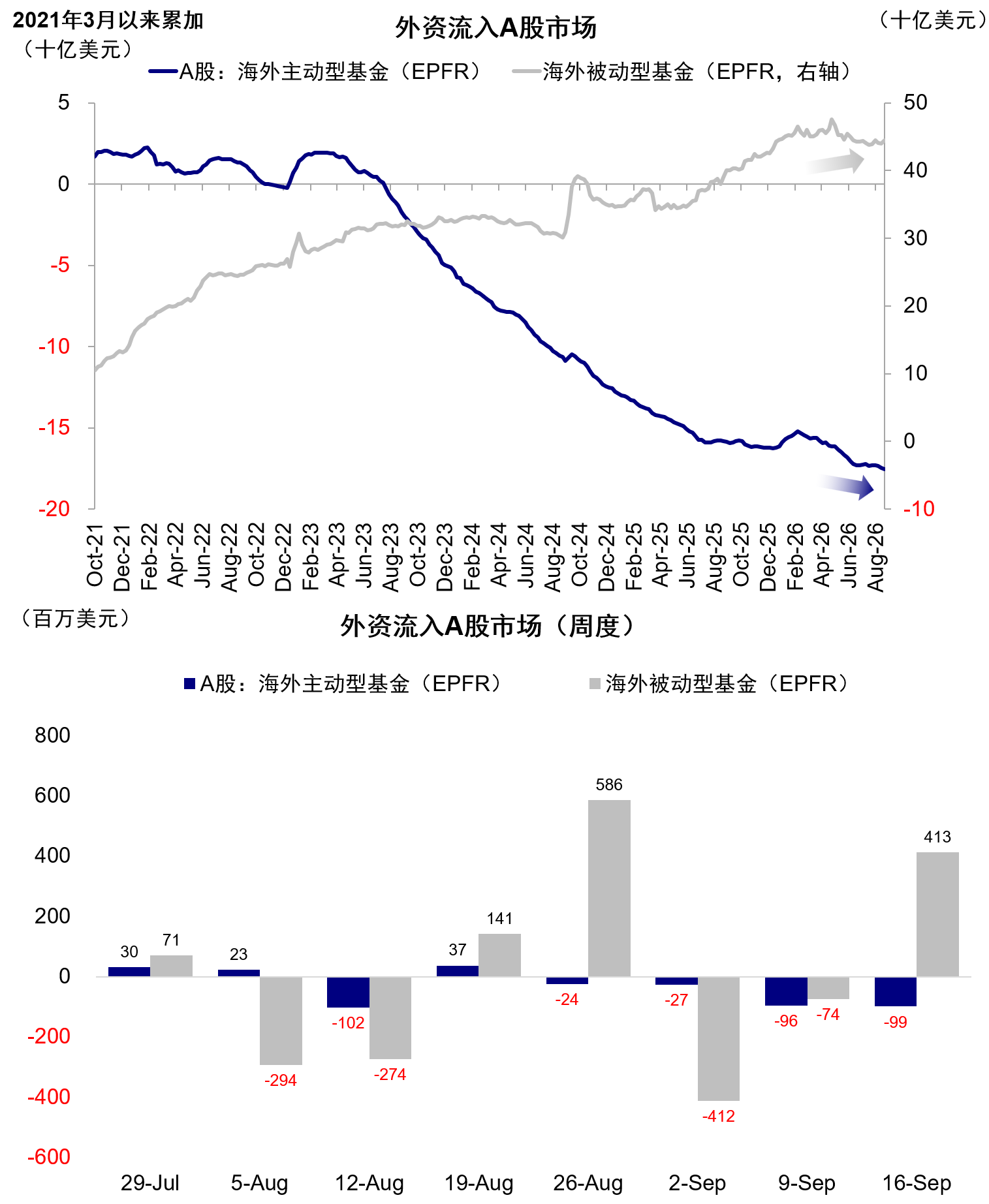
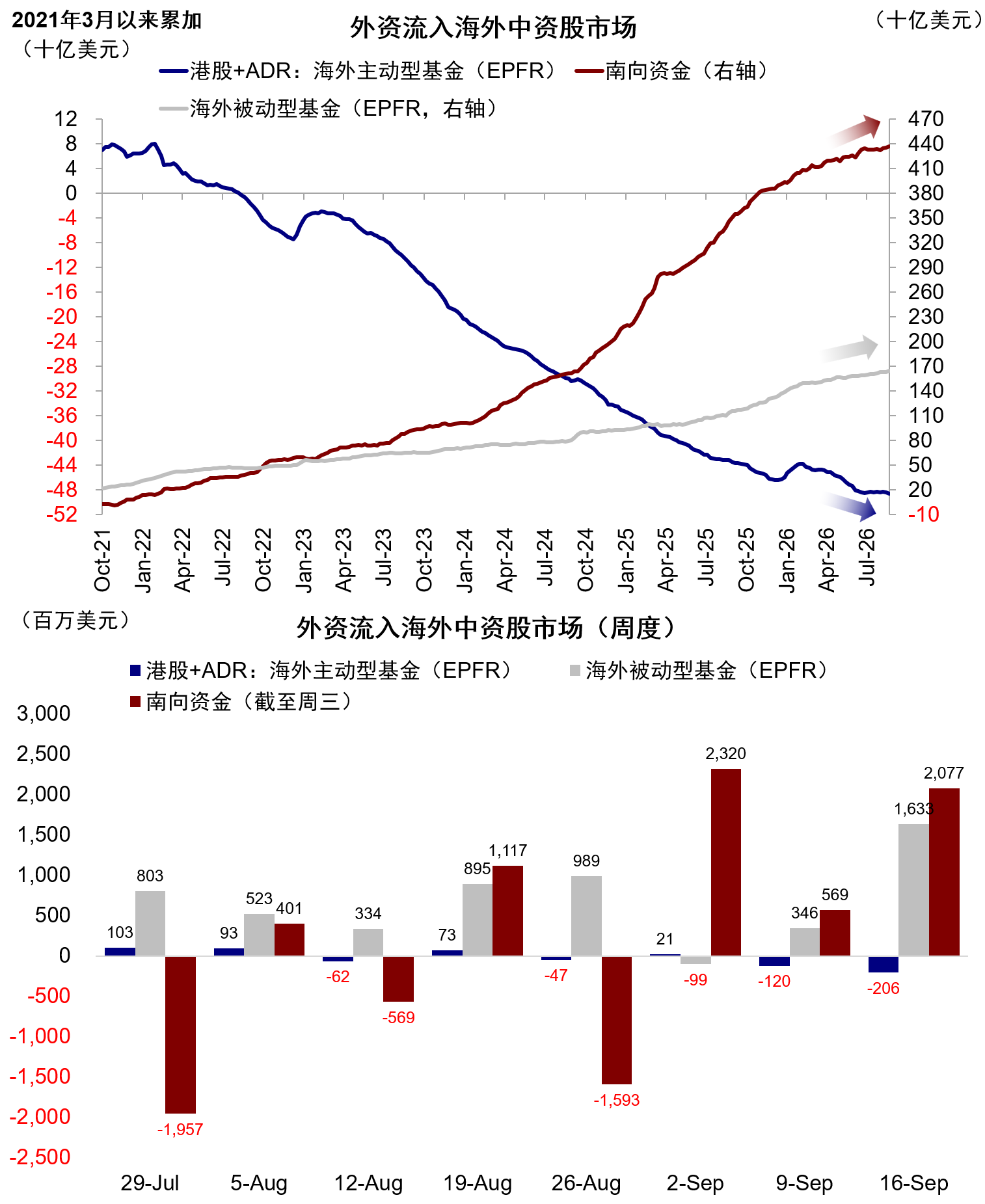
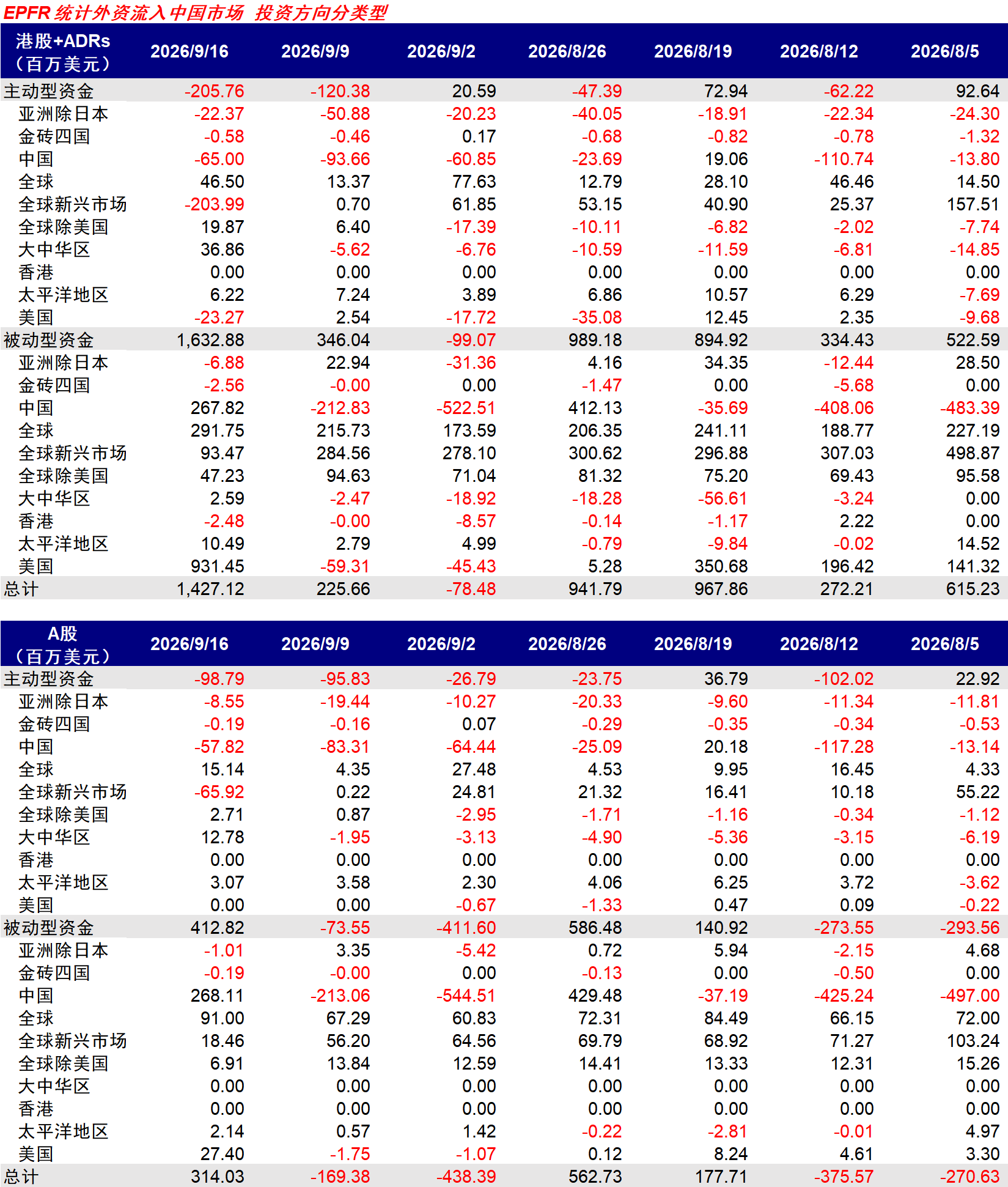
1️⃣ Foreign Investment: Active foreign capital outflow from Hong Kong stocks was 210 million USD (vs. an outflow of 120 million last week), and outflow from A-shares was 100 million USD (vs. an outflow of 100 million last week).
Passive foreign capital inflow into Hong Kong stocks was 1.63 billion USD (vs. an inflow of 350 million last week), and inflow into A-shares was 410 million USD (vs. an outflow of 70 million last week) <a class="wx_img_refer_link" data-seq="2" data-refer="Figure 2" style="">Figure 2</a><a class="wx_img_refer_link" data-seq="3" data-refer="Figure 3" style="">Figure 3</a><a class="wx_img_refer_link" data-seq="4" data-refer="Figure 4" style="">Figure 4</a>.
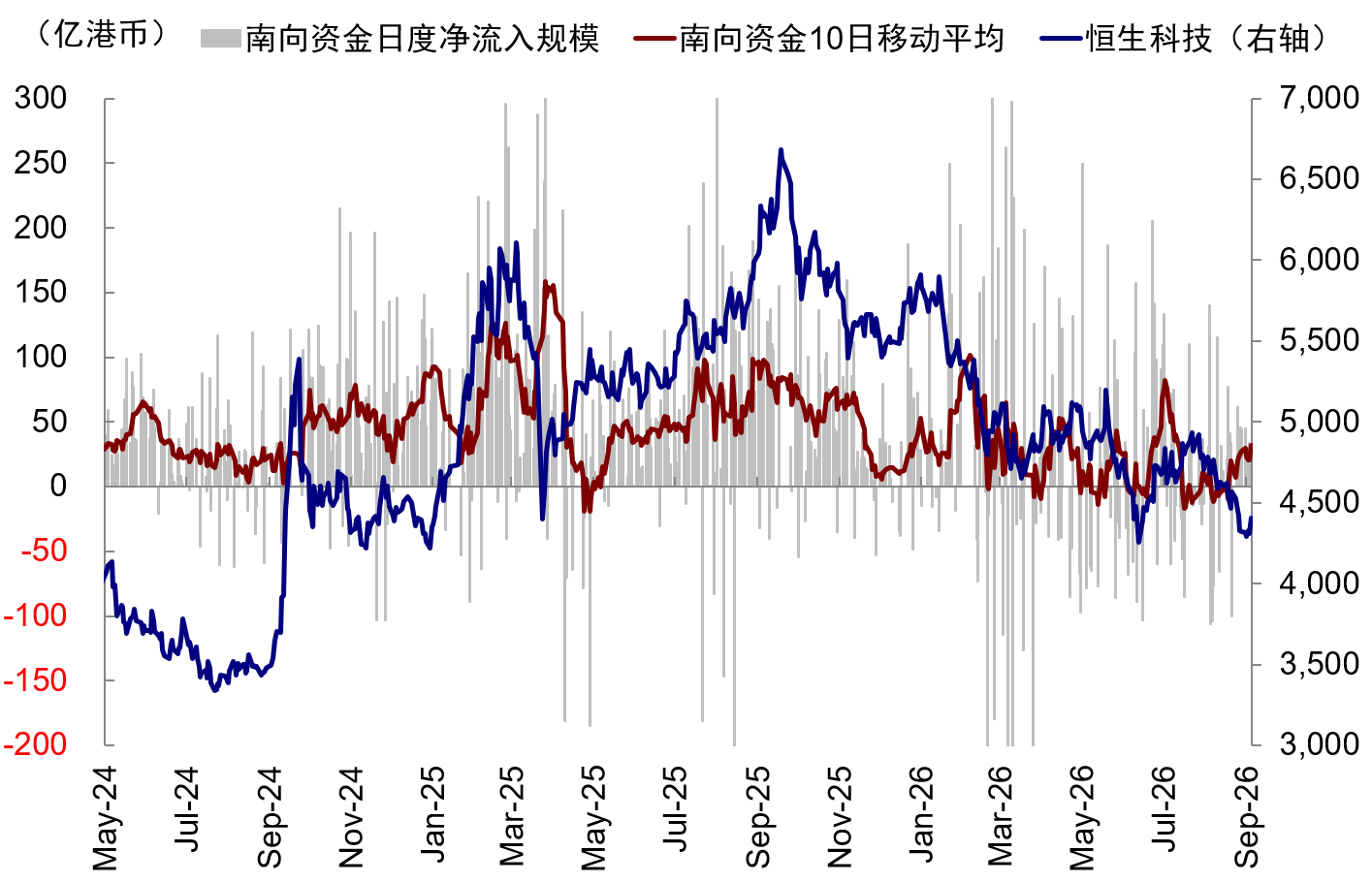
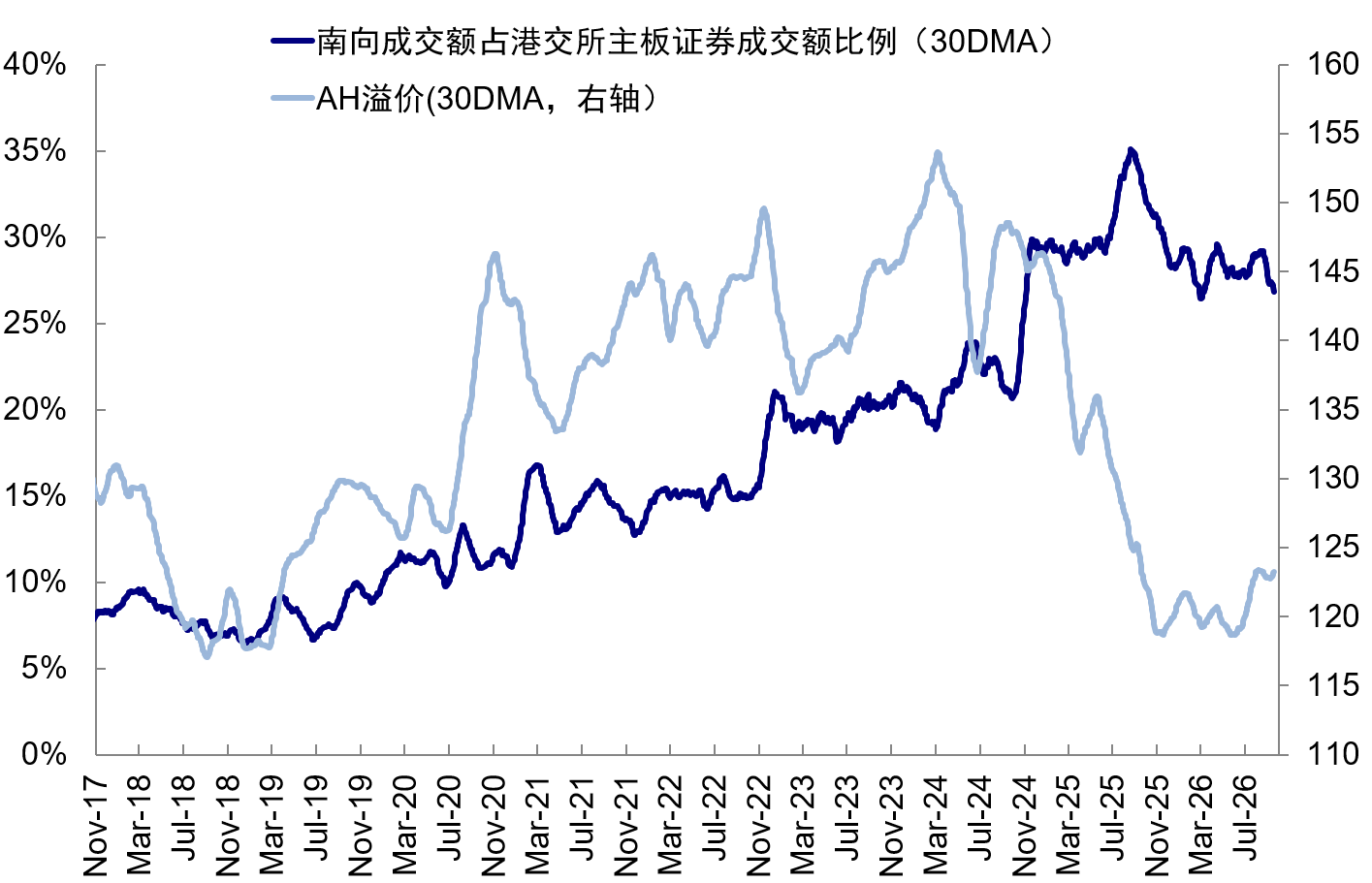
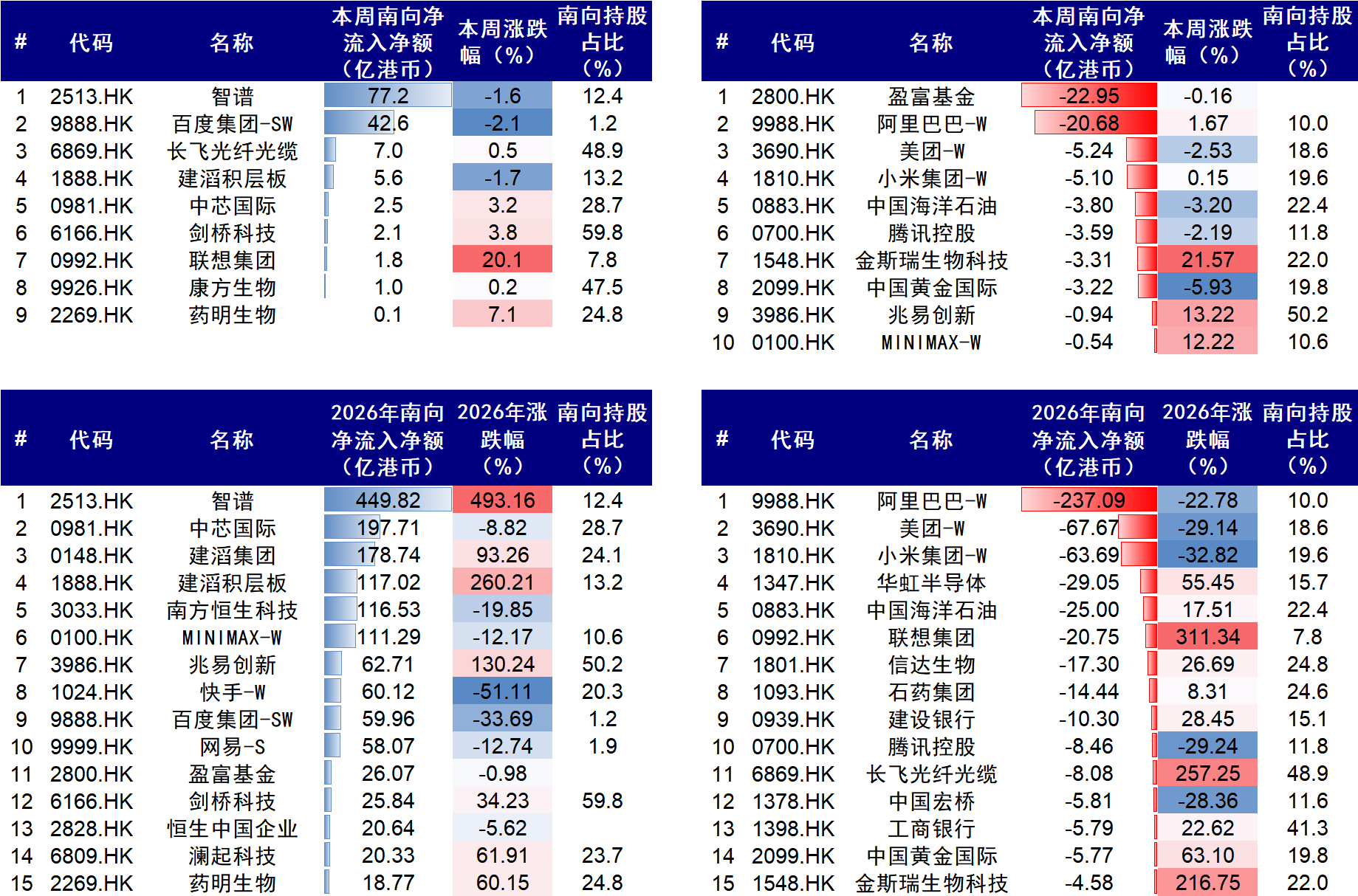
2️⃣ Southbound: Inflow was 12 billion HKD (vs. an inflow of 21 billion last week), with an average daily inflow of 2.4 billion HKD (vs. an average daily inflow of 4 billion last week) <a class="wx_img_refer_link" data-seq="5" data-refer="Figure 5" style="">Figure 5</a>. Purchases included Zhihu, Baidu, and Changfei Fiber, while selling included Tracker Fund of Hong Kong, Alibaba, and Meituan <a class="wx_img_refer_link" data-seq="7" data-refer="Figure 7" style="">Figure 7</a>.
This week, several changes are noteworthy:
🏵️ Rate hike implemented, market goes "in the opposite direction". The September FOMC raised rates by 25bp as expected, consistent with our prior indications. After the rate hike, the market rebounded and U.S. Treasuries hit a peak, aligning with our viewpoint of "realization leads to maximum negative reactions" <a href="https://mp.weixin.qq.com/s?__biz=MzA3NjU1NTQwMA==&amp;mid=2649792511&amp;idx=1&amp;sn=66cc22a8d911401255d5a9af1a44a229&amp;scene=142#wechat_redirect" class="normal_text_link mp_article_text_link" target="_blank" data-itemshowtype="11">What happens if rates are raised?</a> After the rate hike, the term premium for U.S. Treasuries fell to 60bp, returning to the levels prior to the July FOMC, indicating that the credibility of the Federal Reserve, damaged by the comments of Walsh in July, has been restored, leading to a decline in the term premium of U.S. Treasuries after the rate hike, with nominal rates gradually topping out.
Looking ahead, the focus is shifting from "to hike or not to hike" to "how many hikes". The dot plot expects only one increase, and CME futures imply a rate hike in January next year, which is better than pre-meeting expectations, thus this meeting's outcome is actually dovish <a href="https://mp.weixin.qq.com/s?__biz=MzA3NjU1NTQwMA==&amp;mid=2649792511&amp;idx=1&amp;sn=66cc22a8d911401255d5a9af1a44a229&amp;scene=142#wechat_redirect" class="normal_text_link mp_article_text_link" target="_blank" data-itemshowtype="11">Is one rate hike enough for the Federal Reserve?</a> Unless oil prices go completely out of control, the basis for continuous large rate hikes is currently not present. Attention should be paid to Iran's latest proposed seven-point ceasefire conditions, as well as Sino-U.S. talks.
🏵️ Regarding the Chinese market, rate hikes are often not the leading variable. Two "perfect" counterexamples illustrate this issue: In 2017, there were consecutive rate hikes, but the domestic fundamentals were strong, leading to significant rises in both A-shares and Hong Kong stocks, alongside foreign capital inflows; in 2019, rates were cut amidst weak fundamentals, resulting in market fluctuations and foreign capital outflows.
Considering the extent of the rate hikes along with domestic fundamentals, this round resembles a combination of the "preventive rate hikes" of 1997 and the impact model of 2025 rate cuts: short-term effects accounted for and disturbances revert back to the original fundamentals afterward. However, due to currently weaker fundamentals, if large continuous rate hikes were to occur, the impact would be significantly larger and needs to be guarded against.
Furthermore, as Hong Kong follows suit with rate hikes, local real estate and financial sectors are more directly affected. Hong Kong's real estate market has been heating up continuously this year, also related to the Federal Reserve's rate cuts in the last quarter of last year.
🏵️ In terms of configuration, after the pressure from prior rate hikes was relieved, it still returns to fundamental pricing. However, the weakening credit cycle (as indicated by continued social financing in August) limits the upward space, maintaining a focus on market segment trading and "odds" thinking. Technology focuses on industrial progress (Anthropic is expected to IPO in November), cyclical pressure is reduced, consumption policies are helping, and dividends are serving as hedges.
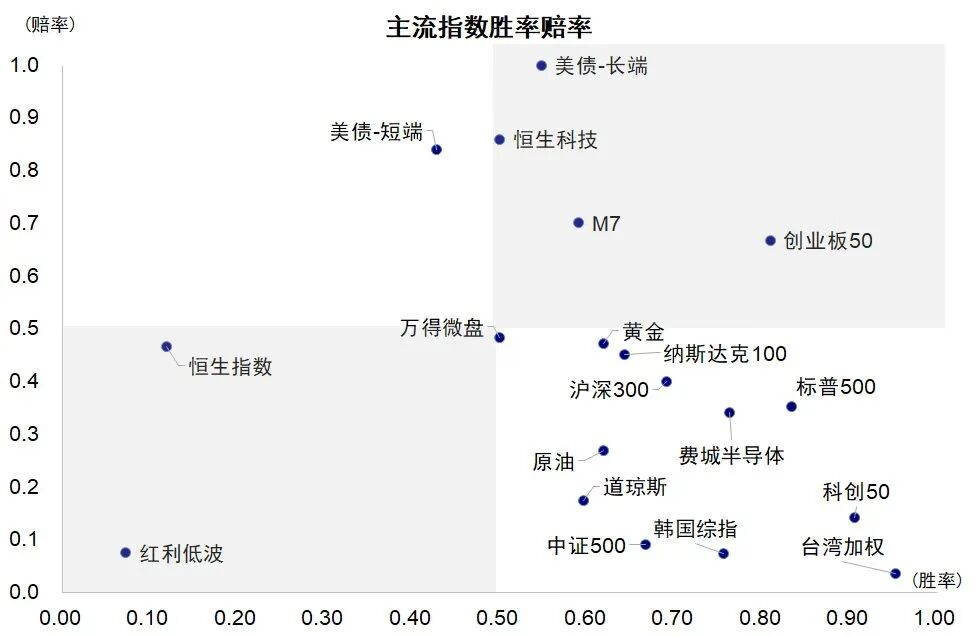
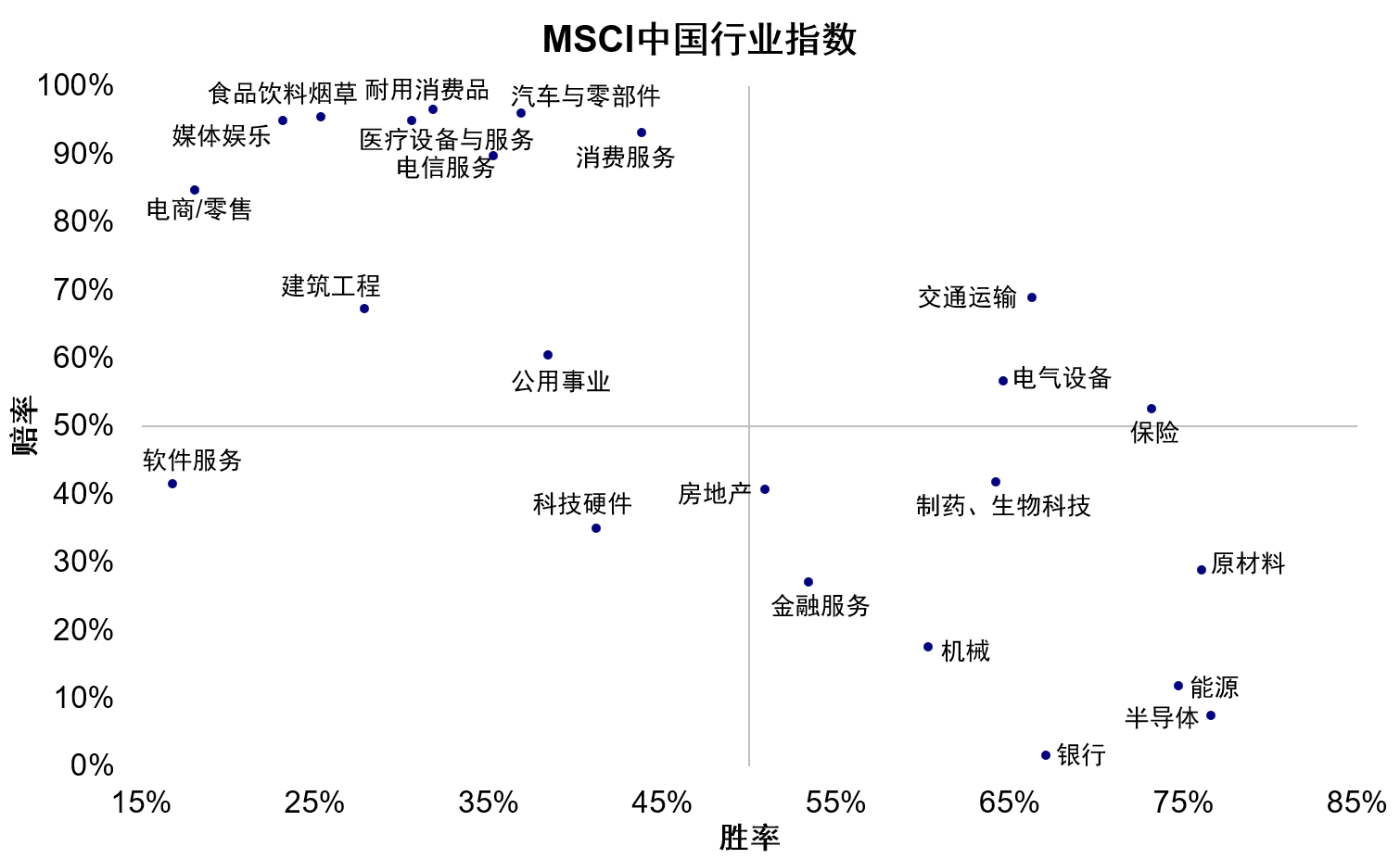
Win rate odds update: The top five sectors this week are insurance, transportation, materials, electrical equipment, and semiconductors <a class="wx_img_refer_link" data-seq="9" data-refer="Figure 9" style="">Figure 9</a>; the top five assets are ChiNext 50, Taiwan Weighted Index, Sci-Tech Innovation 50, Nasdaq, S&P 500 <a class="wx_img_refer_link" data-seq="8" data-refer="Figure 8" style="">Figure 8</a>.
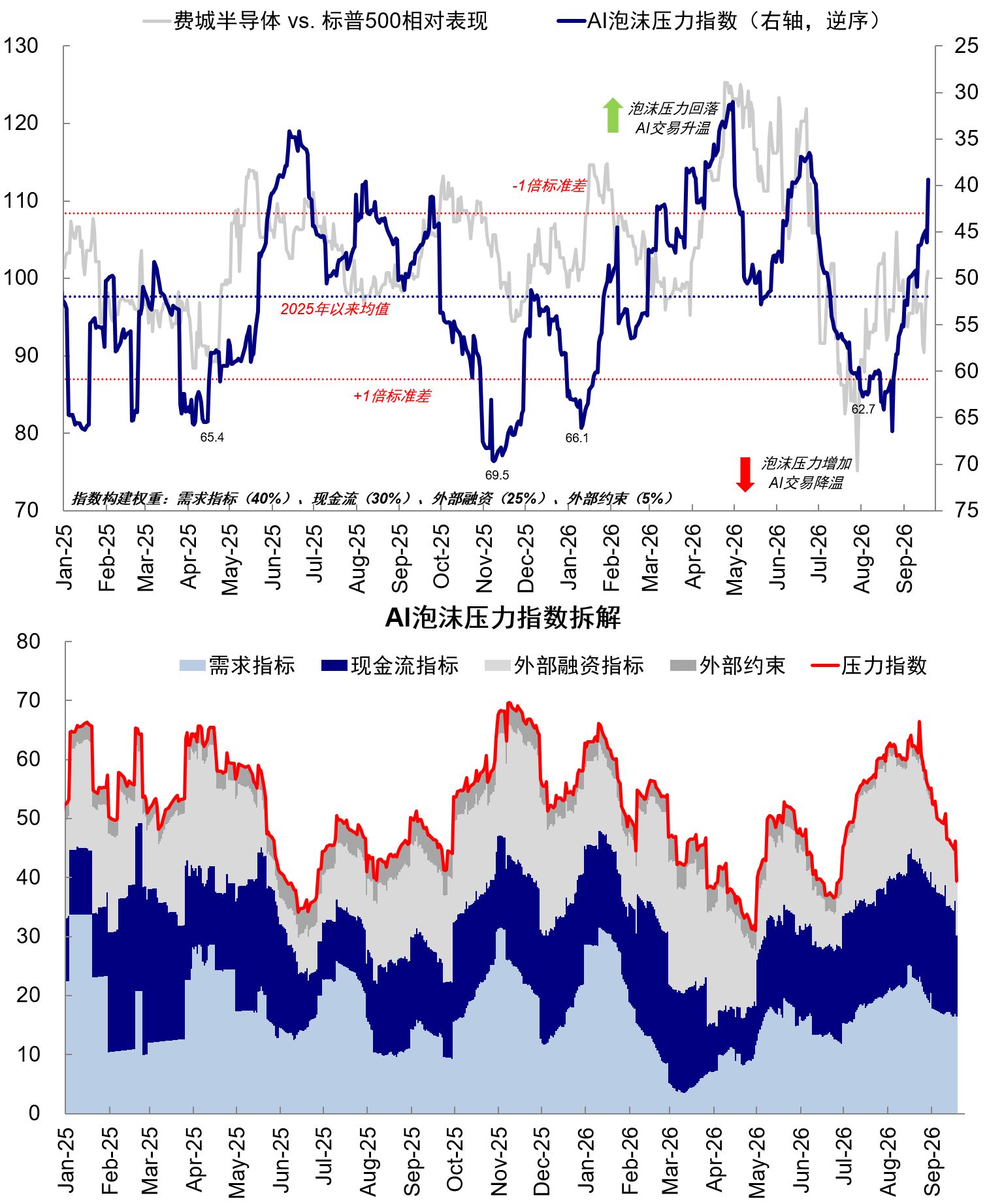
This week, the AI bubble pressure index continues to improve, with repairs in all four dimensions and a noticeable improvement in cash flow and external financing. The continued repair of fundamentals and alleviation of rate hike pressures should benefit the performance of tech stocks (pay attention to whether the Oracle Jupiter project loans ferment) <a class="wx_img_refer_link" data-seq="1" data-refer="Figure 1" style="">Figure 1</a>.
免责声明:本文章仅代表作者个人观点,不代表本平台的立场和观点。本文章仅供信息分享,不构成对任何人的任何投资建议。用户与作者之间的任何争议,与本平台无关。如网页中刊载的文章或图片涉及侵权,请提供相关的权利证明和身份证明发送邮件到support@aicoin.com,本平台相关工作人员将会进行核查。


