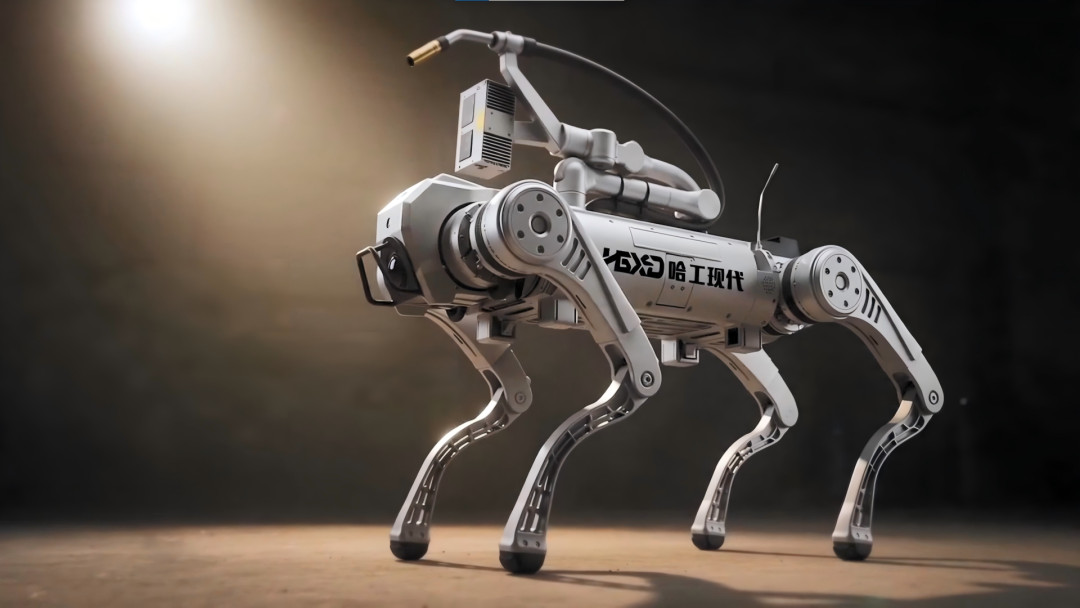
The largest single market segment in industrial manufacturing.

Author Zhan Zhu
The word count of this article is 4192
Handcrafted quantity丨100% AI content丨0%
Against a backdrop of overall rationalization of capital, Shengshi Weisheng has completed three rounds of financing in less than a year. The latest round of financing is a series B round totaling hundreds of millions of yuan, backed by Shanghai Semiconductor Industry Investment, Jinqiao Fund, Zero One Venture Capital, Xinding Capital, Zhongguandinghua Investment, and existing shareholder Weiguang Ventures. Before this, Shengshi Weisheng had already completed over 100 million yuan in A round financing in the first half of 2025, followed by tens of millions in A+ round financing co-invested by South Korea's Hyundai.
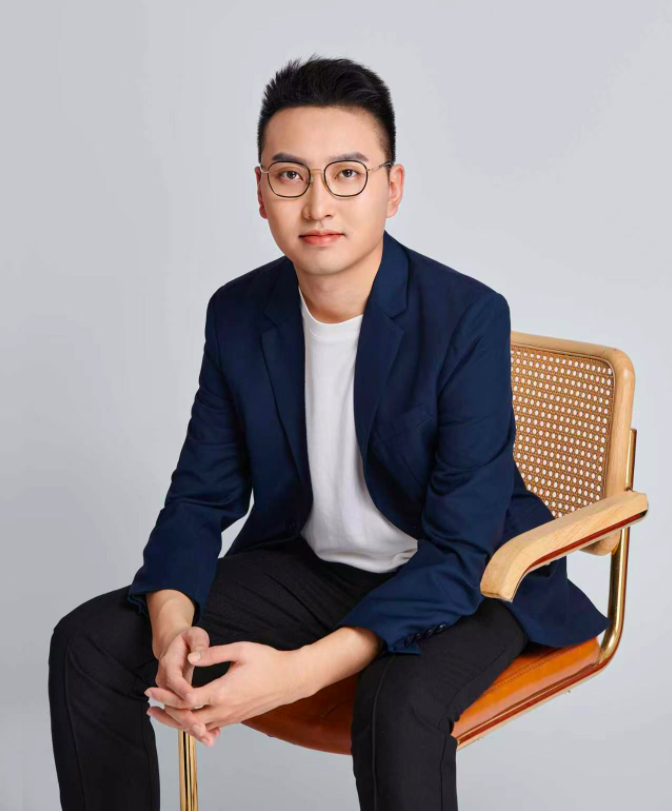
So, why has a smart welding robot company been able to frequently attract capital interest? What do investors truly see behind their moves? With this question in mind, Shengshi Weisheng Chairman Wang Dezhao recently engaged in a conversation with Investment Weekly.
In that conversation, Wang Dezhao's answer was: an increasingly strong certainty of implementation.
Certainty of the track:
A necessary market that has long remained unsolved
In contrast to the currently popular embodied intelligence, many may feel slightly unfamiliar with the "welding" industry. But for Shengshi Weisheng, this seemingly niche track is actually the largest single market segment in industrial manufacturing.
In Wang Dezhao's view, the market space is large enough, corresponding to a highly rigid substitution demand—welders. At the same time, the working conditions for welders are very harsh, combined with high requirements for skill levels, leading to an average global welder age of 45-55 years.
"Currently, young people are almost unwilling to choose this profession. Difficulty in recruitment, aging, and a severe gap have become pain points for the entire industry," Wang Dezhao remarked. "Therefore, even without policy drive, the entire manufacturing sector desperately needs welders." On this basis, the government has also introduced numerous policies, such as subsidies in Shanghai for welding robots and intelligent welding products, encouraging the market to use robots as substitutes for welders.
A group of data shows that there are currently about ten million registered welders in China, with a workforce gap expected to reach several million by 2025; by 2035, this gap could approach ten thousand, and the aging issue will become increasingly severe.
On one side is strong demand, while on the other side is the low penetration rate of robots in this field.
The core reason, according to Wang Dezhao, who has deep experience in this field, is that the previous generation of traditional industrial robots only had "small brains" and could only perform standard parts operations. They can complete fixed actions through teaching and programming, "but they do not possess the generalized capabilities of humans, cannot make decisions through a 'brain,' and cannot handle non-standard, flexible welding scenarios like humans."
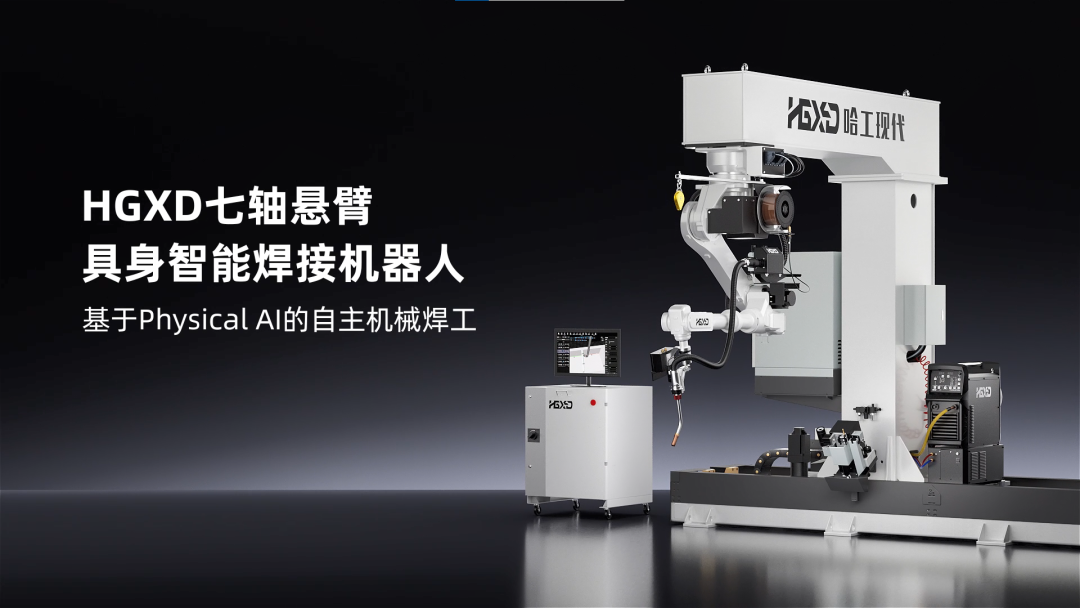
As a result, what Wang Dezhao and Shengshi Weisheng aim to do is to truly replace welders with embodied intelligence, meet this market demand, and address this social issue.
Wang Dezhao told Investment Weekly that, faced with the challenges in real working conditions, Shengshi Weisheng focuses on the authentic pain points of the market—non-standard, small batch, and varied welding scenarios, which include numerous contexts such as ships, underwater tunnels, bridges, power equipment, engineering machinery, and steel structures. "These scenarios involve diverse workpieces, with small batches and various types; traditional rule-based solutions simply cannot cover all boundaries and situations."
In this context, Shengshi Weisheng wants to tackle this long-standing unsolved market pain point with flexible solutions, promoting the penetration of robots in the broader welding domain.
Certainty of the technical route:
A full-stack closed loop of "brain + small brain + body + data" with zero human intervention
With a clear direction and goal, how can Shengshi Weisheng excel in this entire track? The answer is: the difference in technological pathway.
"Our greatest difference and advantage lies in training robots through an embodied brain approach, essentially achieving 'zero' human intervention, replacing skilled welders,” Wang Dezhao said. To realize this, it is backed by the data accumulation that Shengshi Weisheng has developed over many years.
It is well known that welding, as a vertical scene, has no open-source datasets available directly in the market. For industrial embodied intelligence, welding is a very "real" business that requires customers to perform actual welding, and the finished product must meet customer-recognized quality before it can be defined as valid data.
Thus, all of Shengshi Weisheng's data began with the company's founding in 2020, where they sold robots one by one, step by step obtaining real production data from customers for training. On this path, Shengshi Weisheng has traversed a full six years.
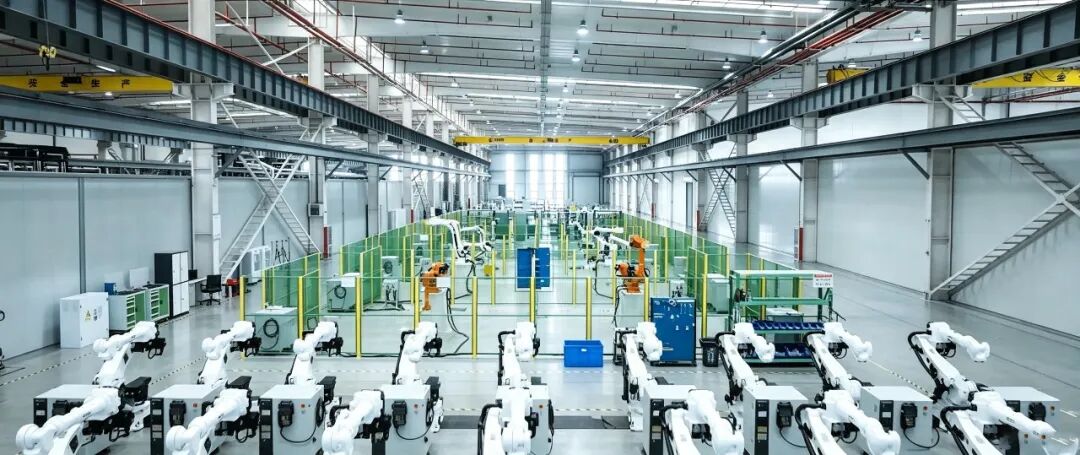
“To a certain extent, this means that the data in such industrial vertical scenes is almost positively correlated with your shipping volumes and sets,” Wang Dezhao emphasized. “Only when you feed enough training data will the brain develop generalized capabilities; when faced with truly non-standard components, it can infer the most suitable parameters based on experience, complete the welding work, and replace manual labor.”
For this reason, from the very first day of data accumulation, Shengshi Weisheng had to possess solid technical strength. By doing so, as the data accumulated, a complete industrial embodied intelligent closed loop could be gradually formed, rather than just simple breakthroughs in technical points.
Specifically, once enough high-quality data has been accumulated, the team can discern which dimensions of data directly affect welding quality. Subsequently, these critical data are fed back to the "brain" for training, continually optimizing the "brain's" decision-making capability, forming a solidified intelligent paradigm; then, they further optimize the "small brain" for motion control and redefine the hardware carrier, making the hardware more efficient at collecting data—creating a positive cycle of "data-algorithm-hardware."
With this cycle, when facing an unseen shape or workpiece, Shengshi Weisheng's embodied brain can use this generalized capability to infer the most suitable welding parameters based on experience, thus handling robustness challenges more confidently. “It’s like when it has seen 100 components, it can weld 1,000; after welding 1,000 components, it can weld 10,000,” Wang Dezhao explained.
Under this logic, Shengshi Weisheng has established one of the most difficult-to-replicate technical barriers in the industry: a technical flywheel created through data formats, brain paradigms, and small brain hardware. In Wang Dezhao's view, a single aspect will not suffice. It must be a combination of efforts; continuously implementing, training the complete brain and small brain will continually enhance the generalized capability, ultimately forming an increasingly stronger moat.
Compared to other players in the market, Shengshi Weisheng's nearly 100% zero human intervention also means that what customers are purchasing is no longer just a set of auxiliary automation equipment, but rather a welding capacity that does not resign, does not fatigue, and is replicable; in a scenario of welder shortages and rising labor costs, it possesses a necessity-level substitution value.
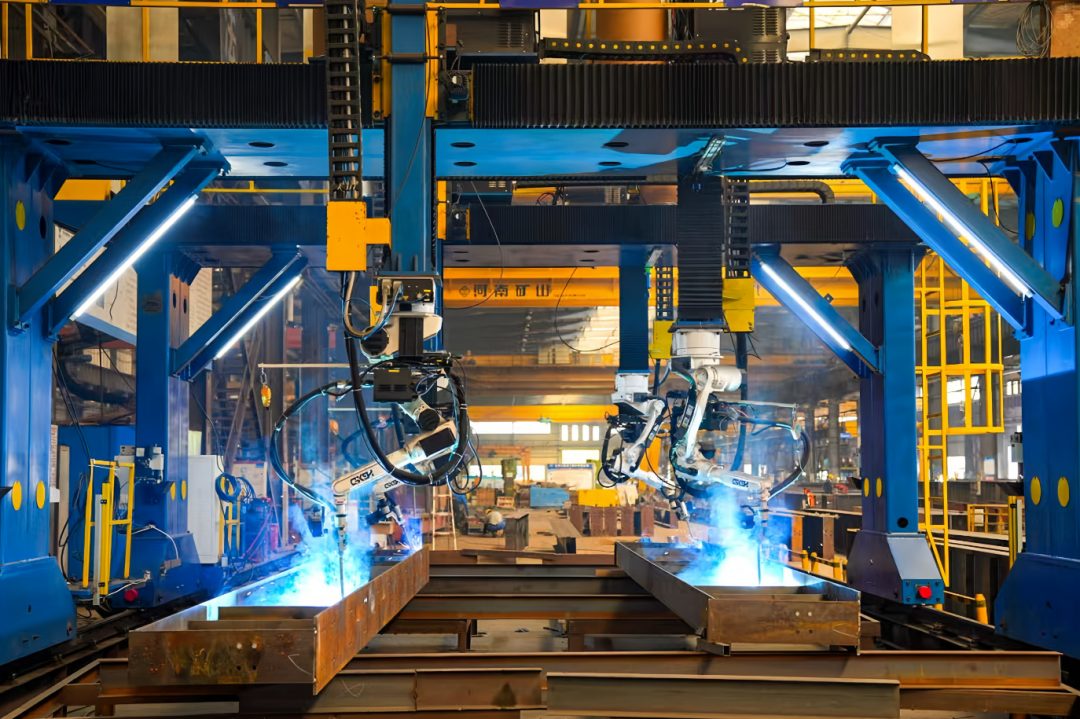
So far, Investment Weekly has learned that, unlike the rule-oriented players in the market, Shengshi Weisheng insists on defining intelligent welding through an AI-embodied method, forming a full-stack self-research technical closed loop through the brain (multi-modal large model of welding) + small brain (self-developed motion control) + body + process data.
Commercialization certainty:
Technology has transformed into real "payable" productivity
In fact, transitioning from "capable of welding" to defining "intelligent welding" through AI embodiment, to successfully commercializing it, Shengshi Weisheng has not achieved this overnight.
Wang Dezhao categorizes Shengshi Weisheng's development into two major stages:
The first three years (2020-2022) focused on early customer acquisition. By directly signing contracts with some large terminal users and delivering products, they collected early data. At that time, acceptance was low, and Shengshi Weisheng secured a steady progression through various methods, including directly signing terminal customers to deploy their products to the front line, achieving deliveries, and ultimately obtaining real production data.
The second three years (2023-2025) marked the beginning of mass sales. The entire large model technology began to develop, and Shengshi Weisheng optimized the model architecture, launched the first generation of intelligent welding products, and commenced mass sales.
“Now, looking back at the first 3-4 years, we have trained the brain to possess some generalized capability, which is when Shengshi Weisheng could enter the second three years, selling standardized products to customers in succession while continually recirculating data for further training.”
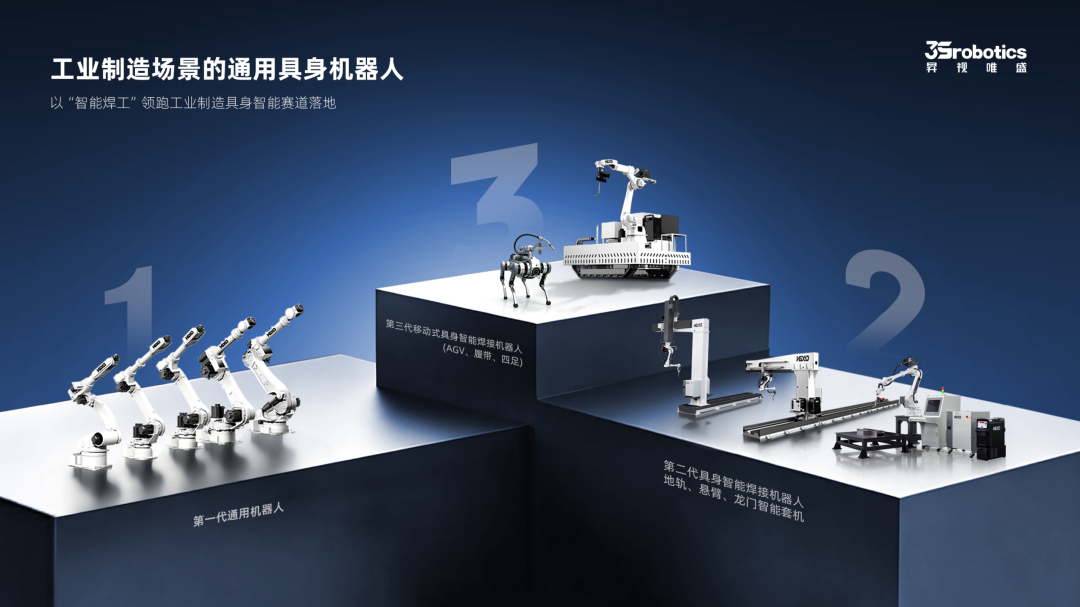
In this process, one case has left a deep impression on Wang Dezhao.
In 2022, Shengshi Weisheng's first batch of second-generation intelligent welding products was used in the Tibet region, with the end customer being China Railway Group, involved in the construction of the Sichuan-Tibet Railway. Building a railway in the Tibetan plateau involves extensive welding work, mostly non-standard parts. “Recruitment on the plateau is very challenging; despite initial doubts about robotic welding, the customer was still willing to give it a try.”
“I remember the first batch of products involved me and the R&D head traveling to Tibet to investigate and facilitate on-site delivery. At that time, the workers in the factory were skeptical and surprised, believing that non-standard welding robots could not perform.”
However, after a month of adjustment, the first batch of products delivered excellent results. Leaders came to inspect and found Shengshi Weisheng's products met the requirements. Subsequently, China Railway Group ordered over 100 more intelligent welding robots, quickly contributing in the construction of the Sichuan-Tibet Railway. “In that scenario, we felt that Shengshi Weisheng's products were highly valuable.”
From "skepticism" to "willingness to continue paying," Shengshi Weisheng proved the utility of its technology through genuine production results.
Of course, beyond traditional sales of the body, Shengshi Weisheng has innovatively launched a "robot labor service" model charged by welding meterage. This approach, turning hardware into a service, aims to build customer confidence, as well as to seek cooperation with equipment service providers.
In market research, Wang Dezhao found that many vendors' “no-teaching-required” equipment was often overstated and frequently sat idle after purchase, eroding customer trust in intelligent welding technologies. Shengshi Weisheng hopes that by charging per "meter," customers can genuinely experience the benefits of intelligent welding, reestablishing confidence and rapidly accumulating a quality customer base.
Furthermore, seeking cooperation with equipment service providers is part of Shengshi Weisheng's plan to build benchmark models, attracting providers specializing in equipment leasing to purchase their products, which would then be leased to end users to leverage channel collaboration.
Global expansion:
Seeking greater growth opportunities
Through these collaborations, Shengshi Weisheng has become the leading smart welding robot company in terms of domestic market share. However, Shengshi Weisheng's "ambition" extends far beyond this, transitioning from a focus on domestic markets to international branding; Shengshi Weisheng is seeking greater growth opportunities in global manufacturing.
According to Wang Dezhao, Shengshi Weisheng has penetrated the South Korean and Japanese markets. “South Korea's Hyundai is our channel partner, generating batch orders worth tens of millions. Additionally, Hyundai is also an investor, allowing us to leverage their brand influence overseas to expand our products.”
Meanwhile, Shengshi Weisheng is accelerating its globalization strategy, actively pursuing layouts in North America, Europe, Southeast Asia, and other regions. Importantly, in the European market, Shengshi Weisheng is also actively establishing local channel networks and accelerating implementation and penetration in Europe through deep collaboration with local partners.
In light of this overseas strategy, Wang Dezhao believes that Chinese smart welding companies have two core competitive advantages: one is the vast data accumulation, and the other is a mature supply chain.
“Compared to overseas, North America has very strong R&D capabilities, but our data capabilities are certainly stronger. In China, there are numerous early users, demo users, and alpha-beta customers; now Shengshi Weisheng has accumulated a wealth of real data experiences across various industries, and the speed of data accumulation places Shengshi Weisheng ahead of North America.”
Thus, supported by data, Shengshi Weisheng's models and brain capabilities will become increasingly intelligent and robust.
The second core competitive advantage is a mature supply chain. “As humanoid robots develop, the entire supply chain for humanoid robots will become increasingly mature and costs will decrease. For overseas companies, Shengshi Weisheng's cost, technology, and after-sales systems will become more mature.”
Notably, at overseas trade shows, Shengshi Weisheng’s products have attracted attention from global giants.
Wang Dezhao stated: “They are most interested in our second and third generation smart welding products. In overseas markets, the embodied intelligent applications in vertical scenarios tend to be slower in efficiency and speed compared to China, and there's a lack of such providers. However, strong user demand is emerging in the U.S. and Southeast Asia. These customers have never seen AI products in vertical scenarios, making them very interested in Shengshi Weisheng.”
Starting in 2020, and now advancing on dual fronts domestically and internationally, if initially engaging with "welding" was merely the first step for Shengshi Weisheng into industrial embodied intelligence, then in the next 3-5 years, Wang Dezhao hopes Shengshi Weisheng can continuously provide downstream services to clients through hardware and software carriers like welding.
However, this is not the ultimate destination for Shengshi Weisheng. In Wang Dezhao's vision, the true endgame for Shengshi Weisheng is not to be a welding robot company, but rather a global industrial embodied intelligence company that starts from welding. In his view, leveraging these two core advantages in China, Shengshi Weisheng will journey further into the future.
Originally from Investment Weekly
免责声明:本文章仅代表作者个人观点,不代表本平台的立场和观点。本文章仅供信息分享,不构成对任何人的任何投资建议。用户与作者之间的任何争议,与本平台无关。如网页中刊载的文章或图片涉及侵权,请提供相关的权利证明和身份证明发送邮件到support@aicoin.com,本平台相关工作人员将会进行核查。


