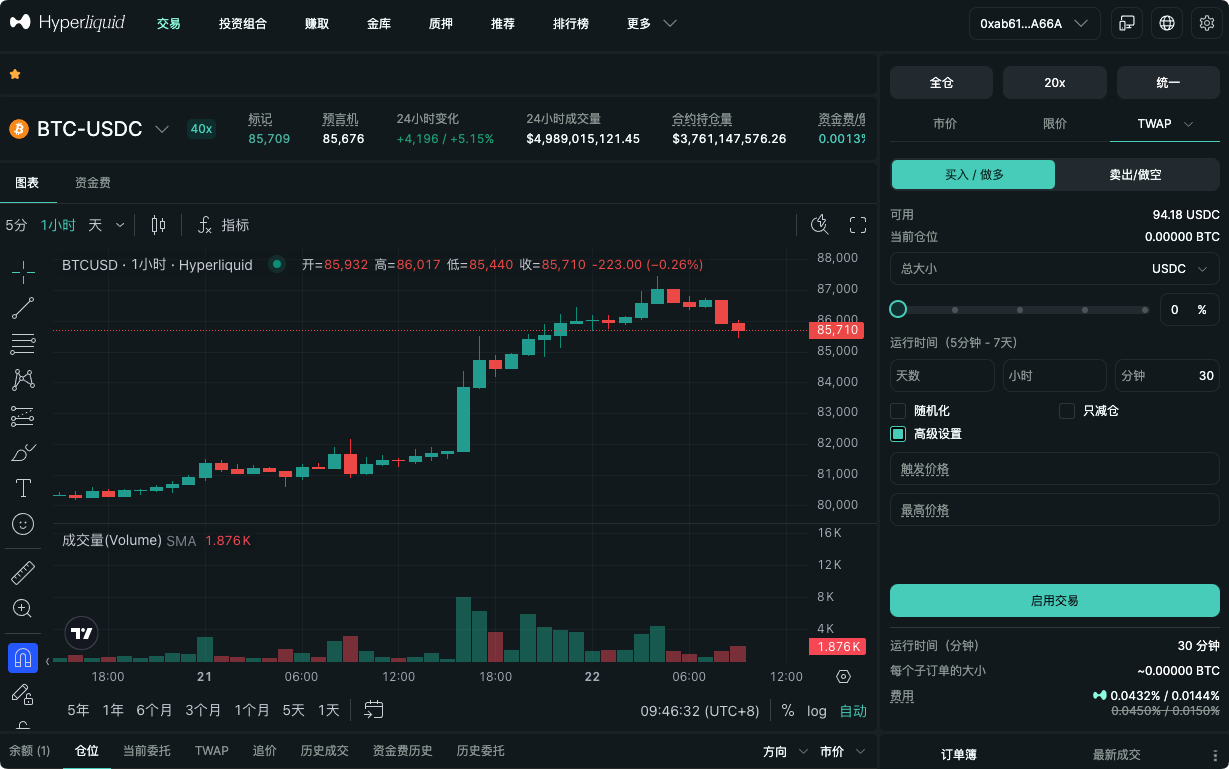
BTC surged from around $75,000 to $87,000, and the real change in the market may not just be the price recovery.
On September 21, BTC peaked at around $87,000, reaching a new high since January this year, with a 24-hour increase exceeding 6% at one point. Meanwhile, over the past 24 hours, the total crypto asset liquidation across the network surpassed $750 million, with short liquidations amounting to about $648 million, accounting for over 80%.
This means that the first phase of this rally is very clear:
First, the shorts were forced out.
But by September 21, the market began to show a second change— the rise was no longer limited to BTC.
ETH regained the $2,700 level, while mainstream coins like SOL and XRP also strengthened, with some high Beta and privacy assets seeing further increases. ETH saw an increase of about 6% in the past day, with SOL and XRP also recording significant gains.
Thus, the market is transitioning from one question to the next:
Can BTC's short-squeeze trend evolve into a true spread of altcoin capital?
First, let's look at the summary
- BTC reached a peak of about $87,000, a new high since January this year;
- Total liquidation across the network exceeded $750 million in 24 hours, with shorts accounting for about $648 million;
- BTC's weekly close was around $81,200, reclaiming the 50-week moving average;
- ETH rose above $2,700, with SOL, XRP, and some high Beta assets also rising simultaneously;
- This rally has shown signs of spreading from BTC to mainstream coins, and then to high Beta assets;
- What is truly worth observing next is not how much more BTC can rise, but whether the spread of altcoin capital can continue.
Phase One: BTC first clears out the shorts
On September 15, BTC fell to a low of around $75,000.
In less than a week, the price broke above $80,000 again and further surged to the $86,000 - $87,000 range.
The speed of this rise made the derivatives market an important amplifier for this rally.
According to CoinGlass data, about $648 million of short positions were liquidated in the past 24 hours, with the total liquidation amounting to about $750 million.
The characteristics of such a rally are very evident:
Price increases → Short stop-loss/liquidation → Forced buying in spot or closing positions → Further price increases → More shorts are liquidated.
Therefore, the initial rise does not necessarily equate to an influx of new capital.
A significant portion of the buying power actually came from the forced exits of shorts.
This is also why BTC was able to achieve such a rapid rebound within a few trading days.
Phase Two: Capital starts to leave the single-point market of BTC
What is truly worth paying attention to is the market breadth after September 21.
When BTC rose, ETH also reclaimed near the $2,700 level, with SOL, XRP, and other mainstream assets strengthening simultaneously.
Among them, ETH has another even more noteworthy data:
ETH's relative performance against BTC began to improve.
On September 21, ETH rose about 6%, the ETH/BTC ratio strengthened again, breaking through the downward trendline that had persisted for several years.
If only BTC rises, it can be understood as capital concentrating back into Bitcoin.
But when ETH, SOL, XRP, and higher beta assets start rising together, the market structure changes:
Risk appetite is spreading from BTC to higher-risk assets.
This is typically a pronounced sign when market sentiment shifts from defense to offense.
However, it cannot yet simply be defined as “alt-season.”
CoinMarketCap data indicates that while the breadth of the market's recent rise has significantly expanded, the Altcoin Season Index remains in neutral territory, and BTC's market share is still around 58.5%.
So a more accurate description now is:
Capital is beginning to spread, but a complete rotation has not yet occurred.
The 50-week moving average has been reclaimed, but this does not mean “the cycle bottom has been confirmed”
Another signal frequently discussed in the market is BTC reclaiming the 50-week moving average.
As of the week ending September 20, BTC closed at around $81,159, above the then approximately $78,786 50-week moving average. This is the first time BTC has stood above this level on a weekly basis since November 2025.
This is indeed an important technical change.
Previously, BTC had been running below this moving average for several dozen weeks.
But it is important to note:
Standing above the moving average ≠ the cycle bottom has been confirmed.
Technical indicators can only indicate that the market structure has changed; whether a sustained trend has formed still requires the subsequent weeks to maintain volume, and for spot capital and other factors to cooperate further.
Therefore, instead of rushing to label this rally as a “new bull market,” it is better to observe whether BTC can transform the previous resistance zone into new support.
The real test starts now
This rally has completed the first verification:
$75,000 did not continue to be breached, and BTC surpassed $80,000 again.
The second verification is:
After the short liquidations end, who will take over?
If ETFs continue to see inflows while ETH, SOL, and other mainstream assets continue to outperform, with capital further flowing to high Beta and mid- to small-cap assets, then this rally will shift from a “short-squeeze rebound” to an “expansion of risk appetite.”
Conversely, if after the short positions are cleared, BTC's trading volume declines and ETF funds weaken again, while altcoins rapidly give back their gains, then this rally may still primarily be driven by derivatives pressure.
So currently, the most worthy observation is not the increase of any single coin.
Instead, it is the path of capital diffusion in the market:
BTC → ETH → SOL/XRP and other mainstream coins → high Beta/privacy assets.
If this chain continues to extend, the market structure has truly changed.
BTC's rise to $87,000 is just the first step. What is truly worth observing is whether, after the short-squeeze ends, risk capital will continue to expand outward.
If you are also paying attention to the Crypto market and want to participate in trading or asset allocation, you can register through the following exclusive channels and enjoy discounts:
Binance: Register through the exclusive link and enter the invitation code aicoin668 to enjoy a 10% rebate.
Registration link: https://jump.do/zh-Hans/xlink-proxy?id=3
Benefit group: https://www.aicoin.com/link/chat?cid=gmLgwvKD1
OKX: Register through the AiCoin exclusive link to enjoy a permanent 20% rebate.
Registration link: https://jump.do/zh-Hans/xlink-proxy?id=2
Benefit group: https://aicoin.com/link/chat?cid=l61eM4owQ
Bitget: Register through the AiCoin exclusive channel to enjoy a 10% fee rebate.
Registration link: https://jump.do/zh-Hans/xlink-proxy?id=6
Benefit group: https://aicoin.com/link/chat?cid=N63yYYKQ
You are also welcome to join AiCoin-related communities to get more information on new coins and profit opportunities from exchanges:
Official Telegram group: https://t.me/aicoin_support
AiCoin Chinese Twitter: https://x.com/AiCoinzh
The content of this article only represents the author's personal view and does not represent the stance of this platform. The opinions, conclusions, and suggestions in the article are for reference only and do not constitute any investment advice related to this platform. The market has risks; invest cautiously.
免责声明:本文章仅代表作者个人观点,不代表本平台的立场和观点。本文章仅供信息分享,不构成对任何人的任何投资建议。用户与作者之间的任何争议,与本平台无关。如网页中刊载的文章或图片涉及侵权,请提供相关的权利证明和身份证明发送邮件到support@aicoin.com,本平台相关工作人员将会进行核查。