Podcast: a16z
Translation: Mark Intents
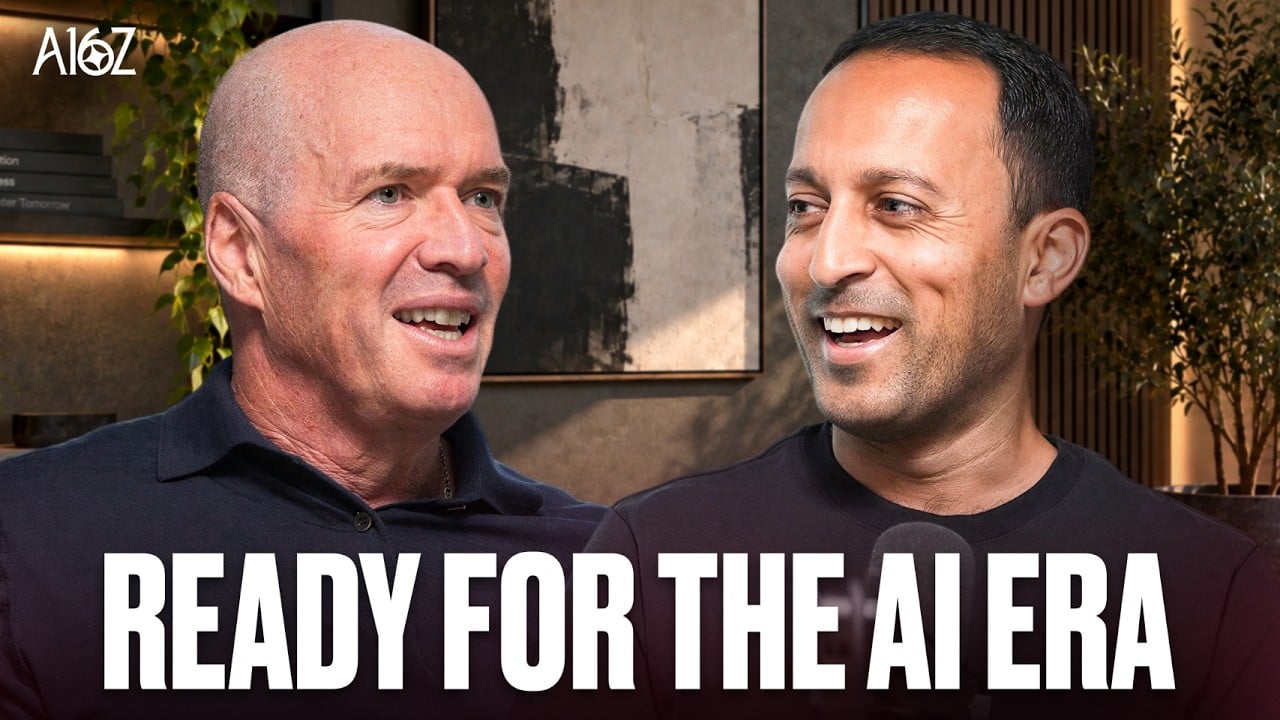
The age of AI should be the most suitable era for young people in history, but the training system is still built for a soon-to-disappear world. Ben Horowitz and Gagan Biyani founded Horowitz Andreessen Academy: to teach builders to “do,” not just “learn to do,” through projects, Silicon Valley experience, and networks.
Universities are still useful for those who want to become scholars or professors; but for eighteen-year-olds who “want to find jobs” or “already have entrepreneurial ideas,” it is a huge investment of money and time, while much of the content in classrooms does not revolve around these two things. Ben Horowitz stated plainly in the a16z podcast: “If you ask an eighteen-year-old why they go to college, it’s usually to find a job—yet this doesn’t always pan out.”
This is not anti-intellectualism but rather a redefinition of the customer. The academy is not meant to replace all universities but to provide another path for young people who already know what they want to build.
University is a bundle of products, most reforms only unbundle one
Erik Torenberg points out the key: a university is a “bundle”—credits, socializing, status, diplomas, brands, and even sports and connections are all included. Many projects attempting to replace university either focus only on skills training or do a specific mix, but fail to create a truly competitive value proposition.
Gagan Biyani added an entrepreneurial common sense: “When you start, you need a very specific customer with a strong desire for a product.” Over the past six months, he immersed himself in young builders and found that there is a group within this generation that has already “caught fire”—they will employ thousands in the future and raise billions in funding. The academy will first serve them, instead of trying to serve everyone.
a16z has invested in over sixteen hundred companies and has real job and skills maps. The logic behind this investment is to overlap “what we know we should learn” and “the educational ideas we have been thinking about for a decade”: it’s not about creating another online course platform, but rather building a container comparable to the university experience that is not designed for “becoming a scholar.”
Ben separates “doing” from “the knowledge about doing”: music appreciation classes are good, but what the academy needs to align with is “do you want to major in music? Then write songs and complete the creative process”; similarly for technology—“do you want to work in tech? Then learn to build systems.” Gagan added socializing and accommodation: there needs to be interpersonal dynamics, living in San Francisco, and access to real employers who hire top talent. Few have delivered this complete package seriously over the past fifty years.
AI revolution ≈ Industrial Revolution: old training does not match new jobs
Ben stretched the timeline long. The university system started from religious institutions, and after the Industrial Revolution erupted, the ability to read, do arithmetic, and enter the corporate world suddenly became necessities, leading to an explosive expansion of American universities—“to a large extent, today’s America is built upon the backbone of great universities.”
However, he judges: the impact of AI on job content, work methods, and available positions will be as thorough as the Industrial Revolution was for agricultural society. “To use training designed for the Industrial Revolution to map the AI revolution—probably won’t be perfect.” Therefore, someone needs to step out and pave a way: spend less time sitting in five to eight-hour lectures, and more time using tools, learning at a personal pace with AI, and designing more structured social interactions—because classroom time has been freed up.
Gagan’s statement is even bolder: “We are building a new school for the AI age, which means redesigning everything.” Living in San Francisco, being part of the employer network, and having real interpersonal dynamics—remove any one of these links, and it’s just “training,” not an “academy.”
Eighteen-year-olds should be excited, but the system makes them anxious
The tension lies in the fact that the existing employment entry system makes young people anxious, while the problems haven’t disappeared. “All I read are problems; problems are everywhere.” You can directly tackle them—either as a leader or as a team member.
He uses family history as an analogy: his great-grandfather escaped from Russia and slept under a sewing machine in a sweatshop; his grandfather taught at CCNY; his father’s generation was even better. Looking back, today’s young people may feel their parents “are like sleeping under a sewing machine”—provided you stand on the “future-oriented” side rather than cling to a rapidly fading past.
Creating is easier now, but you must learn to choose what is worth doing
With the power of tools increasing, “creating” has become easier, but “what to create” and “who to create with” have become even scarcer. Ben reminds: if you truly feel “only I understand this matter” and are driven to start a business—that is a Zuckerberg-level scarce opportunity. More people need to first enter companies like Databricks, NVIDIA, or Stripe, or join peers doing hard things and build their judgment.
When he was eighteen, he didn’t have a groundbreaking idea; what really laid the foundation was seeing “how innovation truly changes things” at Silicon Graphics. Most people are not “Zuckerbergs who see billion-dollar ideas at a glance,” but rather need to first immerse themselves in environments like Databricks, NVIDIA, or Stripe, or join peers doing hard things. Ben half-jokingly said: most of Zuckerberg's Harvard roommates who didn’t join Facebook later regretted it—opportunity windows often open only once.
Mark and a Gen Z research report he commissioned contained a poignant point: this generation has the “highest variance and fragmentation”—subcultures are more extreme, and there are far more eighteen-year-olds already immersed in entrepreneurship than in their generation. Gathering builders under one roof is in itself a scarce ability. The founding class Fellowship targets about fifty people. Gagan emphasizes that the definition of “building” should be broad: builders from different directions colliding with one another are more valuable than taking another “negotiation class” for networking skills.
The specific mechanism is “forced immersion”: the peer network should be deep, but also coexist with companies, projects, internships, and cooperatives in the office—when you want to create a new robotic dog, but can’t get a certain chip and don’t know how to write cold emails, your surroundings must be filled with people who can help with these things. Networking skills are not gained from attending lectures; they develop out of your passion for something and mustering everyone on board.
San Francisco is not a landscape; it’s an entire campus
Why must it be in the Bay Area? Ben says pragmatically: many great companies in America start here, and the majority of those who understand this matter and have worked in such places are also in California. “In the companies we connect with, likely more than eighty percent are in this area.” You come to learn and to start; geography and opportunity overlap.
Gagan writes the city itself as a campus: San Francisco embraces failure—if something doesn’t work out, you can still be funded next round; Silicon Valley has a culture of mutual benefit, high trust, where “helping others first will surely lead to returns.” This combination is rare: both ambitious and comparatively safe. The future of AI, currency, and biotechnology, along with much discussion and building, will also spill out from here.
The academy being established as an independent company rather than as a department within a16z is to prevent stifling ambition: the ideas are not limited to technology; every profession, including music and healthcare, is undergoing transformation and needs scalable entities; while also retaining brand signals—strong performance by graduates explicitly links them to opportunities in the ecosystem.
Students are the customers; profit is to align incentives
They do not pursue monopoly. “Please copy us. Please have Harvard copy us.” First break through, then change the training methods of each generation of young people. Profit motives compel institutions to consider “whether students will truly achieve great things later” as a brand flywheel—this is not common in education but is the academy's core belief.
Curiosity drives engagement; networking skills can only be practiced on-site
The old saying in education has been reactivated: “Education is not pouring water into a bucket, but lighting a fire.” Transitioning from push-based grading to pull-based curiosity: what you naturally wish to pursue, go build and produce. Steve Jobs’ interest in calligraphy and Ben’s long-term investment in rap were not “professional” at the time, but they fostered narrative skills and authenticity. Stanford cryptography professor Dan Boneh’s trade-offs regarding AI were sharply relayed by Ben: either ban it—though it won’t hold—or design problems so that “there’s nothing AI can’t solve.” As a result, students end up tackling historically unsolvable problems.
Networking skills are similarly developed. Ben often tells CEOs: you can read every book on being a CEO, but “it’s like finishing every football textbook; when you actually step into the NFL as a quarterback, and a three-hundred-pound person charges at you—books won’t help you.” What the academy needs to do is: form teams, execute projects, and pay the price in conflict and hesitation—more like practice matches rather than official competitions, but you must “experience that terrifying feeling through doing.”
He compares founders to movie directors or nightclub promoters: they have to write scripts, cast actors, create excitement, and negotiate conditions; at the same time, they must practice the “inner game”—managing their psychology while working with a group of highly unique individuals. AI also offers an unexpected bonus: you can quickly talk to AI, allowing it to handle computers, thereby freeing people from screens to genuinely engage—getting to know peers, motivating each other, doing greater things together. The most undervalued icebreaker is often simply: “Where did you grow up?”
When tools are too powerful, the real constraint becomes “what is worth doing.” Ben’s advice remains about matching interests and abilities with the real problems you see—disease, environment, election system integrity, etc.—often the journey resembles scientific discovery: you aim at pancreatic cancer, only to crash into another hard problem that must be solved first, which then becomes the real idea. So when there’s no billion-dollar idea, don’t rush to pocket a million-dollar idea; keep exploring.
The default strategy is only one: first choose a hard problem that you genuinely care about, forcing yourself to practice cold emailing, team formation, and conflict management through projects; when there's no billion-dollar idea, don’t rush to cash a million-dollar idea—continue exploring until failure brings the “secret.” The failures cherished in Silicon Valley are those that make you understand why problems are difficult, thereby revealing sub-problems and neighbor problems.
How to measure success five years later? Ben's measure is simple: graduates have careers they love, creating interesting companies or creations; the academy needs to clarify “what truly works” before expanding to creators beyond technology—because creative friends can already use AI to turn a feeling into movies, songs, and soundtracks. “If you want to be a main character, we support you; if you only want to be a screw in the machine, this may not be the best place.”
The academy becoming an independent company carries another layer of ambition: what a16z brings is “almost access to every door in technology”; but this idea itself is not an investment product, but rather the training infrastructure for the future of the nation that should not be locked within the confines of fund boundaries. Gagan, who founded Udemy and worked at Maven, has been crawling in the education field for over a decade—what he lacks is not ideas, but resources like a16z and the network of over sixteen hundred companies. The narrative of their meeting is quite entrepreneurial: we have this idea; the other side says, I've thought about it longer than you, and I’ve been trying to make it happen—all it lacked before was the resource foundation to scale the idea.
Don’t train yourself for a world that is about to disappear. Go do, don’t just learn to do.
免责声明:本文章仅代表作者个人观点,不代表本平台的立场和观点。本文章仅供信息分享,不构成对任何人的任何投资建议。用户与作者之间的任何争议,与本平台无关。如网页中刊载的文章或图片涉及侵权,请提供相关的权利证明和身份证明发送邮件到support@aicoin.com,本平台相关工作人员将会进行核查。


