Yesterday, BTC staged another roller coaster market, watching helplessly as it surged from 8.1 to 8.5, and today it fell back from 8.7 to 8.5. The greater the market fluctuations, the easier it is for someone to use high returns as bait to set traps, so today's title specifically added "open your eyes" — there are too many traps in the crypto circle with inflated APY, so today let’s have a good chat about LP in DeFi.
If you want to track the capital flow of BTC, market changes, and market hotspots in real time, you can register for OKX through the AiCoin cooperation portal:
👉https://jump.do/zh-Hans/xlink?checkProxy=true&proxyId=2
Registration also allows you to enjoy a permanent 20% rebate on trading fees.
Open OKX, find the exchange/Web3 entrance, switch to the Web3 wallet, and the original planet icon will change to the DeFi entrance. Once you enter, the first thing that catches your attention will definitely be rows of annualized yields: 30%, 100%, 500%, and some pools even list higher. Are these annualized yields real? Today we will break down the LP gameplay, detailing the pitfalls and screening methods all at once.
LP is short for Liquidity Provider, which is called 流动性提供者 in Chinese. Simply put, it's a business that earns trading fees, similar to how exchanges earn fees. Take ETH and USDG as an example, where both assets are stored in a liquidity pool.

If someone wants to buy ETH, they put USDG into the pool to exchange for the corresponding amount of ETH; if someone wants to sell ETH, they put ETH into the pool to exchange for USDG. The entire exchange process is automatically completed by smart contracts, similar to the market-making logic of exchanges.
Where do the coins in the pool come from? Part of it comes from users like us who provide LP. Everyone puts both assets into the pool, providing liquidity for market transactions; every time another user completes an exchange, they will pay a fee, and all LPs in the pool will share this amount according to their contribution ratio. Letting others use your liquidity means you earn a fee — for a transaction of 1000U generating a 3U fee, if you hold 10% of the pool, you would get approximately 0.3U, which is somewhat like charging a "passing fee" for transactions.
So how are the annualized yields on the page generated? They are driven mainly by three factors: First is trading volume; the more frequent the transactions, the more fees generated, which is the easiest to understand. Second is the shared capital amount; with the same fee, the smaller the total capital in the pool, the more each share is distributed, which is also not hard to figure out. The third point is the most critical and can easily hide pitfalls: activity rewards. Some projects will issue additional tokens or stablecoins as rewards, directly inflating the annualized yield displayed on the page.
This led to the scene I accidentally clicked into last week — almost 800 APY, at first glance, I thought DeFi glory had returned. But upon closer inspection, it was all risks.
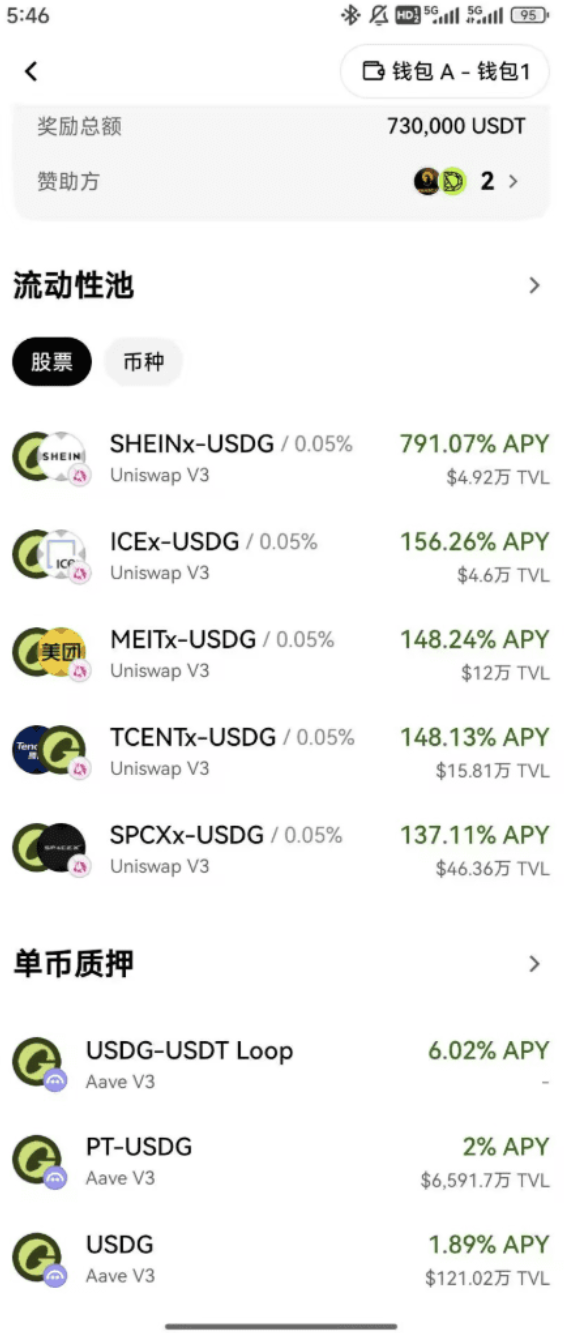
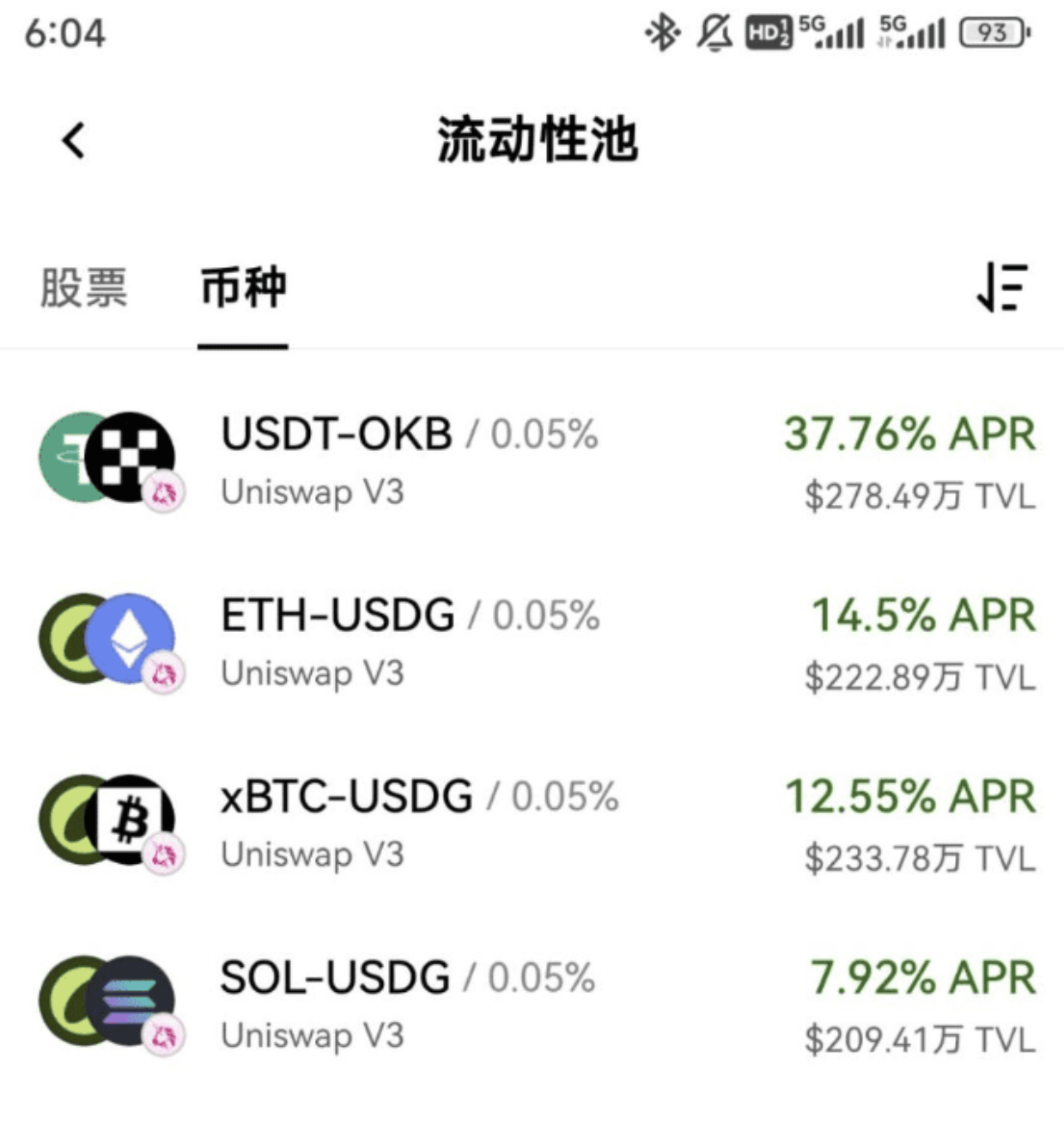
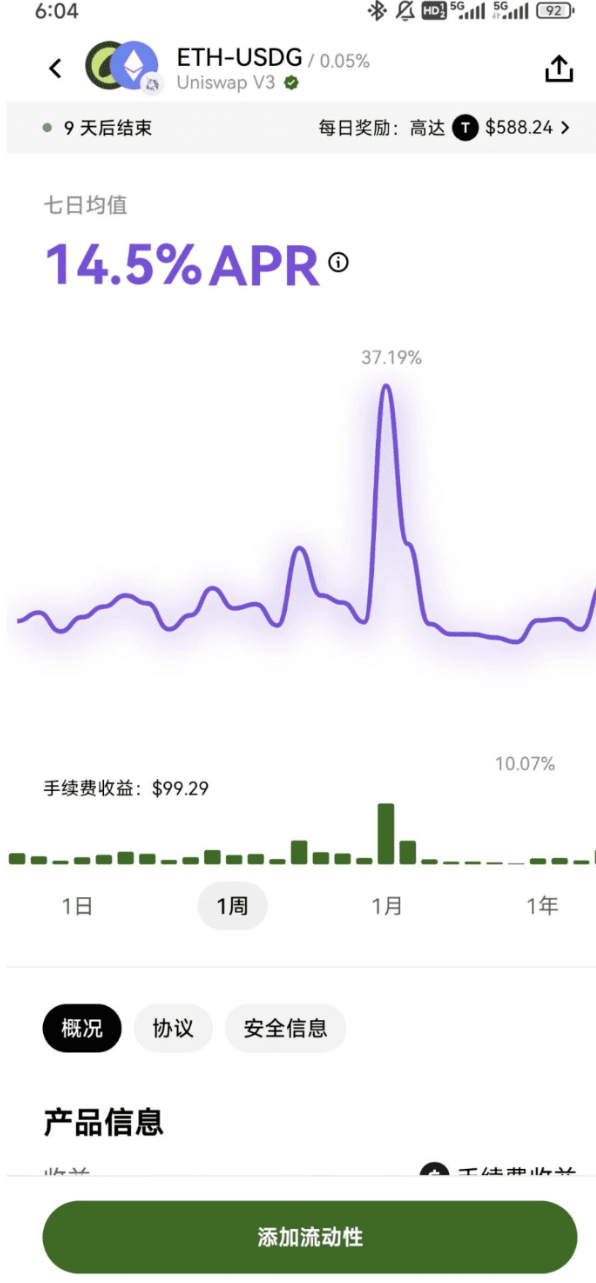
In a stock asset pool SHEINx-USDG, it once showed 791.07% APY, but the total locked TVL of the pool was only about 49,200 USD; while a conventional coin pool ETH-USDG showed 14.5% APR with a TVL of 228,900 USD. The scale difference is so great that the stability of earnings is not even on the same level.
The LP gameplay can best showcase its advantages in a volatile market. When talking about volatility, many people think of grid trading, but they are different: grid trading involves buying low and selling high to earn the price difference, whereas LP does not participate in the transactions themselves and earns traders' fees. For instance, when BTC surged to 8.7 last night and dropped again today, if it returns to 8.1 later, the number of coins in your hand may not change much, but you have already earned quite a bit from the fees. It’s no wonder exchanges always make money; they collect fees regardless of whether the market goes up or down.
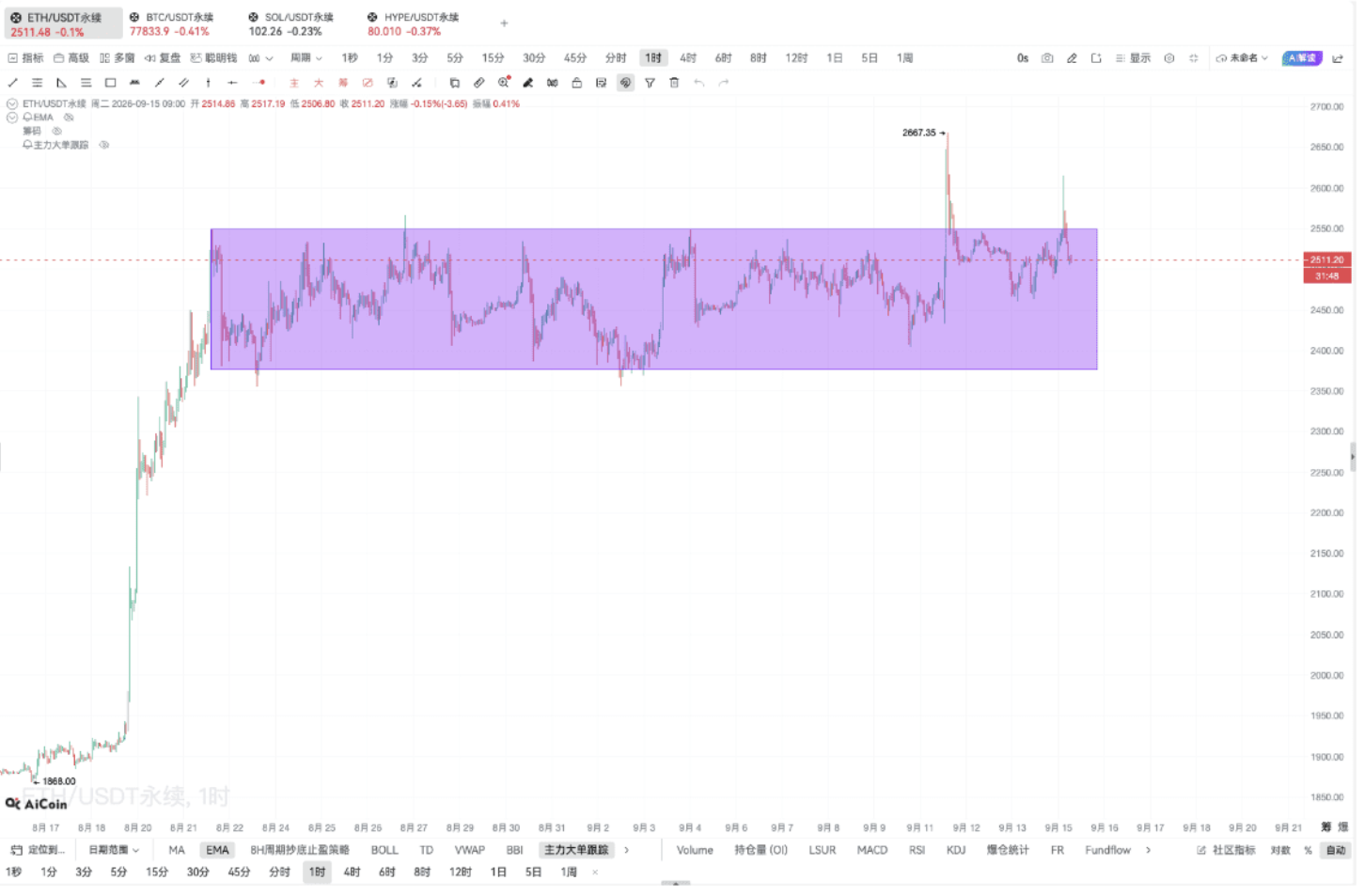
Taking the previous ETH market as an example, from late August to mid-September, ETH oscillated between 2350U and 2550U for most of the time, occasionally breaking through briefly but never leading to a significant one-sided trend. If you were simply holding ETH, the price fluctuations wouldn’t yield much at the end. But if you took out some ETH and stablecoins to do LP covering that range, as long as the positions didn’t move out of the range and the market remained active, you could continuously accumulate fees.
Therefore, LP's most comfortable scenario is easy to understand: you are willing to hold both types of coins long-term, don't see a strong one-sided trend in the short term, but the market trading is very active. Instead of letting the assets sit in your wallet, you can take part of them to do LP and convert the market's activity into fee income.
An Inescapable Topic: Impermanent Loss
Many people have heard this term and find it complex, but it can be explained with a simple math problem. With the same 1000U principal, you can compare two different routes and understand it using a simplified model. When you invest, if the price of ETH is 2500U, you take out 0.2 ETH (worth 500U) and pair it with 500U of stablecoins, totaling 1000U exactly. After a while, ETH rises to 3100U.
👉 Route A: Directly holding. 0.2 ETH is worth 620U, plus 500U of stablecoins, your total assets are 1120U. 👉 Route B: Doing LP. During ETH's price increase, the pool will automatically sell part of the ETH for more stablecoins. Under a simplified model, the LP holding becomes 0.1796 ETH + 557U stablecoins, totaling about 1114U.
Not counting transaction fees for now, direct holding is 1120U, while LP assets are 1114U, and the difference of 6U is the impermanent loss during this period. Suppose during this time you earned 5U in fees, with an exit cost of 2U, LP would ultimately be about 1117U. Comparing the principal earns 117U, but compared to direct holding, you still have 3U less—fees offset part of the impermanent loss, but not entirely cover it.
The term "impermanent" is very appropriate; this difference will change with the relative changes in coin prices. When ETH drops back to 2500U, the difference will shrink again. Only when you completely exit LP will gains and losses truly be realized. Gains and losses caused by price changes themselves are normal market gains and losses; the difference between LP and direct holding is the impermanent loss.
How to Select Reliable LPs? Remember This Order
Don’t click on the pool with the highest annualized yield right away! The order must be reversed: First look at the assets, then the pool, and finally the yields.
Step One: Confirm that you are willing to hold both assets in the pool. After price fluctuations, the ratio of the two assets in the LP will change automatically. Beginners should start with "mainstream coins + stablecoins," such as ETH-USDG, xBTC-USDG, SOL-USDG, etc. The simplest judgment standard: If the final holdings become all ETH or all stablecoins, can you accept that? If you don't want to hold one of the coins long term, then this pool is not suitable for your first LP.
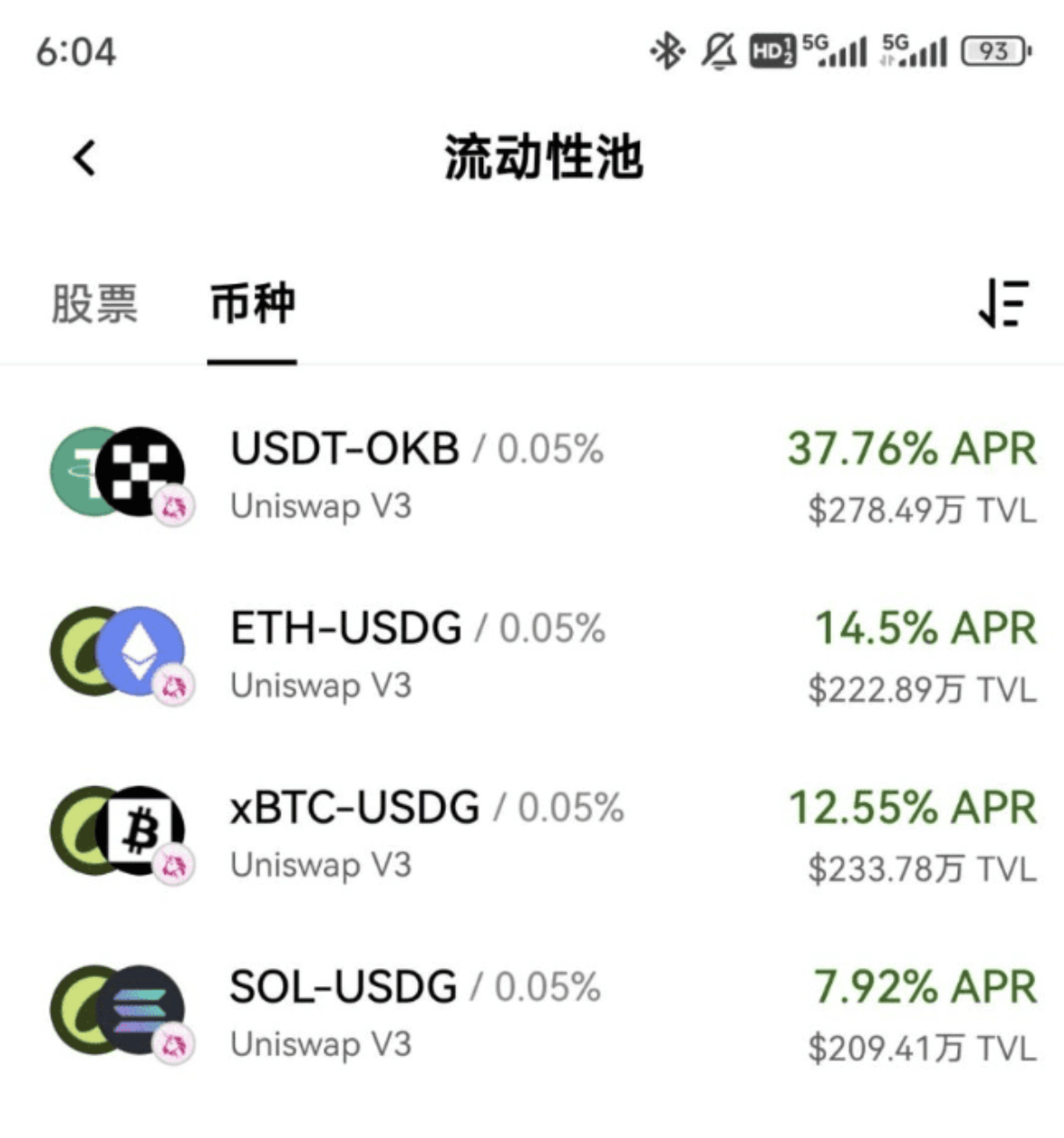
Step Two: Check if the pool's basic information is transparent enough. Pay special attention to underlying protocols, the public chain it is on, total TVL, operation time, contract address, and security audits. For example, the ETH-USDG in the screenshot runs on X Layer, the underlying protocol is Uniswap V3, and TVL is about 228,900 USD. This information at least lets you know where the funds are going. Security scores and audit reports can only assist in assessing risks; they do not guarantee that the principal is safe.
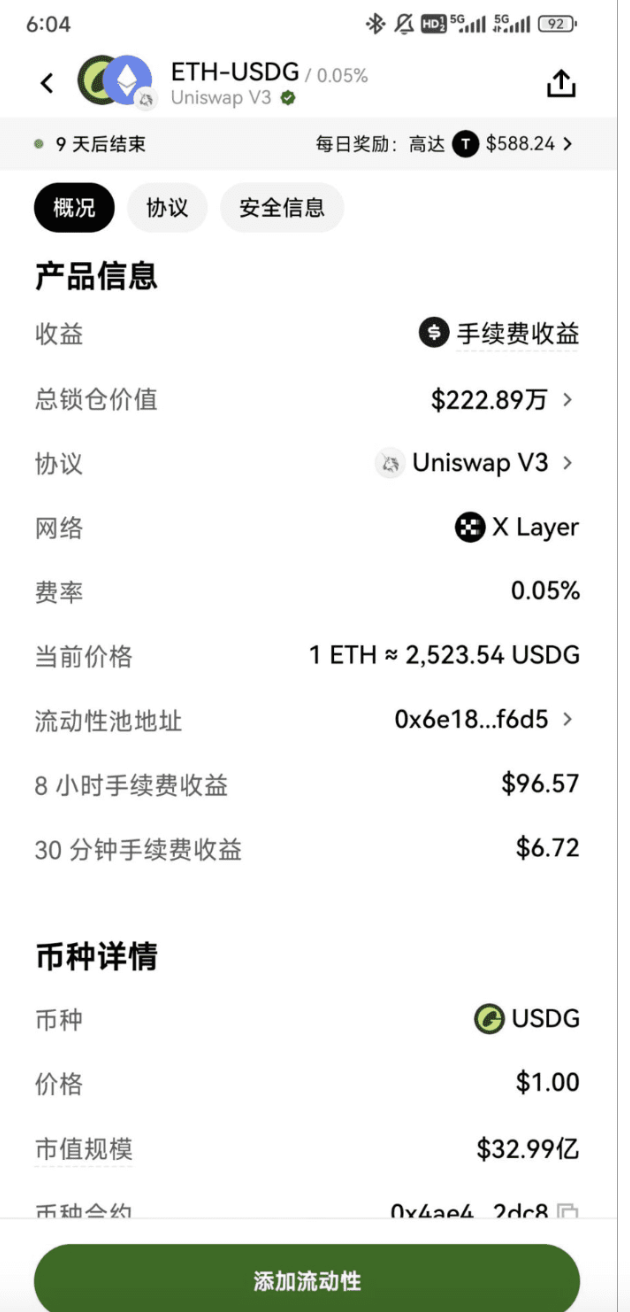
Step Three: Understand where the income is coming from. Only real trading-generated fees have sustainability; high annualized rates created by activity rewards are likely to plunge once the activity ends. Just like the 14.5% of ETH-USDG versus the 791.07% of SHEINx-USDG, the latter looks enticing but the TVL is less than 50,000 and the asset risk is also high. For beginners, understanding 14.5% is far more suitable for practice than not understanding 791%.
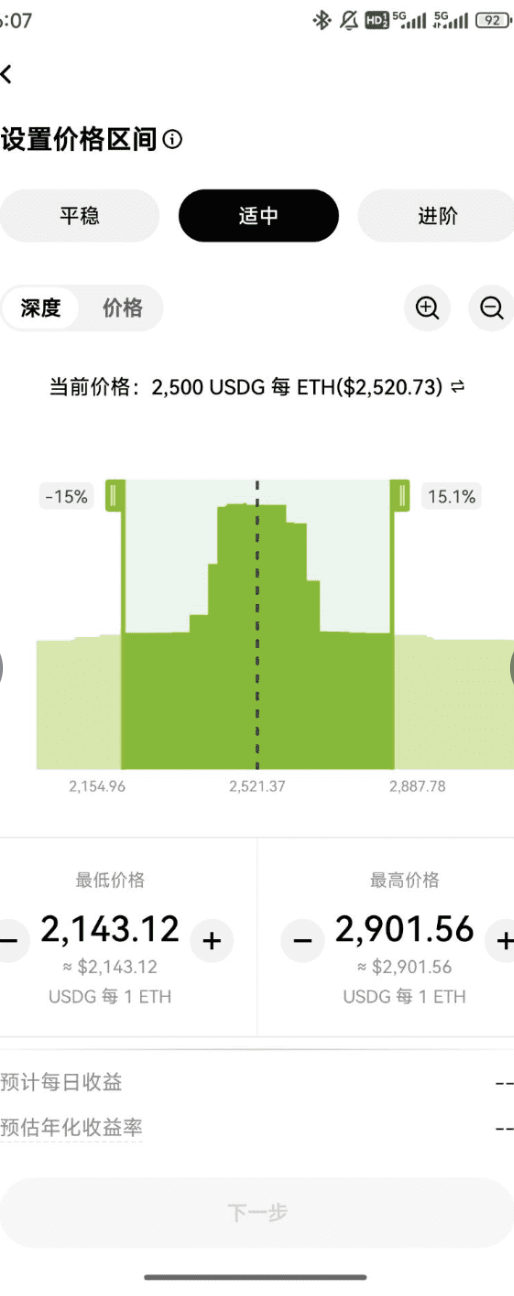
Step Four: Assess whether you can manage the price range. The narrower the range set, the more concentrated the funds, and the higher the efficiency of earning fees per unit of capital, but the prices are also easier to exceed the range, stopping the earning of returns; wider ranges may be less efficient but are easier to manage. It’s similar to grid trading; setting the range too narrow can lead to "exploding." Beginners don’t need to pin down the range too strictly at first; they should ensure they understand and can manage it.
Four steps compressed into one sentence: willing to hold both coins, able to verify pool information, income supported by real transactions, and manageable price ranges before considering investing. The page for setting the price range looks like this.
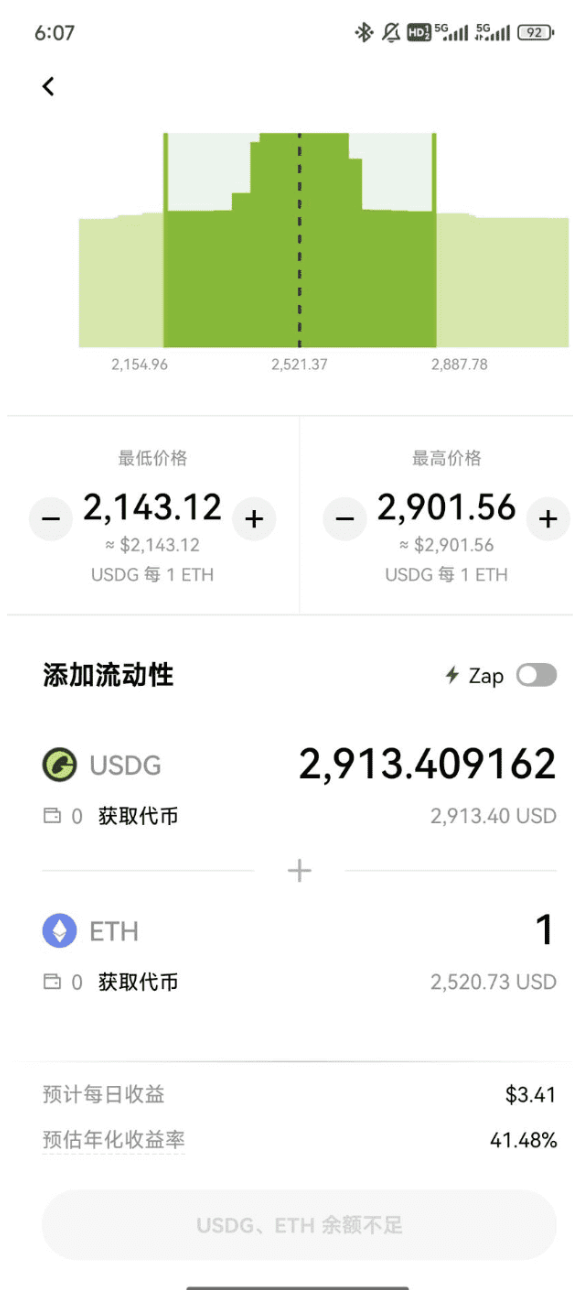
Finally, let’s talk about who is suitable to do LP: those who are willing to hold two assets simultaneously, anticipate market fluctuations, and are willing to periodically check their positions are more suitable for LP. If you are certain that a particular coin will rise significantly, wanting to capture all the upside benefits, direct holding is more suitable. If you only accept stablecoin risks, or have no time to manage the range, you might want to look at simpler single-coin products first.
For first-time participants, it is recommended to start with a small amount, avoid leverage, and keep good records of fees, position net worth, and the value of directly held coins during the same period. Only after completing an entry and exit will you know how much real income the annual yield displayed on the page can ultimately turn into.
That’s all for today’s LP review content.
免责声明:本文章仅代表作者个人观点,不代表本平台的立场和观点。本文章仅供信息分享,不构成对任何人的任何投资建议。用户与作者之间的任何争议,与本平台无关。如网页中刊载的文章或图片涉及侵权,请提供相关的权利证明和身份证明发送邮件到support@aicoin.com,本平台相关工作人员将会进行核查。


