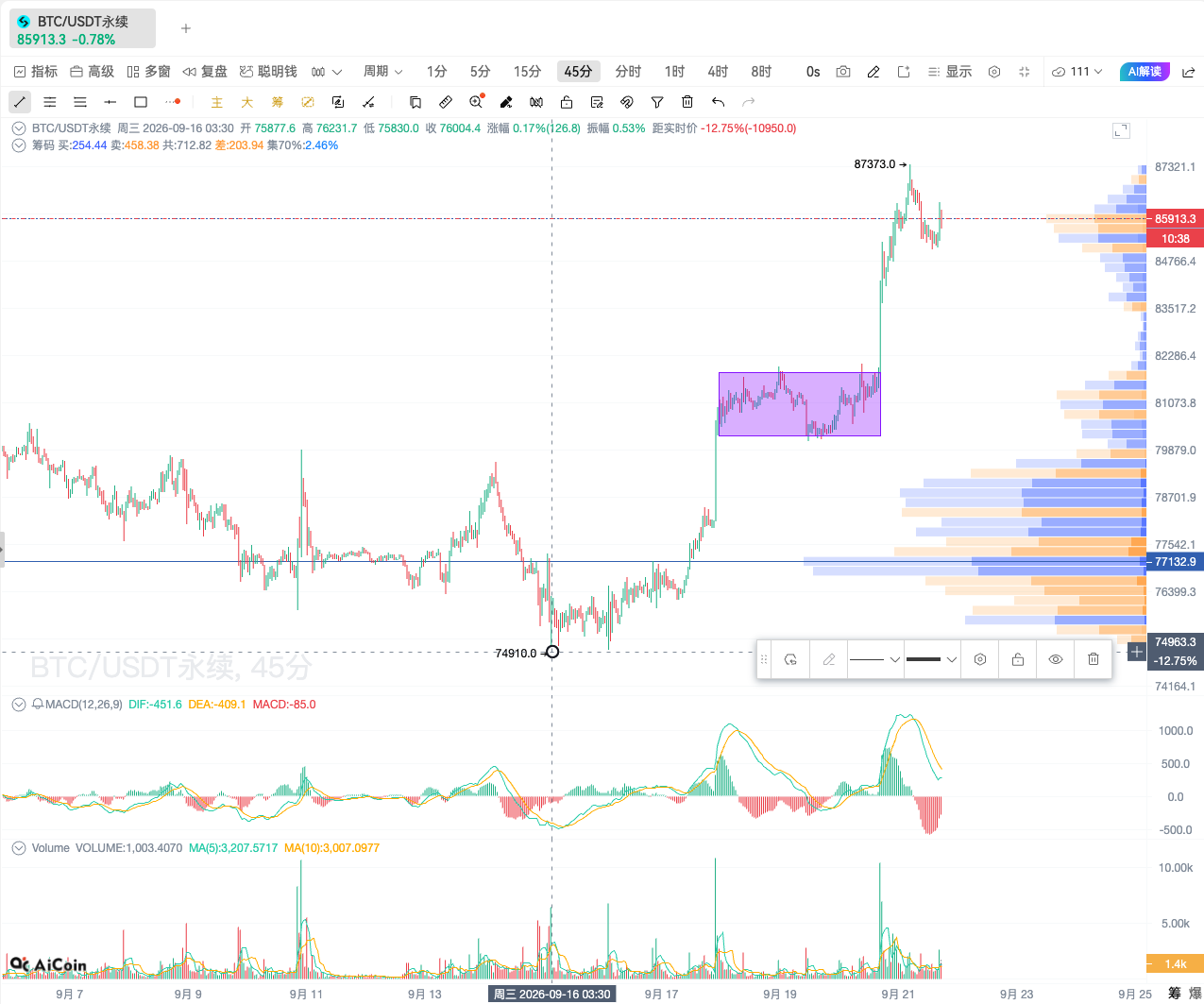
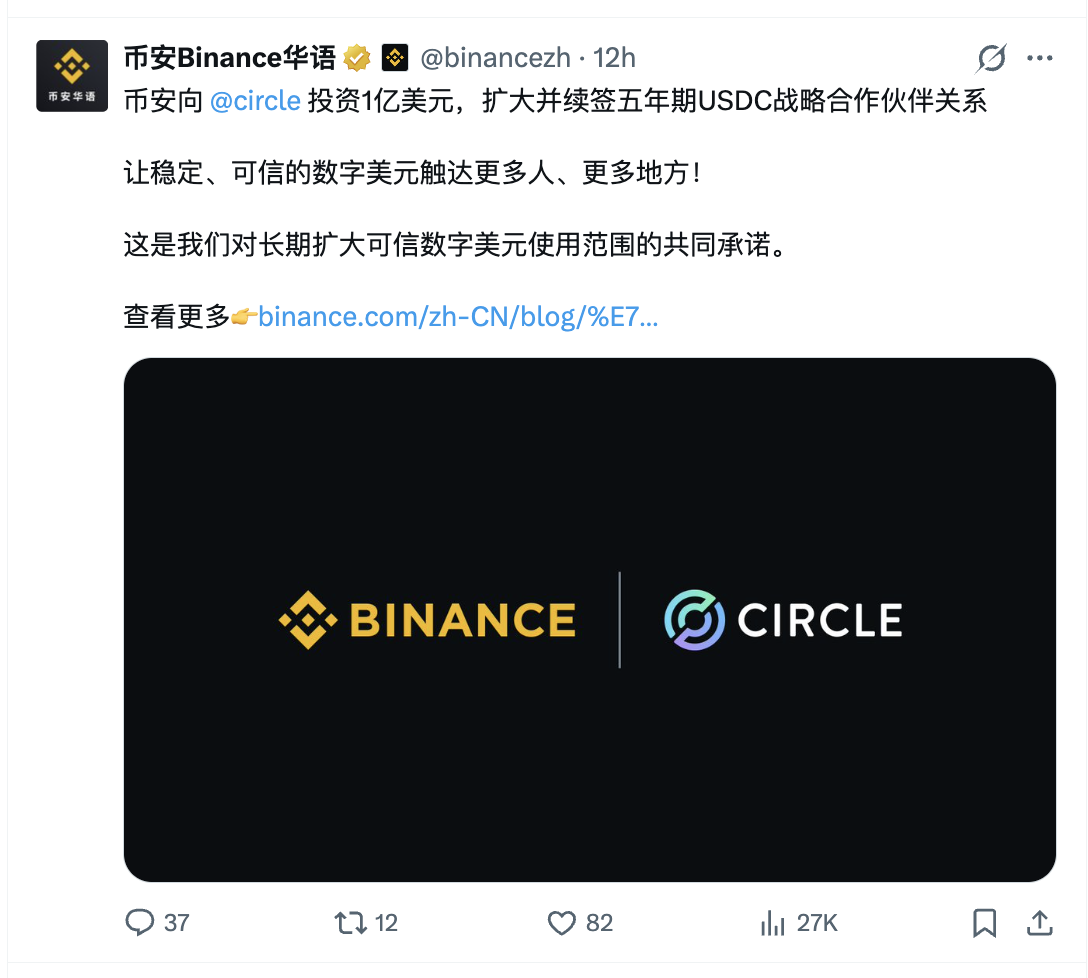
On September 22, Binance announced an investment of 100 million USD in Circle.
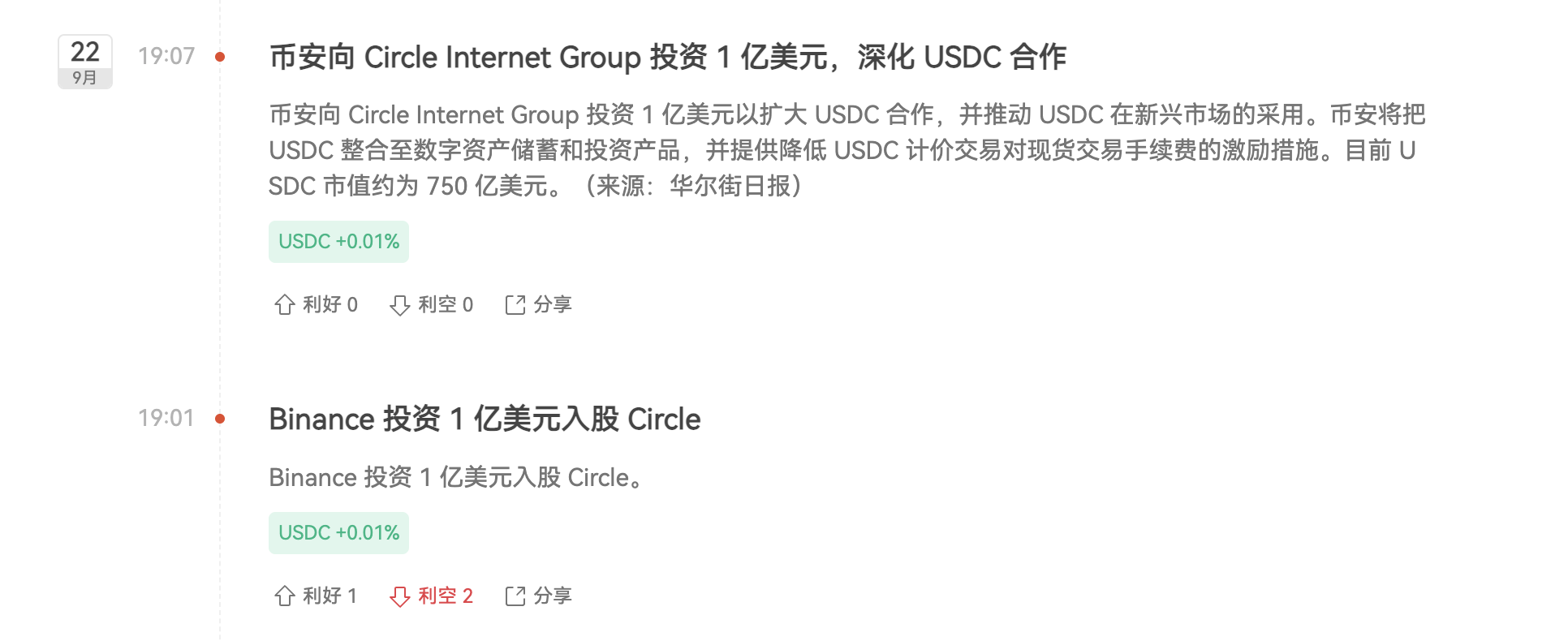
On the same day, the two parties also announced a new five-year business cooperation agreement.
Why would a leading global crypto platform be willing to invest 100 million USD in a company that issues USDC?
If viewed merely as a regular equity investment, it's easy to oversimplify this news.
Because behind this 100 million USD lies something that many crypto users come into contact with every day:
USDC
You may have seen USDC on the trading pages of BTC and ETH, but what exactly is it? Why is it worth Binance spending 100 million USD to invest in its issuer?
More importantly, what does this have to do with the average user?
These questions deserve to be understood together.
What exactly does Circle do?
Circle's most famous product is USDC.
USDC is a stablecoin aimed at keeping the value of 1 USDC close to 1 USD.
You can simply understand it as: a way to bring USD-valued assets onto the blockchain.
So on trading platforms, you will often see:
- BTC/USDC
- ETH/USDC
Users can also temporarily hold USDC in their accounts or use it for on-chain transfers.
Of course, USDC is not equivalent to 1 USD in a bank account, nor is it a completely risk-free cash alternative; it still involves risks related to the issuer, reserves, regulation, and market liquidity.
But in the crypto market, it has become a very common tool for trading and capital flow.
This explains why Binance's apparent focus is on a single company, but what they're really looking at may be how many users and use cases USDC can cover in the future.
How exactly did Binance invest this 100 million USD?
This transaction itself is not complex.
On September 17, Circle issued common stocks to Binance, and Binance officially invested 100 million USD in Circle. These stocks have a transfer restriction of up to two years, and Binance retains corresponding shareholder voting rights.
If you only see it from this perspective, it is merely a strategic investment.
But what is truly worth noting is that the two parties simultaneously signed a new five-year business cooperation agreement.
This means that this cooperation is not just "Binance buying stocks in Circle for 100 million USD", but rather a combination of "equity investment + USDC promotion + long-term business cooperation".
This is the real reason to pay attention to this transaction.
In this five-year cooperation, what is being truly connected?
According to the information released by both parties, over the next five years, Binance will further promote and integrate USDC on its platform, focusing on expanding into emerging markets. Circle will continue to provide the relevant infrastructure.
Additionally, the agreement includes a critical arrangement: Circle will pay Binance monthly incentives based on the relevant scale of USDC.
This means that the interests of both parties do not just remain at the level of "holding shares".
If the scale of USDC usage on Binance expands, the related business cooperation will also change accordingly.
Simply put: Circle is responsible for USDC and related infrastructure, Binance has a large user base and trading scenarios, and USDC connects both sides.
Moreover, this is not the first collaboration between the two. In 2024 and 2025, Binance and Circle already initiated cooperation around the promotion of USDC. This five-year agreement looks more like an extension and deepening of the original cooperation.
Therefore, instead of focusing solely on the figure of "100 million USD," it is better to keep observing:
How much usage scale can USDC achieve on Binance in the next five years.
Why are stablecoins becoming increasingly important?
Many newcomers, when first entering the crypto market, focus their attention on BTC, ETH, and various popular tokens.
However, once they start trading, it's hard to avoid stablecoins.
When buying BTC or ETH, stablecoins can be used; when one doesn't want to bear the price volatility of cryptocurrencies, they may exchange back to stablecoins; on-chain transfers and capital settlements often involve stablecoins as well.
Thus, they serve more like a USD channel in the crypto market.
This is also why Binance and Circle's cooperation is noteworthy.
If in the future, USDC can enter more trading, payment, and settlement scenarios, its significance would extend beyond just being a currency on a trading page, especially in the emerging markets mentioned by both parties.
What are the differences between USDC and USDT?
Newcomers often confuse these two.
Simply remember: USDT is issued by Tether, USDC is issued by Circle.
Both are USD stablecoins, but their issuers, reserve arrangements, regulatory pathways, and business strategies are not entirely the same.
Currently, USDT still holds a larger market scale.
Therefore, Binance's investment in Circle should not be simply understood as: "USDC is going to replace USDT."
What is more worth observing is: Whether USDC can leverage Binance's users and trading scenarios to further expand its usage scale.
Especially in emerging markets and potential future payment and settlement scenarios.
So what does this have to do with regular newcomers?
It's actually quite straightforward.
If you have only looked at BTC and ETH in the past without really using stablecoins, then USDC is a relatively easy entry point.
You don't have to study complex products like contracts or leverage from the start.
First, get the basic process down:
Register → KYC → Security Settings → Deposit → Buy USDC → View Assets
After completing the operation once, understanding BTC, ETH, stablecoins, and spot trading will become much more intuitive.
Step One: Register a Binance Account
If you don't have a Binance account yet, you can complete the registration through the referral link.
👉 Binance registration link:
https://jump.do/zh-Hans/xlink-proxy?id=3
(Referral Code: aicoin668, enjoy 10% commission return)
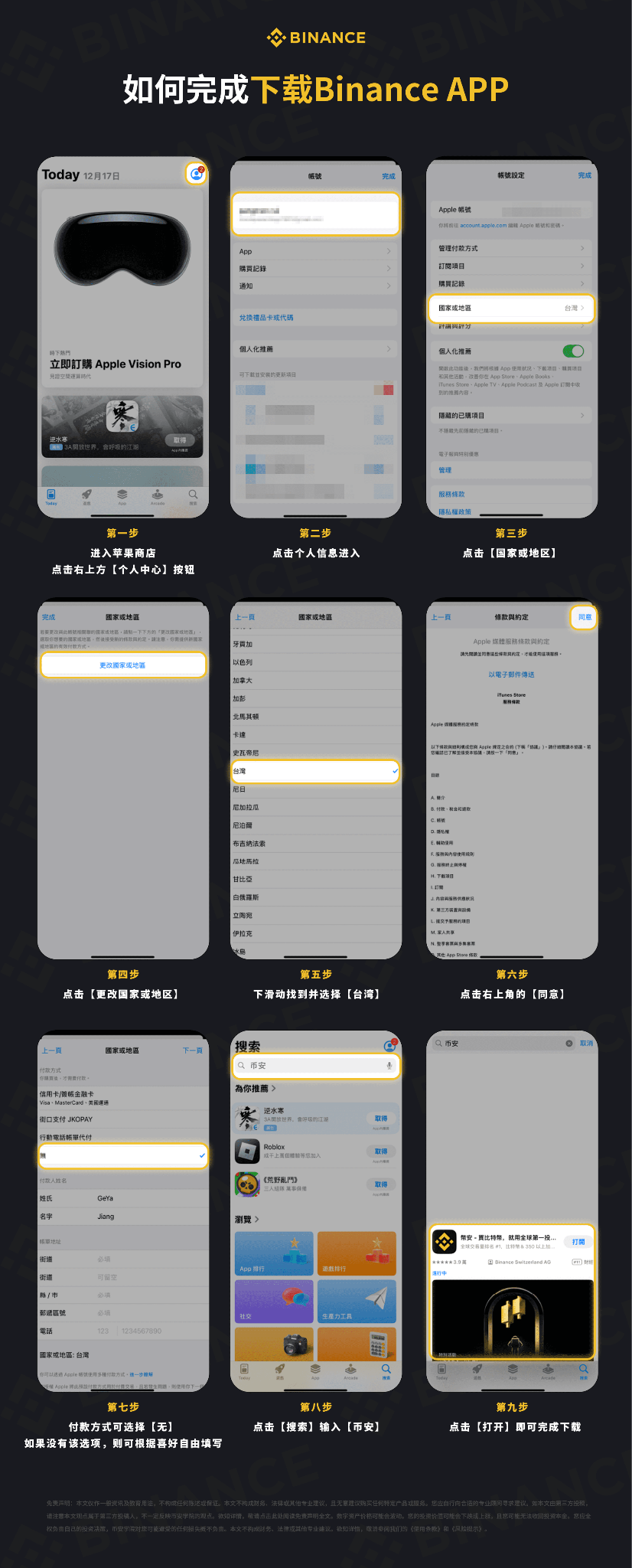
After registration, download the Binance app.
There is no rush to invest money on your first operation; just complete the account registration and basic settings.
Step Two: Complete KYC
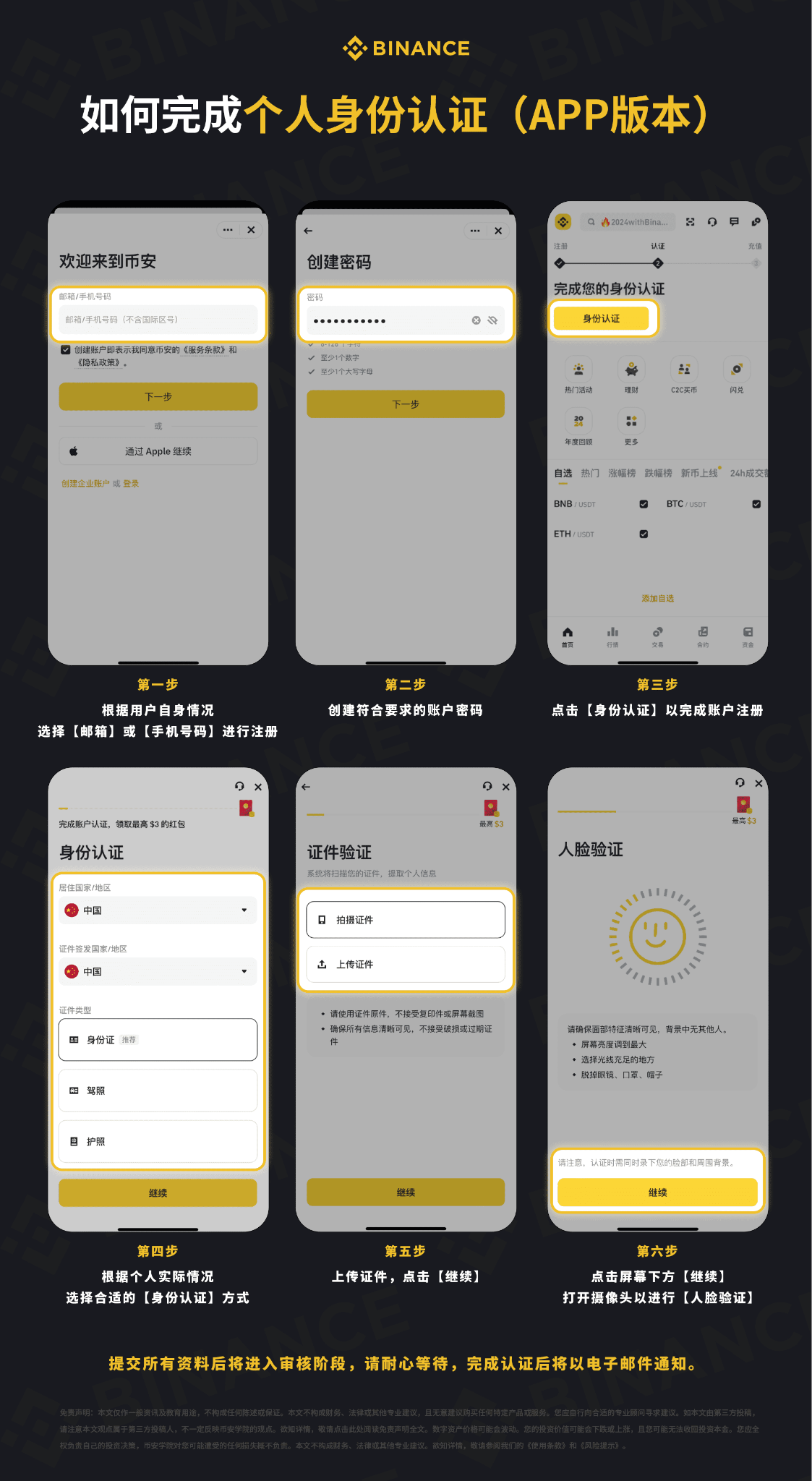
Log into the newly registered account, follow the prompts in the app to complete identity verification, which is KYC.
This is a fundamental step for later use of deposit, trading, and other functions. Just follow the prompts on the page.
Step Three: Set Up Account Security First
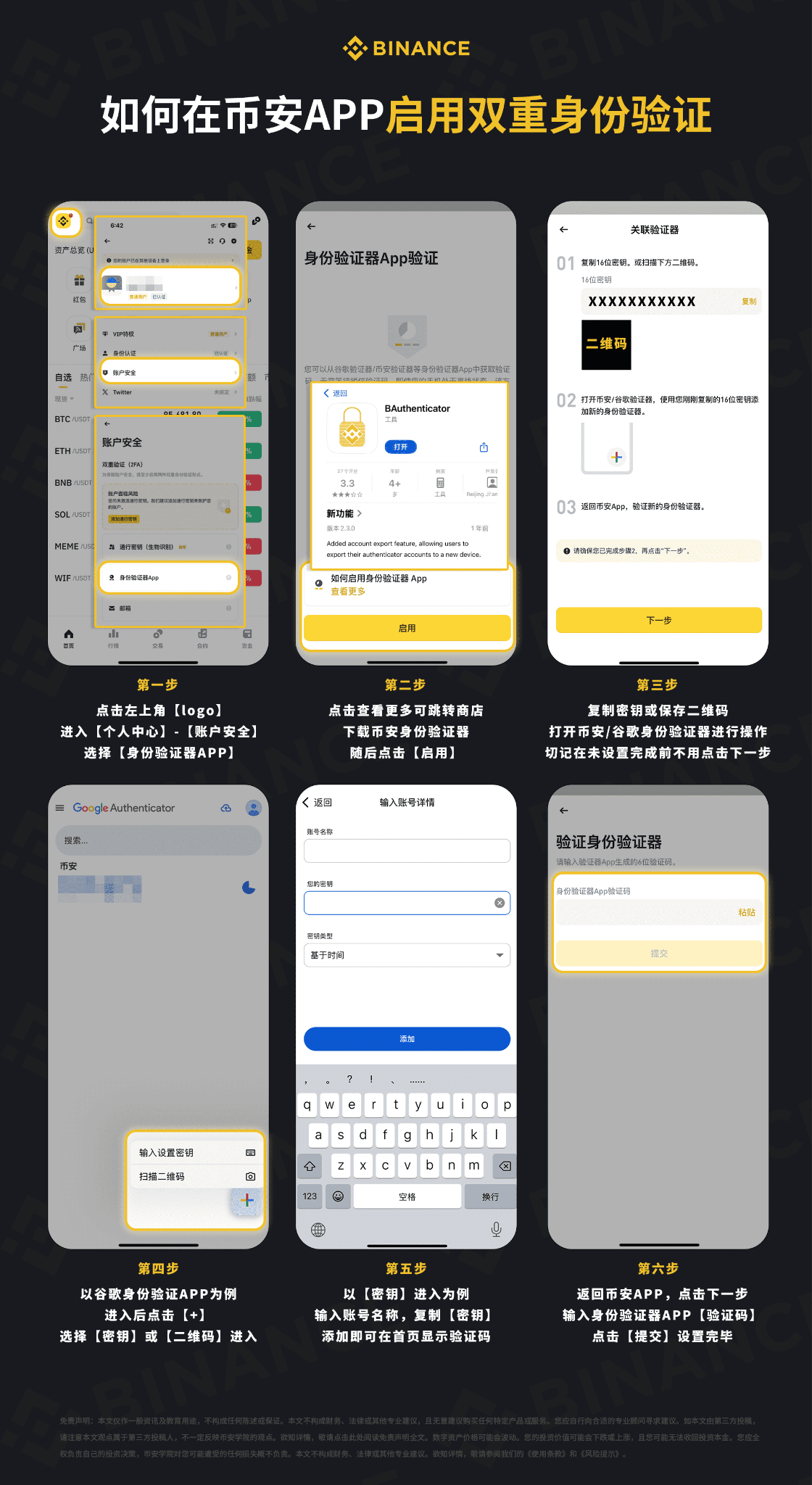
After KYC is completed, it's advisable to check the account security settings first.
For example, enable Two-Factor Authentication (2FA) and configure other security verification methods based on your situation.
If you plan to hold assets in your account in the future, this step should not be skipped.
First, protect the account, then consider how much capital to hold.
Step Four: Understand How to Use USDC
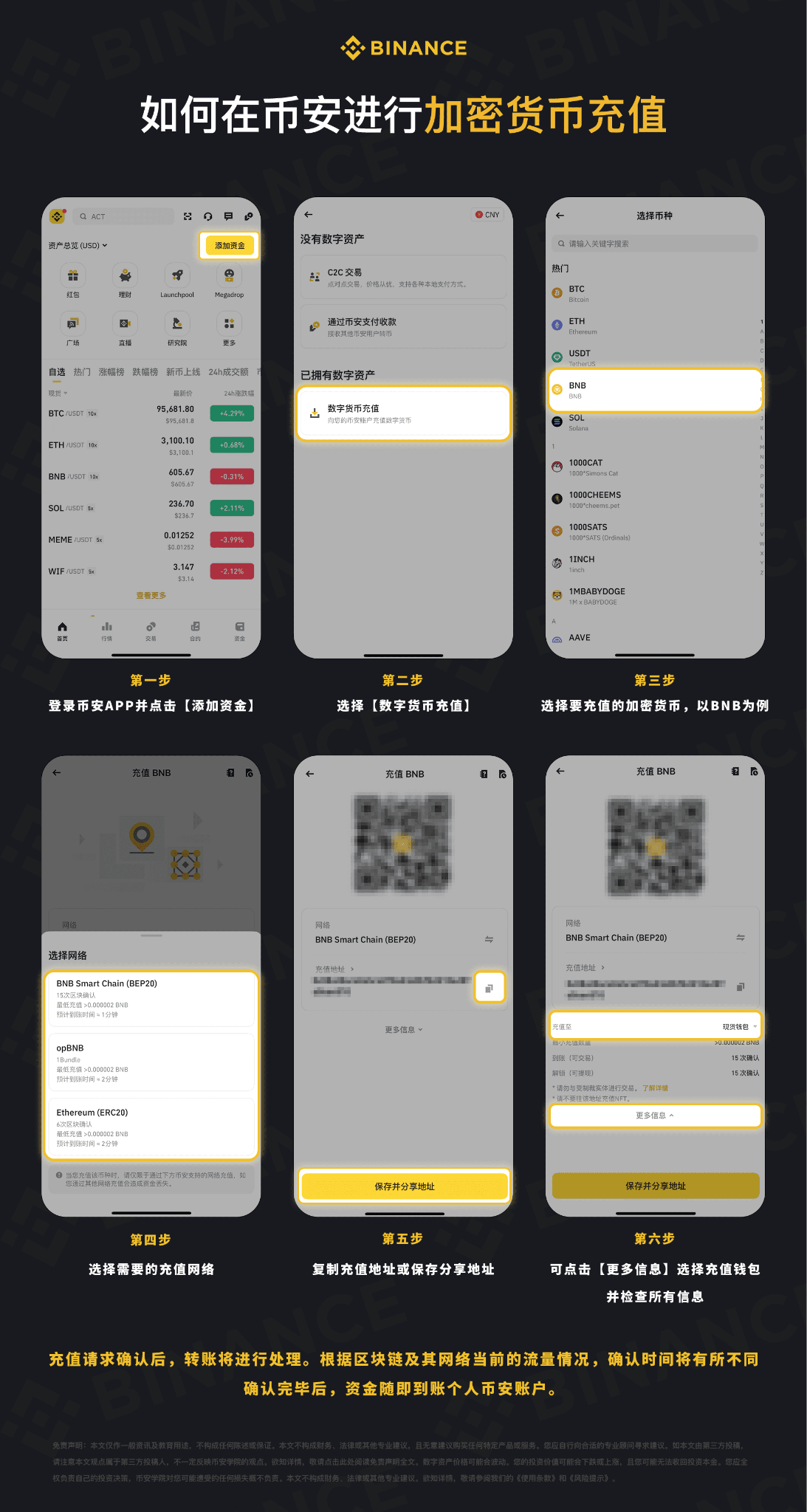
Once the account is set up, you can enter the deposit or trading-related pages to learn how stablecoins enter the account.
If you are planning to try purchasing, start with an amount that you can afford.
After buying, you will see the USDC balance on the asset page and can further learn about the spot trading between USDC and BTC or ETH.
No need to aim for a large amount on the first operation.
The key is to understand: Deposit → Buy → View Assets → Use USDC
Going through this process will make understanding concepts like stablecoins and spot trading much clearer.
After registration, how to view the market?
Now that you have an account and know how to use USDC, the next practical question newcomers typically encounter is:
How do you view the daily market trends, funds, and changes?
If you usually pay attention to mainstream coins like BTC and ETH, you can use AiCoin in conjunction.
Binance focuses more on completing account, asset, and trading operations, while AiCoin can be used to check market trends, fund flows, on-chain data, major orders, and market updates.
Simply put: Binance solves "how to operate," and AiCoin helps you understand "what is happening now."
This way, you will have more complete information when viewing market trends and making trades.
Moreover, recently, new registered users have a little benefit:
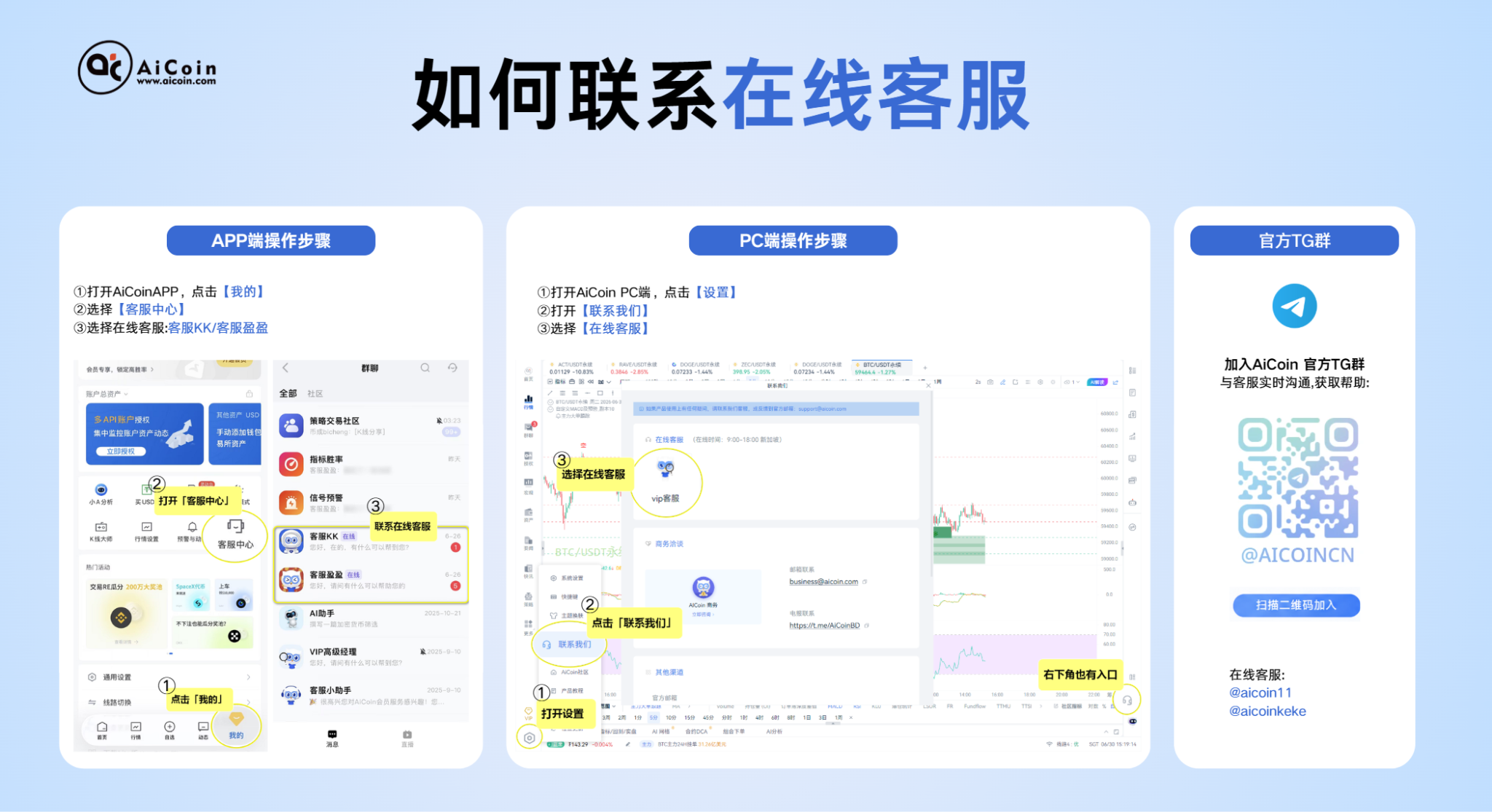
After registration, contact customer service to receive a 3-day trial for AiCoin membership features.
If you want to experience advanced functions regarding market trends and funds, you can register and then contact AiCoin customer service to register; the specific eligibility conditions will be determined by customer service during the actual registration.
What else can you do with USDC or USDT without trading for now?
If you already hold USDC or USDT but have no trading plans in the near future, you can also look into Binance's wealth management products.
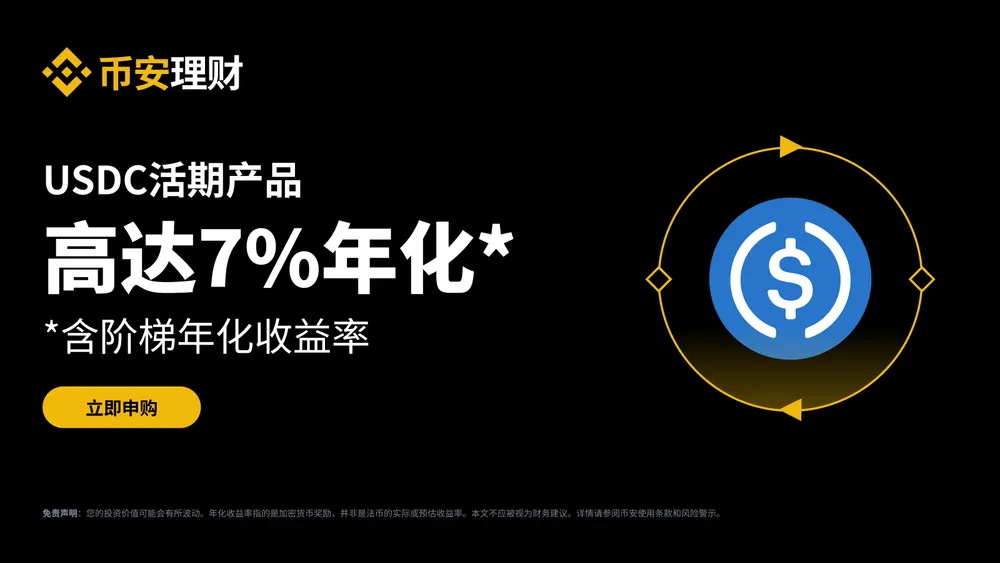
Currently, in the September USDC flexible product activity, eligible users can earn up to 7% annualized yield, with the activity ending on October 1, 2026, at 07:59 (UTC+8). Specific yield rates, amounts, and participation conditions are subject to the current product page.
The operation path is straightforward:
Enter the APP, click 【Assets】 → Choose 【Wealth Management】 → 【Subscribe】 → Find USDC or USDT → View current APR and product rules
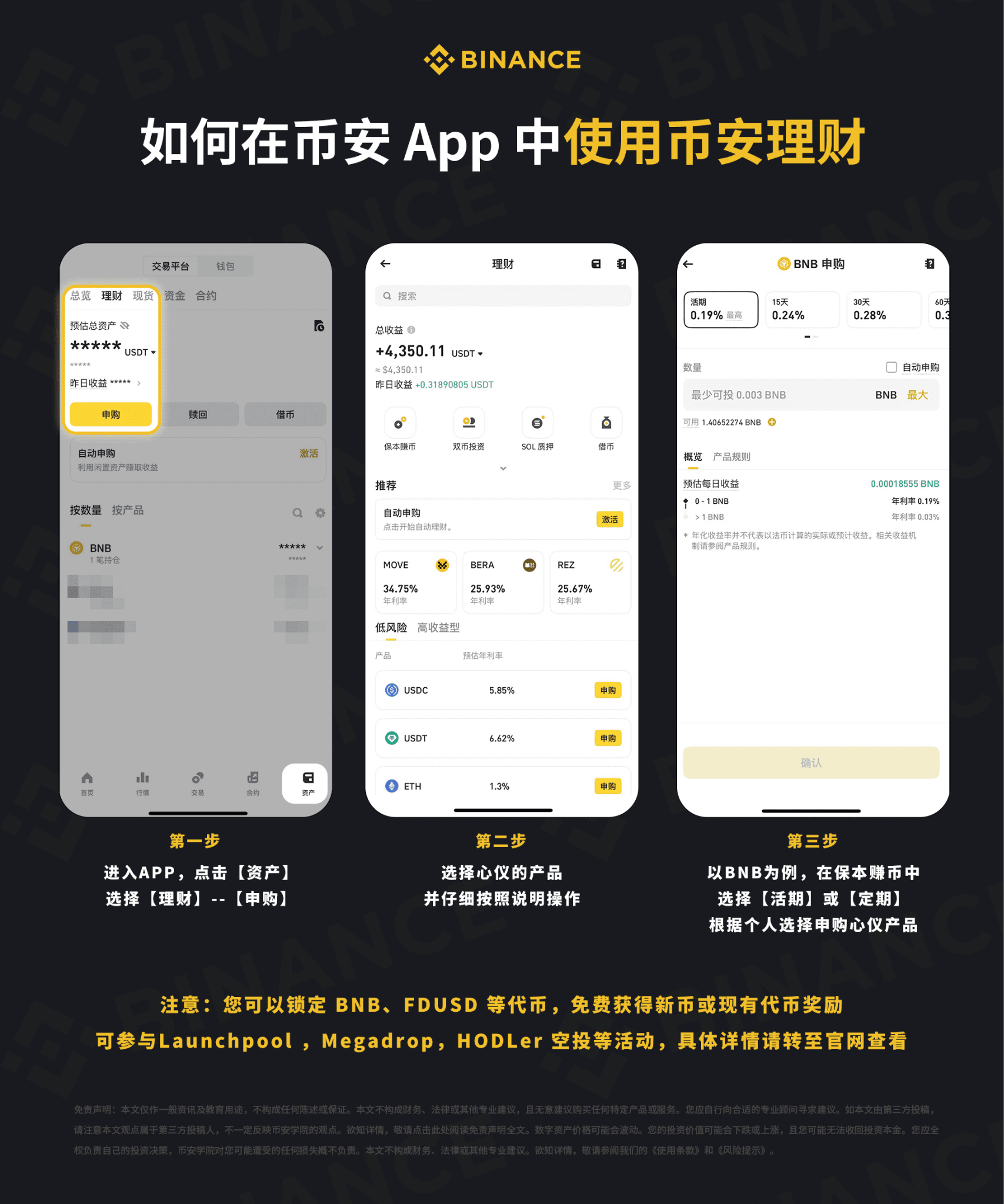
It is important to note that 7% is the maximum APR for eligible users during the activity period, not a long-term fixed income, and should not be understood as a risk-free return.
Yield rates, amounts, activity durations, and eligibility may change, so clarify the product rules before use.
Looking back at this 100 million USD
Looking back at this transaction, the 100 million USD is just the beginning.
Binance is investing 100 million USD in Circle while simultaneously signing a five-year business collaboration. Circle continues to manage USDC and related infrastructure, while Binance provides users and trading scenarios, and both parties have linked the USDC scale to commercial incentives.
In this light, what both parties truly want to accomplish becomes much clearer:
To place USDC into more user, trading, and capital flow scenarios.
Thus, what will be truly worth paying attention to next is the usage volume of USDC on Binance, the user growth in emerging markets, and whether it can enter more payment and settlement scenarios.
These changes will gradually inform the market of whether this 100 million USD investment is worthwhile.
For those who are new to the crypto market, there is no need to study a bunch of complex products right away.
First, understand what BTC is, what the differences are between USDT and USDC, and then go through the processes of registration, deposit, and purchasing coins.
👉 Binance registration link:
https://jump.do/zh-Hans/xlink-proxy?id=3
(Referral Code: aicoin668, enjoy 10% commission return)
First, clarify the most basic concepts, and then understanding the market will be easier.
Join our community, let's discuss and become stronger together!
Official Telegram community:
AiCoin Chinese Twitter:
Binance benefits group:
https://www.aicoin.com/link/chat?cid=gmLgwvKD1
Risk Disclaimer: Digital asset prices are highly volatile, and stablecoins also carry risks related to the issuer, reserves, market, regulation, and platform. The yield rates, amounts, availability, redemption rules, and eligibility for profit-making products may change over time and by region, subject to confirmation by Binance's official page and product rules. This article is for information sharing only and does not constitute investment advice.
免责声明:本文章仅代表作者个人观点,不代表本平台的立场和观点。本文章仅供信息分享,不构成对任何人的任何投资建议。用户与作者之间的任何争议,与本平台无关。如网页中刊载的文章或图片涉及侵权,请提供相关的权利证明和身份证明发送邮件到support@aicoin.com,本平台相关工作人员将会进行核查。