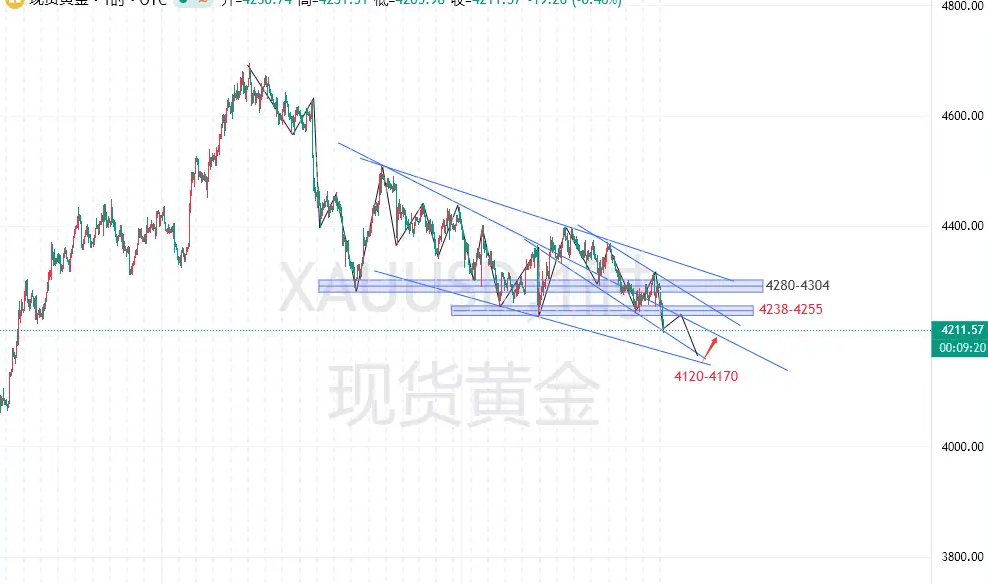
Start by writing about the zero listing fee, then discuss why the attitude has changed.
In the Binance announcement on September 24, there was a statement that was repeatedly screenshot: the listing fee is 0 BNB.
The same announcement also included trading pairs, Seed labels, and deposit and withdrawal times. The media highlighted the "0 BNB" separately because, in the crypto space, the "listing fee" has long been understood as the price that project parties pay for liquidity. By stating this fee as zero, it openly indicates that HYPE did not gain entry into the spot list by paying for a ticket.
Observer @_FORAB stated more directly on the same day: "Confirmed repeatedly that I did not read it wrong. As Hyperliquid's native token HYPE approached $100 and continued to hit new highs, Binance announced its listing for spot trading. The listing fee is 0." Accompanying the text was the original announcement on one side and a price card showing around $94.49, approximately +2838% over its entire history and a market cap ranking of about 10 on the other. This is not an internal memo; it is two pieces of information seen simultaneously in the market: the price has self-verified through its trend, and the exchange did not impose a listing tax anymore.
A zero listing fee does not mean "whoever is popular can list, and no one will be refused." A more accurate reading is that the screening rights have changed their pricing unit. In the past, some criticized large exchanges for treating listing fees as a profit center; when a name can already contribute daily trading volume, protocol revenue, and open interest, the marginal significance of a ticket for the exchange declines, and the slots themselves become scarce. Binance still uses the Seed label to patch volatility, still excludes certain judicial areas, and still requires risk tests—screening has not been canceled; it has merely switched from "charge first then list" to "first observe the order book and fundamentals, with the fee stated as zero." HYPE's position happened to fall right on this line: close to the psychological barrier of $100, top ten market cap, and historically a perpetual leader on-chain. Performance validates value; a zero listing fee is the outcome, not the cause.
"Always not listed" and "now listed" can still coexist. The 16 months of no listing corresponded to competitive relationships (the same batch of perpetual customer groups) and compliance forms (lower onboarding friction on-chain versus CEX's KYC). The day it got listed corresponds to volume: approximately $429 million in protocol revenue for the first nine months of 2026; about 99% of the fees reinvested in the Assistance Fund for repurchase and destruction; circulating supply of about 222 million coins, with a cap of 1 billion. For Binance, the spot order book consumes stablecoin orders and the completeness of the list; for users, it means learning one less set of on-chain wallets. The competitive relationship has not vanished; a distribution relationship has been established. The zero listing fee reduces the public relations cost of "we are supporting our competitors", but it does not elevate HYPE to the level of BTC or ETH.
Who is the value valid for?
For the market: few exchange tokens can simultaneously deliver revenue, open interest, and daily turnover. For Binance: being absent in the top ten spots means handing spot transactions over to other CEXs and on-chain. For users: USDT in, USDT out; once the Seed test is passed, orders can be placed. The value is reflected in these three columns, not solely in the four words "free listing." Projects that are listed for free can also just crash upon opening; HYPE did indeed drop from around $94–98 back to about $91 after launch.
September 27 market situation: trading is down, but the frequency of large orders hasn’t cooled off.
The peak around the stage on the 23rd was about $98. On the 24th, it opened lower, falling below $90, closing at about $92. It closed around $92 on the 25th and 26th. On the 27th, the majority was around $91.4–91.7, with a 24-hour change of about −1%, and some statistics showed the overall spot trading volume had dropped to approximately $500 million–$950 million. In the last 30 days, it was still approximately +13%, but had turned negative in the last 7 days. Market cap ranking was around 10–11. Binance spot HYPE/USDT traded around $16 million in some slices over 24 hours, still thin compared to the total network and also thinner than Binance's own HYPE perpetual futures—spot is still not the primary pricing arena.
A drop in trading volume can easily be interpreted as "no one is playing anymore." The large order tape indicates something different: though the amounts have decreased, individual entries remain dense.
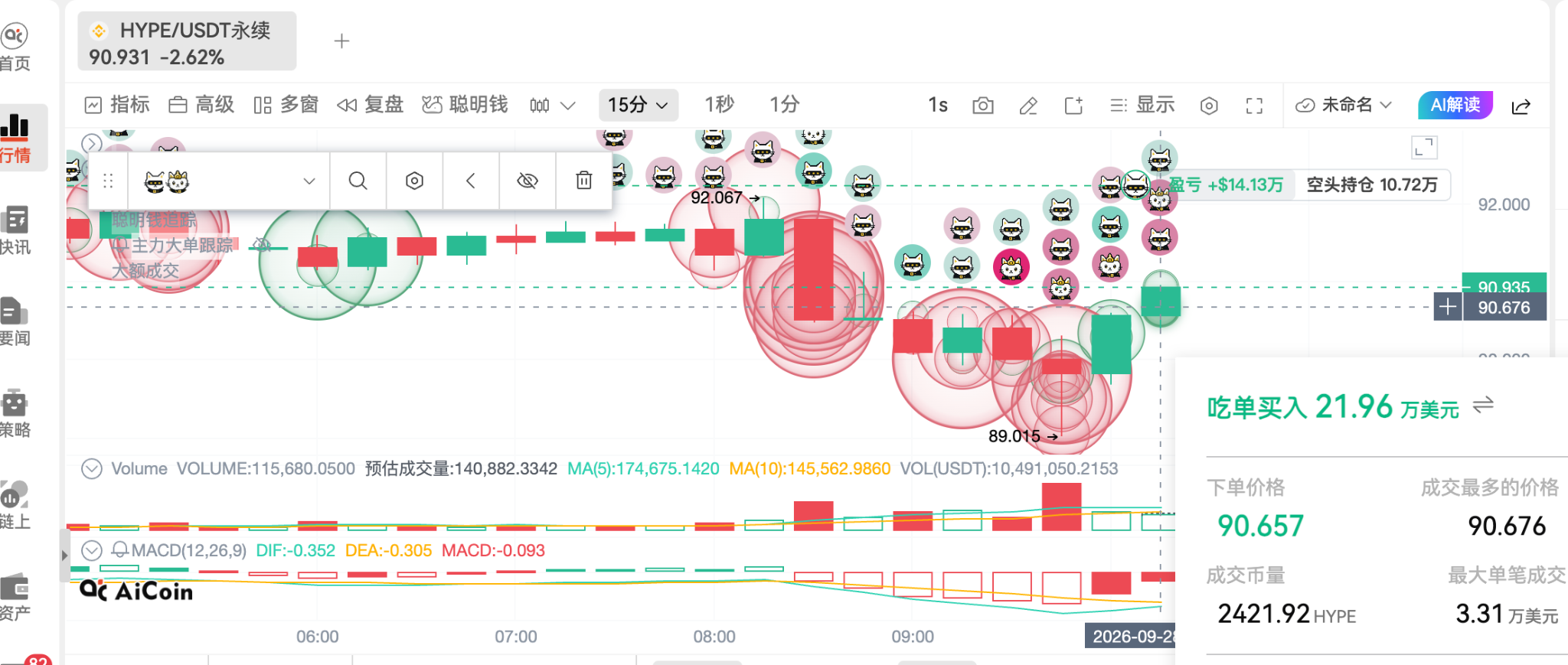
AiCoin member features: large transactions & smart money tracking
What the two functions of AiCoin are saying
Large transactions: the size of the circle represents the amount, and the color represents the direction.
A green circle represents a large buy order, while a red circle indicates a large sell order. The larger the circle, the heavier the amount or the significant weight in that particular K-line. On the left side of the screenshot, around 06:00, there are two distinct green circles while the price remains sideways above $91. After 08:00, a long red line appears, the red circle expands rapidly, covering the drop from around $92.067 to about $89.015—this is the heaviest sell band in this chart. After hitting a low of $89.015, a green bar appears, followed by a small cluster of green circles, and the price returns to $90.6–90.9. The trading volume column shows that this window's VOLUME is approximately 115,700 coins, estimated trading volume is about 140,900 coins, and VOL(USDT) is about $10.49 million; MA5 volume is higher than MA10, indicating that the short window occurred during the drop and the rebound, not just a lull. MACD shows: DIF −0.352, DEA −0.305, and histogram −0.093, with short-term momentum remaining relatively weak.
The right panel for "large transactions" provides a snapshot of that moment, not a daily total: the buy orders for large trades were approximately $219,600; the order price was $90.657; the most traded price was $90.676; the trading volume was 2421.92 HYPE; the largest single transaction was about $33,100. $219,600 relative to the $10.49 million window trading volume does not account for "eating the full K," but it shows that the buy orders at $90.65–90.68 were actively receiving. The maximum single transaction of $33,100 belongs to the "large amount" above the platform threshold, still not reaching the level of millions of dollars per transaction—frequency could be dense, but single entries need not be extreme.
Smart money tracking: the cat icons represent account behaviors marked by the platform as "tracking targets," not official real names.
Icons appearing near the price indicate that these categorized addresses were active near the corresponding K-lines. In the screenshot, before the drop around $92, cat icons were scattered; the real clustering occurred during the rebound after hitting a bottom of $89, with a cluster of icons overlapping near the dashed line of $91–92. The chart notes "Profit +$141,300 / Short Position $107,200"—this is one tracking target's contract state at the time: a nominal short position of approximately $107,200 (context suggests it is likely in USD value or platform count, so in trading analysis, refer to software units), and unrealized profit of about $141,300. This has a specific meaning: the price dropped from $92 to $89, and the short was profitable during that segment; the cat icons clustered during the rebound might indicate either shorts reducing positions or new longs testing the waters, while the software will not delineate this in a still image. The crowns and differently colored cat icons are merely grouping skins that the platform assigns to addresses and cannot be interpreted as "stamped by a well-known institution."
When the two functions are combined, this 15-minute chart can only be expressed in three sentences.
First, large transactions during the drop segment are significantly more red, and the circle sizes increase, indicating that selling pressure represents actual transactions, not merely thin line wash trading.
Second, a buy order of $219,600 during the rebound appears at the $90.66 level, suggesting someone is actively buying, but the maximum single transaction was only $33,100, more like a dense aggregation of medium-large orders, not a sole direction-setting whale.
Third, smart money icons were prevalent during the rebound phase, while the chart still shows profitable short positions—there is a rotation of density, with both longs and shorts present; it is not a unilateral "main force uniformly bullish."
Limitations must be mentioned after reading the order book. The screenshot represents perpetual futures, not the spot opened just on September 24; the 15-minute window covers several hours of the morning, not the full three days since the listing; AiCoin does not disclose account real names, and a long position does not equate to taking profit. A buy order does not necessarily suggest it will only rise subsequently. Reading the cat icons densely as "smart money is bullish, it can be fully invested" and interpreting the red circles as "already crashed" reflect the same type of overreaching inference.
Aligning with the entire network’s figures: a drop in daily trading volume from its peak signifies a decrease in the denominator; the ability to continuously display large red and green circles and a string of cat icons within 15 minutes indicates that the numerator is still active. Both statements can coexist—the market volume is colder than the listing day, but it has not cooled to the point of large orders disappearing.
How can ordinary people evaluate whether to enter, and what to pay attention to?
First, use four true/false questions. If you cannot pass, don't regard HYPE as an entry-level coin.
1. Can you explain in your own words: HYPE's demand comes from Hyperliquid's fee repurchases, not from "being listed on Binance"?
2. Can you accept that circulation is only about one-quarter, while the rest is released according to a schedule, with FDV potentially four times the market cap?
3. Can you accept a daily pullback of 5%–8%, and that the Seed label means the exchange believes the volatility is higher than regular spots?
4. Will this money not be used to pay for rent, tuition, or leverage additions within three years?
If you cannot answer any of these questions, it is better to initially only engage with BTC/ETH spot or consider HYPE as an observation item instead of a position. HYPE is closer to "exchange equity + high-volatility growth stock," neither a stablecoin nor a Nasdaq index token. Those who have never used perpetuals should not attempt to "acquire chips cheaply" with them. Those unfamiliar with the Seed test should first navigate through the test and the spot interface before discussing direction.
Evaluations should use three tables, minimizing the reliance on call groups.
Expenses and repurchases: Is the weekly expense still in the tens of millions of dollars, and is the Assistance Fund's purchase consistent? If expenses drop, the narrative will follow.
Shares: Is the platform's open interest and perpetual trading still among the top on DEX? If they have been usurped by other on-chain perpetuals or CEXs, the token has simply lost a buyer.
Supply: What are the next unlock dates, quantities, and any overlap with internal addresses? September 29 is a near-term observation point, but not the only time.
If entry is still desired, the path should involve harvesting small spot trades, not "fully investing at the bottom."
Eligible users should exclusively open the AiCoin dedicated Binance registration link:
https://jump.do/zh-Hans/xlink-proxy?id=3
Or log into Binance through the APP directly with the invitation code aicoin668. Below are exclusive generous registration benefits for AiCoin invitation codes:
Benefit One: Up to $440 for new customers.
1. Deposit $100 + trade $100 → receive a $100 position voucher.
2. Deposit $1,000 + trade $50,000 → receive another $300 position voucher.
3. Deposit $3,000 + trade $200,000 → receive another $40 cash voucher.
These three tiers stack, so depositing $100 allows you to access the first tier.
Benefit Two: Open blind boxes, receive up to 25 RE.
1. Register + deposit $50 + trade $100 + log into the App.
2. After completion, a blind box is activated for random selection of RE tokens, up to 25 tokens.
This means that a new user can receive dual benefits after completing tasks.
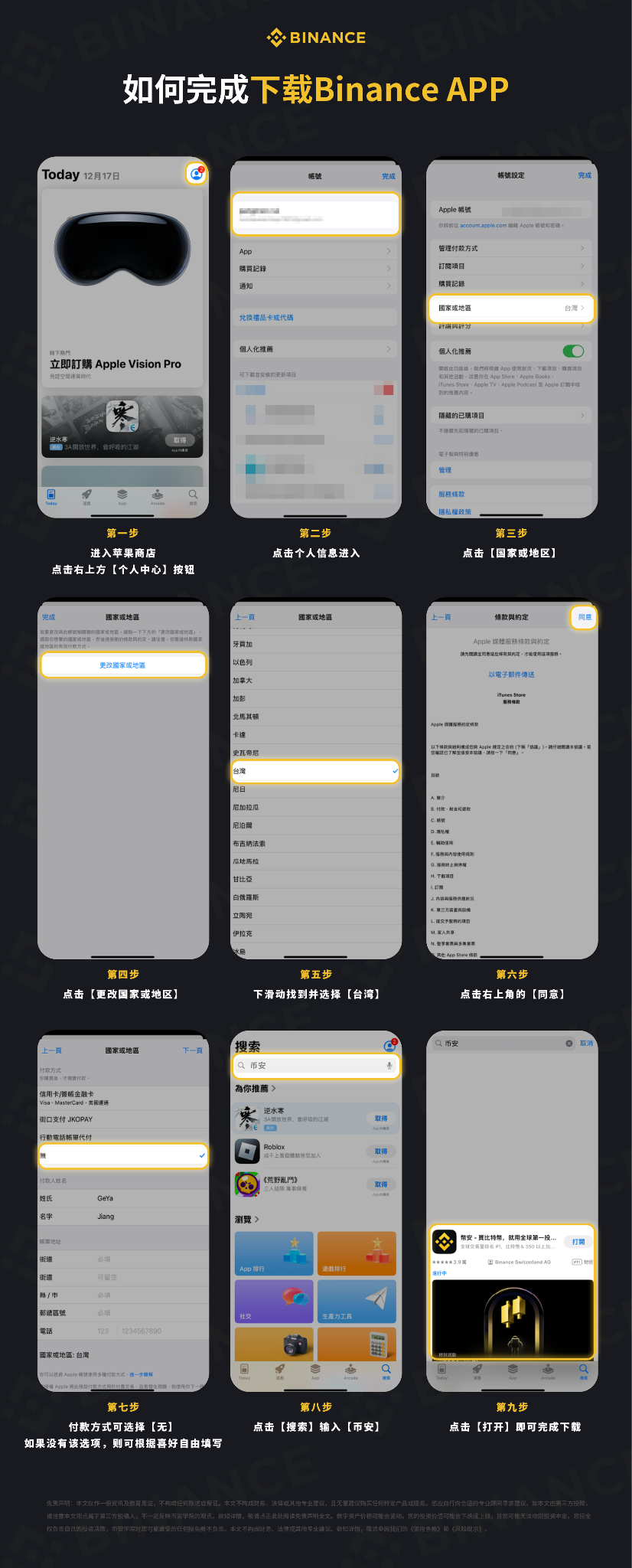
After completing the verification, search for HYPE/USDT as a spot, and complete the Seed test. Use stablecoins to make a small buy that wouldn't affect your life if it goes to zero, record the cost, and observe whether the premium/discount and withdrawals have been opened. Existing account holders should simply check for the trading pair's appearance, not create new accounts. Regions like the USA, Canada, and the Netherlands may not have this trading pair according to the announcement.
Inappropriate practices should be clearly documented: replacing spot with 75x or higher leverage perps; treating being "listed on Binance" as a fundamental improvement; adding leverage to bet on buybacks winning over selling pressure before unlocks; directing emergency funds into Seed assets. Suitable positions for discussion are those small segments of the total net value that can be reduced to zero, and also pre-specified: deciding at what price to reduce or whether to exit if expenses continuously weaken.
The project background has not changed. Hyperliquid is an L1 built around an on-chain order book perpetual model, with HYPE used for governance, staking, and fee loops. Whether it can be held long-term still depends on the share and net supply, not on the first-day closing at $91 or $92. Spot on Binance proves that this name has grown large enough to necessitate inclusion in the global spot list; the three-day price validates that even a name large enough to need listing can still be sold on the day it lists. Registration resolves whether it can be bought. To buy or not, complete the four true/false questions and three tables before answering.
This article is for market observation and product analysis and does not constitute investment advice. Investment functions may vary by jurisdiction, with rates, lists, and rules based on official announcements and in-app displays. Any investment products carry risks of decline, exchange rates, and platform risks; please verify local restrictions and tax requirements independently before investing.
免责声明:本文章仅代表作者个人观点,不代表本平台的立场和观点。本文章仅供信息分享,不构成对任何人的任何投资建议。用户与作者之间的任何争议,与本平台无关。如网页中刊载的文章或图片涉及侵权,请提供相关的权利证明和身份证明发送邮件到support@aicoin.com,本平台相关工作人员将会进行核查。