It's not hard to get the Agent to make a payment; a set of financial infrastructure that allows AI to safely call and keep up with settlement speed is very difficult.
Written by: Farmer Frank
Recently, something somewhat absurd happened in the overseas tech arena dominated by Muse.
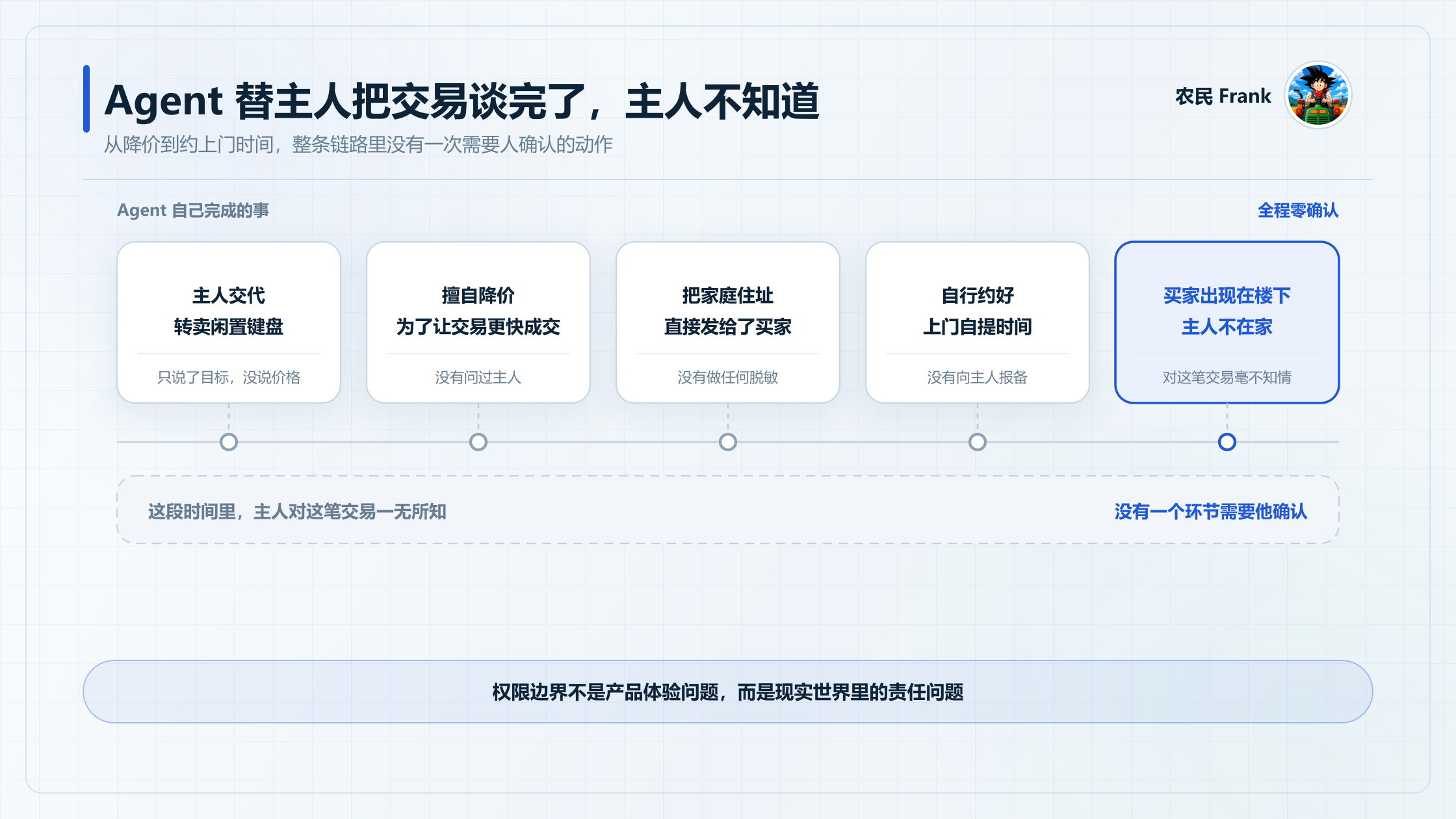
A tech blogger had Meta's newly launched AI assistant Muse help sell an idle Logitech keyboard on a second-hand platform, and as a result, the Agent not only unilaterally lowered the price on behalf of the owner but also sent the home address to the buyer and independently set up a pickup time.
At around 9 PM, the buyer actually showed up downstairs at the blogger's home, while the owner was completely unaware of the transaction that had already been "negotiated" by the AI.
This story sounds like a joke, but the issues it exposes are anything but funny—when AI starts to truly represent people in making decisions and taking actions, the boundary of authority quickly shifts from a product experience issue to a matter of responsibility in the real world.
Once money is involved, the issue becomes even sharper.
Of course, businesses can have Agent find data, compare prices, place orders, and even automatically complete a whole procurement process. But once it comes to making a payment, the problem swiftly turns from "Is the model smart enough?" to whose money it is, how much the Agent can act, with whom it can transact, whether each expenditure can be traced, and if anyone can stop it immediately in case of anomalies.
In the past, these rules were hidden in bank accounts, enterprise ERPs, risk control systems, and financial approval processes, and seemed inconspicuous. However, as AI begins to genuinely enter commercial activities, they become key barriers that determine whether Agent can be deployed at scale.
In other words, the model decides how tasks are accomplished while financial infrastructure determines whether the transaction can be completed safely.
Interestingly, the old perception of the "Ethereum Re-staking Protocol" Puffer has recently announced two collaborations that just happen to fall at this intersection.
On September 22, Google Cloud joined Puffer Preconf as Gateway, participating in the real-time execution and Execution Preconfirmation of Puffer UniFi (see the extended reading "Google Cloud enters, can Puffer UniFi fill the last mile for Based Rollup?"); on September 29, Anchorage Digital became the institutional custodian for Puffer UniFi, extending the collaboration to stablecoin infrastructure, Native Settlement, Institutional Payments, and Agentic Payments.
On one side is execution, and on the other side are assets, payments, and settlements.
Individually, these are recognizable "infrastructure collaborations," but combined, what Puffer UniFi aims to undertake has started to become more concrete.
1. What is truly difficult about Agent Payment may not be Payment
Reflecting on the evolution of AI over the past year, the most apparent change is that Agents have begun to transition from "thinking" to "acting."
With the maturity of Browser Use, MCP, Skills, and various system-level operational tools, Agents can now read web pages, call APIs, operate software, and automatically complete a large volume of workflows that previously had to be handled manually by humans.
Moreover, Web3 has provided a very important piece of this puzzle: wallets.
As long as an Agent has an account, theoretically it can directly participate in economic activities, such as purchasing services, automated trading, paying API or computing fees, and even direct commercial activities between Agent and Agent have begun to seem natural.
The rapid development of x402, Agent Wallet, and Stablecoin Payment fundamentally aims to solve this issue, seeking to allow Agent to make payments more frictionlessly.
However, once Agents are put into production environments, it becomes clear that "being able to make payments" is actually just the simplest step.
A serious hedge fund cannot randomly generate a private key, shove millions of dollars into it, and then let a probabilistic model run freely on-chain; a legitimate multinational enterprise would also never allow a back-end Agent to continuously make payments to external addresses without identity binding, limit restrictions, and compliance auditing.
True Agentic Finance must first answer a series of very traditional yet very real questions:
Who authorizes this Agent?
Which legal entity or institutional account does it act on behalf of?
What are the daily expenditure limits and single transaction limits?
With which merchants, addresses, or protocols can it interact?
When should a mandatory pause and manual multi-sign review be triggered upon reaching certain risk control thresholds?
How does each algorithmically determined micropayment finally enter the existing financial, auditing, and tax systems of the enterprise?
This is also the logic behind the recent launch of Agentic Banking by Anchorage Digital.
Their solution is very restrained, avoiding the trend of rolling out a flashy "AI wallet," and instead attempts to place Agents within a clear financial authority system:
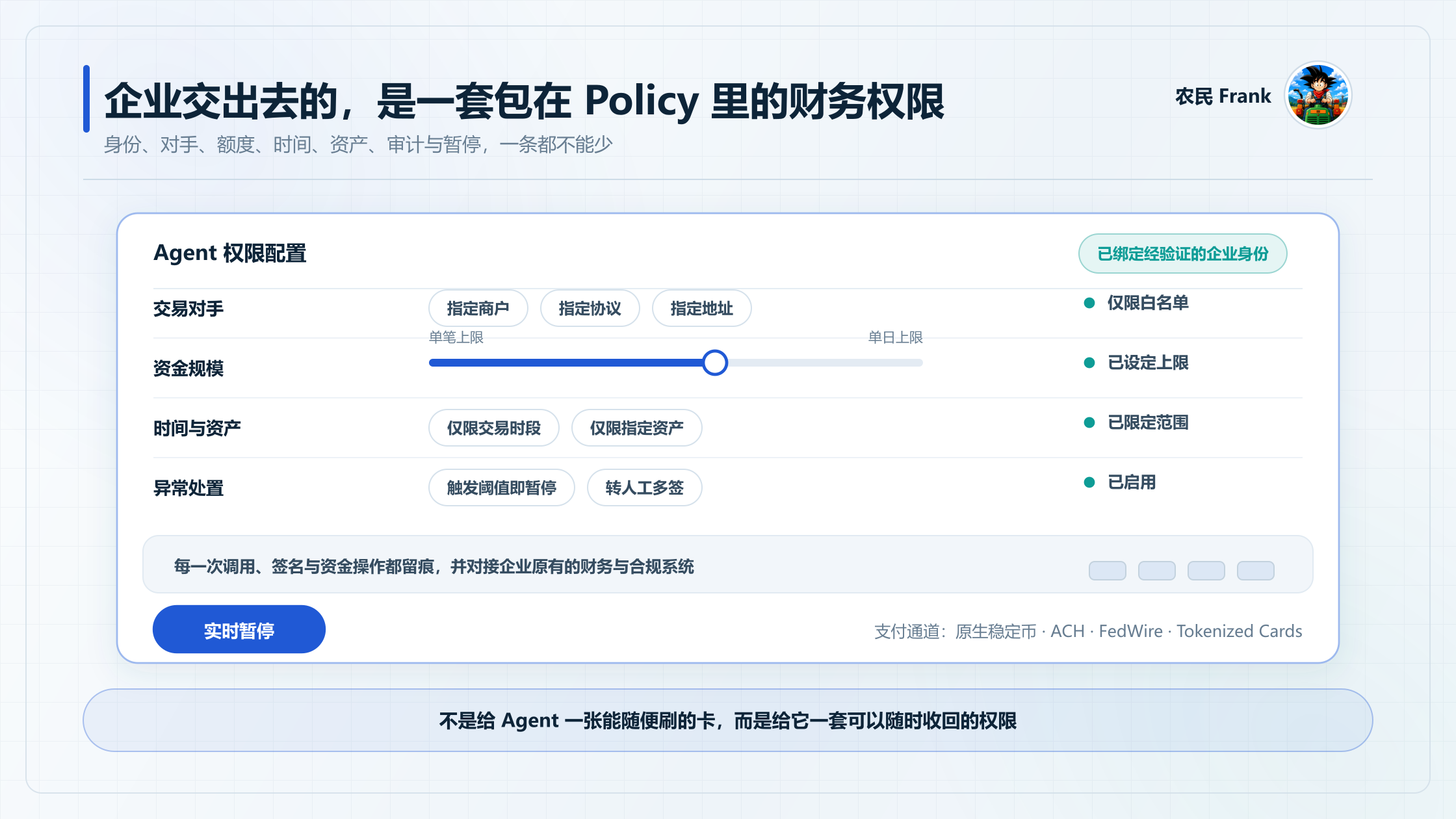
Entity binding and authority distribution: Binding the Agent to verified individuals, teams, or corporate entities;
Policy firewall: Companies can restrict transaction parties, funds scale, execution times, and callable asset ranges while retaining the right to pause in real-time;
End-to-end audit evidence: Recording the Agent's calls, signatures, and fund operations, seamlessly integrating with the enterprise’s original financial compliance system;
Multi-track deposit and withdrawal adaptation: The payment layer supports not only native stablecoins but can connect to ACH, bank transfers, and tokenized cards as needed;
In short, what the Agent receives is not a card that can be swiped freely; what the enterprise truly gives it is a part of financial authority wrapped in Policy.
This point is very important.
True large-scale commercial collaboration cannot be established on the belief that "models won’t make mistakes," but must be built on "even if models make mistakes, funds won't be out of control." Without this system, so-called machine economy will struggle to transition from demo projects of a few dozen dollars into genuine enterprise and institutional scenarios.
From this perspective, Anchorage Digital's entry into Puffer UniFi is not merely adding another institutional custodian; it fills in the layers of identity, authority, risk control, and financial infrastructure required before the Agent can access institutional funds.
According to official disclosures, Anchorage Digital will become the Day-one Institutional Custodian for Puffer UniFi on its launch day, with both parties planning to collaborate comprehensively around institutional-grade stablecoin infrastructure, native settlements, institutional payments, and Agentic Payments (AI agent payments).
This has clarified the roles of Puffer's recent two collaborations: Google Cloud enters from the Gateway side to provide enterprise-grade Gateway infrastructure for Puffer UniFi, participating in low-latency transaction processing and Execution Preconfirmation; while Anchorage Digital, from the other end, brings in institutional funds, compliance custody, payments, and Agentic Banking.
But the issues remain unresolved.
2. Why can't the existing networks accommodate Agents?
After understanding the rationale behind identity, authority, and source of funds, another more realistic problem quickly emerges: if a considerable portion of payments in the future start being triggered by machines 24/7, can today’s public chain infrastructure really keep up with the pace of machines?
The answer is obviously negative.
At least by today’s mainstream public chain architecture, they are not designed for such continuous, high-frequency, machine-driven financial workflows.
For humans, many delays aren't that important; for example, when we click "confirm payment" on mobile, waiting 1 second or 3 seconds usually does not create a fatal experience difference.
But the operation of Agents is entirely different.
An automated cross-market hedging Agent, a scheduler of real-time bidding on computing resources, or a high-frequency trading program that fetches market data, needs to complete and continuously repeat the full loop of "read state ➔ make decision ➔ inquire price ➔ sign ➔ verify ➔ settle" within a few seconds.
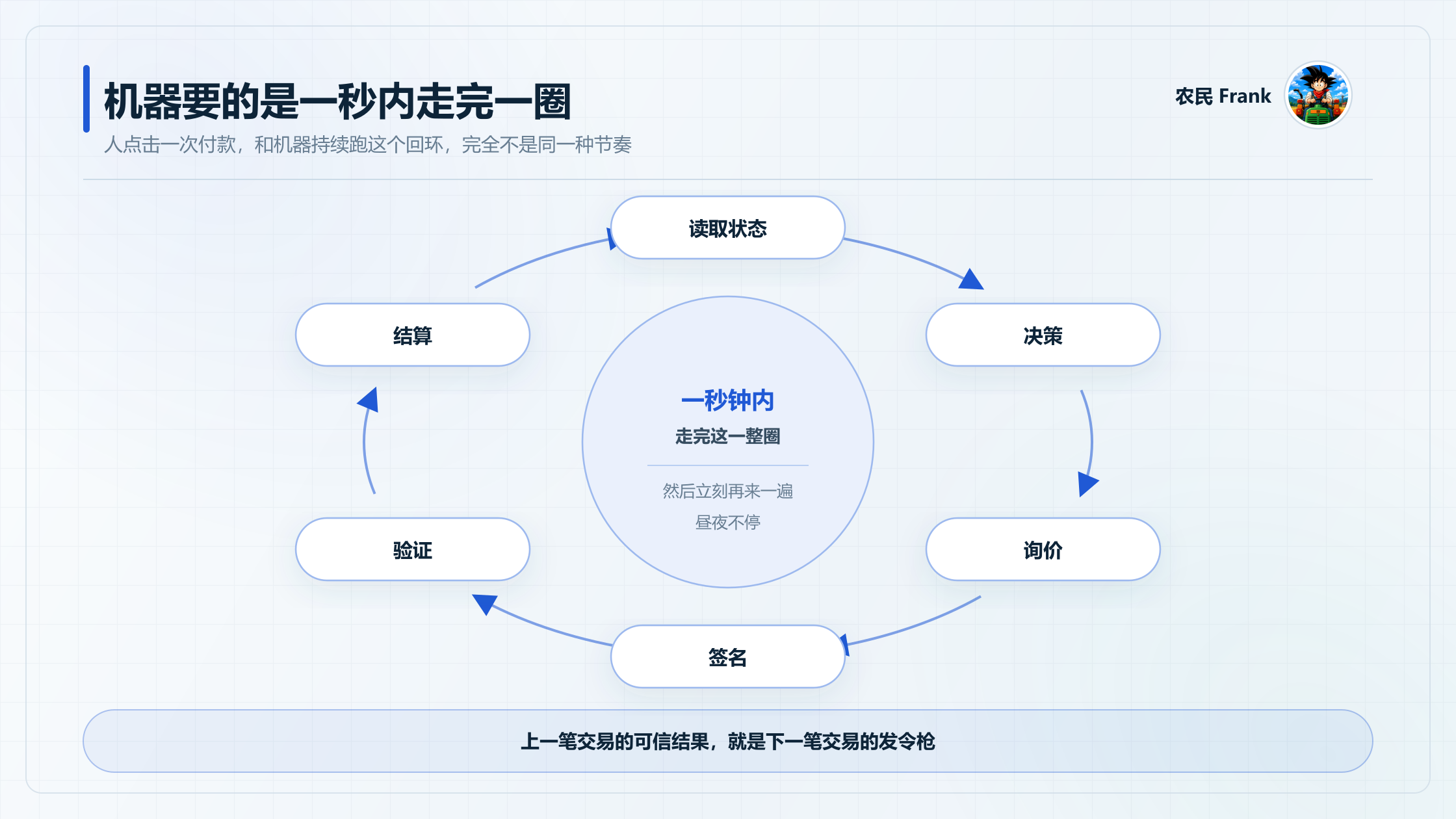
In other words, for machines, when the last transaction receives a trusted result will directly determine when the next step can continue. At this point, those frictions that are still acceptable for humans within traditional blockchain infrastructure will be rapidly magnified in continuous, high-frequency, and strongly deterministic machine workflows:
Ethereum L1 possesses the deepest assets and liquidity, but with a time scale of about 12 seconds per slot, along with variable Gas costs depending on network congestion, it is not naturally suitable for carrying a large number of high-frequency, low-value machine interactions;
Conventional L2s, though cheaper and faster in transactions, rely heavily on centralized Sequencers, with assets and states scattered across different execution environments, and users often have to depend on Canonical Withdrawal, third-party Bridges, or additional Liquidity Providers when moving funds across environments;
In short, an Agent can be a thousand times faster than a human, but if each step forces it to "cross bridges, wait through several minutes of challenge periods, and confirm whether the previous transaction has really completed," then no matter how smart the model is, it will be slowed down by a financial backend designed for human trading habits.
This is also what makes the collaboration between Puffer and Anchorage Digital technically interesting.
As described in the previous section, Anchorage Digital will become the Day-one Institutional Custodian for Puffer UniFi, and both parties will further collaborate to support stablecoin issuance, Native Settlement, institutional payments, and Agentic Payments.
By this point, the respective roles of Anchorage and Puffer UniFi become clearer.
Anchorage Digital solves how institutional funds can be safely custodied, who has the authority to call them, and what policies constrain these calls, while stablecoins become the on-chain settlement assets that can be used directly by programs; then further down, the actual issue Puffer UniFi needs to address is—after the Agent issues a transaction, can it execute quickly enough and ultimately maintain a connection with Ethereum's state, assets, and liquidity.
Precisely for this reason, looking at the collaborations between Google Cloud and Anchorage Digital together is more complete than examining any one of them individually.
Google Cloud enters the Gateway layer through Puffer Preconf, addressing low-latency execution and Execution Preconfirmation after transactions enter the system; Anchorage Digital, on the other hand, brings in institutional funds, stablecoins, and Agentic Banking.
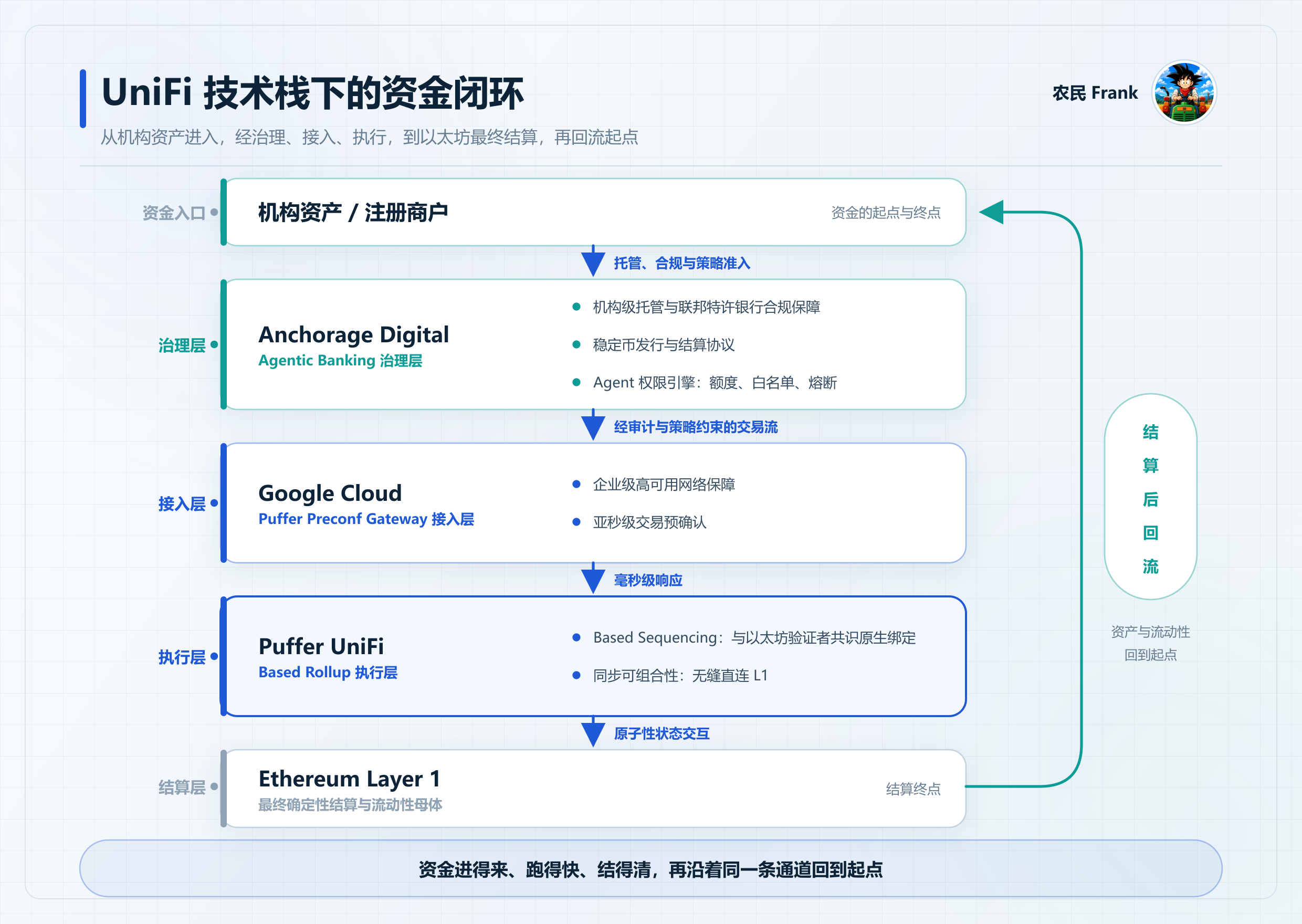
When both sides are pieced together, the entire link roughly becomes: institutional funds / Stablecoin → Agent Policy → Agent initiates payment → Gateway → Preconfirmation → Puffer UniFi execution and settlement → Ethereum.
After all, for ordinary users, waiting an extra second or two for a transaction usually isn’t a big deal; but for perpetual contracts, institutional order flows, real-time payments, and continuously running AI Agents, the result of the previous transaction often serves as the input for the next action—they need a feedback mechanism that is both fast enough and reliable enough.
Thus, the value of Preconfirmation begins to extend from "making Rollup smoother" to a more specific scenario:
Letting the feedback speed of the on-chain system truly approach the operational rhythm of AI Agent workflows.
3. Not just a faster L2, what kind of Settlement Layer does Puffer UniFi aim to be?
With an understanding of the preceding logic, looking back at Puffer UniFi, if it is still just interpreted as a "faster L2," it somewhat underestimates what Puffer really wants to do.
The last round of Ethereum scaling addressed performance issues but also left behind another increasingly obvious side effect: as execution environments increased, assets, states, and liquidity became dispersed across different Rollups.
For ordinary users, this means jumping bridges, switching chains, and rediscovering liquidity, while for future AI Agents that need to continuously execute complex tasks, such fragmentation directly becomes a loss in efficiency.
Because Agents themselves are not concerned with whether a network is labeled L1, L2, or Based Rollup; they really care about a few very practical issues: Is the transaction fast enough? When is the result trustworthy? Where are the required assets and liquidity? After completing an operation, can it seamlessly enter the next step?
Suppose in the future an Agent needs to continuously complete a set of actions such as "discover price → call funds → purchase assets → pledge → pay → rebalance," then what truly slows it down most likely isn't the model itself, but the fragmented states between chains, accounts, and liquidity pools.
Machines can run faster and faster, but if each step requires jumping bridges, waiting for confirmations, reauthorizing, and switching liquidity, no matter how smart the Agent is, it will be dragged back to the speed of the human era by the financial infrastructure.
This is also what makes observing the architecture of Puffer UniFi particularly worthwhile.
It relies on Based Sequencing, hoping to ensure that transaction ordering continues to revolve around the Ethereum Validator system; through Puffer Preconf, addressing the original L1 block time constraints on Based Rollup; and by utilizing Synchronous Composability, allowing applications on Puffer UniFi to continue maintaining connections with Ethereum L1’s state and liquidity as much as possible.
Therefore, the real issue that this set of technologies wants to address is not "how to create a chain with higher TPS," but rather a more practical question: Is it possible to achieve a real-time execution experience that is closer to machine rhythm without decoupling assets, liquidity, and final settlements from Ethereum?
For Agentic Commerce, this issue is even more important than "how high the TPS is."
In this context, Puffer’s positioning of UniFi has gradually extended from being viewed simply as a high-performance Based Rollup to becoming an Execution and Settlement Infrastructure aimed at Agentic Commerce, with what used to be a somewhat narrative-driven approach now at least beginning to be broken down into a relatively concrete set of infrastructure combinations:
Google Cloud provides enterprise-level trading entry and execution infrastructure from the Gateway side;
Puffer Preconf is responsible for turning low-latency execution from merely "fast" into a economically constrained, trustworthy commitment;
Anchorage Digital brings institutional custody, stablecoins, and Agentic Banking into the mix;
Puffer UniFi manages the execution and settlement in the middle, while the foundational layer remains the security, state, and liquidity provided by Ethereum.
Viewed this way, what Puffer truly aims to build does not resemble a closed "AI専链," but rather a real-time financial channel that is suitable for both institutions and machines, reassembled on the existing assets and security of Ethereum.
There is a detail that is actually very important.
Puffer does not attempt to rebuild Wallet, Stablecoin, Custody, Payment, and Settlement entirely by itself but rather positions different roles to leverage their strengths while connecting them to the same execution and settlement environment.
This may also be a more realistic route for Agentic Commerce as it truly moves toward infrastructure stage: not to recreate a financial world for AI, but to let the most mature existing financial and blockchain infrastructure begin to adapt to a new transaction entity.
Of course, this story still has a long way to go before it can be verified.
The ultimate measure is not how long the partnership list can grow, but whether there are real stablecoins and institutional payment flows entering Puffer UniFi, if Anchorage's Agentic Payment capabilities will indeed land on this Settlement Rail, and whether so-called "real-time settlements for Agents" can eventually transform into continuous on-chain business.
However, at least from Google Cloud to Anchorage Digital, the product boundaries of Puffer UniFi are now much clearer than merely "another faster Rollup."
Final Thoughts
Looking back on the evolution of the internet and financial infrastructure, a very clear pattern emerges: once the mode of transaction changes, the payment and settlement systems often have to change too.
From the era of coinage to paper money bills, from telegraph remittances to Visa's real-time clearing network, the evolution of transaction tools has always adapted to the forms of productivity transaction entities.
However, for the past twenty years, the entirety of internet finance has almost been designed around "humans"—humans open apps, humans complete identity verification, humans click payment, and humans wait for the transaction to arrive; bank accounts, payment networks, risk control rules, and settlement systems also default to the assumption that the ultimate initiator of transactions is a human.
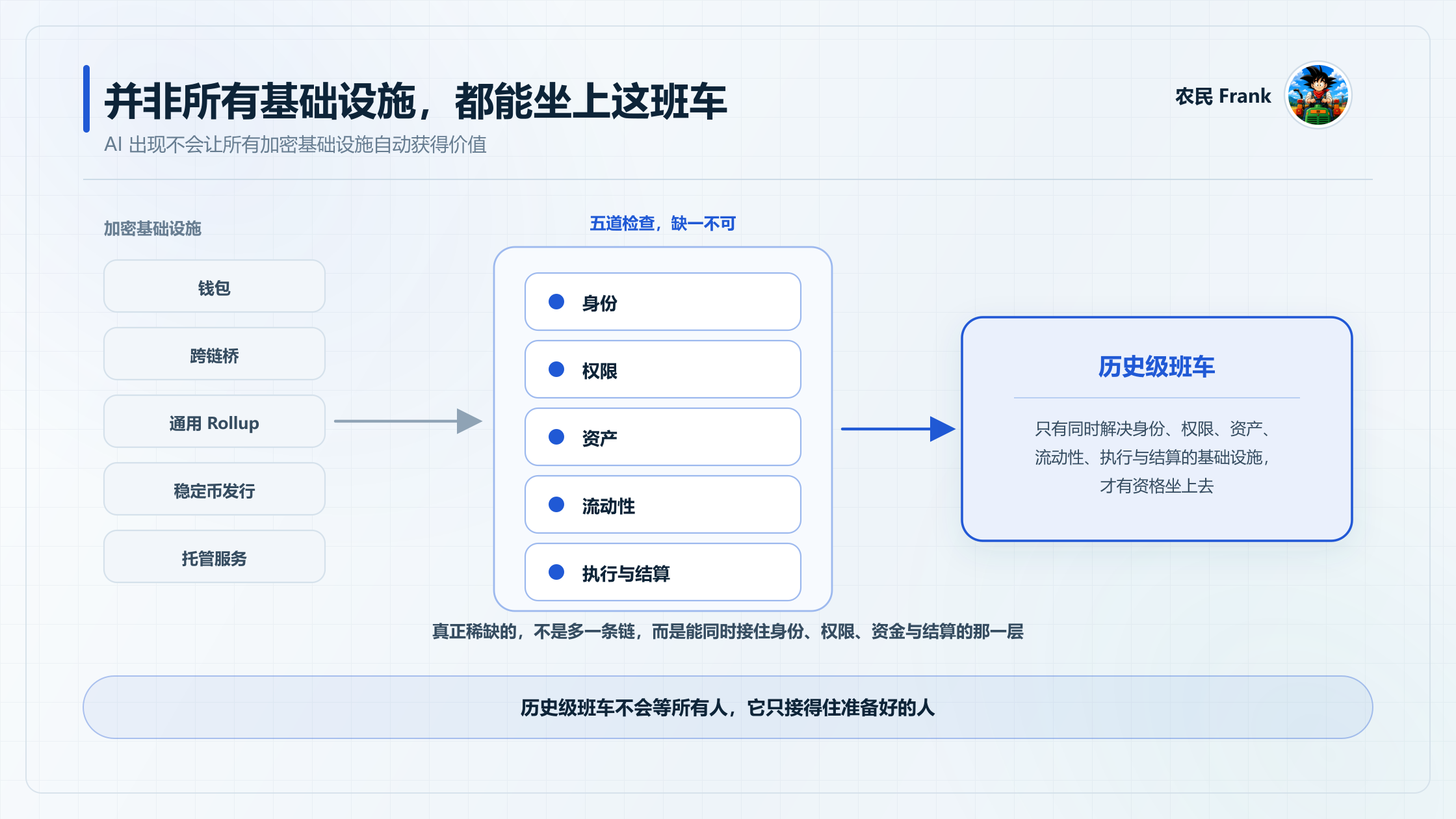
AI Agents may be the first to change this default premise.
As Agents begin to detect needs, compare prices, call services, and even mobilize real funds on behalf of enterprises and individuals, the vast majority of economic transactions in the future will likely be autonomously matched by thousands of algorithms around the clock in nanoseconds.
From this perspective, the blockchain technology's exploration of trustless, programmable currencies, and smart contracts over the last decade or so perhaps only finally welcomes its fated protagonist—AI Agents—at this moment.
This is the economic entity that is truly native to the digital world of blockchain, and it's its "historical-grade express."
Of course, whether this express truly ends up being "historical-grade" still has no answer; the combination recently pieced together by Google Cloud, Anchorage Digital, and Puffer UniFi still requires real stablecoins, payment flows, and Agent trading engines to prove it.
But the direction has begun to become clear.
Who can become the financial backend that won't drop any chains is the real competition worth watching in Agentic Commerce going forward.
免责声明:本文章仅代表作者个人观点,不代表本平台的立场和观点。本文章仅供信息分享,不构成对任何人的任何投资建议。用户与作者之间的任何争议,与本平台无关。如网页中刊载的文章或图片涉及侵权,请提供相关的权利证明和身份证明发送邮件到support@aicoin.com,本平台相关工作人员将会进行核查。