1. Bessent Advisor Signals: US Bond Yields May Fall
David Zervos, the new senior advisor to US Treasury Secretary Bessent, believes that US real interest rates are currently significantly high. As energy shocks gradually fade, there is room for US bond yields to decline.
This judgment comes as US 10-year and 30-year Treasury yields have recently risen to their highest levels in about 24 years. The market is reassessing inflation, economic growth, corporate financing needs, and the future policy path of the Federal Reserve.
Zervos believes that the recent rapid rise in yields reflects more the shock of energy prices and increased financing demand rather than necessarily indicating that the US has entered a new phase of long-term high interest rates.
However, it is important to note that a high yield does not necessarily mean it will fall immediately. The subsequent trend still depends on inflation, economic growth, bond supply and demand, and Federal Reserve policy.
2. Rising Oil Prices: How Energy Shocks Push Up Interest Rates?
The energy supply risks brought by the US-Iran conflict are one of the important reasons for the recent repricing in the bond market.
According to reports, since the beginning of the US-Iran conflict, Brent crude oil prices have risen by about 38%. Rising oil prices not only mean increased energy costs, but also affect market perceptions of future inflation.
If high oil prices persist, corporate production and transportation costs may rise, and consumers may face higher energy expenditures. Once inflationary pressures resurface, the market may reduce its expectations for loose policies, even factoring in further interest rate hike risks.
This is also one of the logics behind the recent pressure on US bond yields.
Zervos's assessment is that if energy shocks gradually fade, some inflation and real interest rate pressures may also ease.
However, a drop in oil prices is only one condition for a decline in yields, not a sufficient condition. If US inflation remains stubbornly high, or if fiscal financing needs continue to expand, long-term yields may still remain at high levels.
📌 If you want to continuously follow BTC, ETH, and the impact of macro data on the market, you can pay attention to the public account "Crypto Old Ding", which explains important market changes and the underlying logic every day.
3. AI Investment Boom: Why Does Technological Development Also Drive Up Interest Rates?
In addition to energy prices, investments in AI infrastructure are also an important factor in this round of long-term interest rate increases.
Large tech companies are continuously building data centers, purchasing chips, and expanding power infrastructures, which require massive investments. Some companies are financing through the bond market, which means they are competing with the US government and other borrowers for long-term capital.
When financing demands grow rapidly, while market fund supplies do not increase simultaneously, borrowers may need to offer higher yields to attract investors.
In the long run, AI investments may boost productivity and expand economic output, which is positive for economic development. However, from a short-term financing perspective, large capital expenditures may also drive up real interest rates and corporate financing costs.
This creates a paradox worth noting:
AI may enhance future economic productivity, but AI investments themselves may also raise current financing costs.
Therefore, even if energy shocks ease, sustained financing by AI companies, US Treasury bond issuance, and global bond supply and demand changes may still limit the downside potential of US bond yields.
4. The Federal Reserve Remains a Core Variable: A Decline in Yields Does Not Mean a Policy Shift
Interest rate policy should not be overlooked either.
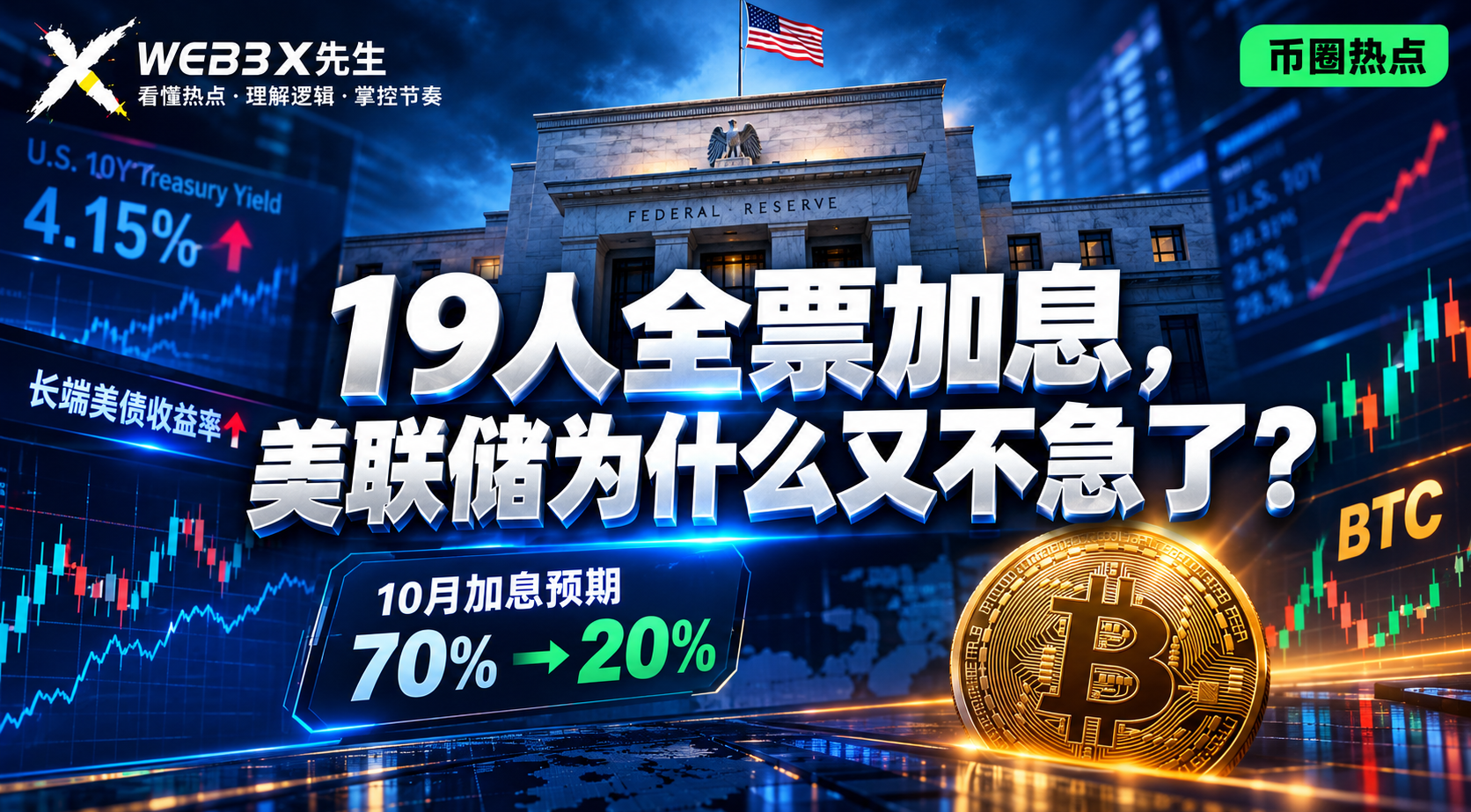
Reports indicate that in September, the Federal Reserve raised its federal funds rate target range by 25 basis points to 3.75%—4.00%. Meeting minutes showed that most officials believe further tightening may still be necessary in the future, but there are differences regarding the timing of specific actions.
Meanwhile, futures data reported show that the market expects a probability of over 82% for a rate hike in December.
This indicates that Zervos's view that yields may fall does not represent a shift towards loosening by the Federal Reserve.
It is also necessary to differentiate between short-term policy rates and long-term Treasury yields: the former is more influenced by the Federal Reserve's policy path, while the latter is affected by inflation expectations, term premiums, the scale of government bond issuance, and market fund demand.
Even if the market expects future policy rates to decline, long-term yields may not necessarily fall sharply.
Therefore, determining whether US bond yields have truly peaked requires ongoing observation of energy prices, inflation data, Federal Reserve statements, and the supply and demand situation in long-term bonds.
📌 If you want to continuously follow BTC, ETH, and the impact of macro data on the market, you can pay attention to the public account "Crypto Old Ding," which explains important market changes and the underlying logic every day.
5. If US Bond Yields Fall, What Does It Mean for BTC?
For BTC, US bond yields are an important indicator for observing macro financial conditions, but not the sole price determinant.
When US bond yields continue to rise, the relative attractiveness of dollar bonds may increase, and corporate and investor financing costs may also rise. Tightening financial conditions often suppress the market's willingness to allocate to high-volatility risk assets.
If oil prices fall and inflation pressures ease, leading to a decline in US bond yields, risk assets may gain some support, and BTC may benefit from it.
However, it should not be simply understood as "if yields fall, BTC will definitely rise."
If the decline in yields is due to a significant deterioration in economic growth, market risk aversion may also rise simultaneously; if the dollar continues to strengthen, or if the crypto market itself undergoes a significant deleveraging, BTC may still come under pressure.
Key observations in the coming period can focus on three clues:
Energy Market: Whether the situation between the US and Iran eases, and whether Brent crude can retreat from high levels.
Interest Rates and Inflation: Whether US inflation data reaccelerates, and whether the Federal Reserve continues to signal tightening.
Financial Market: Whether US bond yields, dollar trends, and BTC capital performance show consistent changes.
📌Mr. Web3 X: There is room for a fall in yields, but it cannot yet be deemed to have peaked
Bessent Advisors believe that current US real interest rates are significantly high,
and if energy shocks dissipate, US bond yields may have room to decline.
However, oil prices, AI financing demands, fiscal debt issuance, and Federal Reserve policy may still keep long-term rates high.
For BTC, what truly deserves attention is not the judgment of a specific official on yields,
but whether inflationary pressures ease, financial conditions improve,
and whether capital is willing to take on risk again.
—— I am Mr. Web3 X, with 6 years of growth in Web3, focusing on Bitcoin, the crypto market, macroeconomics, and industry trends. If you want to continually track BTC, ETH, HYPE, and the impact of macro data on the market, please pay attention to the public account "Crypto Old Ding". Understand the hotspots, grasp the logic, and establish your own judgment, rather than just watching price fluctuations.

免责声明:本文章仅代表作者个人观点,不代表本平台的立场和观点。本文章仅供信息分享,不构成对任何人的任何投资建议。用户与作者之间的任何争议,与本平台无关。如网页中刊载的文章或图片涉及侵权,请提供相关的权利证明和身份证明发送邮件到support@aicoin.com,本平台相关工作人员将会进行核查。