Gerlko's system is proprietary computing power + market making, not a chatbox predicting price fluctuations.
Gerlko, born in 1979 in Moscow, is a PhD in mathematics from Moscow State University, with research interests including algebraic exchange and homological dimension. He later obtained a master's degree in economics from the New Economic School and is registered as a mathematician in the Mathematics Genealogy Project. He joined Deutsche Bank in 2004 as a quant for stocks and forex, and in 2009 moved to GSA Capital to oversee forex trading. After leaving in 2015, he founded XTX Markets, with the company's name derived from a formula related to matrix operations.
His pathway was not a "sudden discovery that AI can trade stocks," but a transition from academic mathematics to quantitative trading, and then making machine learning a core infrastructure. Public reports (including the Financial Times) state that he early on judged that the high-frequency path of purely competing for microsecond speed has limits, and instead bet on "intelligence"—using more computing power and data to make better price predictions. The company has no external investors, with profits flowing to a few partners, of which he holds about 75%. The leap in the wealth ranking corresponds to the appreciation of this private company's valuation, not how many times he multiplied his personal brokerage account in a year.
How the system transitions: data, computing power, prediction, then market making.
XTX's public description is: using machine learning to predict prices, trading on exchanges and other venues, and providing liquidity to clients. The entire company has about 250 employees (some reports mention around 300), with no traditional human traders. Decisions are executed by algorithms, and employees are primarily researchers and engineers.
Data layer: Over 400PB of global financial market data (equivalent to trillions of photos).
Computing power layer: Research cluster with about 25,000 NVIDIA GPUs (mainly recent generations); early reports indicated the deployment of supercomputers in Iceland, utilizing geothermal energy and low temperatures to reduce cooling costs; the company is investing over 1 billion euros in building multiple data centers in Finland.
Prediction layer: Deep learning models simultaneously process real-time data streams of over 50,000 financial instruments (stocks, fixed income, forex, commodities, crypto, etc.), identifying micro price patterns from cross-markets, with prediction scales ranging from milliseconds to hours.
Execution layer: Market making (providing quotes on both buy and sell sides, profiting from price differences) and proprietary trading (capturing transient distortions). The daily trading volume is about $250 billion, which is the transaction volume, not managed assets or daily profits.
It is not A (retail investors using large models to look at candlestick charts and shout buy or sell), but B (institutions using proprietary data + large-scale GPU clusters for high-frequency/mid-frequency price predictions and market making). The edge is minimal, relying on scale and continuous execution accumulation. By 2025, reports indicated that the UK business revenue was about £3.9 billion, with substantial profits, and large profits distributed to partners; these figures are at the company level, not replicable personal strategy return rates.
What ordinary people can do with AI and what they cannot do.
Public large models can lower several thresholds: quickly summarizing news, financial reports, and research reports; helping write or debug Pine Script/Python backtesting code; proposing hypotheses based on historical patterns; organizing scattered information into a verifiable checklist. This is faster than learning programming from scratch or reading a pile of English documents.
What it cannot do: stably provide tradable excess profits, replace risk management and position control, or replicate backtesting results under actual market slippage and transaction fees. Public AI trading competitions (paper money, real-time prices) show high differentiation: there have been models that outperformed the S&P 500 in certain time periods, but also significant drawdowns; rankings across seasons are unstable, with about 40% of model-season combinations ultimately profitable. Mainstream Western models have shown significant losses in some live or simulated competitions. These are experimental records, not product promises.
Current common public tools and records (all auxiliary or simulated, not guaranteed):
- ChatGPT / GPT series: excels at integrating multi-source information into arguments, assisting in writing analysis frameworks. Performance varies in public competitions, showing lag in some phases.
- Claude (Anthropic): often ranks high on financial reasoning benchmarks, good at code generation and cautious expressions. Some paper bots have outperformed the S&P in specific ranges, but samples are short, and drawdowns exist.
- Gemini (Google): strong in multi-asset correlation analysis. There are periods of leadership and lagging in competitions.
- Grok (xAI): natively connects to real-time X information streams, suitable for sentiment and news timeliness scenarios. Public records show both positive and negative outcomes.
- Dedicated trading arenas/rankings (such as some AI Trading Arena, TradingBotTracker, etc.): multiple models' paper accounts in real-time comparison, observable but not directly applicable as live trading reference; leaders often switch, and absolute returns are mostly in the single to low double-digit range, with drawdowns in between.
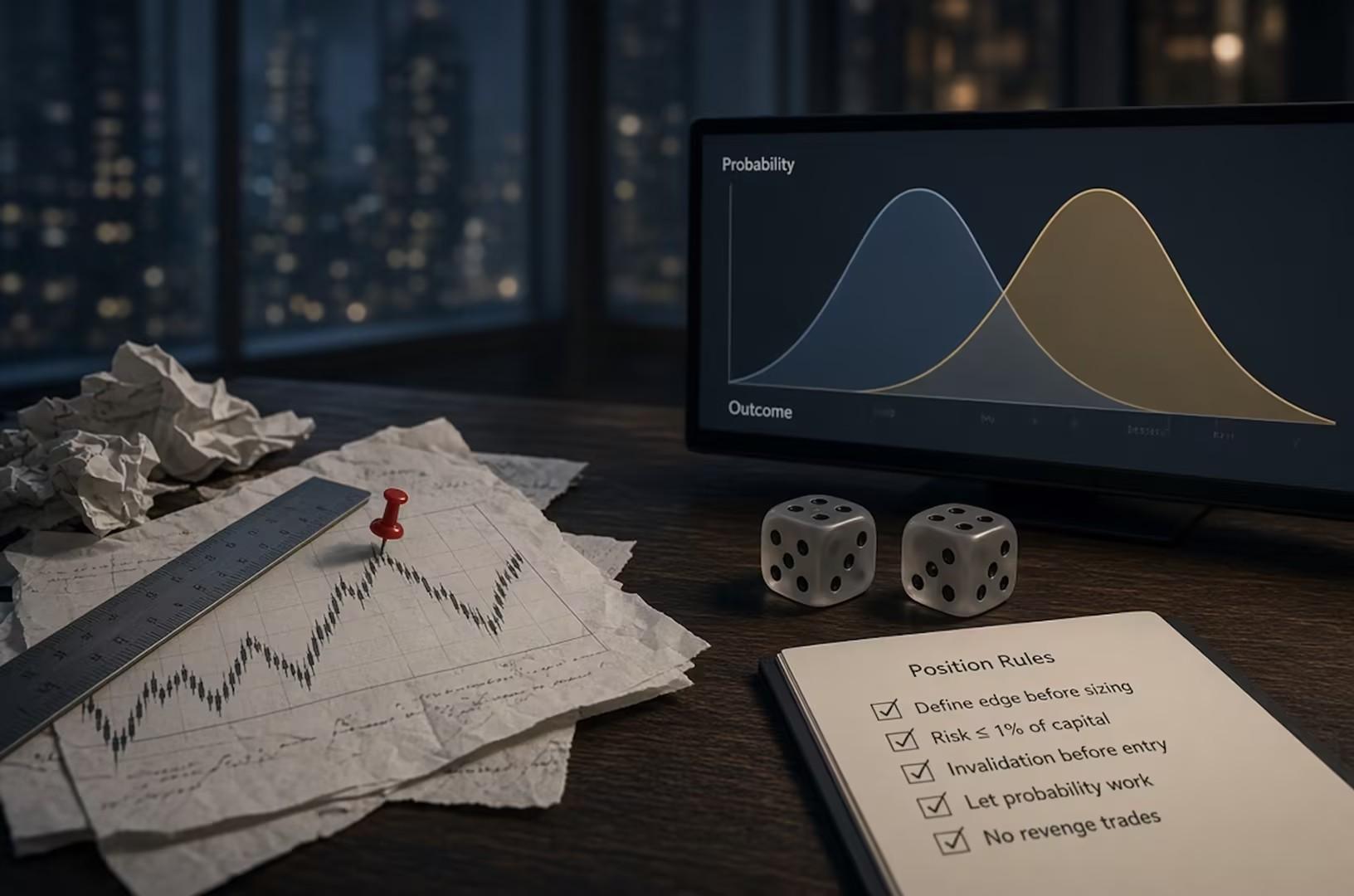
Usage suggestions (for beginners): treat AI as a research and coding assistant, not an automatic order processor. Write down any signals first: entry conditions, exit conditions, maximum loss per trade as a percentage of total idle funds (for example, 1%–2%). First, use simulated or very small spot trading for validation before considering live trading. Large models may hallucinate numbers and causal relationships, requiring manual verification against raw data.
What can be observed is not "who has earned how much with AI."
Look at whether XTX or similar institutions continue to scale up their proprietary computing power (progress of Finnish data centers, GPU scale), examine the cross-period stability of public large models in independent paper competitions, assess whether individuals using AI really reduce impulsive trading, or just place orders faster. The disparity between institutional systems and individuals using chat windows lies in data exclusivity, computing power, execution, and risk control, not in the phrase "using AI."
Gerlko’s path proves that a mathematics background + long-term investment in computing power and data can establish a scale advantage in market making and micro prediction. It does not prove that ordinary people can replicate the same results by simply opening a chat window. AI lowers the barriers to information organization and coding while raising the requirements for rules and position sizes. Utilizing tools on verifiable processes is closer to achieving repeatable trades than chasing a headline of "64 billion in one year."
Binance AI: the same type of model connected to the exchange's execution layer.
On October 5, Binance co-CEO Richard Teng and VP of Product Jeff Li announced Binance Intelligence, which includes three products, rather than a single chatbot.
Binance AI (some reports call it Finance AI): free, aimed at regular users. It provides personalized market information, portfolio performance summaries, asset volatility analyses, voice or text briefings. Starting from October 5, it is gradually opened by region, having previously had about 150,000 beta testers. It lowers the threshold for "understanding the market," but does not automatically place orders.
Binance AI Pro: designed for users wanting to turn a sentence into a strategy. Beta launched on March 25, 2026 (based on the open-source ecosystem of OpenClaw), with a full new version planned for release in late October, adopting a freemium model (the standard version has monthly free credits; Premium approximately 19.99 USDC/month for live deployment, simulation testing, and model selection). Users describe rules in natural language, and the system generates a strategy flowchart, which can be tested on paper first, then authorized for live trading in a sub-account after user review. The API has no withdrawal permissions, and funds must be manually moved from the main account. Early internal data suggests that about 70% of AI actions are execution rather than simple analysis. Included models are ChatGPT, Claude, Qwen, MiniMax, Kimi, and others.
Agent OS: a developer platform launched on August 20, 2026. It allows external AI applications (ChatGPT, Claude Code, Codex, Cursor, etc.) to access Binance's trading, market data, wallet, and payment capabilities through standards like MCP (Model Context Protocol). Daily calls have exceeded 280,000 times. Developers can build their own Agents, with user-controlled permissions and sub-account funds.
Similarities and differences.
Similarity: All share underlying mainstream large models (Claude, ChatGPT series), supporting natural language input, strategy draft generation, and information summarization. Those that perform well or poorly in public AI trading competitions are indeed these model families.
Difference: Most public tools stop at "generating suggestions or code", with users placing orders on other platforms. Binance connects the models to its own order book, execution, sub-account isolation, and risk limits, forming a closed-loop of "generation → review → execution," with funds isolated from the main account. This is closer to "an assistant with an execution layer," rather than a pure chat window. The gap with XTX is even larger: XTX uses proprietary data and thousands of GPUs for micro market making, while Binance AI is layering trading capabilities on existing large models, aimed at retail and developers.
Old product or newly launched? What results can we see now?
Agent OS is a product launched on August 20, with daily usage scale data. The Beta version of AI Pro started on March 25, with a full new version update scheduled for late October. Binance AI has gradually rolled out a new consumer-facing interface since October 5, with approximately 150,000 beta users.
Publicly verifiable "results" currently mainly show usage levels, not long-term return rankings: Agent OS has daily calls exceeding 280,000 times; AI Beta has about 150,000 test users; in early actions, execution comprised about 70% of AI Pro's actions. Independent third-party assessments of long-term excess returns from the Binance AI Pro strategies have yet to form publicly comparable rankings. Meanwhile, public paper competitions using the same model families (across multiple seasons and thousands of trades) show that only about 43% of model-season combinations ultimately made profits, with unstable rankings across periods and some models displaying significant drawdowns. Model capabilities are improving, but stable replicable excess is still not a default outcome.
For ordinary people: treat AI as a process tool, not an automatic money machine.
Gerlko's case demonstrates that mathematics + long-term investment in computing power can establish scale advantages at the market making level. Binance's case demonstrates that the same types of large models can be connected to the execution layer of ordinary accounts, reducing the steps from "idea to order placement." Neither equates to "simply opening a chat window can guarantee stable profits."
Operable actions include: completing the exclusive Binance link from AiCoinz: https://jump.do/zh-Hans/xlink-proxy?id=3
Or log into the Binance app and input the invitation code aicoin668, below are the exclusive generous registration benefits for the AiCoin invitation code:
Benefit 1: New customers can get up to 440 USDT
1. Deposit 100 USDT + trade 100 USDT → receive a 100 USDT position voucher
2. Deposit 1,000 USDT + trade 50,000 USDT → receive a 300 USDT position voucher
3. Deposit 3,000 USDT + trade 200,000 USDT → receive a 40 USDT cash voucher
Three tiers stack; deposit 100 USDT to qualify for the first tier.
Benefit 2: Open blind boxes, with a maximum of 25 RE tokens.
1. Register + deposit 50 USDT + trade 100 USDT + log into the app.
2. After completing the above activities, a blind box will be awarded, randomly drawing RE tokens, up to a maximum of 25 tokens.
This means that a new user completing tasks can receive double benefits.
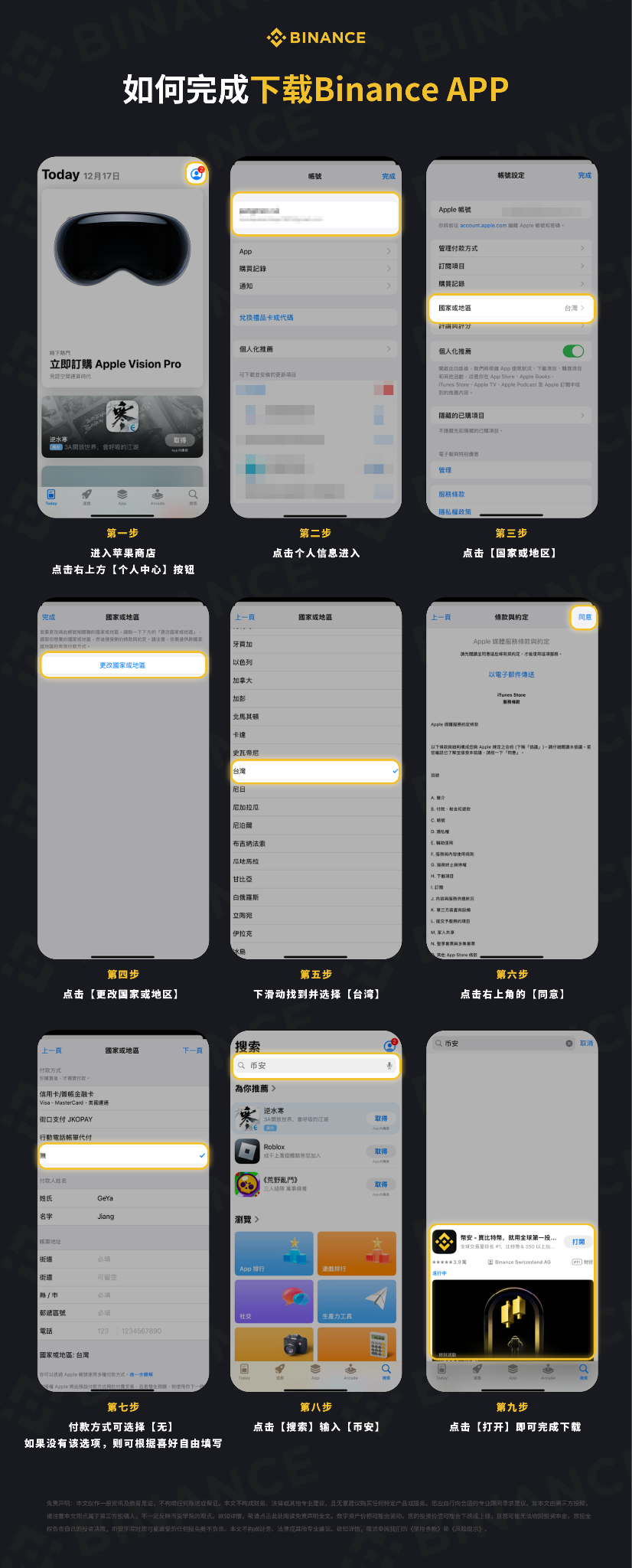
After registering and verifying, use Binance AI to quickly整理 market trends and portfolio information; use AI Pro to write rules into audit-able strategy drafts, run paper tests first, and then set a maximum loss per trade (e.g., 1%-2% of total idle funds) before trading small amounts live; developers can use Agent OS to connect their own models. Any generated numbers and causal relationships must be manually verified against raw data.
What can be observed is not the 64 billion in the headline, but the model’s cross-period stability in independent competitions, whether the actual execution limits of Binance AI products are adhered to, and whether personal usage reduces impulsive trading. While AI lowers the information threshold, it raises the requirements for rules and positions. Utilizing tools on verifiable processes is closer to achieving repeatable actions than chasing a single wealth story.
Risk Warning: This does not constitute investment advice; you may lose all your principal; comply with local laws; do not use leverage, borrowing, or living expenses to participate.
免责声明:本文章仅代表作者个人观点,不代表本平台的立场和观点。本文章仅供信息分享,不构成对任何人的任何投资建议。用户与作者之间的任何争议,与本平台无关。如网页中刊载的文章或图片涉及侵权,请提供相关的权利证明和身份证明发送邮件到support@aicoin.com,本平台相关工作人员将会进行核查。