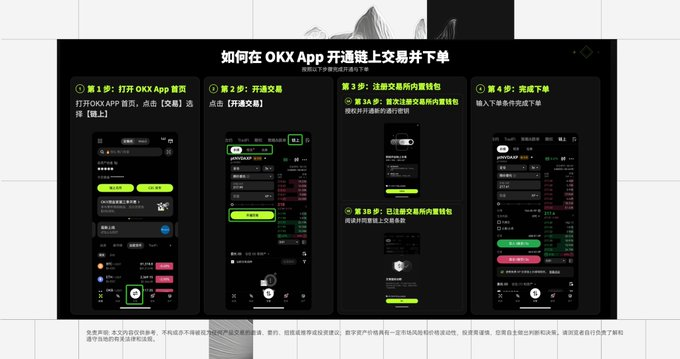
In the crypto market, what is truly scarce is not project information, but finding projects worth continuously tracking before they enter mainstream liquidity.
Many users only begin to pay attention to tokens after they launch on spot exchanges, but by this time, the project has already undergone a leap in market recognition, and early valuations, liquidity, and trading depth often change. For those who paid attention to the projects earlier, the landing on spot exchanges is not the end of the story, but a key window for the project to first accept public market pricing, trading volume, and user capital verification.
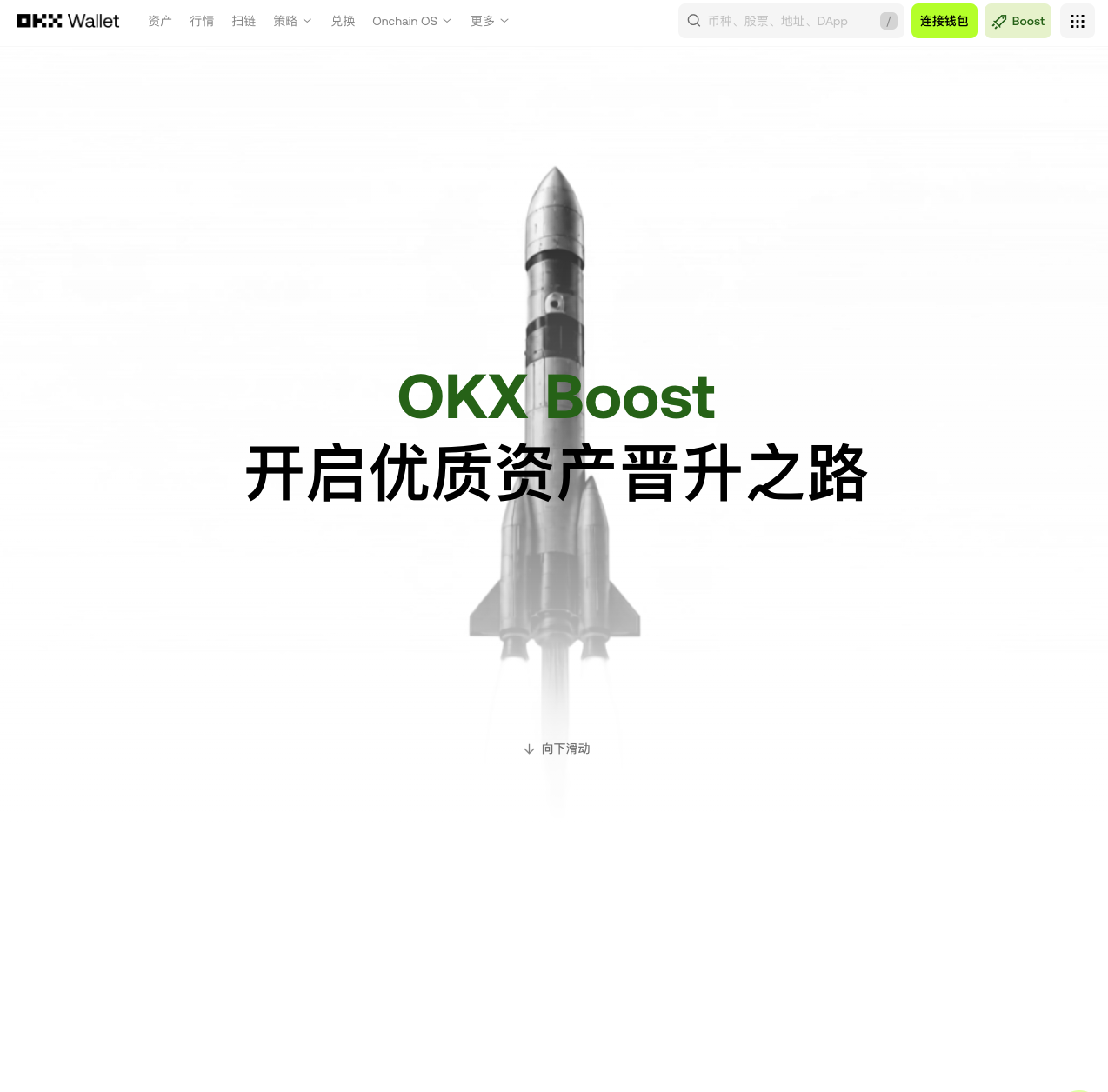
This is exactly why OKX Boost is worth paying attention to.
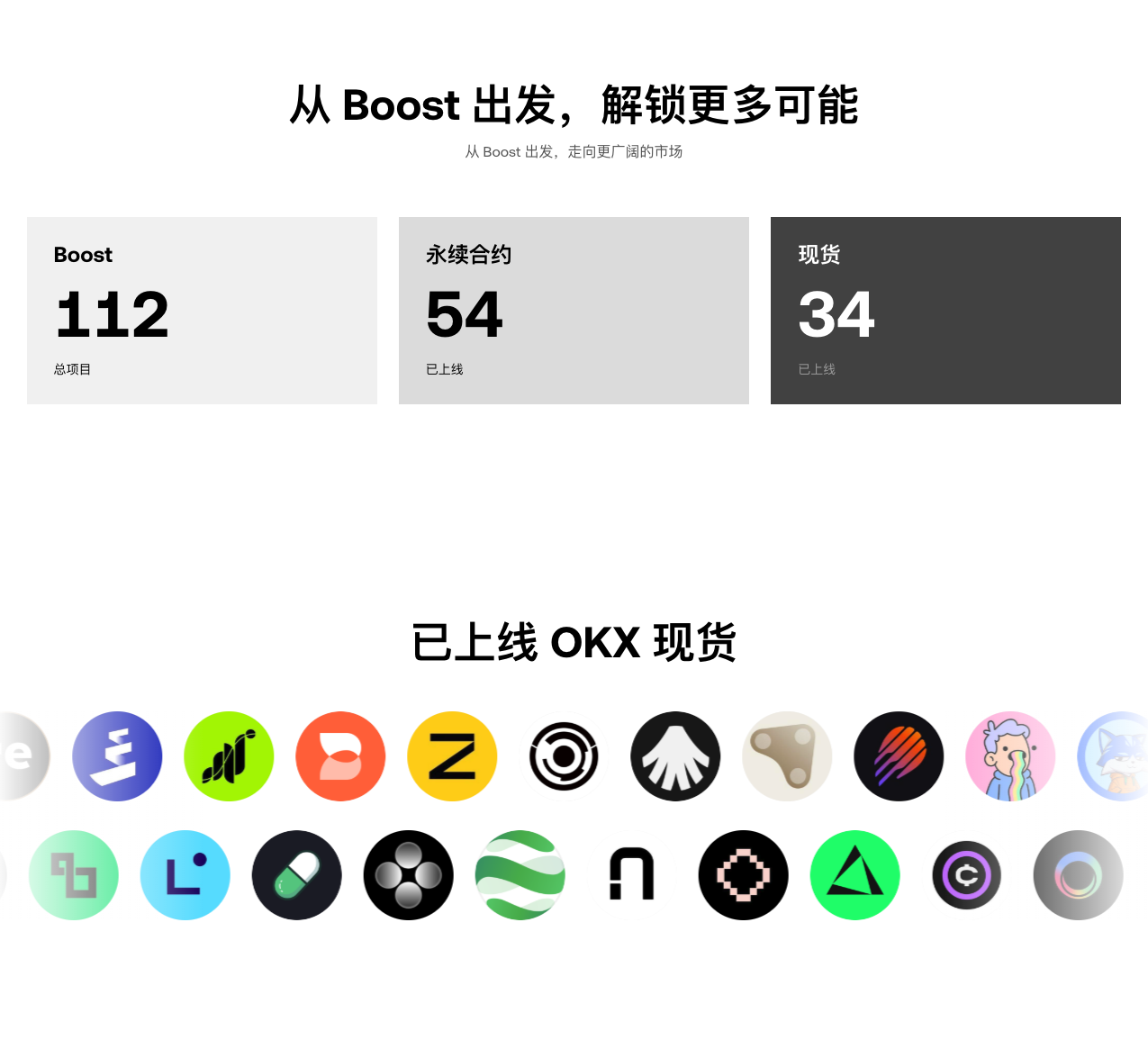
OKX Boost has showcased 112 projects, among which 54 projects have launched perpetual contracts, and 34 projects have launched on spot exchanges. This set of data indicates that Boost is not just a one-time activity entrance, but is also forming a growth path for projects from discovery, on-chain trading, market observation to spot liquidity support.
Why Pay Attention to Projects Before They Launch on Spot Exchanges?
Launching on spot exchanges usually brings three changes.
First, the trading entrance expands from on-chain to a broader user base.
In the early stages, projects may mainly rely on DEXs, communities, and task activities to accumulate users. After launching on spot exchanges, users can buy and sell assets through more familiar trading entrances, broadening the range of market participants and potentially improving price discovery efficiency.
Second, liquidity and transaction data will be re-evaluated.
The prices of early-stage projects may be formed under low liquidity conditions. After they launch on spot exchanges, the market will reassess project value through trading volume, buy/sell depth, position distribution, and continued trading.
Third, early narratives begin to translate into public market pricing.
Whether a project has real users, product progress, and sustained community activity will gradually be reflected in data such as trading volume, liquidity, and holding addresses. A spot launch is not a guarantee of price increase, but an important node to observe whether the project can attract wider capital.
Therefore, a more accurate understanding of “the spot launch is wealth realization” should be: The spot launch provides a potential window for early projects to enhance liquidity, discover prices, and allow investors to exit, but the final value is still determined by market demand, project progress, and risk appetite.
Boost 112 Projects, What Kind of Selection Framework is Being Formed?
From the page structure, Boost does not merely display a project list but observes projects at different stages:
- Boost Project Pool: 112 projects representing the early discovery range;
- Perpetual Contracts: 54 projects already have more mature trading and risk pricing tools;
- Spot Market: 34 projects have entered a broader spot trading phase.
This structure can help users establish a layered research approach.
For Boost projects, the focus should be on product direction, on-chain data, community activity, token distribution, and liquidity; for projects with perpetual contracts, extra observation should focus on funding rates, open interest, and long/short crowding; for projects that have launched on spot, the emphasis should be on trading volume, buy/sell depth, holding addresses, and price volatility.
In other words, projects at different stages cannot be evaluated using the same set of indicators.
Boost Advanced List: Which Projects are Worth Continuing to Track?
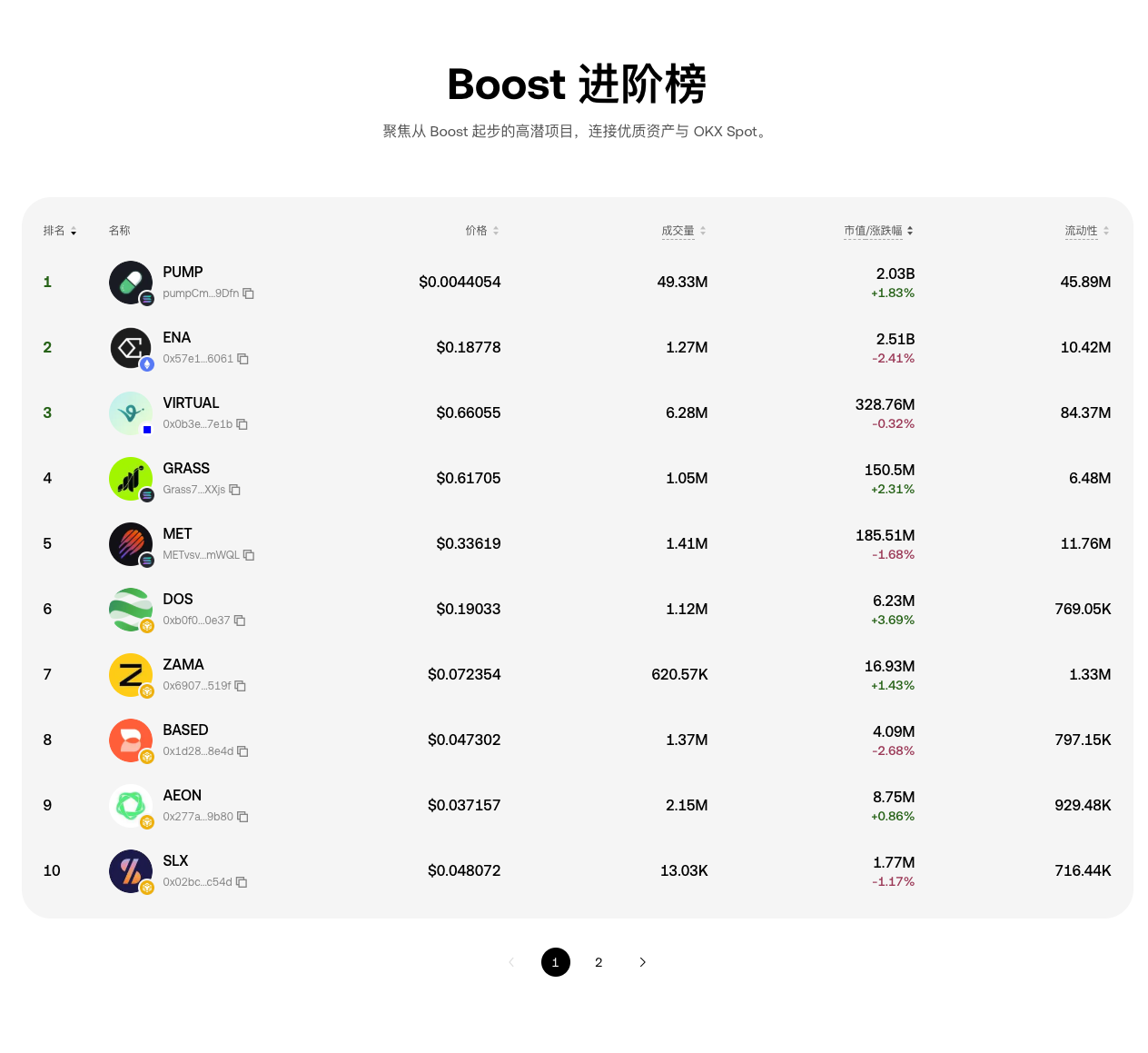
The Boost Advanced List showcases the prices, trading volumes, market cap changes, and liquidity data of 10 projects.
PUMP: Trading Volume and Market Cap Ranked at the Top
The PUMP page shows a price of about 0.0044054 USD, a trading volume of about 49.33M, a market cap of about 2.03B, liquidity of about 45.89M, and a market cap increase of about +1.83%.
Its standout points in the list are that both the trading volume and liquidity scale are significantly higher than other projects. This indicates that PUMP has strong market attention and trading acceptance capability, but it should also be noted that a higher market cap means that some expectations have already been priced in, and subsequent increases require new capital and fundamental catalysts.
ENA: Large Market Cap but Weak Short-term Performance
The ENA page shows a price of about 0.18778 USD, a trading volume of about 1.27M, a market cap of about 2.51B, liquidity of about 10.42M, and a market cap change of about -2.41%.
The data for ENA illustrates that project size does not necessarily correspond directly to short-term price increases. While the market cap is high, if capital inflows are insufficient or market sentiment weakens, the price may still adjust. For users, project scale serves as a reference for safety margins and liquidity, but it does not guarantee future returns.
VIRTUAL: Market Cap to Liquidity Ratio is Worth Observing
VIRTUAL price is about 0.66055 USD, trading volume is about 6.28M, market cap is about 328.76M, liquidity is about 84.37M, and page market cap change is about -0.32%.
Its liquidity is relatively high compared to market cap, indicating that market trading acceptance capability is worth paying attention to. However, high liquidity does not replace the need for research on token release, position concentration, and real usage demand.
GRASS, MET: Volatility and Narrative Opportunities in Medium Market Cap Projects
GRASS page shows a price of about 0.61705 USD, market cap of about 150.5M, liquidity of about 6.48M, and a market cap increase of about +2.31%; MET price is about 0.33619 USD, market cap is about 185.51M, liquidity is about 11.76M, and market cap change is about -1.68%.
Projects like these are characterized by a market cap that is not as large as leading projects; prices may be more sensitive to capital inflows, news, and market sentiment. They may have greater growth elasticity but may also face more dramatic pullbacks. Users need to observe trading volume, liquidity, and token unlocking plans together.
DOS, ZAMA, BASED, AEON, SLX: Small Market Cap Implies Higher Risk
The page market caps for DOS, ZAMA, BASED, AEON, and SLX are approximately 6.23M, 16.93M, 4.09M, 8.75M, and 1.77M.
Among them, the DOS page shows a market cap increase of about +3.69%, ZAMA about +1.43%, AEON about +0.86%; BASED about -2.68%, SLX about -1.17%.
Small market cap projects have advantages of greater valuation elasticity, where small changes in capital can lead to significant price volatility; however, the disadvantages are that liquidity and exit abilities are usually weaker. Price increases may look appealing, but if liquidity is only in the hundreds of thousands to slightly over a million dollars, users may face significant slippage when actually buying or selling.
These projects are more suitable for small-scale research and continuous tracking, rather than concentrating all funds on a single narrative.
What to Look for After Launching on Spot Exchange?
The OKX wallet page shows that 34 projects have landed on OKX spot. This includes displaying the launch duration of partial projects, number of holding addresses, liquidity, transaction counts, and unique trading addresses.
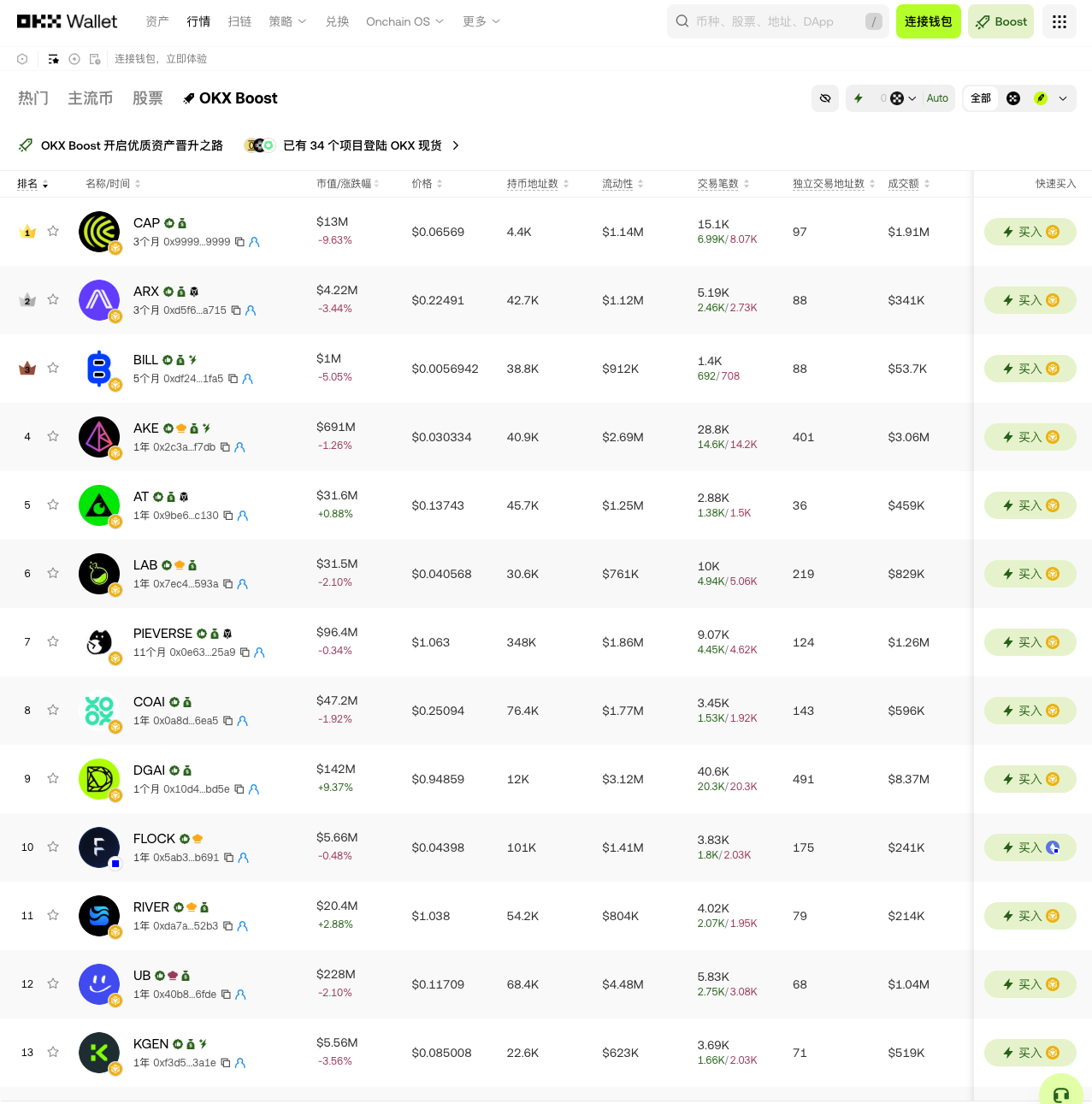
DGAI: Trading Activity and Recent Price Increase Stand Out
The DGAI page shows that it launched about 1 month ago, with a market cap of about 142M, a market cap increase of about +9.37%, number of holding addresses around 12K, liquidity of about 3.12M, transaction count of about 40.6K, unique trading addresses around 491, and transaction volume of about 8.37M.
The characteristic of DGAI is that its launch time is short, but its transaction count and volume are high compared to the projects shown in the screenshot. What is worth paying attention to is not the single-day price increase itself, but whether it can maintain real trading after launch, whether the number of holding addresses continues to increase, and whether the transaction volume is concentrated among a few addresses.
PIEVERSE: Large Number of Holding Addresses
The PIEVERSE page shows that it launched about 11 months ago, with a market cap of about 96.4M, number of holding addresses around 348K, liquidity of about 1.86M, transaction count of about 9.07K, and transaction volume of about 1.26M.
A large number of holding addresses may indicate that the project has a wide address coverage, but the number of addresses does not equal the number of real users, nor does it imply that every address has the same holding scale. It is necessary to combine position concentration, active addresses, and trading frequency for judgment.
AKE: Large Market Cap with Higher Trading Activity
The AKE page shows that it launched about 1 year ago, with a market cap of about 691M, liquidity of about 2.69M, transaction count of about 28.8K, and transaction volume of about 3.06M.
CAP, ARX, BILL: Data Differences Indicate Projects are at Different Stages
CAP launched about 3 months ago, with a market cap of about 13M, liquidity of about 1.14M, and transaction volume of about 1.91M; ARX launched about 3 months ago, with a market cap of about 4.22M, number of holding addresses around 42.7K, and liquidity of about 1.12M; BILL launched about 5 months ago, with a market cap of about 1M, number of holding addresses around 38.8K, and liquidity of about 912K.
This data indicates that launching on spot exchanges does not directly eliminate early project risks. Some projects may continue to accumulate users and transactions after launch, while others may see a decrease in transaction volume, a decline in liquidity, and price pressure after waning interest.
Why is “Spot Launch” an Important Window for Wealth Realization?
What early participants are often most concerned about is the exit path. For projects without sustained liquidity, even if the on-paper valuation rises, it may not be easy to cash out.
The spot launch may bring three types of improvements:
- Trading entrance becomes more standardized. Users can buy and sell through the spot market, no longer entirely relying on a single on-chain pool.
- Price discovery is more public. More participants lead to more quotes and trading actions, and the market can reassess project value.
- Early participants have clearer position management opportunities. They can decide to hold, sell in batches, or continue observing based on actual prices, transaction volumes, and liquidity.
However, launching on spot exchanges may also bring selling pressure. Early investors, airdrop users, and project incentives may increase selling supply. Therefore, what truly deserves attention is the continuous data after launch: whether transaction volume is stable, whether buy/sell is balanced, whether holding addresses are increasing, and whether liquidity is improving.
How Should Ordinary Users Participate From Boost to Spot?
It is recommended to treat OKX Boost as a project research entry point, rather than an “automatic profit tool.” The following process can be adopted:
- First, look at the project stage: Is it in the Boost, perpetual, or spot phase;
- Next, examine on-chain data: market cap, liquidity, trading volume, holding addresses, and unique trading addresses;
- Research the token mechanism: token release, unlocking time, and shares for the team and investors;
- Assess product progress: Are there real users, revenue, protocol usage, or continued development;
- Compare market pricing: After launching on spot, does the market cap reflect most expectations;
- Control positions: For small market cap and low liquidity projects, only use funds that you can afford to lose;
- Set exit plans: Do not consider “holding” as the only strategy, plan beforehand for partial profit-taking and stop-loss.
The OKX wallet integrates project discovery, on-chain quotes, spot trading, and Boost activities into one entry point, allowing users to complete the loop from information discovery to transaction execution more quickly.
Conclusion: True Wealth Realization Comes From Prior Research and Correct Exits
The 112 projects, 54 perpetual projects, and 34 spot projects displayed on the OKX Boost page indicate that crypto projects are undergoing a layered growth process from early discovery to public trading.
For investors, the most valuable action is not to blindly chase highs after a spot launch, but to create an observation list during the Boost stage, continuously tracking project progress, on-chain data, and liquidity changes. When projects enter the spot market, there is an opportunity to complete value verification and position management through more public price discovery and more mature trading entrances.
Therefore, a more accurate expression of “launching on spot is the best time for wealth realization” is: Launching on spot may be an important window for the early project value to be re-priced by the market, for liquidity improvement, and for investors to manage their positions. Whether it can truly be realized depends on project quality, market demand, trading depth, and exit discipline.
Exclusive Benefits for AiCoin Users
Use the OKX Web3 wallet to "invest in assets from around the world"!
Bind the invitation code 【AICOIN88】 to enjoy a 20% transaction cost saving (Gas optimization and other benefits)!
Download/upgrade OKX Web3 wallet now to catch the wave:
https://jump.do/xlink?checkProxy=true&proxyId=24
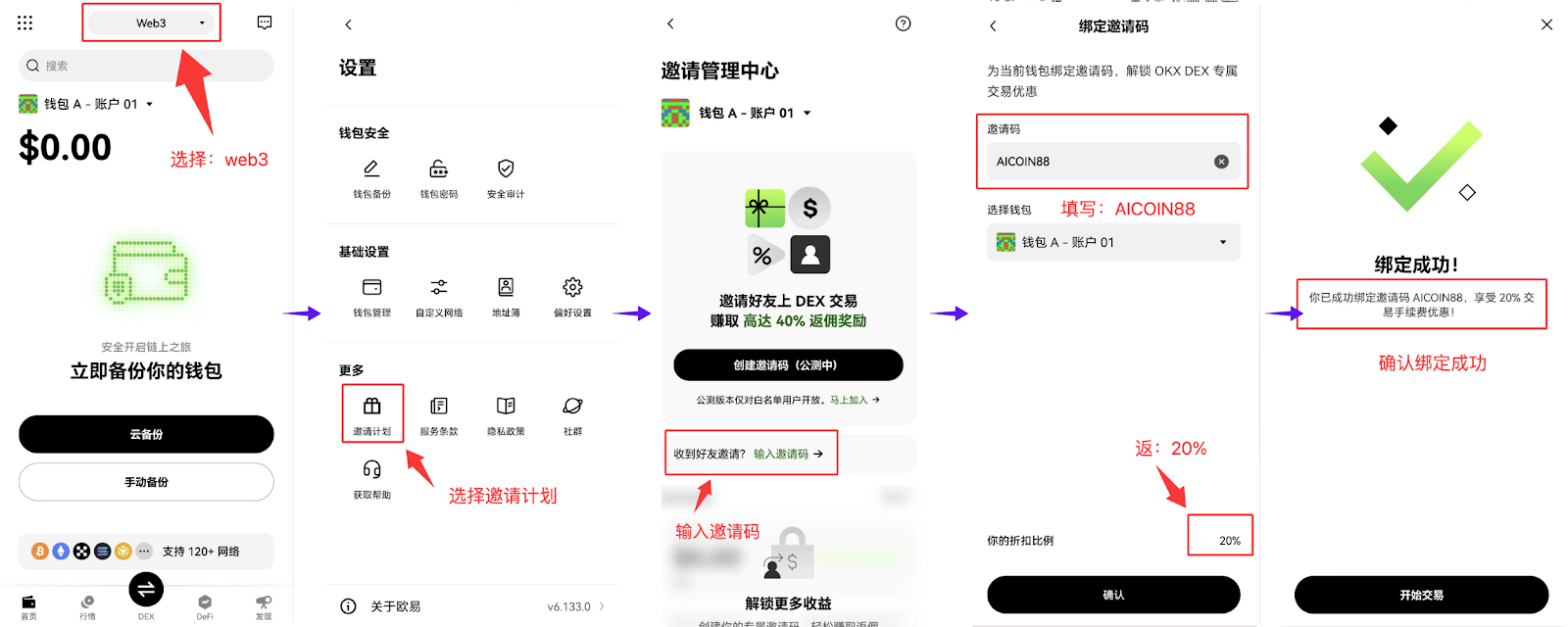
Use the exclusive invitation code 【AICOIN88】 to bind to the OKX wallet, web interface is easy to operate too!
https://web3.okx.com/ul/joindex?ref=AICOIN88
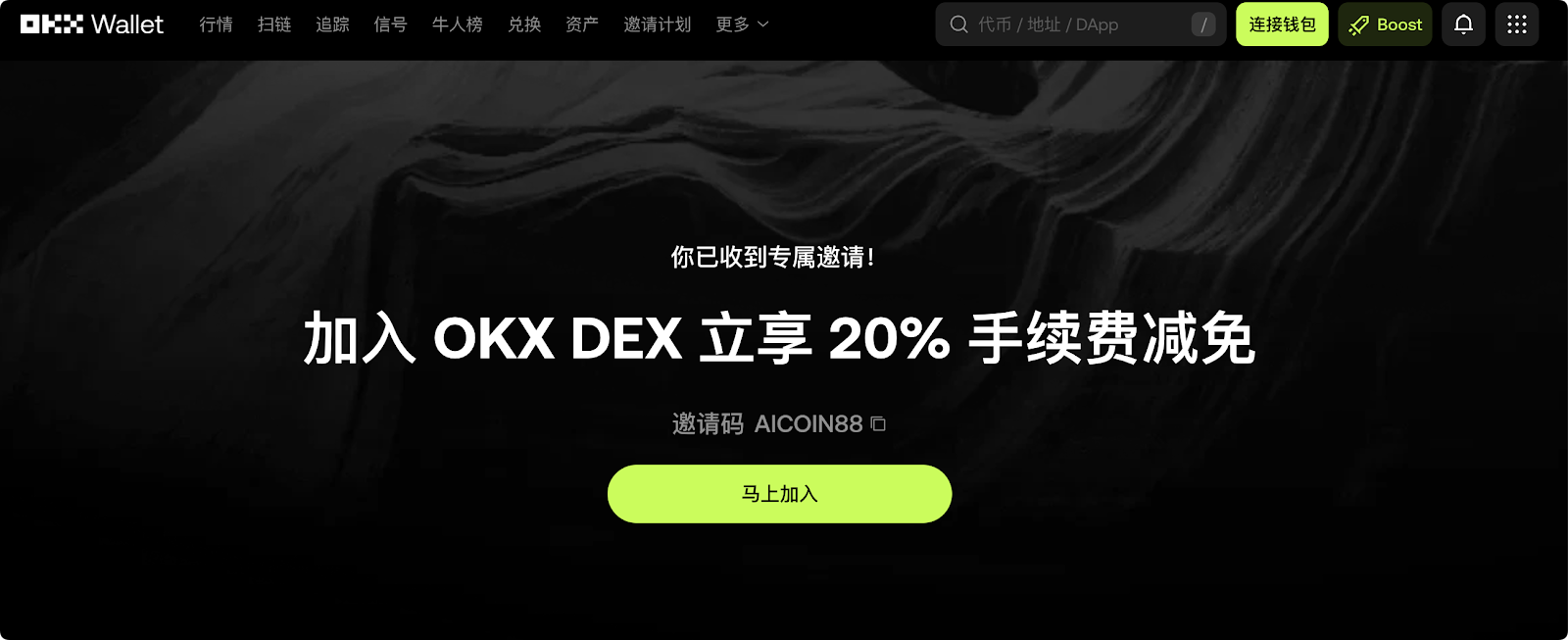
Don't wait, set up the OKX wallet, bind the benefits, and gain new wealth!
免责声明:本文章仅代表作者个人观点,不代表本平台的立场和观点。本文章仅供信息分享,不构成对任何人的任何投资建议。用户与作者之间的任何争议,与本平台无关。如网页中刊载的文章或图片涉及侵权,请提供相关的权利证明和身份证明发送邮件到support@aicoin.com,本平台相关工作人员将会进行核查。