Iron Fish recently acknowledged in an announcement that the wrapped asset wIRON on the Base chain showed signs of abnormal issuance, which had originally been designed as a cross-chain token to correspond 1:1 with Iron Fish's native asset, but suddenly became the center of a cross-chain security incident. The project team stated that they are investigating the issuance situation of wIRON on the Base chain, but cannot confirm that all wIRON still has complete and sufficient 1:1 reserve support before the investigation is completed, and therefore no longer guarantees the peg of wIRON on the Base chain. More alarmingly, Iron Fish directly advised users not to purchase wIRON on Base or continue cross-chain operations via relevant bridges until further notice, in order to minimize potential risk exposure. In an environment where cross-chain wrapped assets are generally viewed as "neutral infrastructure," this cautious and somewhat stark statement has turned wIRON from a technical intermediary into the most sensitive uncertain factor within the Iron Fish ecosystem.
Abnormal issuance of Base chain wIRON highlighted
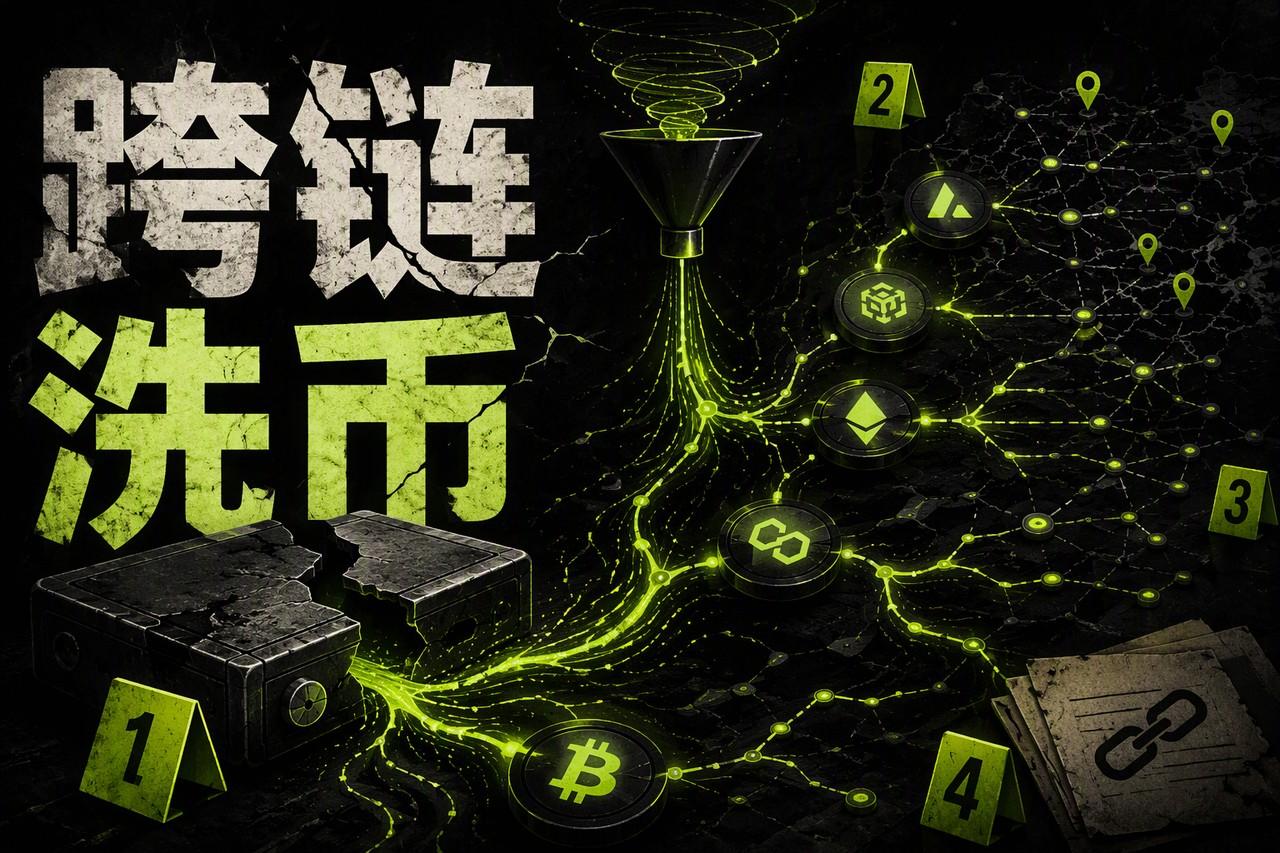
After this stark risk warning, the focus naturally turned to wIRON on the Base chain. Originally, wIRON was designed as the wrapped version of Iron Fish's asset on Base, with the underlying logic involving the custody of native Iron Fish assets by a cross-chain bridge, and then issuing corresponding tokens on the target chain on a 1:1 basis, maintaining the peg through a "burn or lock the original chain asset - minting the mapped token on the target chain" model. However, Iron Fish has used the term "abnormal issuance" in public statements, which effectively admits that the issuance of Base chain wIRON has deviated from this regular trajectory.
Once the issuance of wrapped assets is no longer strictly constrained by underlying reserves, the most straightforward risk is the potential mismatch between circulation and the actual custodial assets. Iron Fish also made it clear in the statement that there is currently insufficient evidence to prove that all Base chain wIRON are supported by adequate 1:1 reserves, which casts doubt on every wIRON circulating in secondary markets, raising the question of "is there really an Iron Fish behind each one." More troubling is that the current public information has neither disclosed the specific quantity of abnormal issuance nor provided the starting time and triggering reasons for the issue, leaving the external world unable to judge whether the incident is limited to a certain time period or batch, or whether it has affected the entire stock of Base chain wIRON. Until more details come to light, it remains undecided whether the issue with Base chain wIRON is a localized fault or a systemic risk.
ChainPort cross-chain bridge urgently brought in for review
Before the mystery of the abnormal issuance is resolved, Iron Fish quickly turned its attention to the service aspects responsible for wIRON's cross-chain operations and issuance. ChainPort, as one of the service providers for the wIRON cross-chain bridge on the Base chain, was specifically named in the official statement to urgently review the relevant cross-chain and issuance processes, effectively bringing it into the center of the incident. This action in itself does not equate to assigning blame, but at least indicates that the project team has identified the "how assets are minted" chain link as a key area for investigation.
From a conventional structure perspective, the cross-chain bridge is responsible for custodial Iron Fish assets on the original chain and issuing a corresponding amount of wIRON on the Base chain to maintain the 1:1 peg promise. Should there be deviations in the process or discrepancies between accounts and reality in this part, it could evolve into a source of risk due to reserve and issuance mismatch. As per current public information, ChainPort has not released a detailed review report or technical documentation, and Iron Fish has not provided qualitative statements on technical flaws, operational mistakes, or attack vectors. In the absence of conclusions, whether the cross-chain bridge is the root cause of the problem, an amplifier, or an innocent scapegoat, remains an open question waiting for subsequent evidence.
1:1 peg shaken: cracks in trust over wrapped assets
For wrapped assets like wIRON, the principle of "locking 1 Iron Fish on the original chain should yield 1 wIRON on the Base chain" should be the core and simplest risk commitment. The cross-chain bridge holds native assets on the original chain and mints corresponding tokens on the target chain. This design has embedded the 1:1 correspondence into a "psychological contract" beyond contractual terms from the beginning. Consequently, when signs of abnormal issuance appear on the Base chain and Iron Fish officially states in the announcement that it cannot guarantee sufficient 1:1 reserves at the current stage, users face a tangible issue rather than an abstract technical bug: Can the wIRON I hold still be redeemed for an equivalent amount of Iron Fish's native asset at face value?
Once the possibility of a mismatch between reserves and issuance arises, the identity of wrapped assets as “certificates” begins to weaken, and holders are no longer certain whether they hold a complete custodial receipt or a note that may or may not be redeemable in the future. Historically, many accidents involving cross-chain wrapped assets started when the 1:1 commitment was broken, leading to rapid loss of confidence amid doubts and rumors, with prices trading at a discount on different chains. Scenarios that originally relied on the asset as collateral or a unit of account were also forced to hit the pause button. Current public information shows that wIRON has yet to provide evidence of restored credible reserves or auditing conclusions. Under this persistent uncertainty, the story of the 1:1 peg surrounding wIRON is becoming increasingly difficult to take for granted.
Iron Fish chooses to actively disclose risks rather than remain silent
After the premise of the 1:1 peg was compromised, Iron Fish did not choose to wait until "internal conclusions" emerged before speaking out but openly acknowledged the risk of abnormal issuance for wIRON on Base while the investigation remained in the "under investigation" and "emergency review" phase. They candidly stated "cannot guarantee sufficient support." This statement not only officially brought ChainPort into the incident investigation framework, requiring it to conduct an urgent review of the wIRON cross-chain and issuance processes, but also had a more defensive connotation, as the project team actively requested users to suspend purchases of wIRON on Base and stop using relevant cross-chain bridge pathways until further notice, thereby reducing potential new risk exposure from the source.
This strategy of proactively exposing risks, in the short term, indeed provides a clear "stop line" for existing and potential users: Do not buy more, do not cross, wait for results, and avoid becoming the last buyer amidst information asymmetry. However, the price is also clear—without an announcement that repairs have been completed or the cross-chain pathways have been reopened, the statement "we are still investigating; we cannot guarantee at this time" serves not only as an honest risk warning but also as an indirect admission of insufficient internal control capabilities. In choosing to lay the risks on the table, Iron Fish is balancing user protection and exposing its own governance shortcomings.
How deep can trust in cross-chain wrapped assets go? What to look for next
The abnormal issuance of wIRON on Base brings old issues of cross-chain wrapped assets back to the forefront: on one end is the custody of native assets, and on the other end is issuance on the target chain, connected by cross-chain bridges and multiple authorities. As long as any link in this chain suffers from information opacity, the 1:1 peg will start to loosen in unseen ways. According to public information, the root cause, scale, and ultimate impact of this abnormal issuance have not been disclosed in detail; ChainPort's review is still "in progress," and Iron Fish has not provided a clear timeline for repairs and subsequent risk management reforms. This means the on-chain data can only tell us "what has happened," while whether trust should be restored depends on how subsequent disclosures unfold. In the short term, whether ChainPort can produce a report with technical details and responsibility allocations, and whether Iron Fish will concurrently provide more transparent cross-chain bridge information disclosures, verifiable reserve proof mechanisms, and stricter multi-chain asset security governance will directly determine whether wIRON can transition from a "not recommended to touch" risk asset back to an acceptable cross-chain tool for users. This sector of cross-chain wrapped assets can only regain the foundational level of trust that has been long relied upon once issuance, custody, and governance become more auditable and accountable.
Join our community to discuss and become stronger together!
AiCoin exclusive Hyperliquid benefits: https://app.hyperliquid.xyz/join/AICOIN88
AiCoin exclusive Aster benefits: https://www.asterdex.com/zh-CN/referral/9C50e2
On-chain Telegram community: https://t.me/AiCoinWhaleData
On-chain community: https://www.aicoin.com/link/chat?cid=N6OVMor5g
AiCoin on-chain Twitter: https://x.com/aicoinwhaledata
免责声明:本文章仅代表作者个人观点,不代表本平台的立场和观点。本文章仅供信息分享,不构成对任何人的任何投资建议。用户与作者之间的任何争议,与本平台无关。如网页中刊载的文章或图片涉及侵权,请提供相关的权利证明和身份证明发送邮件到support@aicoin.com,本平台相关工作人员将会进行核查。