1. Is everything in the article based on assumptions?
The main point of the article "Speculative Opportunities Hide in the Overlooked Details" published on October 22 is not to explore the conditions under which ordinary people can discover opportunities hidden in details, so the focus is not on assumptions, hypotheticals, or what-ifs.
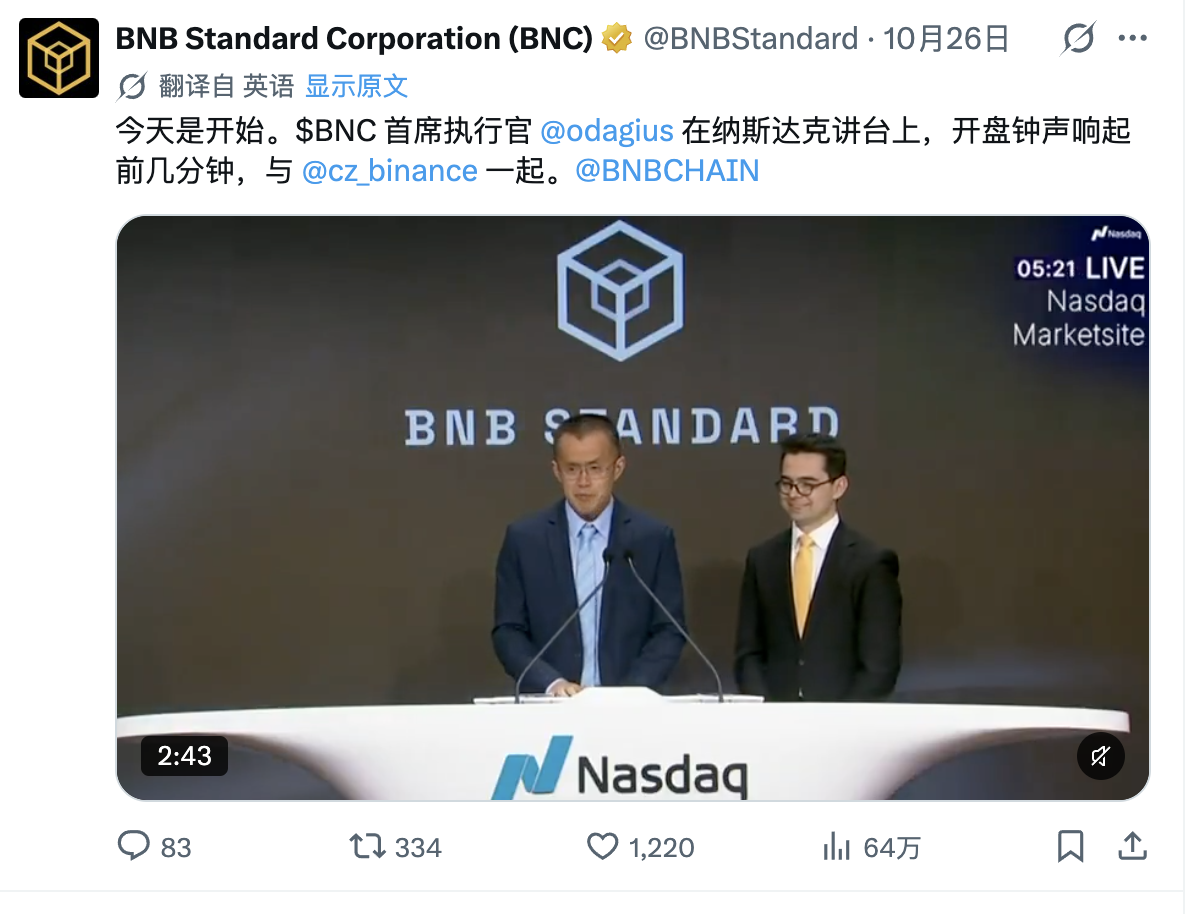
Instead, it aims to explain that when ordinary people are able to discover some unknown opportunities due to various circumstances, there is no need to take on risks that are difficult for ordinary people to bear, like the character Jack Clark in the article or CZ who once sold a house to buy Bitcoin. One only needs to invest a small amount of capital that they can afford to lose to try it out and seize the opportunity.
2. Actually, the idea of buying 100 shares at a very small cost is not valid, because there are far too many 100-share options to choose from, and having a certain amount of capital is a filtering process. If it’s really just about buying 100 shares, there are too many targets and too much randomness, which is likely overwhelming for a person.
The method I previously shared can address the issues raised in the comments:
Strictly control the positions, for example, only use no more than 20% of the total funds to try out various projects that one is optimistic about.
For projects bought using trial capital, continue to hold them, only changing or liquidating in two situations:
First, if you find fundamental issues with the project (e.g., problems with the team, insufficient moat, unviable profit model), then sell it;
Second, if you discover a better project compared to the one you currently hold, then sell the less favorable project fully or partially and invest in the better one you are more optimistic about.
If due to a misjudgment the project goes to zero, that should have been considered a loss one can bear, no need to get tangled up.
I have been operating this way for the past few years:
Due to team issues, I sold CRV and exchanged it for a Bored Ape while holding onto the Punk;
Due to problems with the economic model, I sold UNI;
For the project Magic which failed and went to zero, I took the loss;
Then, I sold off all other less promising second-layer expansions and various miscellaneous projects, leaving only some as fees, most went completely.
Everything I still find promising, I keep.
The funds obtained from selling those projects were all converted into Ethereum, and then this portion continues to be used to try out new projects I believe in; if there are no promising projects, I don’t make any moves.
I have been using this method up to now, and I have not found it to be too much of a hassle, nor have I encountered risks I could not bear.
As for the "not being able to bear" mentioned in the comments, I think that is not an issue with the method, but possibly a mindset issue.
What kind of mindset issue?
The desire to get rich overnight, wanting to earn 100 times from just one project.
Under the stimulation of such a mindset, the appreciation of Bitcoin and Ethereum seems too slow, one cannot wait, and thus ends up selling the spare funds or the Bitcoin and Ethereum that should be held firmly to try new projects.
This kind of operation is unbearable for anyone, because it is not investing; it is gambling.
3. What do you think about A16Z's name change and related operations?
When I saw this fund's name change, I immediately thought of our public account’s name change—from "Dao Talks Blockchain" to the current "Dao Talks Time".
So, I first guessed whether their name change could be related to our reason for changing names: to expand the scope and coverage?
Then I carefully looked at the reports on this online.
The official statement mentioned several points: for instance, expanding from a singular track to a broader frontier track, the blurring of cryptocurrency boundaries, the demand from top entrepreneurs no longer limited to a single field, etc.
I believe these statements are objective facts and represent the reasons for their name change.
Some believe this move indicates they are lowering the investment weight in the crypto ecosystem; I think it seems that way now because the hype surrounding AI is currently far greater than that of the crypto ecosystem. But when the crypto ecosystem rises again with new projects and new business models, I believe they will invest heavily again.
As for whether their operation will affect the development of the crypto ecosystem?
I believe not at all.
I have always believed: whether the crypto ecosystem can continue advancing depends solely on whether the teams of the most core projects in this ecosystem continue to fight and move forward even when the market is down.
The fact is, their pace has not only not slowed down but is also moving forward more firmly, more vigorously, and more swiftly.
免责声明:本文章仅代表作者个人观点,不代表本平台的立场和观点。本文章仅供信息分享,不构成对任何人的任何投资建议。用户与作者之间的任何争议,与本平台无关。如网页中刊载的文章或图片涉及侵权,请提供相关的权利证明和身份证明发送邮件到support@aicoin.com,本平台相关工作人员将会进行核查。