AI has transformed professional penetration into a downloadable accelerator
From the end of September to early October 2026, at least seven financial institutions in South Korea (including Shinhan Bank, KB Kookmin Bank, Hana Bank, etc.) were breached, with approximately 68,000 individuals' names, phone numbers, income, loan limits, and other data stolen. Investigations revealed traces of the open-source AI agent tool Artex. Artex, originally designed for security testing, can leverage large models such as DeepSeek, Claude, and Grok for automated reconnaissance and path planning. The attack's source IPs were distributed across multiple countries. The President of South Korea publicly stated that there are signs that AI was involved in these attacks.
Almost simultaneously, cybersecurity company Straiker disclosed that the organization CyberCartel utilized a multi-agent system based on models like Claude and Grok to conduct automated scanning and attacks on about 400 financial institutions in Central and South America. Different models had distinct roles: some were responsible for information gathering, some for path determination, and others for scheduling. The data that was stolen or targeted included email accounts, bank accounts, API keys, etc. In Italy, there were cases of AI cloning CEO and lawyer voices to deceive private banks into transferring funds. Financial institutions in India, Japan, Australia, and other places also experienced upgrades in cyber risks or related incidents.
These incidents share a common characteristic: attackers no longer need to assemble large teams from scratch. Open-source AI agents and large models can quickly generate scripts, scan for vulnerabilities, and optimize social engineering content. Steps that previously required specialized teams long-term preparation can now be compressed. The South Korean case has clear traces of open-source tools; the Latin American cases show a higher degree of automation through multi-model collaboration. They are not precisely "synchronized attacks by the G7 nations at the same second," but the highly concentrated timing indicates that AI tools make similar attack paths easier to replicate and scale.
It is not that AI can independently discover and exploit unknown vulnerabilities, but rather that AI has significantly lowered the threshold and speed of known attack paths.
The central bank is taking action: G7 simulations and the European Central Bank deadline
The International Monetary Fund has warned that an AI-enabled cyberattack hitting critical financial institution services could undermine market confidence. In mid-October, the G7 finance ministers and central bank governors agreed during the IMF annual meeting in Bangkok to conduct a joint tabletop exercise simulating the impact of AI-driven cyberattacks on the banking and financial sectors. The Japanese Finance Minister publicly confirmed that the plan has been approved at the ministerial level. The simulations will be designed by national finance authorities to test response protocols, and private sector institutions may also be invited to participate.
The European Central Bank has taken more concrete actions. In July, the chair of the European Central Bank's Supervisory Board sent a letter to the CEOs of banks directly regulated in the Eurozone, requesting them to submit a comprehensive action plan against AI cyberattacks by October 31, covering security controls, resources, responsibilities, and timelines. The Deputy Governor of the Bank of England stated that banks can no longer assume existing defenses are immune to AI-enabled attacks.
These measures indicate that regulators view AI as a "force multiplier" for cyber threats, especially targeting payment and clearing pipelines in the financial system. Simulations and plans are not solutions in themselves, but rather tests of whether existing manuals can handle attacks at machine speed.
Binance incident: Currently more resembles exploited permissions
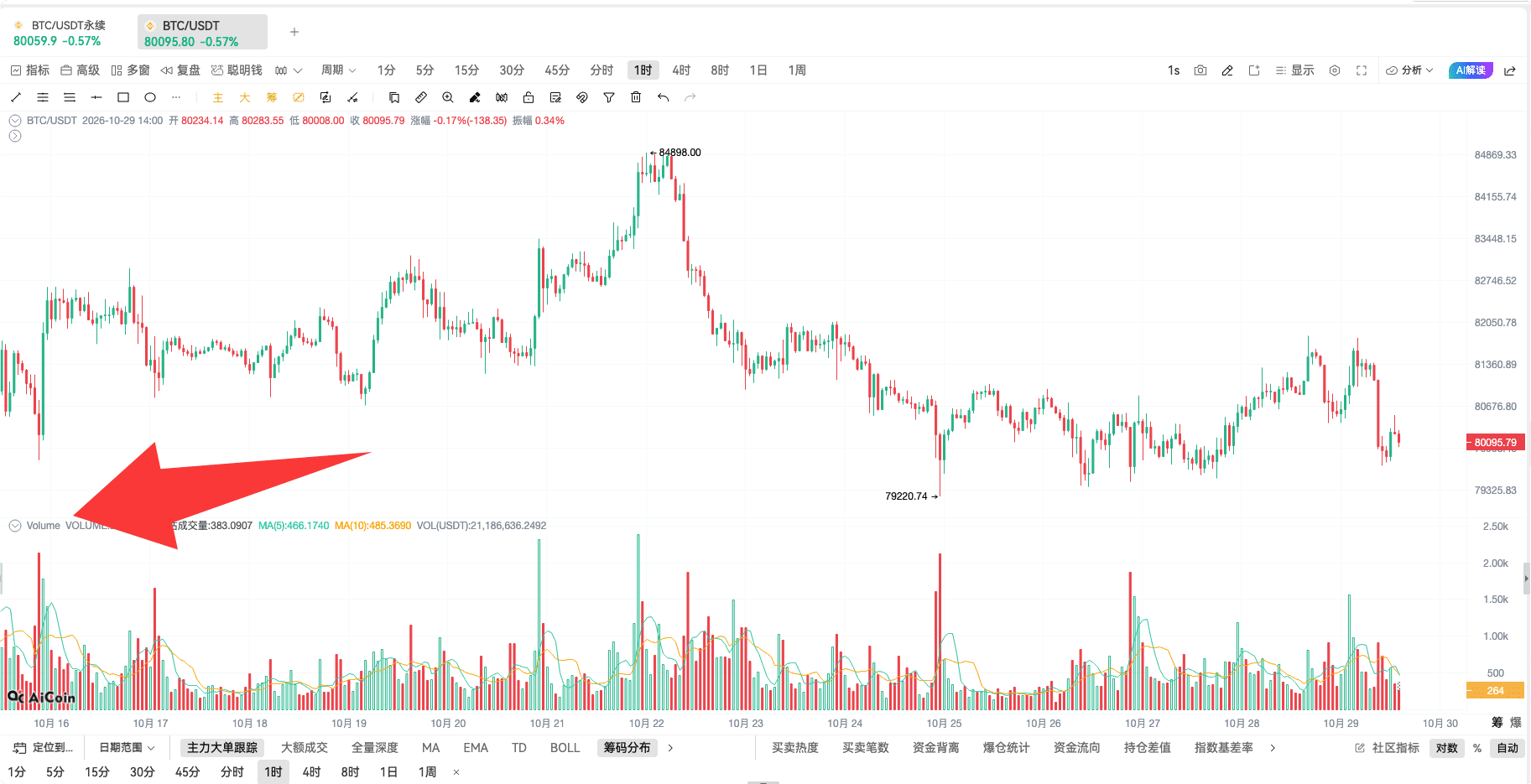
In the early hours of October 30, 2026, Binance's hot wallets across multiple chains experienced substantial outflows. On-chain estimates indicate outflows of about $5.5 billion to $6.3 billion, involving Ethereum, Bitcoin, Tron, and several other chains. One transaction included about 167,000 ETH and $1.6 billion USDT. The attack utilized the EIP-7702 authorization mechanism, allowing the hot wallet to execute specific code and then be swept en masse.
Binance's preliminary investigation suggested that the event might involve a DevOps engineer's laptop being compromised, allowing the attacker to enter the service container and submit unauthorized withdrawal transactions. No direct leaks of wallet private keys have been detected. Binance announced that it would cover all losses with the SAFU fund and company funds, and has worked with Tether, Circle, and others to freeze about $3 billion. Withdrawals are paused, expected to resume within 48 hours (subject to official announcements).
On September 24, Bitget's hot wallet and warm wallet were also attacked, resulting in losses of about $350 million to $388 million. The official statement indicated that the protection fund would cover this, with no impact on user balances, and withdrawals resumed about a week later. On-chain analysis shows some overlapping flows of funds between the two incidents, but officials have yet to confirm the same attacker.
Comparing with bank AI attacks: The bank cases had clear traces of open-source AI agents and automated reconnaissance features; the Binance incident currently points to internal access paths being exploited based on public information. Both exemplify "increased speed and scale," but direct evidence has yet to attribute Binance to the same category of AI agent tools. The common factor is that once effective access permissions (employee devices, credentials, API) are obtained, subsequent sweeping can be very fast. AI may play an auxiliary role in initial reconnaissance or script preparation.
Can AI automatically find vulnerabilities? Will the proliferation of agents lead to more chaos?
Current large models can assist in scanning public vulnerabilities, generating exploit code, optimizing phishing emails, and analyzing target exposure. The UK's Financial Conduct Authority has warned that the speed at which cutting-edge models detect cybersecurity vulnerabilities may exceed the speed at which some institutions can patch them. However, truly high-value exploitation of unknown vulnerabilities still relies on professional knowledge, permissions, and long-term preparation. Open-source agents make "semi-automated" attacks easier, but do not enable complete novices to execute bank-level intrusions with a single click.
When individuals widely use AI agents as assistants, the risks do indeed expand. Many banks in the U.S. have intercepted attempts by customers to authorize third-party AI agents to attempt unauthorized transfers. After users entrust their account passwords to agents, those agents may execute operations beyond what was expected. This is not an external hacker, but rather the overreach of authorized tools. Institutions need to limit access for third-party agents; individuals should also restrict the scope of authorization.
What ordinary people should do for security precautions in the AI era:
- Do not upload sensitive information to AI: Do not upload ID numbers, bank card numbers, passwords, verification codes, mnemonic phrases, private keys, internal documents, customer data, or contract contents to any public or third-party AI tools. Even for "help me summarize this document," ensure it is desensitized first. AI service providers may use the data to train models, or there may be data leaks.
- Do not authorize AI agents to directly operate financial accounts: Do not give any third-party AI assistants your account passwords or verification methods for banks, exchanges, or payment tools. Only operate through official apps or websites. If you must use AI assistance, limit its permissions and do not authorize transfers or logins.
- Enable multi-factor authentication and withdrawal whitelists: Accounts must enable authenticator apps or passkeys, set anti-phishing codes, and enable withdrawal address whitelists (it is recommended to also lock new addresses simultaneously). SMS verification can be easily intercepted; authenticators are more secure.
- Be wary of AI-generated phishing and deepfakes: AI can quickly generate highly realistic phishing emails, text messages, and even voice clones. Official notifications should include anti-phishing codes; do not click on search ads or unfamiliar links; always verify "urgent transfers" or "customer service requests for verification codes" through official channels first.
- Regularly check authorizations and devices: Check the devices logged into your account, authorized applications, and API permissions weekly, removing any that are unfamiliar. Do not install unknown plugins on work computers; keep personal devices separate from work devices. Store important assets in multiple places, avoiding keeping all funds in a single hot wallet or platform.
What can be observed is not whether "AI is already omnipotent"
Look at whether the regulatory simulations and banks' self-inspection plans are implemented and publicly updated; watch for new attack incidents that continue to show traces of open-source AI agents; see if exchanges and banks strengthen employee device management and restrict third-party agents.
There have already been multiple attacks on exchanges this year. In September, Bitget suffered losses of about $350 million to $388 million, with the official statement clearly indicating that the protection fund would cover this, and that user balances would not be affected, with withdrawals resuming after about a week. The Binance incident on October 30, with a similar official commitment to cover all losses using the SAFU fund and company funds, has frozen about $3 billion. For users, whether the platform has sufficient funds and mechanisms to absorb losses is more important than "whether it has been attacked." Recently Bitget, and now Binance, have both chosen to bear the costs, which is relatively speaking still a more secure choice. There is no need to panic excessively, but one should not relax personal account security settings. AI has lowered the threshold for attacks, but it has also amplified the consequences of human error. The most direct protection remains: limit authorization, increase verification, only use official entry points, and do not hand financial access to automated tools.
免责声明:本文章仅代表作者个人观点,不代表本平台的立场和观点。本文章仅供信息分享,不构成对任何人的任何投资建议。用户与作者之间的任何争议,与本平台无关。如网页中刊载的文章或图片涉及侵权,请提供相关的权利证明和身份证明发送邮件到support@aicoin.com,本平台相关工作人员将会进行核查。