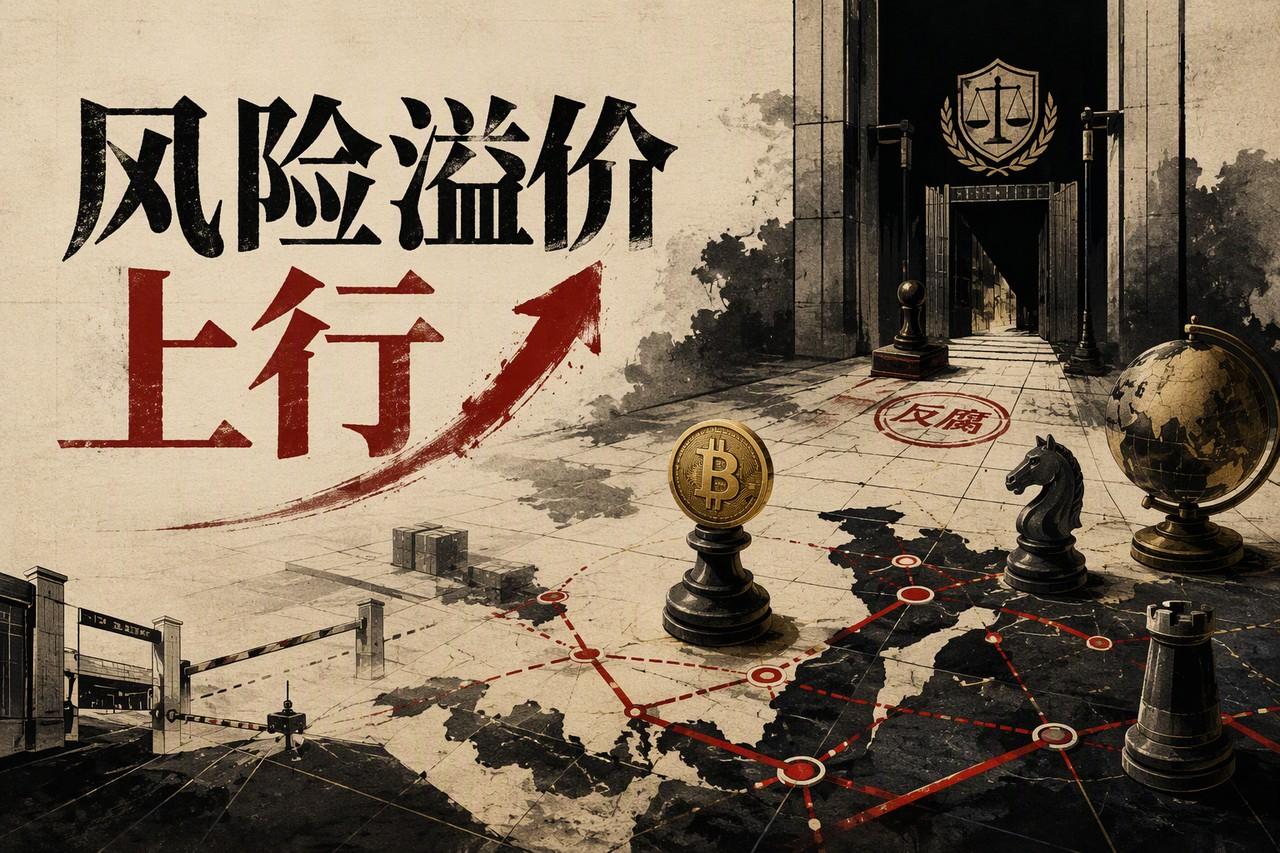
OKX and the Intercontinental Exchange (ICE) jointly established OKXICE TSV, which initially aimed to move the stocks of 62 companies onto the blockchain, but faced rejections from the "parties involved" at the end of October: on October 27, the first version of the list revealed that 33 issuers explicitly disallowed the tokenization of their stocks, and three days later, this number grew to 50. Major companies such as NVIDIA, Walmart, Eli Lilly, Micron Technology, Costco, Nike, CrowdStrike, Palo Alto Networks, and Reddit were conspicuously on the list—within the limited public reports available, this tokenization experiment was collectively paused by traditional capital market actors. Almost simultaneously, the U.S. cryptocurrency industry forcibly entered the Ohio election-related activities with approximately $63 million in political donations: among which Fairshake Super PAC contributed nearly $56 million, and the PAC owned by the Winklevoss twins added about $7.2 million. Public information indicates that this money directly aims to prevent Senator Sherrod Brown from continuing his term, with the true stakes being the direction of future federal cryptocurrency regulation. Further east, on October 29, China’s 20th Central Committee’s Fifth Plenary Session passed a "Decision." As reported by Xinhua, the document rarely specifically named virtual currencies, cross-border funds, and blockchain, stating a need to “resolutely combat” related corruption and proposed to thoroughly investigate expected returns, agreed holding, “white gloves,” and the political-business “revolving door” as new corruption scenarios, while promoting the construction of a digital disciplinary inspection and supervision system. However, as of now, the specific implementation details and cases regarding the virtual currency provisions have not been made public. These three seemingly unrelated clues—the concentrated opposition to tokenized stocks from issuers, the heavy financial involvement of U.S. on-chain capital in elections, and China incorporating virtual currencies into stringent governance under the guise of anti-corruption—are simultaneously illustrating a new global cryptocurrency governance front: under the dual realities of tokenization and politicization, the cryptocurrency industry is entering a more complex cycle of compliance and power play that must engage with regulatory dialogues while also being compelled to negotiate power dynamics.
Surge in OKXICE List: 62 Stocks Meet 50 Oppositions
If the new front in global cryptocurrency governance still seems abstract, then when it comes to the tokenized stock list of OKXICE TSV, it transforms into a very visible tug-of-war. The TSV platform established by OKX and ICE initially had grand ambitions—planning to tokenize the stocks of 62 companies, translating one of Wall Street's most familiar asset forms into the on-chain world. However, when they began discussions with issuers, resistance quickly became apparent. On October 27, 2025, OKXICE announced its first list of oppositions, revealing that 33 issuers clearly stated that they do not allow their stocks to be tokenized, marking the first significant halt to the tokenization plan in public documents.
Even more dramatically, the list changed just three days later. By October 30, 2025, OKXICE updated its notice, reporting that the number of issuers opposing tokenization had risen to 50, and in the original plan of 62 stocks, the vast majority had been tagged as "not allowed" by their respective companies. Public reports mentioned a series of weighty names in the U.S. stock market, including NVIDIA, Walmart, Eli Lilly, Micron Technology, Costco, Nike, CrowdStrike, Palo Alto Networks, and Reddit, all appearing on the opposition list, making TSV's ambitions seem to have collided with a firewall collectively erected by traditional enterprises. For these highly brand-sensitive companies, allowing their securities to appear in a different form on the on-chain world is no longer merely a technical issue, but involves a complex interplay of compliance, reputation, and market expectations. With 50 issuers publicly opposing the plan among the original 62 stocks, the platform initially hoped to serve as a model for tokenized securities has faced a significantly reduced practical space for implementation.
Compliance and Brand Red Lines of Tokenized Securities
From the perspective of regulators and traditional issuers, the primary sensitivity regarding tokenized stocks has never solely been "technical feasibility," but rather what they are legally recognized as. Tokenized products often reflect the price or partial rights of a stock in the form of on-chain tokens; in different jurisdictions, some may be closer to derivatives with settlement arrangements, while others could potentially be viewed as another form of security, which directly involves license types, information disclosure obligations, and investor suitability requirements. Historically, some exchanges have had to restructure or delist stock tokens due to regulatory questioning of their products being "effectively unregistered securities" or "cross-border provision of unlicensed investment services.” This pathway of launching first and then passively rectifying is precisely the risk amplifier that traditional issuers fear most.
At the same time, the red lines surrounding branding and intellectual property are also tightening. Large companies usually meticulously control where their stocks are displayed and traded through licensing agreements and contract clauses, alongside how their names and logos are used by third parties, as every new scenario may be interpreted as a form of "implicit endorsement." Unauthorized stock tokenization models, although they do not directly change the shareholder register, might be viewed by regulators as a form of repackaging sales of the original securities, while breaching the legal boundary of "unauthorized use of company names and logos to provide financial services." As of now, public data confirms that issuers have expressed explicit opposition to OKXICE's tokenization plan, with the opposition list growing from 33 on October 27, 2025, to 50 on October 30, 2025, with specific legal actions or detailed reasons not yet disclosed. However, this collective "disagreement" itself has sent a signal to all future potential participants: the future business model for stock tokenization must treat regulatory attributes and brand licensing as prerequisites from the product design stage, rather than optional remedial factors that can be addressed with technical narratives afterward.
$63 Million in Political Donations: Crypto Capital Bets on Election
As OKXICE has had its tokenized stock project collectively paused by traditional issuers, another front in the cryptocurrency industry has quietly turned towards the ballot. According to a research brief based on single news and official reports, from the second half of 2025 to the recent past, the U.S. cryptocurrency industry has cumulatively contributed about $63 million in political donations for election-related activities in Ohio, with Fairshake Super PAC making the largest contribution of nearly $56 million and an additional approx $7.2 million from the PAC owned by the Winklevoss brothers. Public reports generally identify one core objective behind these funds, targeting the same politician—U.S. Senator Sherrod Brown, whose long-standing involvement in legislative financial regulation positions he is viewed by the cryptocurrency industry as detrimental to business development, making him the key obstacle in this “money voting” election battle.
This $63 million signifies that cryptocurrency capital has upgraded from traditional lobbying in Washington to directly betting on the allocation of Senate seats: the industry is attempting to rewrite the script for future federal regulation with election budgets. Internally, it is seen as a push to secure rule-makers who "better understand on-chain" operations; externally, it inevitably deepens public and regulatory suspicions—an industry already suspected of high risk and problem propensity is now audaciously spending to influence elections, which can easily be interpreted as trying to "buy rules with capital," thus providing new ammunition for hardline figures like Sherrod Brown. However, in the long run, as cryptocurrency capital enters the institutional political realm, it may also leave open a new possibility for future regulatory cooperation: if the industry can demonstrate a willingness to operate within compliance frameworks outside of the election, then this type of political donation may be redefined as a cost of participating in governance, rather than always seen as an aggressive challenge to existing order.
New Anti-Corruption Regulations in China Include Virtual Currencies
As cryptocurrency capital attempts to rewrite the election script in Ohio, another governance front is quietly tightening in Beijing. On October 29, 2025, a "Decision" on further comprehensively advancing the new great project of Party building was passed at the 20th Central Committee’s Fifth Plenary Session. According to public reports (limited by the sources), Xinhua’s relaying of the text for the first time explicitly lists corruption behaviors conducted through the internet, cross-border funds, and blockchain alongside digital asset transactions as key targets for crackdown, requiring thorough investigations into new forms of benefit delivery like "expected returns, agreed holding, white gloves, political-business revolving doors." This approach that packages technological carriers with hidden revenue arrangements effectively delineates a clearer and harsher risk boundary for cryptocurrency-related activities within the anti-corruption framework.
For officials, any arrangements that involve "implicit bribery" or disguised equity stakes utilizing on-chain assets or cross-border payment tools are no longer merely financial compliance issues but fall directly into the purview of disciplinary review; for enterprises, especially those deeply coupled with public power, utilizing tokenization tools to design expected returns, holding structures, or inbound/outbound capital channels for officials will face the potential classification as innovative forms of corruption. Building on this, the "Decision" proposes deepening the digital disciplinary inspection and supervision system; while specific implementation details or typical cases have yet to be disclosed, the directional signals are already distinctly clear: the disciplinary inspection system will integrate on-chain data and cross-border money flows into its technological monitoring domain, thereby utilizing more refined transaction tracking and account profiling to pull what was seen as "decentralized" cryptocurrency assets back into an auditable and accountable power order.
Multi-Faceted Cryptocurrency Governance: Compliance Game Continues to Upgrade
From the three clues that emerged almost synchronously in the second half of 2025, one can vaguely see the contours of the next phase of global cryptocurrency governance: on one end is OKXICE TSV, which, during its plan to tokenize the stocks of 62 companies, revealed for the first time on October 27, 2025, that 33 issuers opposed the tokenization, and by October 30, this number had increased to 50 (according to public disclosures, limited by sources), including major companies like NVIDIA, Walmart, Eli Lilly, Micron Technology, Costco, Nike, CrowdStrike, Palo Alto Networks, and Reddit, indicating that tokenized securities lacking sufficient negotiation and authorization are unlikely to find substantial implementation space among large traditional issuers in the short term. Future compliance pathways are more likely to rely on regulatory "sandboxes," licensing pilots, and issuer-initiated on-chain securities programs. On the other end, U.S. cryptocurrency capital contributed around $63 million in political donations linked to Ohio election activities, where Fairshake Super PAC accounted for nearly $56 million, and the Winklevoss brothers’ PAC contributed about $7.2 million (according to single news and official reports, limited by sources), openly targeting the prevention of Senator Sherrod Brown from continuing his term. This marks that the industry has initiated direct engagement in shaping the regulatory environment using election funds, which could long-term either open a window for clearer federal guidelines or deeply entangle cryptocurrency firms into partisan battles, provoking more targeted counter-legislation. The third clue arises from the "Decision" passed on October 29, 2025, relayed by Xinhua, which proposes placing corruption behaviors facilitated through the internet, cryptocurrency assets, cross-border funds, and blockchain under stringent crackdown, along with establishing a digital disciplinary inspection and supervision system. Though specific execution details have not yet been published, it can be expected that the technicalization of regulation in China will continue to advance, significantly elevating risk assessments for officials and enterprises when engaging with, holding, or utilizing related assets. Under the intertwining of these three forces, global regulators' focus on cryptocurrencies has shifted from "whether to allow" to "how to enforce strict regulation and mitigate risks." The space for tokenized securities will depend on whether issuers’ attitudes shift from blocking to collaborating. The regulatory window following the U.S. elections will test whether political donations can facilitate institutional compromises, while the enforcement strength of China's new anti-corruption regulations will reshape the behavioral boundaries of domestic funds and on-chain activities. Continuous observation of these key variables will determine how industry participants calibrate their compliance strategies and risk thresholds in the new round of cryptocurrency governance reconstruction.
Join our community, let’s discuss and grow stronger together!
Exclusive Hyperliquid benefits for AiCoin: https://app.hyperliquid.xyz/join/AICOIN88
Exclusive Aster benefits for AiCoin: https://www.asterdex.com/zh-CN/referral/9C50e2
On-chain Telegram community: https://t.me/AiCoinWhaleData
On-chain community: https://www.aicoin.com/link/chat?cid=N6OVMor5g
AiCoin on-chain Twitter: https://x.com/aicoinwhaledata
免责声明:本文章仅代表作者个人观点,不代表本平台的立场和观点。本文章仅供信息分享,不构成对任何人的任何投资建议。用户与作者之间的任何争议,与本平台无关。如网页中刊载的文章或图片涉及侵权,请提供相关的权利证明和身份证明发送邮件到support@aicoin.com,本平台相关工作人员将会进行核查。