What would it be like if the stocks of companies like Nvidia, Microsoft, and Walmart could be traded on weekends like Bitcoin?
This is exactly why the tokenization of stocks is attracting market attention.
Traditional U.S. stocks have fixed trading hours, whereas tokenized stocks on the blockchain can theoretically break through some time and geographical limitations, allowing investors to trade even when traditional markets are closed.
It sounds very appealing, but things are not that simple.
Recently, OKX has collaborated with the parent company of the New York Stock Exchange, Intercontinental Exchange (ICE), to explore tokenized stock trading, planning to launch a trading venue covering over 60 U.S. listed companies.
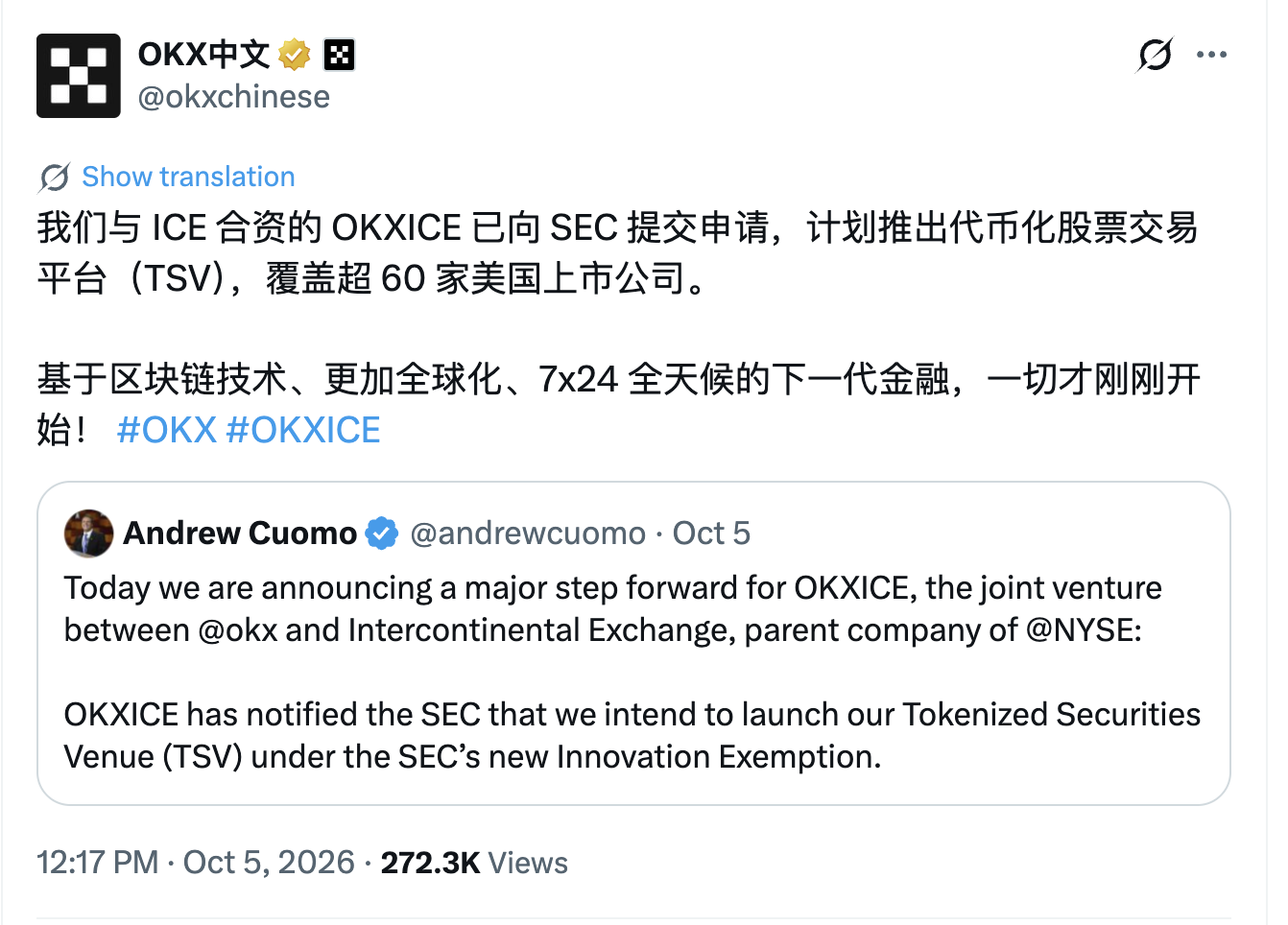
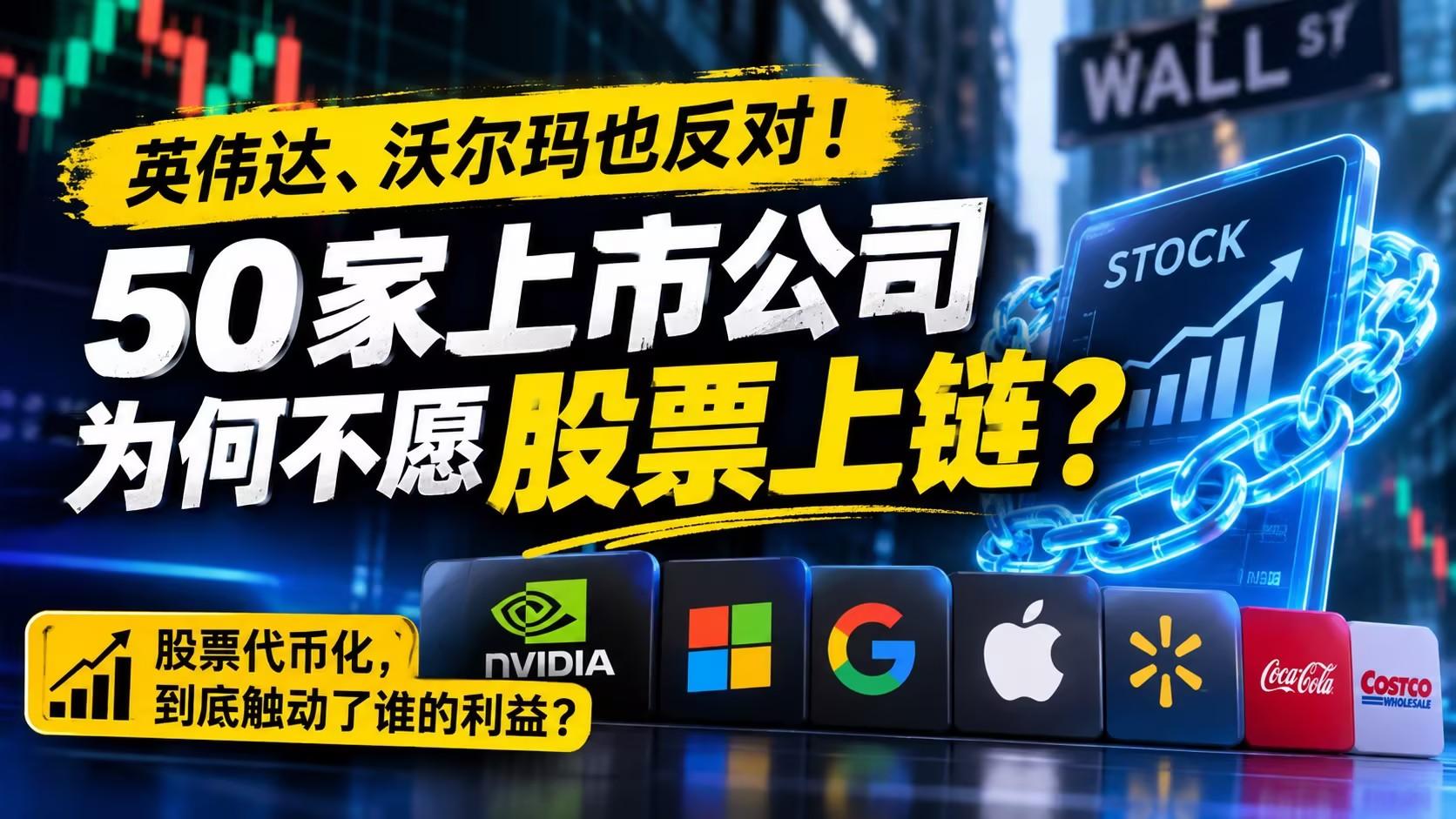
However, during the project's advancement, it has encountered significant obstacles. As of November 1, 2026, 50 listed companies have publicly expressed opposition, including well-known firms like Nvidia, Nike, Costco, and Reddit.
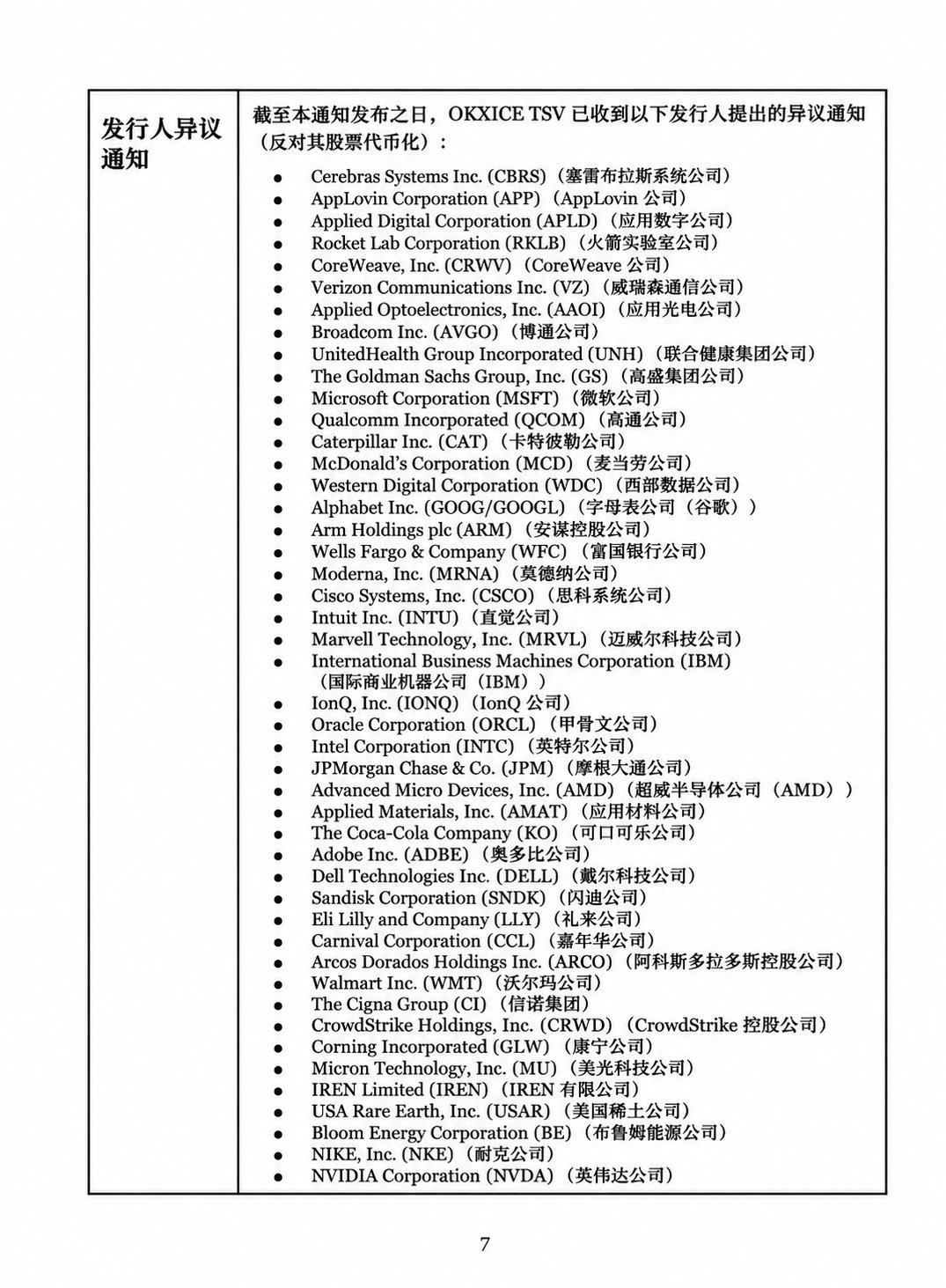
Why are even companies like Nvidia and Walmart unwilling to have their stocks moved to the blockchain?
Whose interests are being affected by stock tokenization? What changes will it bring to ordinary investors?
1. Why are companies unwilling to have their stocks tokenized?
On the surface, stock tokenization seems beneficial for everyone.
Investors gain more flexible trading hours, platforms acquire new trading businesses, and listed companies can increase the market attention for their stocks.
But the problem is: Tokenization of stocks does not mean that listed companies can derive direct profits from it.
If a third-party platform packages relevant stocks into tokenized products without the issuing company's involvement, the platform may earn transaction fees, but the listed company may not gain new financing and might not control how the products are issued, traded, and circulated.
This raises several practical issues:
- Price Issues: The prices of tokenized products may deviate from those in the traditional stock market, especially during market closures.
- Liquidity Issues: Stocks of the same company trading in different markets may lead to fragmented trading depth.
- Shareholder Rights Issues: Are token holders considered company's shareholders? Can they vote or participate in corporate governance?
- Liability Issues: If price anomalies, trading disputes, or product structure issues arise, who should bear the responsibility?
For listed companies, stocks are not only tradable assets but also involve shareholder relations, information disclosure, and corporate governance.
If a third-party platform can establish a new trading market around a company's stocks without the company's participation, the listed company will certainly pay attention to the associated risks.
2. Is 24-hour trading really more convenient?
One of the most appealing aspects of stock tokenization is the opportunity to break the restrictions of traditional trading hours.
Traditional U.S. stocks have fixed opening and closing times, and during weekends or holidays, regular stock markets typically cannot trade.
Meanwhile, tokenized products on the blockchain can potentially offer longer trading hours if they comply with platform rules.
For instance, if a major news affecting a tech company suddenly emerges on the weekend, the traditional U.S. stock market has not yet opened, and theoretically, the tokenized products could first reflect market sentiment.
But there is an easily overlooked issue:
Being able to trade anytime does not mean there will always be sufficient liquidity.
When traditional stock markets are closed, market makers, trading participants, and price reference mechanisms may change. When trading depth is insufficient, the buy-sell spread may widen, and transaction prices may also deviate from those in traditional markets.
Therefore, 24-hour trading provides more choices in trading time but does not guarantee more stable prices or that trades can be executed at reasonable prices at any time.
3. Tokenizing stocks impacts more than just trading time
The real point of concern about stock tokenization may lie in its impact on traditional financial market infrastructure.
In the past, investors buying and selling stocks typically needed to go through several steps involving brokers, exchanges, custodial institutions, clearing, and settlement systems.
These institutions not only handle transactions but also bear responsibilities for asset custody, transaction records, fund settlements, and investor services.
If more and more stocks are issued and circulated through blockchain networks in the future, trading platforms may directly interact with users, potentially taking control over trading entry points, user relationships, and some trading data.
This means that traditional financial institutions need to rethink their positions.
However, blockchain will not automatically replace the existing financial system. Asset custody, compliance checks, trade settlements, and investor rights protection still require reliable systems and infrastructure support.
The real change is more likely the gradual integration of traditional financial systems with blockchain technology rather than a simple replacement of one by the other.
4. Regulatory attitudes will determine how far stock tokenization can go
Stock tokenization involves securities issuance, trading, custody, and investor protection, so regulation is an unavoidable aspect.
In September 2026, the U.S. Securities and Exchange Commission (SEC) introduced innovative exemption arrangements related to tokenized securities, providing some space for eligible market participants to explore relevant business.
However, this does not mean that all platforms can issue and trade tokenized stocks without restrictions.
Relevant arrangements still involve applicable conditions, compliance requirements, and rights of the issuers. Listed companies expressing objections to their own stocks being tokenized has also become an important aspect of regulatory discussions.
This reflects a practical issue: technology can make assets easier to circulate, but asset issuance, investor rights, and market responsibilities cannot become obscured as a result.
For stock tokenization to genuinely develop, both technological and institutional issues must be addressed.
5. Binance bStocks: Tokenized stocks already have practical products
While the industry is still discussing the rules and boundaries of stock tokenization, products that can be practically understood have already appeared in the market.
One such case is Binance bStocks.
According to data published by Binance on October 15, 2026, approximately four months after bStocks' launch, the assets under management had exceeded $1 billion, with trading volumes for conversions between tokens and corresponding stocks exceeding $6 billion.
Another noteworthy statistic: in August 2026, about 42% of bStocks trading volume occurred outside of normal trading hours for the U.S. stock market.
This indicates that there is indeed market demand outside of traditional stock trading hours. For those looking to understand stock tokenization, bStocks provides a window to observe the actual operation of such products.
However, to understand these products, it is essential to clarify how they differ from directly purchasing U.S. stocks.
bStocks are issued by BTech Holdings Limited and provide an economic exposure to the corresponding stocks through its product structure. Holders do not become direct shareholders of the related companies nor enjoy rights such as voting rights associated with common shareholders.
The asset arrangements, dividend handling, trading rules, and applicable scopes related to the product should be based on official product documents. Users in different regions may also face varying product access restrictions.
If you want to learn more about how stock tokenization is implemented, you can search for "bStocks" in the Binance App to check the currently offered related products, targets, and rules.
If you don’t have a Binance account yet, you can register using the link below to learn more about the product information available on the platform.
👉 https://jump.do/zh-Hans/xlink-proxy?id=3
(Invitation code: aicoin668, enjoy a 10% rebate)
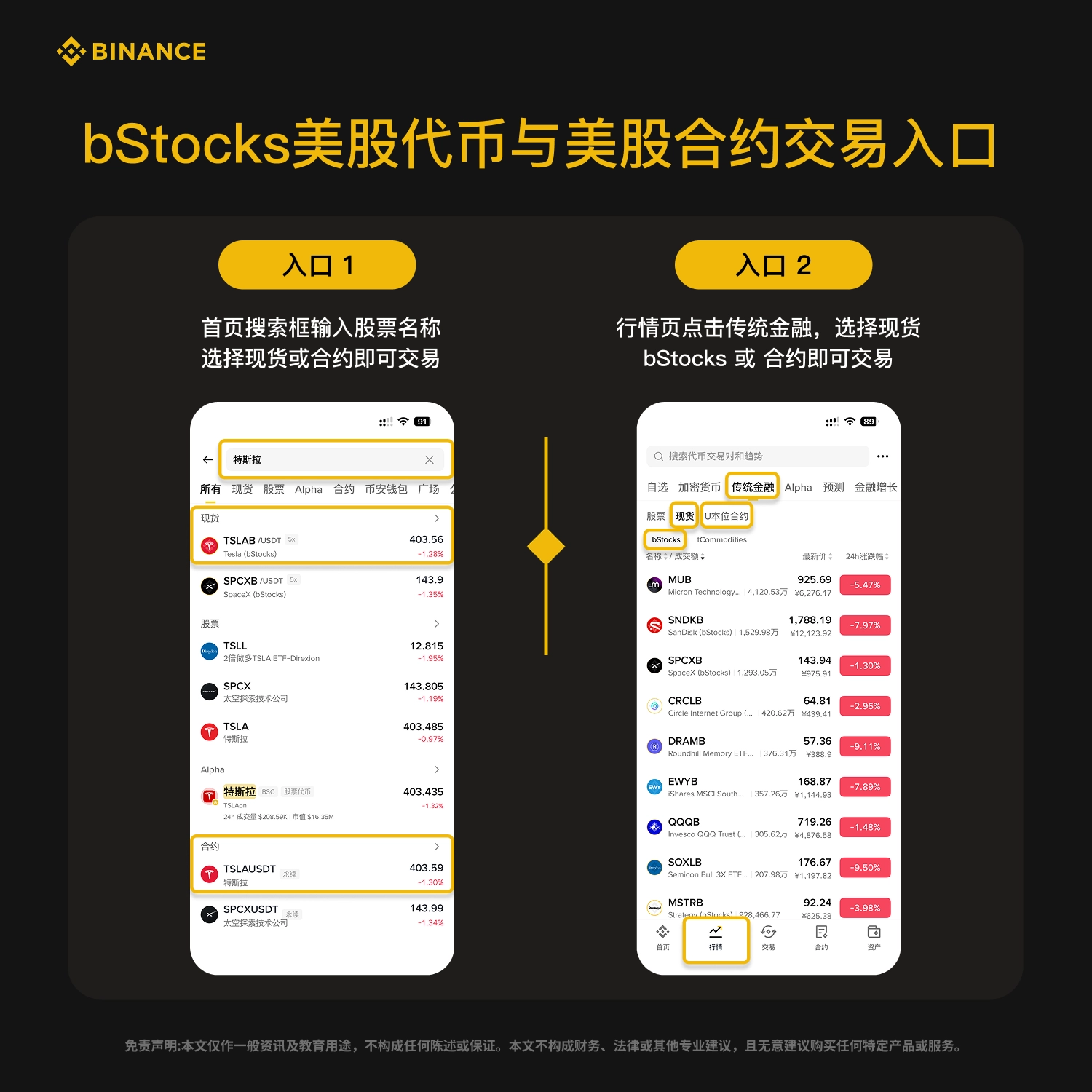
It's more important to understand the product structure, relevant rights, and rules than to focus solely on trading hours.
6. What else to watch for in stock tokenization?
From the collaboration between OKX and ICE to the actual operation of Binance bStocks, and the exploration of asset tokenization by traditional financial infrastructure institutions like DTCC, it's clear that stock tokenization is no longer just a concept.
However, many issues still need to be resolved before it can become a mature market infrastructure.
Whether listed companies accept it, how regulatory rules are implemented, how underlying assets are arranged, how trading prices and liquidity are ensured, and what rights holders actually possess will all affect the future development of such products.
What truly deserves attention regarding stock tokenization is not just whether trading can happen on weekends but whether traditional financial assets can achieve secure, transparent, and compliant circulation within a new technological framework.
This change has only just begun.
Join our community, let's discuss together, and become stronger together!
Official Telegram community:
AiCoin Chinese Twitter:
Binance Welfare Group:
https://www.aicoin.com/link/chat?cid=gmLgwvKD1
Risk Warning: Tokenized stock products differ from direct stock ownership. Holder rights, asset arrangements, trading rules, fees, and availability are subject to official product documents. Related products may involve price fluctuations, liquidity, and counterparty risks. This article is for industry information purposes only and does not constitute investment advice.
免责声明:本文章仅代表作者个人观点,不代表本平台的立场和观点。本文章仅供信息分享,不构成对任何人的任何投资建议。用户与作者之间的任何争议,与本平台无关。如网页中刊载的文章或图片涉及侵权,请提供相关的权利证明和身份证明发送邮件到support@aicoin.com,本平台相关工作人员将会进行核查。