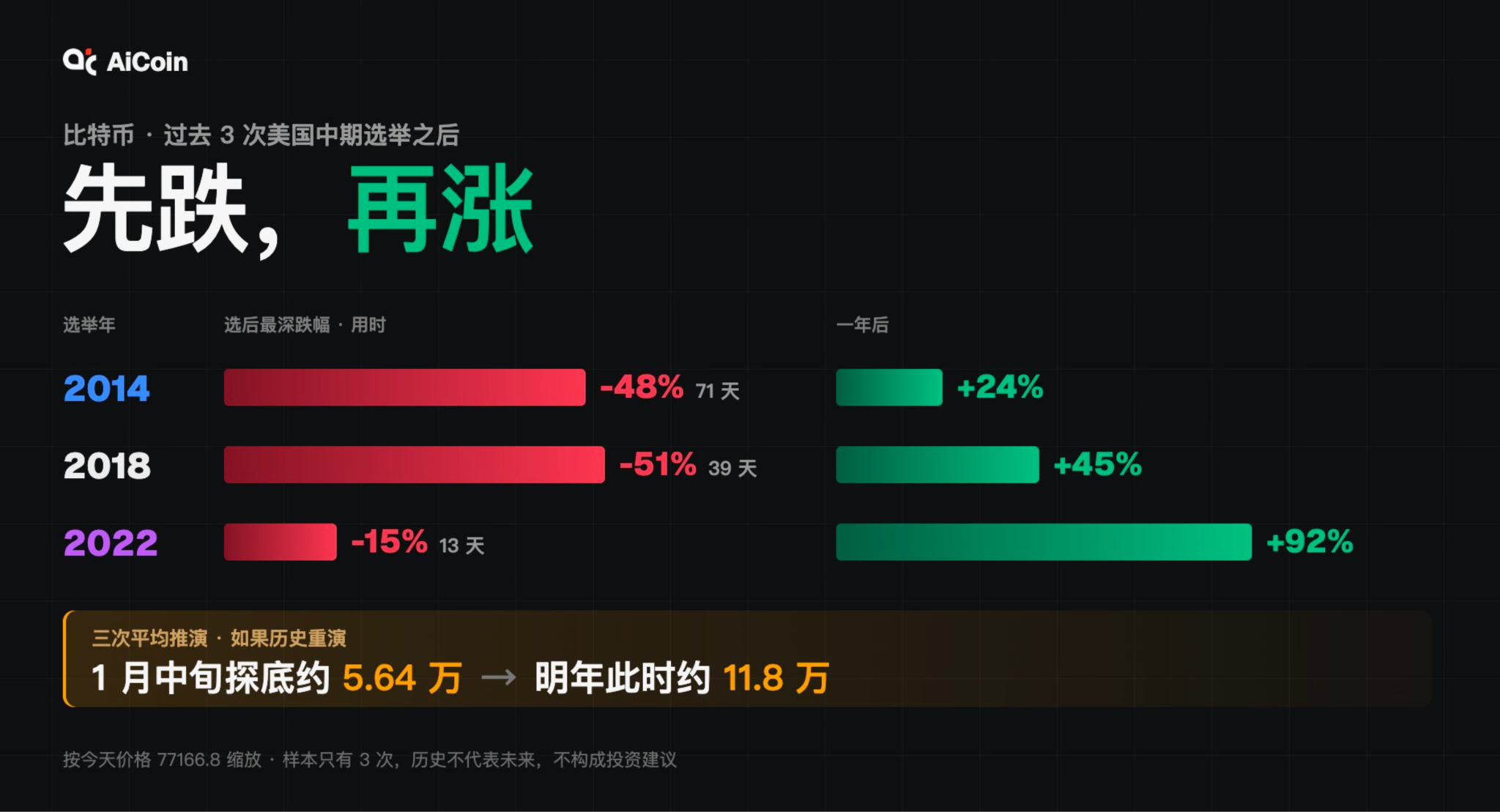
On October 29, 2026, Binance's official announcement disclosed that its hot wallet was hacked, affecting approximately $6.3 billion in token assets; Binance stated it would cover user losses using SAFU and company funds, and mentioned that about $3 billion in on-chain assets had been frozen as of October 30.
This incident brings a frequently overlooked issue back to the forefront:
Is the security of a trading system defined by it "never having incidents," or by how it "limits losses when incidents occur?"
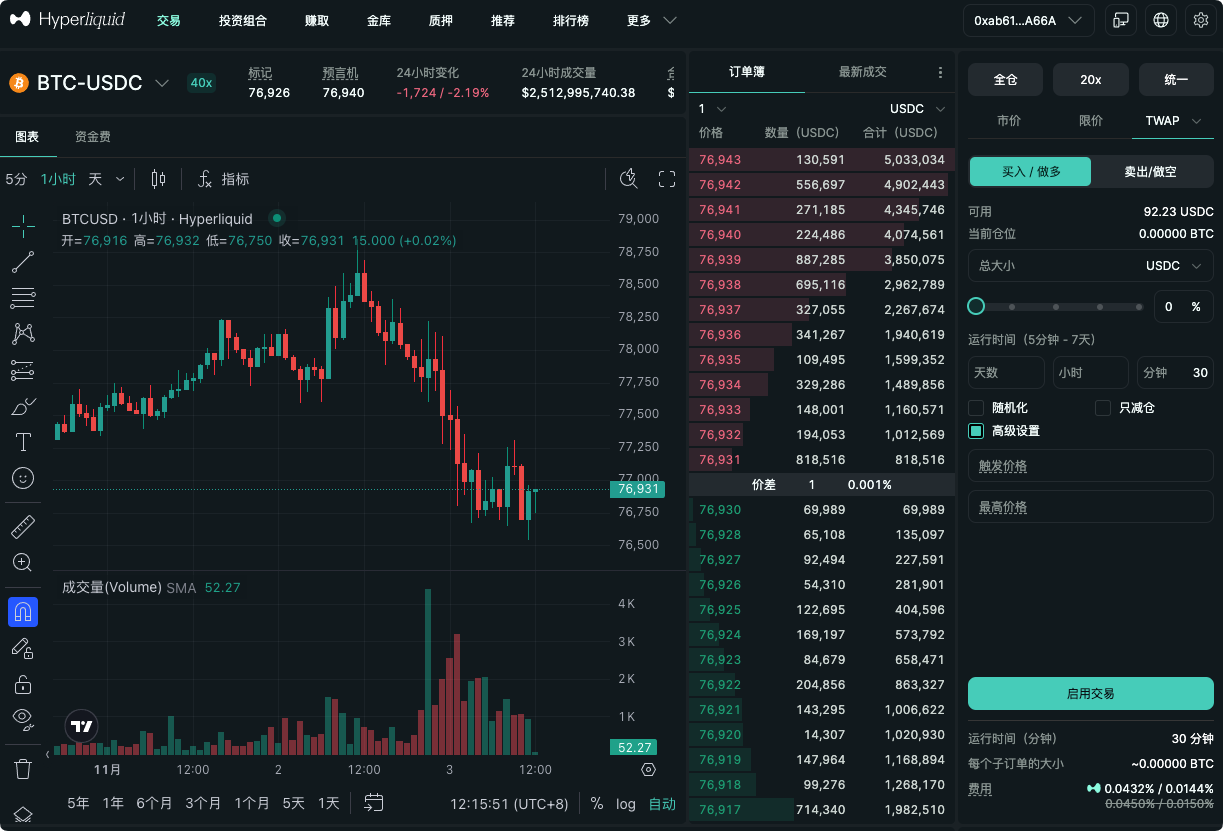
A powerful judgment in the market is that Hyperliquid's key is not that it will never be hacked, but whether risks can be confined locally when problems arise with individual participants, asset custodians, market deployers, or front-end access, rather than propagating to the entire protocol.
This judgment is worth discussing, but cannot be taken as a conclusion directly.
Hyperliquid is not without systemic risks, nor is it inherently "safer the larger it gets." Its more accurate advantage is: there are more separable risk boundaries between the protocol, market, assets, custody, and front-end.
The clearer the separations, the more likely single-point failures can be localized; but with more boundaries, users also need to know exactly which layer their risk is exposed to.
1. The Binance incident exposes the concentrated risk of a "single custody system"
According to Binance's official update, on October 29 at approximately 20:05 UTC, its hot wallet was hacked, resulting in approximately $6.3 billion in token asset losses.
Binance subsequently stated that the company would take on the related losses and had prepared over $6.34 billion in funds, of which about $5 billion is the specific token assets affected; meanwhile, approximately $3 billion in assets have been frozen on-chain.
This indicates that the risks of centralized exchanges have two levels.
The first level is technical intrusion. Attackers do not necessarily need to break into every user's account; as long as they breach the key systems that the exchange can use to represent large numbers of users in transferring assets, concentrated losses may occur.
The second level is balance sheet and credit risk. Exchanges can choose to use reserves, insurance funds, or company funds to compensate, but users ultimately rely on whether the platform has the ability and willingness to assume this responsibility.
This does not mean that centralized exchanges are necessarily unsafe. In fact, centralized platforms can devote resources to security teams, risk control systems, monitoring, and emergency response capabilities, and can unify the freezing of funds, tracing of assets, and compensation arrangements after an incident occurs.
The problem lies in: all capabilities are also concentrated within the same entity.
If custody, withdrawal permissions, key management, hot wallets, and risk reserves are organized around the same company, then the impact of a single-point error may also cover all users.
2. Hyperliquid’s risk structure is different, but it is not without risk
Hyperliquid’s perpetual trading is not a typical exchange custody model.
HyperCore’s clearing house manages the perpetual margin status of each address, including balances and positions; the official documentation shows that users can use full margin or isolated margin, separating the liquidation risk of a specific position from others.
This is not exactly the same structure as "the exchange uniformly records user claims, then handles liquidation internally."
But it needs to be precisely expressed: non-custodial trading does not mean that all assets and all aspects are completely controlled independently by users. Spot assets, cross-chain assets, stablecoin issuance, treasury strategies, oracles, market deployers, front-end applications, and validator networks may still involve different trust and technical assumptions.
The market generally believes that the risks Hyperliquid may face can be classified into several categories: spot and cross-chain asset custody risk, HLP or treasury risk, HIP-3 oracle risk, front-end poisoning risk, and validator node code risk.
This is the author's risk framework, not a complete security classification published by Hyperliquid. Its value lies in reminding users:
"Hyperliquid does not hold perpetual trading accounts" and "the Hyperliquid ecosystem has no custody risk" are two completely different things.
3. First boundary: Risks of different assets should not be conflated
When users trade perpetual contracts, hold native spot assets, use cross-chain assets, or participate in the ecosystem treasury on Hyperliquid, the risks they face are not the same.
The main risks of perpetual positions include margin, price, funding rates, oracles, and liquidation; spot assets may also involve issuers, bridging, custody, or asset mapping; treasury involves strategy executors, smart contracts, and net asset value calculations.
Hyperliquid's latest documentation on Vaults shows that new treasuries on HyperEVM can achieve on-chain accounting through CoreWriter and precompiled contracts, and access HyperCore features including spot and HIP-3; the official description also portrays it as an improvement over traditional HyperCore Vaults launched in 2023.
This means that "treasury" is not a single risk category.
Users cannot simply see the words "on-chain treasury" and think that all funds are in the same security state. It is necessary to further confirm: whether the treasury uses smart contracts for accounting, whether it authorizes external agents for trading, whether it participates in spot or HIP-3, what strategy permissions exist, and how withdrawal rules are designed.
Similarly, users should not automatically assume that BTC, ETH, or other assets they see on Hyperliquid all have the same native settlement method.
For ordinary users, the most practical way to judge is not to memorize the technical architecture of each asset, but to confirm three questions before trading:
- Is this a perpetual position, native spot, or mapped or cross-chain asset?
- Who issues, holds, bridges, or is responsible for the price source of the asset?
- If the relevant participants stop providing services, can users independently recover their assets?
4. Second boundary: HIP-3 places market risk on deployers, and also separates responsibilities
HIP-3 is one of the most important cases in Hyperliquid's risk isolation logic.
The official documentation shows that HIP-3 allows deployers to create their own perpetual DEX. Deployers are responsible for market definition, oracles, contract specifications, leverage limits, and market settlement when necessary; each HIP-3 DEX has independent margins, order books, and deployer settings.
This brings about a dual outcome.
The positive aspect is that an anomaly in the oracle or settlement incident of an external market does not necessarily equate to the same accident occurring in the entire native perpetual market. The market can remain relatively independent at the product and risk parameter level.
On the other hand, users cannot automatically view HIP-3 as the "official native market." What oracle deployers choose, how leverage is set, and how exceptional market conditions are addressed will all influence the final liquidation outcomes for users.
No matter how the specific loss numbers are calculated, such events at least illustrate one fact: the price source itself is the core infrastructure of derivatives.
If the oracle is distorted, a transparent order book cannot compensate for incorrect marked prices; if the settlement rules of market deployers are immature, public on-chain data will not automatically bear losses for users.
Therefore, the real value of HIP-3 is not "risk disappearance," but instead, it explicitly places risk responsibilities on deployers, oracles, and independent market layers, allowing users to more clearly identify the specific entities they are trading with.
5. Third boundary: HLP and treasury do not equal the protocol itself
Many users merge Hyperliquid's HLP, clearing mechanism, and protocol security into one entity.
However, from a risk analysis perspective, at least three entities should be distinguished:
- Protocol layer: How orders, margin states, and liquidation rules are executed;
- Treasury layer: Who manages the funds, what strategies and permissions are used;
- User layer: Whether users entrust funds to a particular treasury or strategy.
Hyperliquid's official documents describe the clearing house as part of the execution state of HyperCore, responsible for managing the margin and positions of addresses; isolated margin can separate the liquidation risk of a single position from other positions.
And the Vaults documentation describes another type of programmable fund container, which can have accounting customized by builders and allow agents to operate through CoreWriter.
This indicates that the protocol's margin engine and user-active treasuries should not be simplistically viewed as the same risk pool.
If a treasury strategy fails, the first analysis needed is of the assets and participants of that treasury; if a HIP-3 market oracle has issues, the analysis should focus on the deployer, price source, and the liquidation rules of that market; if there is a problem at the node or consensus layer, it is another kind of more fundamental systemic risk.
所谓风险隔离,只有在这些边界真实存在、权限真实分离、损失不会自动跨层传导时才成立。
6. Fourth boundary: Front-end is not the protocol, and wallet is not the security system
The most accessible part for users is the trading front-end, but the front-end does not equal the underlying protocol.
A malicious or poisoned front-end may induce users to sign incorrect transactions, leak private keys, or send assets to the wrong address. Even if the underlying order book and liquidation logic are sound, users may still suffer losses at the interaction layer.
Therefore, when using Hyperliquid, security habits cannot be replaced by "on-chain transparency":
- Access through official or trusted portals, and do not click on spoofed links arbitrarily;
- Carefully verify signature content, authorization scope, and target addresses;
- Separate trading funds from long-term assets as much as possible;
- Set different addresses or sub-accounts for high-frequency trading and long-term holding;
- Use isolated margin to limit the liquidation scope of single positions;
- Do not blindly copy trades just because an address is referred to as "smart money."
7. The most fundamental systemic risk: validators and network consensus
Hyperliquid's official documentation treats validators as independent network roles and provides entry points for running validators and delegation plans.
If risks occur at a specific front-end, asset custodian, or HIP-3 deployed market, losses may potentially be localized; but if risks occur at the consensus, execution state, or software layer of validator operation, the impact range theoretically will be broader.
This is also where "Hyperliquid is an anti-fragile system" requires the most caution.
A single-point incident being isolated does not automatically prove that the entire system will be safer as it scales. It only suggests that the protocol design attempts to allow different markets and participants to bear their own risks, instead of concentrating all risks on a single custodial entity.
Real validation still requires long-term observation:
- Is the collection of validators sufficiently diverse;
- Are network upgrades and software releases verifiable;
- Can exceptional trades or market incidents be limited to local areas;
- Are there clear boundaries for user loss responsibilities;
- Do ecosystem participants have sufficient economic incentives to continuously improve security.
8. Translating "anti-fragile" into executable risk control for ordinary users
"Anti-fragile" is an appealing concept, but what traders ultimately need are actionable rules.
In the face of a Hyperliquid market, users should at least distinguish three kinds of risks.
Protocol risk: Issues with the network, execution state, validators, and upgrade processes.
Market risk: Rapid price fluctuations, oracle anomalies, thin order books, imbalanced funding rates, liquidation cascades, and insufficient liquidity.
Account risk: Private key leaks, front-end poisoning, signature errors, address management mistakes, and excessive authorization.
The AiCoin mobile app can help users focus on tracking the second category of risks: candlestick charts, open interest, funding rates, liquidations, large trades, and smart money behavior. It cannot replace wallet security, nor guarantee that the protocol will not experience technical incidents, but it can help users answer several important questions before trading:
Is the current rise driven by spot, short liquidations, or levered long accumulation? Is open interest increasing alongside heated funding rates? Is the trading volume of a HIP-3 market sufficient to support its position? Is a large account making directional trades, or merely engaging in cross-platform hedging?
If you need to execute trades on Hyperliquid, you can use the dedicated entry: Connect to Hyperliquid.
Invitation code: AICOIN88. Qualifying trades can receive a 4% rebate on fees, with specific eligibility, calculation methods, and payout times subject to the event rules.
The rebate can only reduce part of the trading costs and cannot offset risks related to leverage, oracles, slippage, front-end issues, private keys, and liquidations.
Conclusion: A larger system is not necessarily safer, but it can make risk point identification easier
After the Binance incident, users can easily swing to two extremes: either believing all centralized exchanges are untrustworthy or assuming Hyperliquid will not encounter similar risks due to its non-custodial nature.
Both conclusions are overly simplistic.
The advantages of centralized exchanges lie in centralized management, unified risk control, and uniform compensation; their weakness is that a large amount of assets and permissions are concentrated in a single entity. Hyperliquid's advantage is that protocols, addresses, markets, and participants can be layered; its weakness is that users need to assess risks at different layers themselves and bear more operational responsibility.
What is truly worth retaining about the next generation of financial systems is not the slogan "the bigger, the safer," but a more specific design direction:
Make the responsibility boundaries between the market, assets, custody, oracles, treasuries, front-end, and protocols visible, and strive to keep localized incidents confined to local areas.
Whether this design can hold in the long term still needs to be tested through more extreme market conditions, security events, and governance practices.
But for ordinary users, the reason to choose Hyperliquid should not be the belief that it will never be hacked, but rather the ability to actively identify what risks they are undertaking in open data and a clear market structure.
Exclusive benefits for AiCoin users
👉 Enter invitation code AICOIN88 when binding your Hyperliquid account to enjoy a 4% fee rebate.
🔗 Exclusive registration link:
https://app.hyperliquid.xyz/join/AICOIN88
📖 Beginner tutorial:
- "AiCoin PC Hyperliquid Authorization Trading Tutorial":
https://www.aicoin.com/zh-Hans/article/514197
- "AiCoin Mobile Hyperliquid Authorization Trading Tutorial":
https://www.aicoin.com/zh-Hans/article/541383
- "Zero-based Entry! Hyperliquid First Trading Detailed Tutorial":
https://www.aicoin.com/zh-Hans/article/510225
📖 Community交流:
- Telegram:
https://t.me/AiCoinWhaleData
- Discord:
https://discord.gg/5XSXjXSpz
- AiCoin-Group Chat:
https://www.aicoin.com/link/chat?cid=N6OVMor5g
The content of this article solely represents the author's personal views and does not represent the stance of this platform. The views, conclusions, and suggestions in the text are for investors' reference only and do not constitute any investment advice related to this platform. Investing in US stocks still requires individuals to bear market risks, regulatory risks, and compliance risks with local laws and regulations (especially foreign exchange controls, offshore investment declarations, etc.)
免责声明:本文章仅代表作者个人观点,不代表本平台的立场和观点。本文章仅供信息分享,不构成对任何人的任何投资建议。用户与作者之间的任何争议,与本平台无关。如网页中刊载的文章或图片涉及侵权,请提供相关的权利证明和身份证明发送邮件到support@aicoin.com,本平台相关工作人员将会进行核查。