The information flow is too fast, and in-depth analytical articles can easily be overwhelmed by hot topics. The "Weekly Editorial Selection" column extracts these judgment-worthy contents from massive information, helping you filter out the noise and retain insights, bringing inspiration.

Macroeconomic Situation
How far is the US from the next financial crisis?
The "double high" combination of rapidly rising asset prices and strong credit expansion has historically been the most dangerous precursor to triggering a crisis.
According to this framework, once both indicators cross the threshold into the "red zone," the probability of a financial crisis occurring in the corporate sector within the next three years rises to 45%. As of now, the growth of the US stock market has easily crossed the asset price threshold, but the rise in corporate leverage remains moderate so far.
The funding sources for AI-related investments are shifting from operational cash flow to external financing (including debt financing). By 2028, the US will significantly approach the "red zone warning area," but it is expected to remain just outside the boundary.
On the Democratic side, there have been public "betrayals within the party" and a carefully planned vote-sabotage conspiracy. On the Republican side, dramatic situations like "mother and daughter turning against each other" and "cross-attack advertisements" have emerged.
No matter the outcome of the election on Tuesday, these rifts will not disappear.
The Democrats swept both houses; the bad news is that after the Democratic Party secured a majority in both houses, it will temporarily affect crypto legislation and the SEC, CFTC's promotion of crypto-friendly regulatory policies, increasing the tax pressure on AI industry data centers; the good news is that prior to the midterm elections, related news has already been priced in and digested. After the election, regardless of the result, the stock market may welcome a brief rebound, while the performance of crypto concept stocks will still heavily depend on statements of support from Trump and regulatory agencies.
After reclaiming the top market value, Apple faces a pressure test at the $5 trillion mark.
Unlike tech giants like Microsoft, Google, and Amazon, which are continually increasing their investments in data centers and computing infrastructure, Apple has maintained relatively restrained capital expenditure. With robust cash flow, Apple has become a "safe haven" for Wall Street funds amid the recent volatility regarding whether "AI has peaked", surpassing Nvidia, which faced selling pressure, and briefly reaching a market value of $5 trillion.
With $136.1 billion in free cash flow, Apple maintains a strong foundation for its $5 trillion market value. The iPhone continues to bear the brunt, but the disparity in hardware performance has intensified. The real trigger for the post-market decline was the backlash of the memory cycle and the easing of the "Apple tax." Hardware giants ultimately cannot escape the cost squeeze from the upstream semiconductor storage cycle, and the tax-collecting model of a closed ecosystem is also being impacted by the AI wave.
Gold is experiencing a textbook-style failure. All macro factors that should push gold prices up are occurring simultaneously, yet the gold price is falling in the opposite direction.
The structural buying support for gold prices—central banks around the world—still exists and is continuously entering the market, but their buying pace is much slower than the current selling speed. A "price insensitive" buyer encounters a similarly "price insensitive" seller: central banks do not care about the price and accept all purchases at face value, while large holders such as sovereign states sell off gold—arguably the most liquid reserve asset—regardless of price to meet liquidity demands. In the contest of these two forces, the faster-moving party currently holds the advantage.
The market structure has not yet cleared, and the downside risk remains unresolved. $3850 might be the next key support level.
Investment and Entrepreneurship
At first glance, Circle indeed delivered a pretty good report card in the third quarter. However, when breaking down the revenue structure, it is found that a considerable portion of Circle's growth this quarter came from the presale of ARC tokens, while the USDC business itself still faces pressure from declining reserve yields and slower circulation growth.
For investors, when the "one-time accounting bonus" from the ARC presale gradually wanes in the coming quarters, whether the aforementioned payment network and public chain ecosystem can truly take over and contribute sustainable recurring non-interest income will determine Circle's ultimate valuation direction in the secondary market.
Brief bull comeback, which altcoins are worth getting into?
Odaily Planet Daily sorted through four altcoins worthy of attention, starting from protocol revenue and combining token buyback and burn mechanisms.
Hyperliquid: Monthly revenue in tens of millions of dollars, adding US market expectations on top of buybacks; Pump.fun: The "shill" in the meme track, profiting from a new wave of token issuance craze; Uniswap: The leader in DEX finally starts to "eat" protocol revenue after opening the fee switch; Chainlink: Not chasing hot topics, but acting as the "toll station" for on-chain finance.
AI & Storage
Has the AI bubble in the US stock market burst?
Wall Street is experiencing an expensive wake-up call. As major tech stocks encounter the most severe single-month sell-off since March 2025, concerns over the return on investment in AI infrastructure are rapidly escalating, with signs of diminishing AI trading becoming increasingly evident.
The sell-off has spread from the AI and semiconductor sectors, triggering a chain reaction of massive leveraged liquidations and margin calls, with liquid assets like gold and silver not being spared.
The market's scrutiny over whether AI capital expenditures can yield considerable returns has shifted from a marginal issue to a core shadow suppressing the entire sector.
Some leading institutions have begun to actively reduce risk exposure, switch to defensive modes, and avoid buying into dips during downturns in AI and related stocks. The true market peak often forms when the public is still unaware.
Why does Musk still stubbornly stick to Grok Bot despite the unsustainable costs?
This year, SpaceX's successful IPO and a hefty $60 billion acquisition of Cursor, along with a series of prior accumulations, have opened new possibilities for Musk's "infrastructure + model + application three-step AI strategy." Utilizing the popular application Grok Bot, SpaceXAI—the AI mega-group organization under Musk—has finally achieved the possibility of traversing the AI industry's upstream and downstream to seize developmental high ground.
The potential hidden worries behind Musk's "three-line layout": stability of infrastructure, threats from large models, and intensified application competition.
After the report release, why did Intel's stock drop by 30%? Is Intel really this bad?
Intel released its third-quarter financial report; however, its guidance for the fourth quarter is significantly below expectations, leading to a further expansion of the drop to about 30% during regular trading hours.
While its data center continues to grow, demand for personal computers is cooling; AI has brought server orders but has also increased computer costs; and manufacturing continues to reduce losses, with external orders still awaiting breakthroughs.
The difficulty Intel faces is that rebuilding manufacturing capacity takes years, yet the market reassesses every quarter. R&D, capacity expansion, and client validation all have their own cycles, but investors won't continue to accept delayed returns just because these investments are essential. Especially when short-term profitability is pressured, the more compelling the reasons to continue investing, the more urgent the question becomes of when the input can be recouped.
Policies and Stablecoins
This article primarily targets US taxpayers holding crypto assets, explaining the IRS's new regulations and how the expatriation tax can be retroactively assessed for ten years, as well as how on-chain assets should be reported to the IRS.
Also recommended: 《With the Democrats controlling Congress, the crypto industry must face these seven issues》.
CeFi & DeFi
Regulatory approval, OKXICE faces 90% resistance from US stock companies
For issuers, an increase in trading channels does not necessarily mean an improvement in the trading ecosystem.
Listed companies' core concerns focus on three aspects: fragmentation of prices and liquidity, decreased visibility of trading behaviors, and third-party trading results potentially harming issuers' market reputation.
In the stock tokenization sector, the traditional market power formed by listed companies and issuers has actually formed competition with the emerging market power established by crypto companies.
Tiger Research: A sector that quadrupled in a year, what is the next trend in crypto?
The digital asset custody market has rapidly grown over the past year.
The custody business mainly charges service fees based on the scale of assets held, limiting its revenue ceiling; meanwhile, trust services granting institutions direct management and investment rights for such assets are emerging as the core direction for the next phase of development.
Anchorage and BitGo are expanding into the stablecoin issuance and settlement fields, while Agora and Catena are fully establishing investment consulting and asset management businesses. All four institutions are relying on or applying for a national trust bank license to broaden their business boundaries.
In the future, the core competitiveness of custody institutions will no longer just depend on the scale of assets under management but more on the extent to which they can provide value-added financial services to clients.
Also recommended: 《A comprehensive breakdown of Variational: How a non-order book exchange became the dragon behind Hyperliquid?》.
Airdrop Opportunities and Interaction Guide
Bitcoin
Mt. Gox repayment deadline extended for another year, when will 34,400 BTC be released?
On October 16, Mt. Gox bankruptcy trustee Nobuaki Kobayashi announced that he has obtained permission from the Tokyo District Court to extend the deadlines for three types of repayments: basic repayments, one-time early repayments, and interim repayments, from October 31, 2026, to October 31, 2027.
This marks the fourth consecutive year that this deadline has been extended since the original deadline in October 2023.
There are still approximately 34,400 BTC on-chain, accounting for about a quarter of the planned distribution amount.
Ethereum
Vitalik has rarely and systematically shared his "Digital Minimalism" hardcore self-experiment conducted over the past few months.
The most striking aspect is that he voluntarily cut off his phone's cellular mobile data network and relied solely on fixed-location WiFi for an entire 100 days of normal travel and high-intensity work life.
He bid farewell to algorithmic information bubbles, used the Firefly aggregation client, and explored technical configurations for offline maps and local small models. He also deeply analyzed from philosophical and cognitive science perspectives how modern individuals can reclaim attention sovereignty from the addiction of endlessly scrolling screens.
Security
After Binance's $6.3 billion theft, are these four Perp DEXs secure enough?
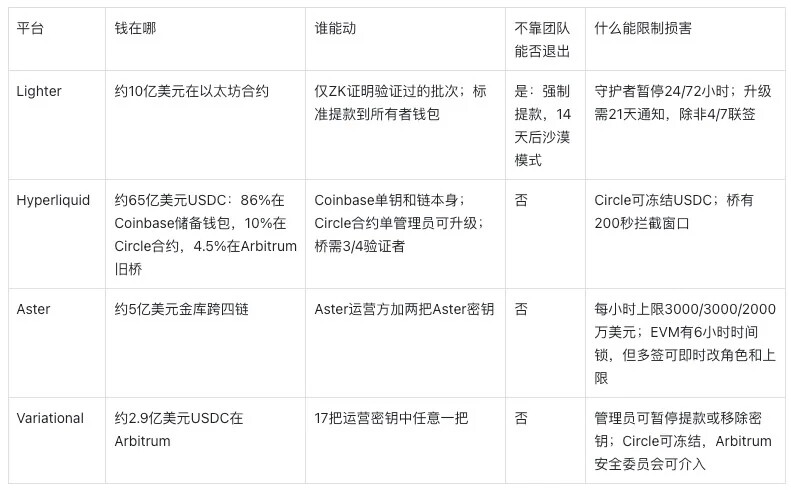
Whether DEX or CEX, only put the money you are currently trading in exchanges.
Before magnifying your funds, perform two checks. First, where is the money really placed: is it locked in on-chain contracts, or lying in a wallet controlled by a team, in an exchange's custody account, or across a cross-chain bridge? If it's a contract, who has the authority to move it—single key, multi-signature, or is it like Lighter, which can only release according to ZK proof? Second, without a team, can you withdraw: are there mandatory withdrawal, escape channels, or time locks in the contract, or does every withdrawal need to wait for the operator's signature?
Don't take the "DEX" label as a security guarantee.
Also recommended: 《Comprehensive Research Report: Is the crypto world ready to face quantum attacks?》.
Weekly Hot Recap
Binance gradually recovers stolen funds and resumes withdrawal functions;
24H net outflow of $7 billion: Binance withstands the withdrawal tide, most institutions stand still;
Stablecoin annualized rates up to 12%, major exchanges initiate a new round of financial competition;
FBI identifies the attackers of Binance as North Korean hackers;
Tracing the money laundering routes of the Binance hacker;
North Korea denies involvement in the theft of approximately $6.3 billion from Binance, claiming the related accusation is fabricated;
Binance releases preliminary report on the hacking incident: hackers exploited fake job interviews to attack employee devices, further gaining access to wallet infrastructure;
CZ: Binance covers theft losses with its own balance sheet, has not borrowed, sold assets, or sought financing;
Policies and Macro Markets
Trump states he will accept the midterm election results and is willing to cooperate with Democrats;
With the end of the elections, the Democrats won a significant victory, leading to a rebound in financial markets, but soon the Democrats' "halt AI" caused a crash in US tech stocks (multiple reasons explained), triggering chain reactions in the hedge fund industry;
The South Korean stock market goes into a circuit breaker;
Vance plans to form a "new right" alliance;
The US Senate currently has 51 members supporting cryptocurrency, indicating a trend of bipartisan support;
The CLARITY Act may be postponed until 2028;
Sun Yuchen reiterates sanctions on WSFI;
US tech giants are expected to maintain their current AI investment plans in the short term;
Anthropic's IPO filing reveals nearly $900 billion in "hidden debt";
US tech giants accelerate issuance of euro-denominated bonds, with AI-related supply potentially raising financing costs for European enterprises and sovereigns;
The US CFTC approves individual stock perpetual futures contracts that can be traded on regulated exchanges in the US, while Wall Street calls for the CFTC to rescind its approval decision;
Opinions and Voices
Bloomberg: Predict market traders "street sweeping" to survey US voters, seeking an informational edge in the midterm elections;
Morgan Stanley: Regardless of the result of the US midterms, one should buy US stocks on dips;
CITIC Securities: Optimistic about the possibility of a rebound in US tech stocks after the midterms;
Deutsche Bank reviewed historical patterns in US stocks: increasing tendency to rise after midterms, but the concentration of indices has reached an all-time high, becoming the biggest variable in this round;
Arthur Hayes: AI giants may face serious share dilution after IPO, and credit tightening could further impact the crypto market;
Investment magnate claims Nvidia is following Cisco's old path, as cyclical financing heads towards bubble collapse;
Bloomberg: The Binance hacker incident prompts the crypto industry to reflect, possibly reintroducing trading delays and other Wall Street risk management mechanisms;
Institutions, Large Companies, and Leading Projects
Polymarket and Binance propose a hard fork to Polygon, directly wiping out about 70.49 million POL from the hacker's attack address;
Data
The total market value of stablecoins has dropped to its lowest in over a year, shrinking by about $17 billion over six months;
Security
Chainalysis suffers from AI-driven cyberattacks, customer names and email details leaked;
Flap's official website faces DNS hijacking, team warns against visiting or connecting wallets;
Kintsu, StonkBrokers, and others may have suffered front-end attacks, connecting wallets could lead to theft of assets;
StepDrainer attacks continue to escalate, users should exercise caution when connecting wallets;
Hot wallets have been attacked, BTCPay Server urges operators to shut down instances;
Investigations into the XPL flash crash are underway;
Critical vulnerabilities in the Linux kernel impact DeFi, Threshold temporarily suspends tBTC minting and redemption;
Brazilian exchange Mercado Bitcoin suffered a theft of over $46 million...
Attached is the series of 《Weekly Editorial Selections》 passage. See you next time~
免责声明:本文章仅代表作者个人观点,不代表本平台的立场和观点。本文章仅供信息分享,不构成对任何人的任何投资建议。用户与作者之间的任何争议,与本平台无关。如网页中刊载的文章或图片涉及侵权,请提供相关的权利证明和身份证明发送邮件到support@aicoin.com,本平台相关工作人员将会进行核查。