Author: AiPlot Research Institute
Focus: RWA / Digital Assets / In-depth Analysis of Financial Infrastructure
Website:https://aiplot.com/?utm_source=aicoin
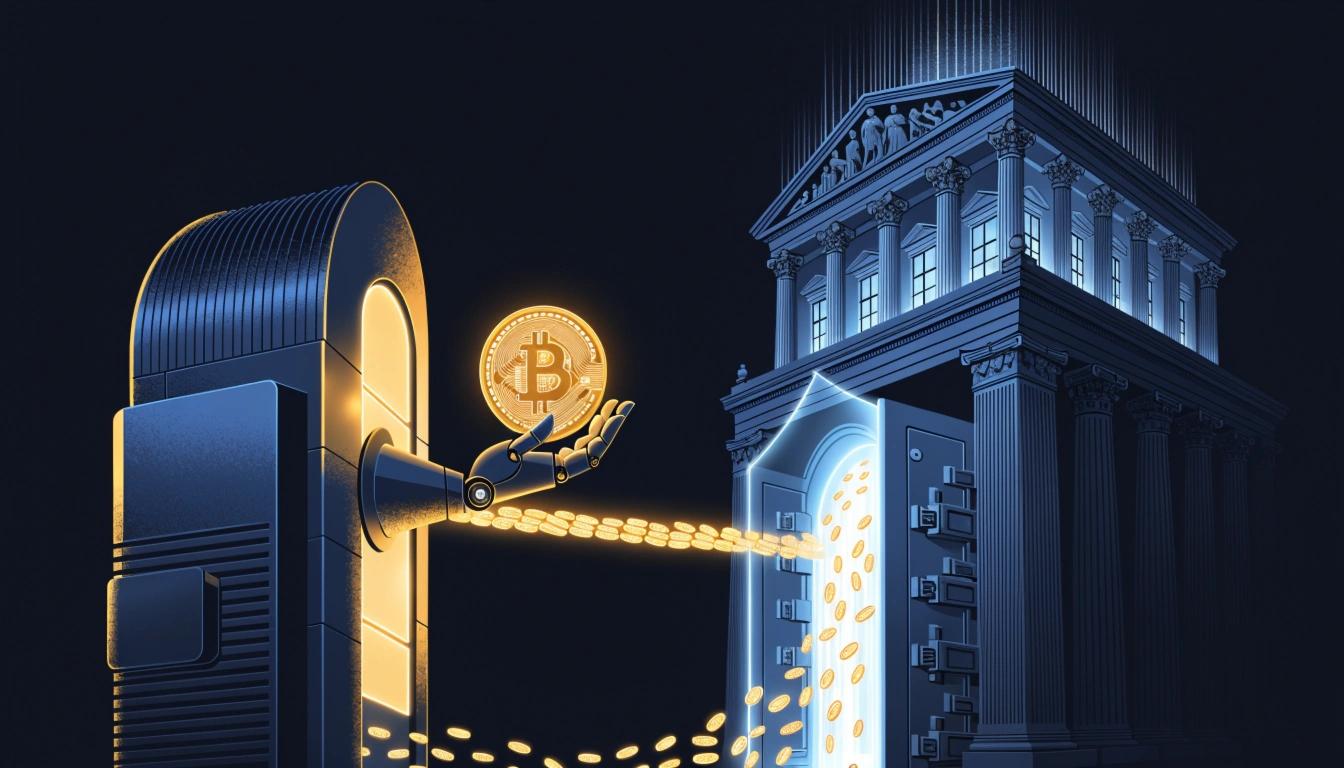
In past discussions about RWA, market attention usually focuses on tokenized government bonds, gold tokens, stock tokens, and fund shares. The core questions are: How many real assets have been placed on the blockchain? What is the amount issued? How many holders are there? Can they be redeemed?
RWA may be experiencing another, faster growth curve: the real assets themselves are still waiting for compliance issuance, custodianship, and redemption systems to mature, while trading prices around these assets have already begun on-chain.
According to market data, the trading volume of RWA perpetual contracts reached approximately $1.147 trillion over the past 30 days, with an open interest size of about $13 billion. Dividing the two, the trading volume is about 88.2 times the open interest size.
This number should not be understood as "there is $1.147 trillion flowing into RWA." Trading volume represents turnover over a period of time; open interest represents the nominal value of contracts that still exist; neither equals the actual margin supplied, nor does either mean that real assets have completed on-chain transfer.
However, this metric is still important. It indicates that the RWA trading market may have shifted from the "asset issuance narrative" to the "high-turnover price market" phase. More and more traders do not require first owning stocks, gold, or crude oil, but instead hope to obtain exposure to long, short, and leveraged trades of these assets first.
1. A Distinction Between Two Types of RWA is Necessary
RWA is not a single market. At the very least, it should be divided into two business lines.
Asset-type RWA focuses on whether the real asset itself has been tokenized. Token holders may receive fund shares, bond yields, gold rights, or other legal rights. Its core indicators include the issuance size, underlying assets, custodial methods, redemption mechanisms, number of holders, and compliance scope.
Trading-type RWA focuses on the price exposure of real assets. Users trade cash-settled perpetual contracts, contracts for difference, or other derivatives, and do not necessarily obtain ownership of the underlying assets. Its core indicators include trading volume, open interest, funding rates, trading depth, oracle quality, liquidation size, and tracking error.
The two can use the same set of asset names, yet correspond to completely different product relationships.
For example, holding a compliant token that represents a share of stock theoretically may involve dividends, voting rights, or redemption arrangements; while trading an NVDA perpetual contract generally only yields profits or losses from the price rise or fall of NVDA, without representing ownership of Nvidia stock.
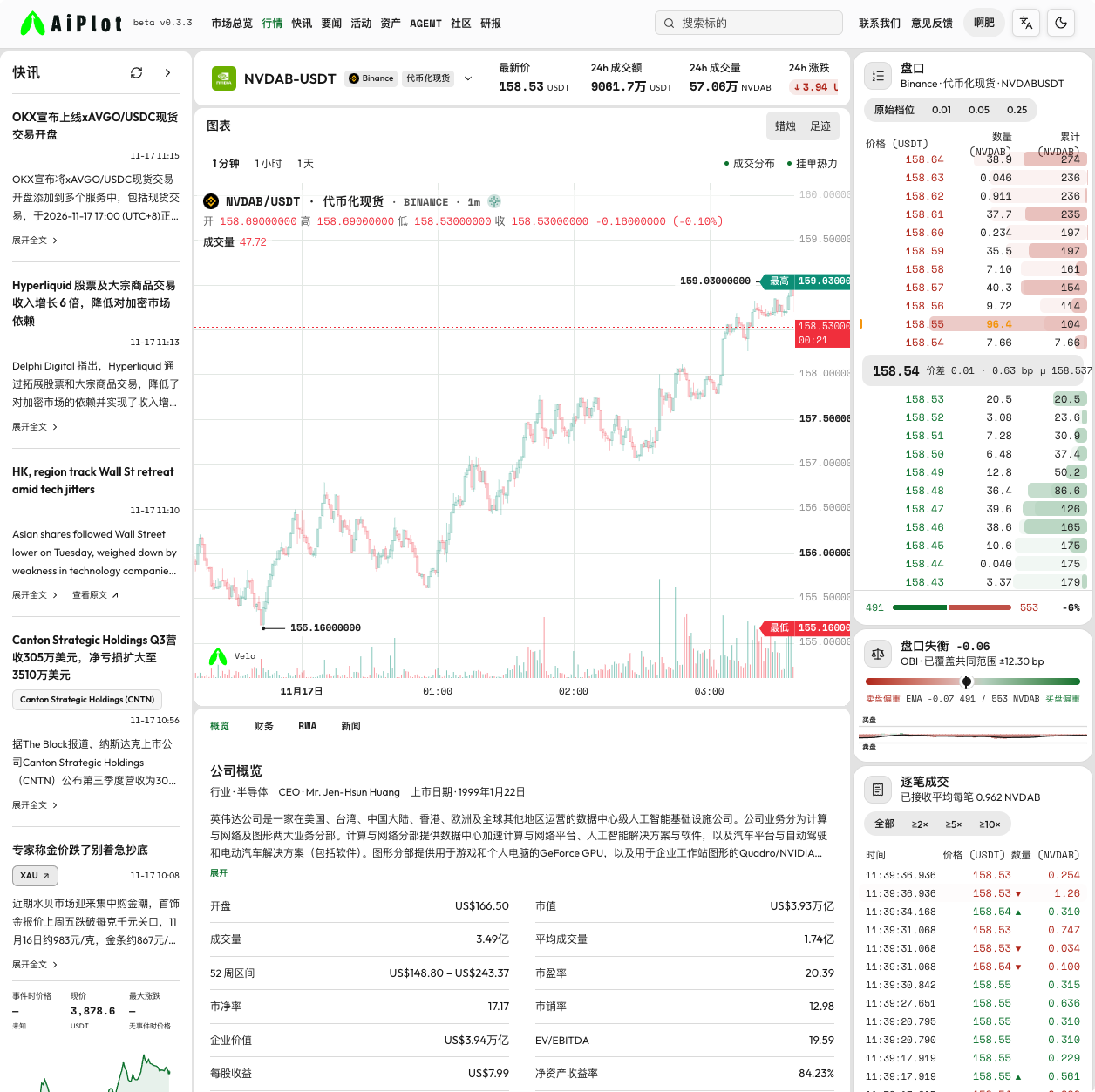
Binance also explicitly states in its TradFi perpetual contract announcements that such contracts track the prices of traditional financial assets and settle in USDT, where users do not need to directly own the underlying assets, nor do they gain ownership of the underlying assets.
Therefore, the growth of trading-type RWA cannot directly prove that asset-type RWA has matured. What it proves is that on-chain traders are willing to use the margin, leverage, and round-the-clock trading mechanisms of the crypto market to trade the prices of traditional financial assets.
2. What the $1.147 Trillion Trading Volume Indicates
Structurally, this figure conveys at least three signals.
1. RWA is Expanding from "Holding Logic" to "Trading Logic"
Traditional financial assets entering the blockchain do not necessarily first manifest as investors holding tokens for the long term. An earlier form may be stocks, gold, oil, and indices packaged as tradable price contracts.
This lowers the entry threshold for assets to be placed on-chain. Platforms do not need to fully resolve all issues like ownership of underlying stocks, dividend allocation, and investor registries before providing a derivative that tracks the price.
This does not mean that regulatory and risk issues have disappeared, but rather that the product path has changed: asset ownership is placed behind, and price exposure is placed in front.
2. High Turnover Indicates Short-term Trading Demand Exceeds Long-term Allocation Demand
A trading volume approximately 88.2 times the open interest suggests there is significant opening, closing, and position switching in the market. Traders may be focusing on earnings reports, macro data, interest rate expectations, geopolitical events, and company news, rather than simply holding a specific real asset.
For platforms, the value of such markets comes not only from issuance fees, but also from trading fees, funding rates, liquidation services, market-making, and margin management.
For researchers, the relationship between trading volume and open interest is also more meaningful than looking at trading volume alone. A high trading volume but low open interest may represent high-frequency turnover; rapid open interest growth without an accompanying increase in trading volume may indicate position accumulation, which also raises liquidation risk.
3. RWA is Absorbing Native Trading Habits of the Crypto Market
Crypto traders are already familiar with long/short positions, leverage, perpetual contracts, stablecoin settlement, and 24-hour trading. When these tools extend to U.S. stocks, precious metals, crude oil, and indices, traditional assets are placed into a more trade-oriented market structure.
This is also an important reason why RWA perpetual contracts are developing faster than asset issuance. Traders have demand first, platforms provide price products first, and legal ownership and physical delivery may be gradually completed in subsequent stages.
3. What Assets are Supporting this Wave of Trading
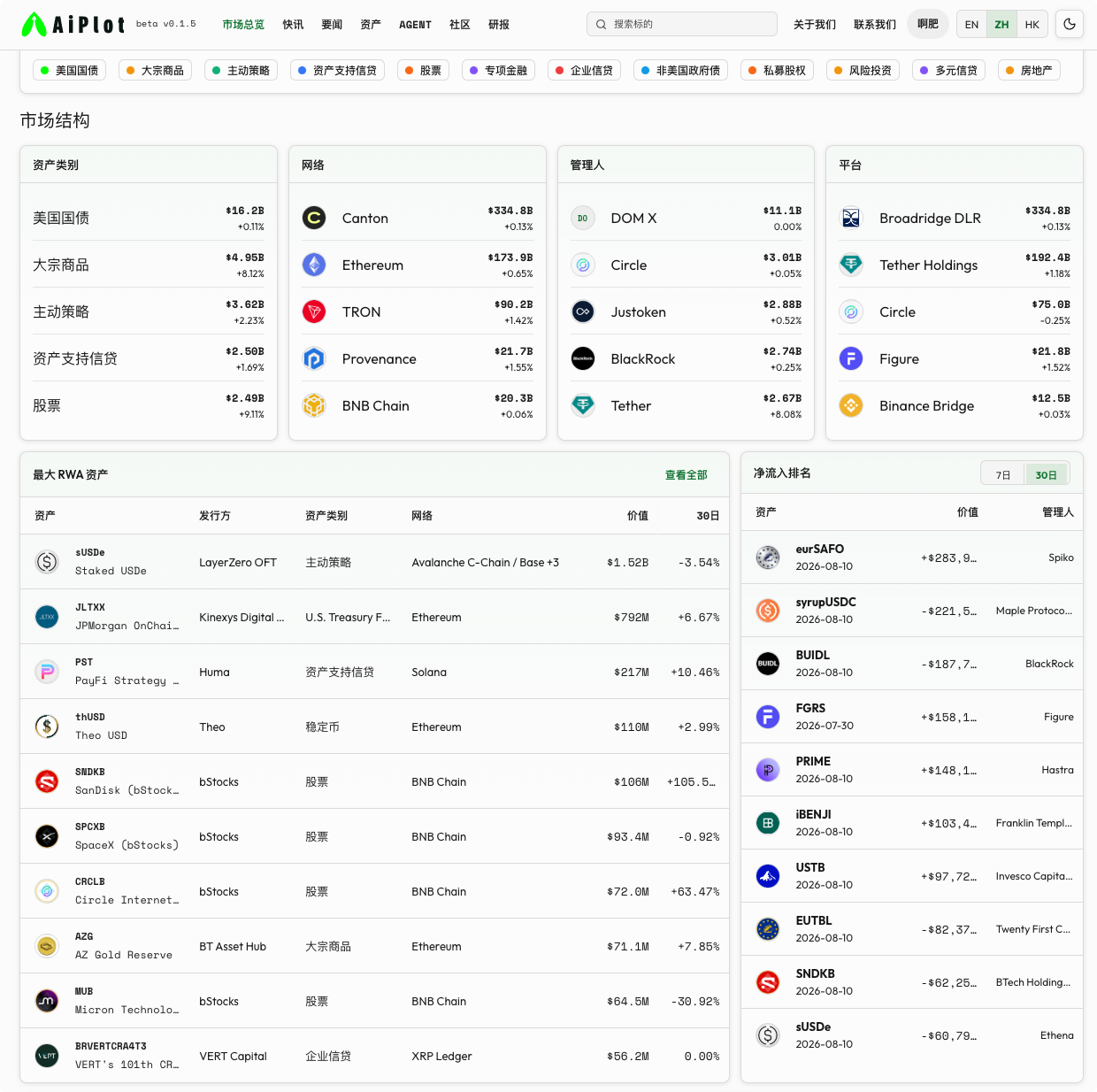
U.S. stock-related contracts account for about $6.8 billion, precious metals about $2.6 billion, stock ETFs about $1.1 billion, crude oil about $859 million, and stock indices about $575 million.
This structure is very important because it shows that RWA perpetual contracts are not merely an extension of gold trading.
U.S. stocks have become the largest open interest category. High-profile stocks like NVDA, TSLA, and AAPL provide on-chain traders with a familiar narrative, sufficient volatility, and a continuous stream of news.
Precious metals rank second, indicating that gold and silver remain important bridges connecting traditional assets with the crypto market. They have global pricing and are suitable for macro trading and hedge trading.
Stock ETFs, crude oil, and indices further expand the range of assets. Traders do not need to enter multiple traditional market accounts and can allocate different types of price exposure within the same stablecoin margin system.
The change this brings is not "how many assets have been issued by blockchain," but "how many global asset prices can be covered by blockchain trading platforms."
4. Why Trading-type RWA May Outpace Asset Issuance
Legal Issues of Asset Ownership are More Complex
A true tokenized stock or fund share requires clarifying the issuing entity, custodianship of underlying assets, investor qualifications, transfer restrictions, dividend distribution, redemption mechanisms, and legal rights.
Price perpetual contracts, on the other hand, usually only need to define settlement rules, price indices, margin mechanisms, funding rates, and liquidation logic. They remain subject to regulatory constraints, but the product structure does not need first to replicate the complete stock registration and custodianship systems.
Crypto Market's Trading Infrastructure Already Exists
Trading platforms already have matching, margin, liquidation, market-making, and risk management modules. Expanding a new price target is often faster than creating a new securities issuance and custodianship system.
The HIP-3 mechanism by Hyperliquid is a typical example. The official documentation allows qualified deployers to create their own perpetual contract markets, with deployers responsible for market definitions, oracle settings, leverage limits, and market operations.
This improves the efficiency of onboarding new targets, but also places a larger part of the risk responsibility on market deployers. Oracle sourcing, price manipulability, market depth, cross-margin qualifications, and liquidation arrangements cannot be ignored simply because "the market is permissionless deployment."
24-Hour Trading Fills the Time Gaps of Traditional Markets
Traditional stocks have fixed trading periods. When significant news occurs on weekends or during the night, holders cannot immediately adjust positions through the spot stock market.
Perpetual contracts can provide continuous price exposure. Binance's official design notes for TradFi perpetual contracts reveal that products can continue trading during traditional market closures, managing risk through price indices, marking prices, smoothing mechanisms, and deviations.
However, 24-hour trading does not mean there is equal quality price discovery at all times.
If the underlying market is closed, platforms need to rely on last prices, futures prices, external indices, or other models to maintain quotations. At this time, contract prices may be affected by liquidity, market maker risk appetite, and sudden news, and the tracking error may also widen.
5. Centralized Exchanges vs. DEX: Who Will Reap the Trading Benefits
RWA perpetual contracts are not an opportunity exclusive to DeFi.
Centralized exchanges have established account systems, matching depth, user bases, and risk control experience, enabling them to more quickly incorporate stocks, commodities, and indices into existing derivative products. They can also more easily provide familiar trading interfaces for regular users.
DEX's advantages lie in on-chain settlement, composability, and open market structures. Users do not necessarily need to deposit funds into a single platform; trading data and positions can also be verified on-chain or connected with other DeFi protocols.
DEX accounts for about 26.1% of RWA perpetual contract open interest. This indicates that DEX has not replaced centralized exchanges, but is no longer a marginal market.
In the future, competition will not only focus on "who lists the most assets," but also on several questions:
- Who can provide deeper liquidity;
- Who can maintain more stable quotations during underlying market closures;
- Who can keep funding rates and slippage at reasonable levels;
- Who can use more reliable price sources;
- Who can reduce chain liquidation risks during extreme market conditions;
- Who can provide clear product compliance paths in different jurisdictions.
From a platform business model perspective, the value capture in the RWA trading market may fall on exchanges, DEX, oracles, market makers, clearing systems, and stablecoin settlement networks, rather than solely on the issuers of underlying assets.
6. The Real Risks of RWA Perpetual Contracts Do Not Lie in "No Underlying Assets," But in the Reliability of the Pricing System
Trading-type RWA do not necessarily require users to directly own the underlying assets, but they must continuously answer one question: What determines the contract price?
Oracle Risk
How is the price source updated when the underlying stock or commodity market is closed? If the price source is delayed, distorted, or manipulated, the contract price may deviate from the real market.
The HIP-3 official documentation requires market deployers to define oracles, indicating that not all price indices are suitable as oracles for perpetual contracts. This means that as the number of markets online increases, the quality and review capability of oracles become increasingly important.
Liquidity Risk
A high trading volume does not mean there are sufficient buy and sell orders at all times. Major news on weekends, pre-market gaps, or sudden policy events can quickly cause slippage to widen.
Leverage and Liquidation Risk
When traders use high leverage to gain exposure to traditional asset prices, rapid fluctuations in a single target may trigger forced liquidations. When multiple markets share collateral, increased correlation can also lead to cross-market risk transmission.
Tracking Error
Perpetual contracts track the index or marked price defined by the platform, and do not necessarily equate to the most recent transaction price of the spot exchange. Funding rates, price smoothing, index lag, and differences in trading periods can all cause deviations in returns.
Legal and Product Classification Risks
Stock price perpetual contracts do not automatically equate to tokenized stocks. The former may be derivatives, while the latter may involve securities, fund shares, or other regulated assets. Just because both are named after stock codes does not mean they possess the same investor rights.
Conclusion: RWA is Forming Two Growth Curves
The first growth curve of RWA is the tokenization of real assets. It addresses issues of asset issuance, custodianship, holding, transfer, and redemption.
The second growth curve is the entry of traditional assets into the on-chain trading market. It addresses how global traders can use stablecoins, margin, and perpetual contracts to gain price exposure to U.S. stocks, gold, crude oil, and indices.
These two curves need not align synchronously.
Tokenization of real assets may take a long time because it must pass through validations of regulation, custodianship, legal rights, and redemption mechanisms; trading-type RWA can start to grow first from price, liquidity, and trading demand, relying on existing derivative infrastructure.
Therefore, the first wave of RWA explosion may not be "all Wall Street assets have moved onto the blockchain," but rather "global traders are starting to trade Wall Street prices on the blockchain."
This is not a replacement for asset-type RWA, but a precursor market. In the future, what truly deserves attention is not only which real assets are issued as tokens, but also which trading platforms, oracles, clearing systems, and stablecoin networks can support this batch of global asset price trading.
For more data and analysis, please follow Aiplot:
https://aiplot.com/?utm_source=aicoin
📖 Community Communication:
- Telegram:
https://t.me/+IIYMcJigBAo4Mjg1
The content of this article represents the author's personal views and does not represent the platform's stance. The viewpoints, conclusions, and suggestions in the text are for reference only and do not constitute any investment advice related to the platform. Markets carry risks; investments should be made with caution.
免责声明:本文章仅代表作者个人观点,不代表本平台的立场和观点。本文章仅供信息分享,不构成对任何人的任何投资建议。用户与作者之间的任何争议,与本平台无关。如网页中刊载的文章或图片涉及侵权,请提供相关的权利证明和身份证明发送邮件到support@aicoin.com,本平台相关工作人员将会进行核查。