Recently, a large-scale destruction transaction quietly took place on the Ethereum mainnet, bringing Tether to the forefront of the narrative: according to a single source's on-chain record, the supply at its Ethereum USDT contract address suddenly decreased by about 4 billion tokens, with the corresponding destruction operation clearly recorded on the blockchain, yet there was no official explanation provided. Almost simultaneously, Ethereum's own roadmap was also being put on hold—during a core developer meeting held on Thursday, someone suggested postponing the timeline for the critical upgrade Glamsterdam to May 2027 in response to compatibility risks identified around Gas pricing changes like EIP-8037, which had already been flagged by ChainSecurity for October 2025, but this was merely a potential path in discussion and had not reached a formal decision. One was a massive on-chain destruction, and the other was a potential delay in the upgrade timeline; together, they formed two signal lines in the recent Ethereum ecosystem but both were in a state of incomplete information: currently, there is no evidence pointing to a direct causal relationship between the two, nor has either side provided sufficient details for the market to draw conclusions, meaning they resemble alert lights that need to be continuously monitored rather than a predetermined storyline.
4 billion USDT vanishes from Ethereum: The surface of on-chain actions
From an on-chain perspective, the picture of this event is actually quite simple and brutal: at the USDT contract address on the Ethereum mainnet, the total supply experienced a sharp drop of about 4 billion tokens in a short period, with on-chain browsing tools only providing a few massive transaction records and corresponding destruction annotations. Current reports point to the same data source—a single on-chain record tracking changes at the Ethereum mainnet USDT contract, which can confirm that "there used to be more USDT here, but it is no longer," but it cannot extract more specific intent from the transaction details. For observers, this is a very typical on-chain indication: a decrease in total supply and the execution of destruction transactions, with nothing left beyond the numerical flow between addresses, no narration, no annotations.
When placed within the context of Tether's past operations, this destruction of about 4 billion tokens also appears particularly striking. Tether has previously adjusted the USDT supply across different public chains, executing issuance, buybacks, and redistributions in the context of cross-chain liquidity management or reserve operations, which has been repeatedly validated as common practice in the industry, but erasing billions at once on a single public chain mainnet still belongs to the realm of major actions. Also, because this reference point of "conventional operations" exists, the abnormality of this event is more easily highlighted: existing public information only tells us that destruction did indeed happen, but there is no accompanying official announcement from Tether, nor any reliable data indicating a direct causal relationship between this destruction and a specific market event or price fluctuation. In the current information density, what readers can confirm is that a rare large-scale contraction of on-chain supply has indeed occurred, while the specific motivation behind this contraction remains in an unknown state.
Technical concerns of Glamsterdam upgrade hitting the brakes
If the sudden contraction of 4 billion USDT is a sharp brake from the funding side, then Glamsterdam represents a consideration to slow down at the Ethereum protocol layer. According to the existing roadmap, Glamsterdam is planned as a heavyweight upgrade, with a very straightforward goal: further enhance network capacity and execution efficiency without sacrificing security, allowing for higher frequency and more complex interactions on-chain to be carried out more cheaply and smoothly. This means that the underlying Gas pricing structure and execution logic need to undergo surgery, and when the scalpel is truly applied to the protocol layer, smart contracts from the old world may become a risk exposure.
In October 2025, a report from the security company ChainSecurity provided an early warning for this surgical process. They focused on the changes in Gas pricing proposals surrounding EIP-8037, pointing out that if the cost structures of different operations are reshaped, the economic viability and execution behavior of a large number of existing smart contracts could be quietly rewritten: some calling paths might suddenly become expensive, and some branches could showcase execution results inconsistent with designers' expectations under extreme circumstances due to changes in cost ordering. In past years, when faced with similar risk warnings, Ethereum had responded by postponing or adjusting proposals to reduce upgrade risks; this time, core developers are evidently also following the same defensive instinct. According to a single-sourced report cited by Cointelegraph, during a recent core developer meeting on Thursday, someone proposed postponing the Glamsterdam upgrade to May 2027, as an option to allow for a buffer period for compatibility risks. However, the "May 2027" timeframe currently stands as a discussion conclusion from the meeting rather than an official decision: the meeting did not result in a public voting outcome, and the Ethereum Foundation or core team has yet to release a revised timeline, placing Glamsterdam's specific placement on the roadmap still in the gray area of safety assessments and technical balancing yet to be fully concluded.
Competition between liquidity and roadmap on the same chain
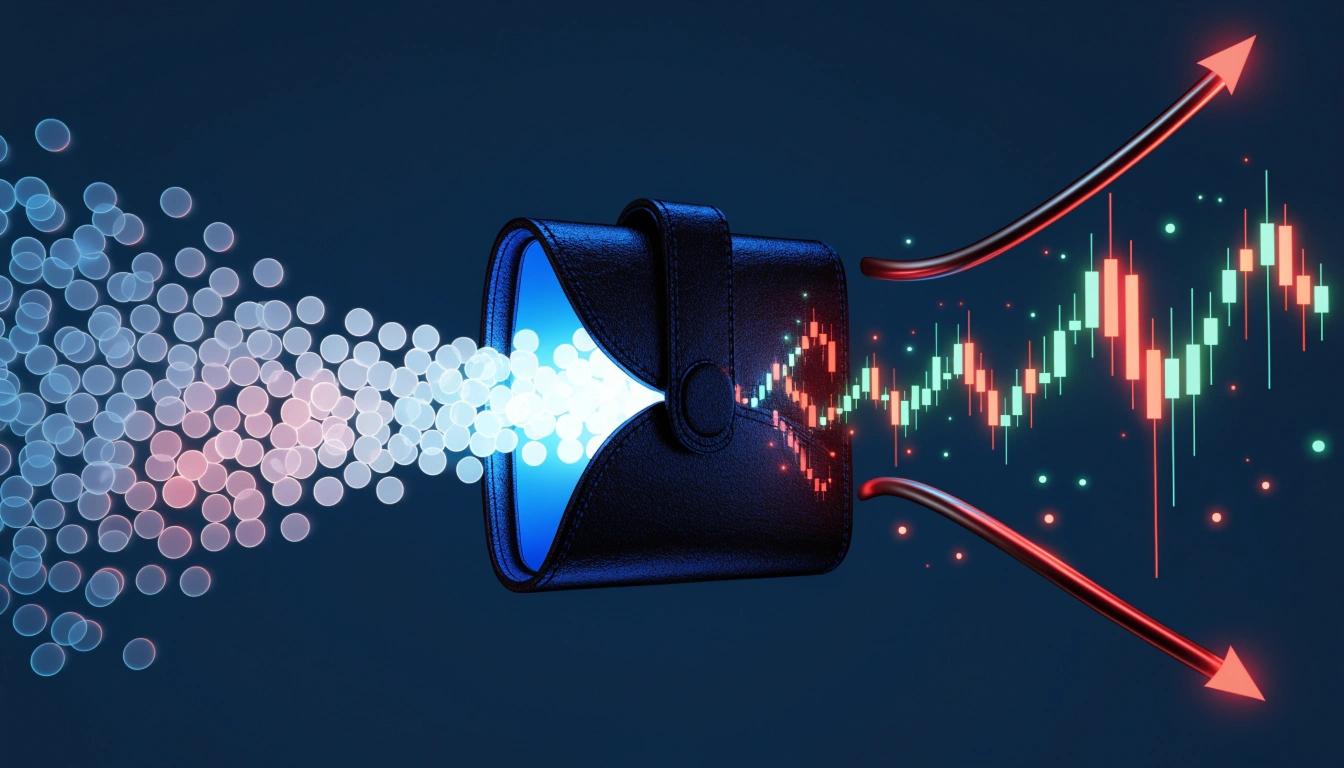
While the protocol layer continues to weigh the timeline for the Glamsterdam upgrade, the funding side has already delivered an extreme and direct action: approximately 4 billion USDT has been destroyed on the Ethereum mainnet, leading to a sharp reduction in the supply at the corresponding contract address. This represents an on-chain change with nearly "instant returns," where financial participants can immediately see the supply structure of commonly traded assets being rewritten, thereby adjusting their position density, market-making strategies, and cross-chain allocations on Ethereum; in contrast, the Glamsterdam upgrade remains stuck in the phase of potentially being postponed to May 2027, yet without a firm conclusion, while changes at the protocol layer only exist in meeting minutes and technical proposals, which release another form of chronic stress into the environment through the uncertainty of time.
Two uncertainties emerge: one is focused on "current funds," while the other is attached to "future environments." The funding side sees Tether decreasing the USDT supply on Ethereum through on-chain transactions recorded from a single source without detailed motives, which can be interpreted as a signal that the liquidity structure is being reshaped; the technical side, however, is concerned with the risk warnings from proposals surrounding EIP-8037 and related Gas pricing changes since October 2025, as well as the repeated discussions among core developers in routine meetings about whether to allow for longer buffer periods for compatibility risks—these factors will all influence developers and project teams' planning for contract deployment, migration schedules, and future execution costs. It is essential to clarify that current public materials do not provide any technical or governance evidence that can directly link Tether's destruction actions with the Glamsterdam upgrade progress; the two are merely parallel clues appearing on the same chain, yet collectively outline the dual uncertainties that the Ethereum ecosystem currently faces.
The risk story of Gas pricing rewriting contract fates
The warning issued by ChainSecurity in October 2025 essentially challenges a long-neglected premise: the vast majority of contracts are written according to the "today's Gas pricing table." EIP-8037 and related proposals aim to adjust this pricing table itself—relative costs of different operations may be reordered, previously expensive storage writes may become cheaper, while some calls once seen as "cheap" could turn into costly burdens. When designers initially wrote the contract logic, they made decisions based on the existing cost structure about whether to store a bit more data or compute a few more steps, whether to break it into multiple transactions or compress it into a single execution—these are all economic balances made around the Gas assumptions. Once the pricing structure undergoes significant change, some contracts may no longer be economically viable, profit models could collapse, or frequently hit cost ceilings in actual execution, causing code that appears "technically runnable" to become difficult to use in the new Gas landscape.
Facing the naked exposure of these risks by auditing firms, the game among Ethereum core developers has also become publicized: on one side are the capacity and efficiency improvements expected from Glamsterdam, on the other is the compatibility protection of the existing contract ecosystem. During a recent Thursday meeting, the option of "whether to postpone the upgrade to May 2027" was proposed, with deferrals, phased deployments, or proposal adjustments—these are strategies previously used by Ethereum in response to risk warnings. However, this time, the meeting did not reach a final resolution, and the official roadmap has not locked in a specific date; a timeframe that appeared in the meeting minutes was quickly translated by media and markets into a more dramatic narrative of "upgrade postponement," combined with other on-chain signals, piecing together a story about the unsteady path ahead for Ethereum. Readers accepting these narratives must constantly remind themselves: the "possible options" in technical discussions and the timelines presented as "predetermined fates" always require a gap to be filled with patience and factual tracking.
Understanding on-chain and roadmap with limited information
The destruction of 4 billion USDT on the Ethereum mainnet, combined with the discussed "braking" of the Glamsterdam upgrade timeline, represents significant on-chain movement from the funding side and a pivotal point on the technical roadmap. They overlap within the same time frame on the Ethereum ecosystem, indeed showing uncertainty on both funding and protocol lines. However, under such narrative tension, it is crucial to draw boundaries clearly: Tether has not publicly explained the motivation for the destruction and can only confirm that the supply of USDT on Ethereum has drastically reduced due to specific destruction transactions; Glamsterdam's goal remains to enhance network capacity and efficiency, and the discussions regarding the risks of Gas pricing changes like EIP-8037 have been ongoing since ChainSecurity's report in October 2025, with the recent core developer meeting mentioning "possible postponement to May 2027" being just an option, and the official roadmap has not locked in an upgrade date. At this stage, there is no technical or governance evidence linking these two events into a causal chain, nor can definitive future outcomes be deduced from a single-source meeting record and on-chain actions. For participants in the Ethereum ecosystem, a more reliable approach is to continue monitoring the minutes of core developer meetings, EIP progress, and subsequent announcements from major asset issuers, waiting to see if Tether provides additional explanations, and whether Glamsterdam undergoes more prudent adjustments, before updating their understanding of mid to long-term risks, viewing these two events as signals that need tracking rather than a completed story with a predetermined outcome.
Join our community to discuss and get stronger together!
Exclusive Hyperliquid benefits for AiCoin: https://app.hyperliquid.xyz/join/AICOIN88
Exclusive Aster benefits for AiCoin: https://www.asterdex.com/en/referral/9C50e2
On-chain Telegram community: https://t.me/AiCoinWhaleData
On-chain community: https://www.aicoin.com/link/chat?cid=N6OVMor5g
AiCoin on-chain Twitter: https://x.com/aicoinwhaledata
免责声明:本文章仅代表作者个人观点,不代表本平台的立场和观点。本文章仅供信息分享,不构成对任何人的任何投资建议。用户与作者之间的任何争议,与本平台无关。如网页中刊载的文章或图片涉及侵权,请提供相关的权利证明和身份证明发送邮件到support@aicoin.com,本平台相关工作人员将会进行核查。