By|Wei Linhua,Light Cone Intelligence
Edited by|Liu Junhong
Anthropic's listing feels more like a stress test for the entire AI industry.
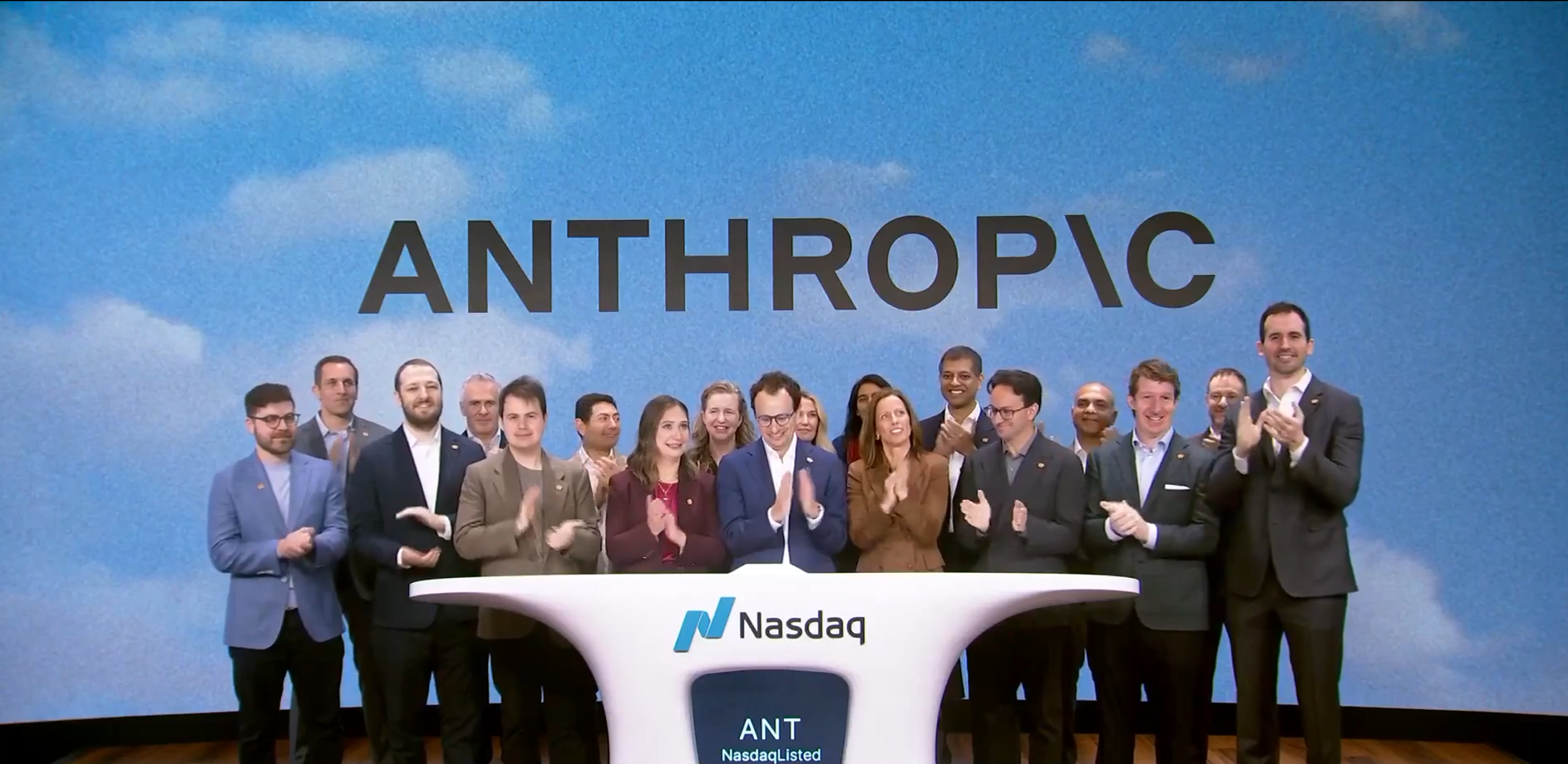
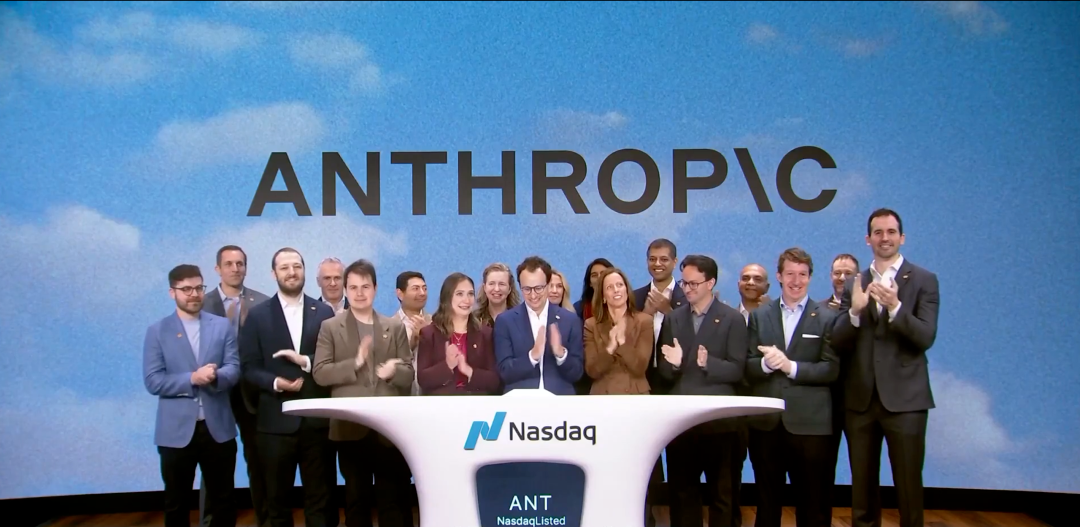
On November 19 at 11:48 AM Eastern Time, under the halo of “the largest IPO in human history,” Anthropic (stock code: ANT) officially started trading on Nasdaq.
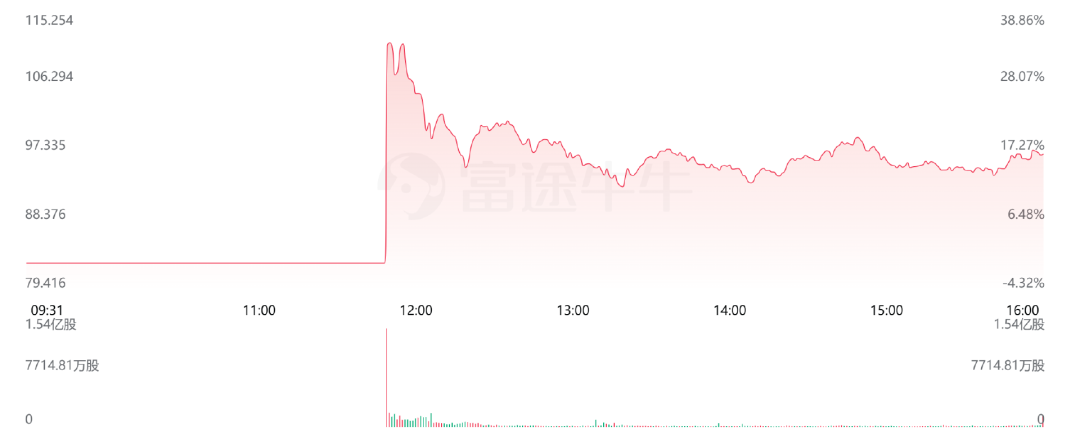
Compared to the $83 issue price set by Anthropic, the opening price soared directly to $111.50, surging 34.3%, reaching an intraday high of $115.10. Calculating on a fully diluted basis, Anthropic's valuation peaked at $20.2 trillion, surpassing SpaceX, which went public in June this year.
However, the celebration after opening lasted for less than half an hour. By the end of trading, Anthropic's market capitalization seemed to have taken a roller coaster ride.
Starting in the afternoon, Anthropic's stock price plummeted, hitting a low of $92.72 during the day, ultimately closing at $97.17. Although it rose 17.07% compared to the $83 issue price, from the day's high, Anthropic had evaporated about $324.4 billion in market capitalization by closing time. On a fully diluted basis, the company's valuation fell back from $2 trillion to approximately $1.76 trillion.
As the bells toll across the ocean, in the Chinese AI circle, almost all founders of large models, investors, and secondary market analysts are staying up late to watch the market. It’s not just about the rise and fall of Anthropic, but searching for an answer: When the global valuation “anchor” of AI sinks into the deep waters of the public market, how should Chinese AI models be priced moving forward?
After all, just before the bell rang, the pricing around Anthropic fluctuated, from the initial $2 trillion valuation by investment institutions to a valuation cut during Anthropic's Q3 roadshow, affected by the U.S. midterm elections and Nvidia’s sudden “leadership change.” Anthropic's value kept decreasing.
Continuing to push for the IPO at this juncture was more of a pressure test for the entire AI industry for Anthropic.
Anthropic's listing was never about a “high or low” story; it was a story about “how to calculate.”
The new yardstick used by Wall Street to evaluate Anthropic will be directly applied to every Chinese large model company.
Anthropic's valuation rose, but it had long been squeezed of excess
As a “demonstration” of global large model companies, a 17% rise in Anthropic's stock price is very normal.
The market's buying enthusiasm remains. According to reports from Bloomberg, the subscription order scale reached about 6 to 7 times the available shares, with subscriptions mainly coming from large institutional investors.
As a result, Anthropic not only has the confidence to raise prices but also plans to make extra profit in a good market, accumulating more funds for itself.
By November 18, Anthropic finally raised the stock price from the initial $70-78 pricing to $83. Anthropic also forcibly expanded the number of shares issued by 19%, increasing from the planned 825 million shares to 980 million shares, generating nearly $20 billion in cash.
With stock demand exceeding supply, Anthropic also had numerous computing power suppliers backing it:
Just before the listing, a group of technology giants known as the “global computing power all-star,” including Nvidia, Google, Microsoft, AMD, Broadcom, Micron, and partners of TSMC, banded together to agree to purchase $26 billion worth of Anthropic shares. Among them, Google and Nvidia were the most generous, each contributing $10 billion.
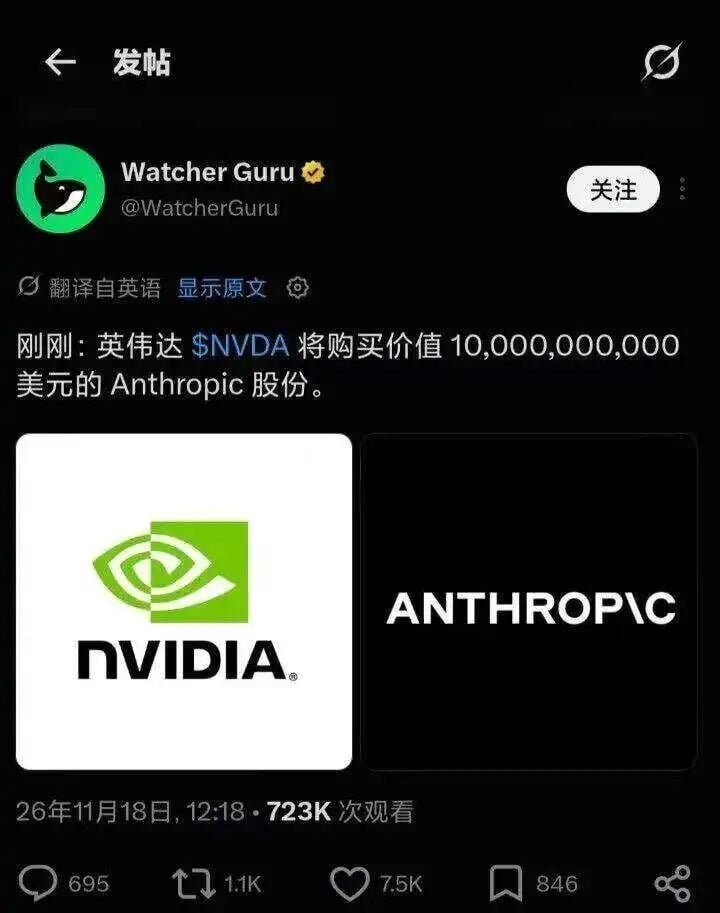
These computing power suppliers and cloud vendors stepping up are effectively binding themselves to Anthropic, locking in a computing power order in advance.
The $26 billion investment resembles a “strategic locking fee” paid by the giants. As long as Anthropic uses this money to continue to expand wildly and train the next-generation model, this money will eventually roll back into orders for Nvidia chips, Broadcom servers, and various cloud vendors’ data centers.
Who is the largest holder behind Anthropic? The answer is Amazon and Google. According to data disclosed by Anthropic, Amazon holds a total stake of 14.7%, while Google follows closely with a stake of 13.7%.
Although the company's market capitalization ultimately fell to around $1.76 trillion, if we broaden the timeline, the fluctuations in Anthropic's market cap actually had been foreshadowed three months before its listing.
In August of this year, the market was still enthusiastically calculating a $2 trillion valuation for Anthropic. At that time, the pricing logic was simple and crude, akin to the domestic primary market's ardent support for large models: as long as the models continue to iterate and revenue growth soars, the imagination for company valuation can lift off.
But reality doused it with cold water. Starting in October, Anthropic experienced multiple “moments” where its valuation dropped:
First, its revenue growth fell short of expectations, prompting investment institutions to reevaluate its value. Anthropic disclosed in its October roadshow that its Q3 revenue growth rate fell from 144% in Q2 to 47%. Consequently, investment institutions first squeezed its valuation down to $1.5 trillion.
This adjustment was still a question against Anthropic itself, while the subsequent decline in company valuation was more out of worries about the prospects of the AI industry.
After the U.S. midterm elections, the pessimism regarding tightening data center regulations led to another bloodbath in the U.S. AI market. On November 6, the Nasdaq fell by 5.52%, and the Philadelphia semiconductor index plunged about 12%.
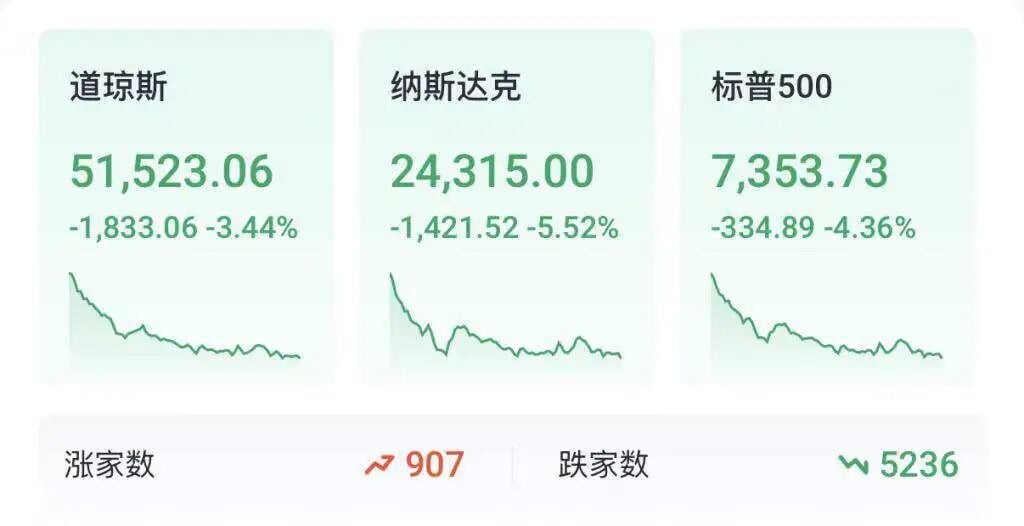
During this process, Anthropic's market capitalization drop represents an evaporation of imagination premium.
Moreover, the alignment of large firms and binding computing power sets up a structure that makes investors cautious. After all, among the apparent dazzling financing and soaring revenue, how much truly comes from genuine market demand, and how much is a circular game from giants “investing capital with one hand and selling computing power with the other”?
On the basis of procurement commitments and total expected expenditures from leasing agreements amounting to a staggering $900.9 billion, Jensen Huang, who has been at the helm of Nvidia for 33 years, suddenly resigned. Coupled with the new signals released after CFO Colette Kress took over as CEO, this pulled away the most crucial load-bearing pillar in the AI computing power financing game.

During Nvidia's earnings call, Kress clearly stated the new rules: Nvidia will critically scrutinize companies receiving financing support in the future, and data center guarantees will only activate once facilities are genuinely built and ready; no guarantees will be provided during the construction period; and if the data center construction is delayed, Nvidia's guarantee will cease to exist.
In the past two years, Nvidia has not just sold shovels; it has also been the “super guarantor” for the entire AI infrastructure construction. By the end of October this year, the financing guarantees provided by Nvidia for AI infrastructure had skyrocketed to $11.8 billion.
Previously, the market was willing to assign high valuations to large model giants like Anthropic, largely because it presumed there was backing from Nvidia if something went wrong. Now, with the “big brother” suddenly replaced and the newcomer’s first action being to retract the blank check guarantee, it is hard for the market not to worry.
When the credit endorsement no longer holds, everyone has to reevaluate whether the future growth expectations for Anthropic can be fulfilled, and by how much.
This is similarly the case in the Chinese market.
In the past two years, many domestic large model companies relied on binding large cloud resources and strategic investments to maintain high valuations, but Anthropic's experience has precociously forecasted the ending. Once they enter the public market, investors will eventually separate the excesses from large company subsidies and commercial performance for independent accounting.
Anthropic's listing has signaled to Chinese large model companies— the era where a single dimension of high growth narratives could dominate the secondary market is over.
Watching Anthropic fall from the $2 trillion cloud to a reality of $1.5 trillion brings concern about how the fate of domestic large model companies, relying on revenue growth to drive up valuation, will unfold next.
Squeezed Valuations and Frenzied Demand: How Should Chinese Large Model Companies Price?
To understand how to view the valuations of Chinese large models, one must start with the changes in Anthropic, for it is not Anthropic that has changed but rather the financial market's pricing yardstick.
In fact, compared to Wall Street, which only began to “squeeze out excesses” for Anthropic today, the valuations of Chinese large model companies have long been positioned more rationally.
Take the currently listed Zhiyuan and MiniMax as an example; well before Anthropic's bell rang, both companies had already showcased the “squeezing of valuation” process for the entire industry.
When going public on the Hong Kong Stock Exchange in January this year, Zhiyuan and MiniMax were exceptionally glamorous, even with Zhiyuan setting a record for a trillion-dollar market cap. What made them so outrageously expensive at that time? It boiled down to two phrases: supply scarcity and skyrocketing ARR narrative.
At the time of MiniMax's listing, its circulating shares in the Hong Kong stock market amounted to only about 17.07 million shares, accounting for less than 6% of its total equity, yet it attracted 420,000 crazy subscriptions with an oversubscription rate as high as 1837.17 times; Zhiyuan also achieved a record of 1159.46 times over-subscription.
However, just a few months later, looking at the company's current valuation compared to the peak, both companies have dropped by more than 80%. Business revenues are still skyrocketing, but as the deadline for lock-up stocks approaches, the premium from the scarcity of circulating shares evaporated in an instant.
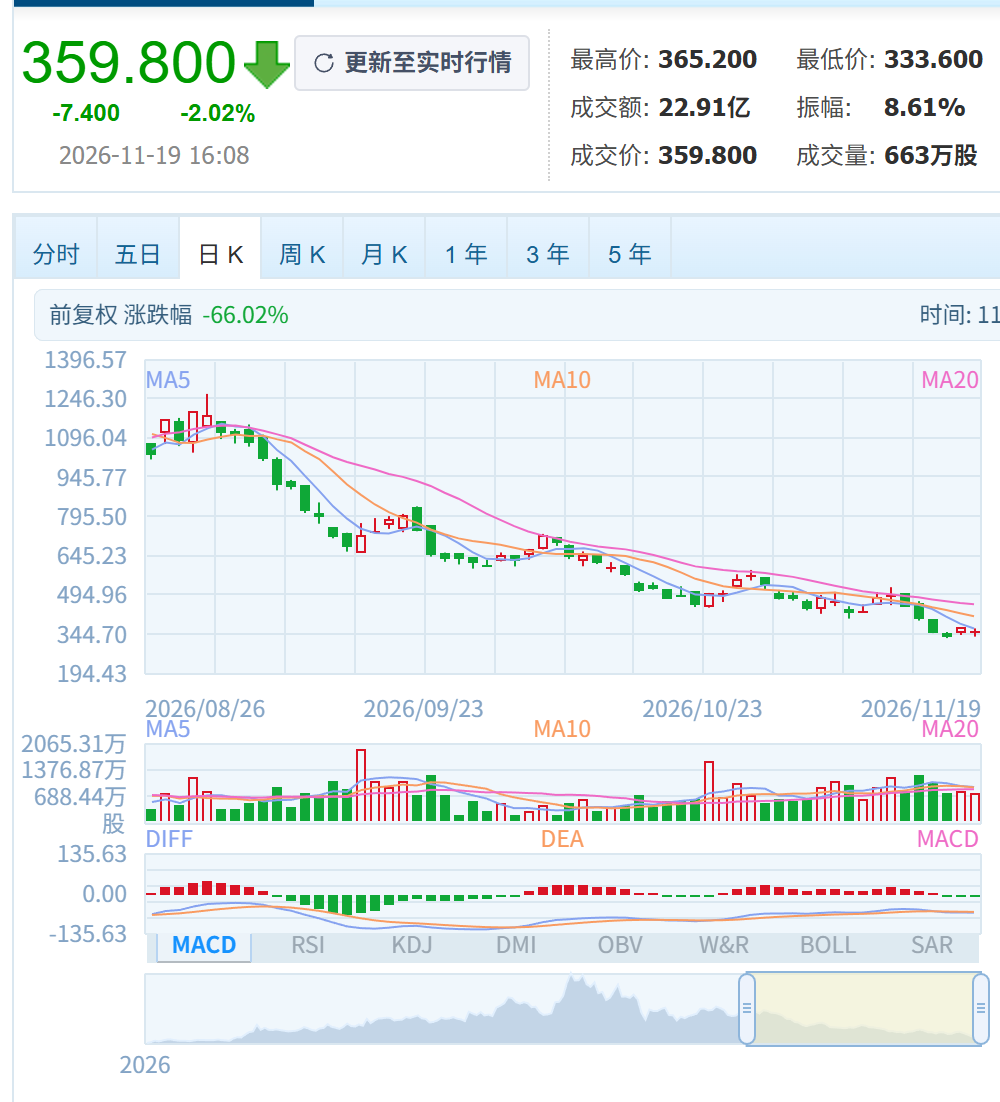
Zhiyuan's market cap
More worryingly, for the large model companies still at the table and yet to be listed— the frost of the secondary market is inevitably spilling back into the primary market.
Overseas giant OpenAI, aiming to replenish ammunition before Anthropic's listing, has recently been briskly advancing a new round of financing. Originally, OpenAI's ambition was to raise $30 billion at a $1.4 trillion valuation, but investors' appetites were evidently not that large.
Ultimately, this round of financing was reduced from a $1.4 trillion valuation to $1.25 trillion, evaporating $150 billion directly, a 10.7% drop, with the first installment shrinking to around $15 billion. Under the scrutiny of capital, OpenAI is making the necessary concessions.
If even OpenAI must actively concede, then looking back at the domestic scene, how much space do the currently unlisted Chinese large model companies have left to boost their valuations?
Once the excess is squeezed out, what Chinese large model companies can really be worth no longer depends on grand narratives, but rather on their actual commercialization capabilities.
However, if we zoom out to the entire global AI industry, although the capital market is wildly “squeezing excesses” from AI valuations, there remains considerable excavating space for actual demand for AI from other industries.
Objectively, the real demand for AI applications not only remains firm but is also poised for a genuine explosion period ahead.
In the past two years, the Chinese AI community has been quite anxious about the commercialization of large models: B-end MaaS revenue is limited, and the C-end has yet to discover truly blockbuster products.
By 2026, with the explosion of coding and the establishment of agent demand, tokens will start to increase in price.
According to a report released by the China Academy of Information and Communications Technology, titled “Monitoring Report on the Performance of Large Model Token Services (2026),” the domestic normalized average price for the second half of 2025 is projected to be 6.8 yuan, while the average price since the beginning of this year has been 13.46 yuan, nearly doubling. However, foreign prices are still higher than domestic ones, with the average normalized price of typical models released since 2026 around 117.8 yuan.
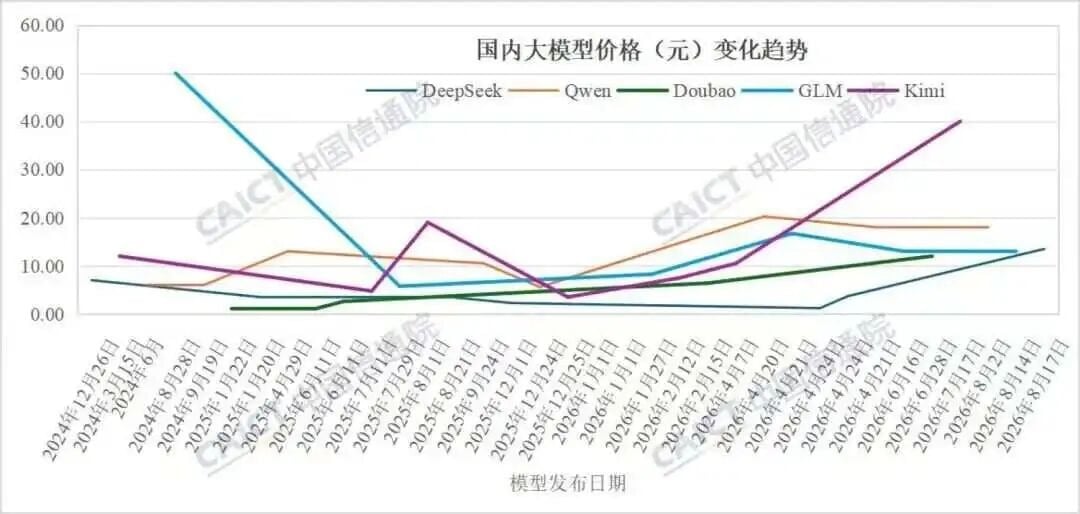
Why do prices rise while people still rush to use them? Because when large models genuinely penetrate complex production processes such as code development and enterprise-level intelligent agents, customers no longer seek cheap chat toys but want a productivity tool that can work directly on tasks. As long as the models are intelligent enough to stably run workflows, enterprises will be willing to pay real money.
In this technology-dominated era, large model companies are still on a roll, and computing power remains a scarce resource. Thus, AI hardware and cloud vendors continue to be the biggest beneficiaries:
During Nvidia's earnings call, the acting CEO recently disclosed a set of data indicating that the rental price of the new generation Blackwell architecture B300 chip has surged more than 60% compared to its initial launch price; even the previous generation Hopper architecture cards had renewal prices at times as high as double the original price. Both super-scale cloud providers and emerging computing clouds are operating at full capacity.
Domestic computing power remains in short supply too. On November 18, Alibaba CEO Wu Yongming stated during an earnings call that as production capacity ramps up, the proportion of domestic computing power in overall computing power will continue to rise, becoming the main engine supporting cloud revenue growth.
Going forward, as supply chain constraints and fierce competition for cards peak, the availability of computing power cards in the market will only become tighter by 2027. When continuously growing application demands meet tighter computing power supplies, tokens are likely to continue to rise in price.
At this point, it becomes clear that the current AI industry is simply capital deflating excesses from large model companies, while the industry is still delivering business for AI companies.
Whether in the circulation play of Hong Kong stocks or the soaring valuations in the primary market, as long as the valuation outpaces the realization of commercialization, the secondary market will eventually help you drain the excess in the harshest way.
Players remaining at the table need to use the “price rise rights” of tokens to prove their irreplaceability. The fact that token prices surged while usage skyrocketed in 2026 has pointed out a way for Chinese large model companies to survive—whoever can make enterprises unable to live without your API after the price increase will secure real pricing power.
Ultimately, this AI valuation correction sweeping across both the U.S. and China is often unrelated to the efforts of any single company, but is part of the entire AI industry’s transition from adolescence to maturation.
The bell rung by Anthropic marks the end of the old pricing era. When the tide recedes, large model companies swimming naked in the water need to reassess what they are actually worth.
免责声明:本文章仅代表作者个人观点,不代表本平台的立场和观点。本文章仅供信息分享,不构成对任何人的任何投资建议。用户与作者之间的任何争议,与本平台无关。如网页中刊载的文章或图片涉及侵权,请提供相关的权利证明和身份证明发送邮件到support@aicoin.com,本平台相关工作人员将会进行核查。


