Tether's total gold holdings have slightly increased, but the pace of accumulation has clearly slowed down, with almost no increase after buying 14 tons in the second quarter.
Written by:Li Jia, Wall Street Insight
The selling pressure in the gold market comes not only from investors taking profits but also from some official holders continuously reducing their positions under financial pressure.
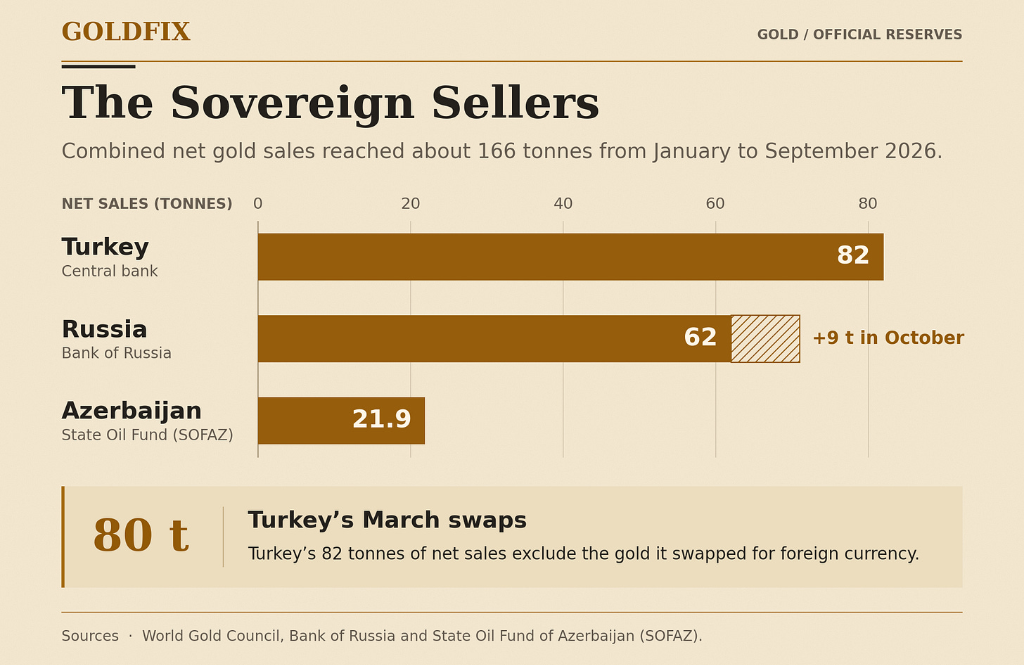
According to GoldFix statistics, as of September, Turkey, Russia, and Azerbaijan's national oil funds have collectively net sold about 166 tons of gold. Among them, Russia is the only holder that has been selling continuously for ten months, with gold holdings declining month by month from January to October, totaling about 72 tons.
The Central Bank of Turkey net sold about 70 tons in the first quarter, mainly concentrated in March, during which 80 tons of gold were also used for gold-to-foreign-exchange swaps. The Azerbaijani national oil fund sold 21.9 tons in the first quarter because rising gold prices pushed holdings above the portfolio limit, and it maintained the gold position at 178.1 tons for the following six months.
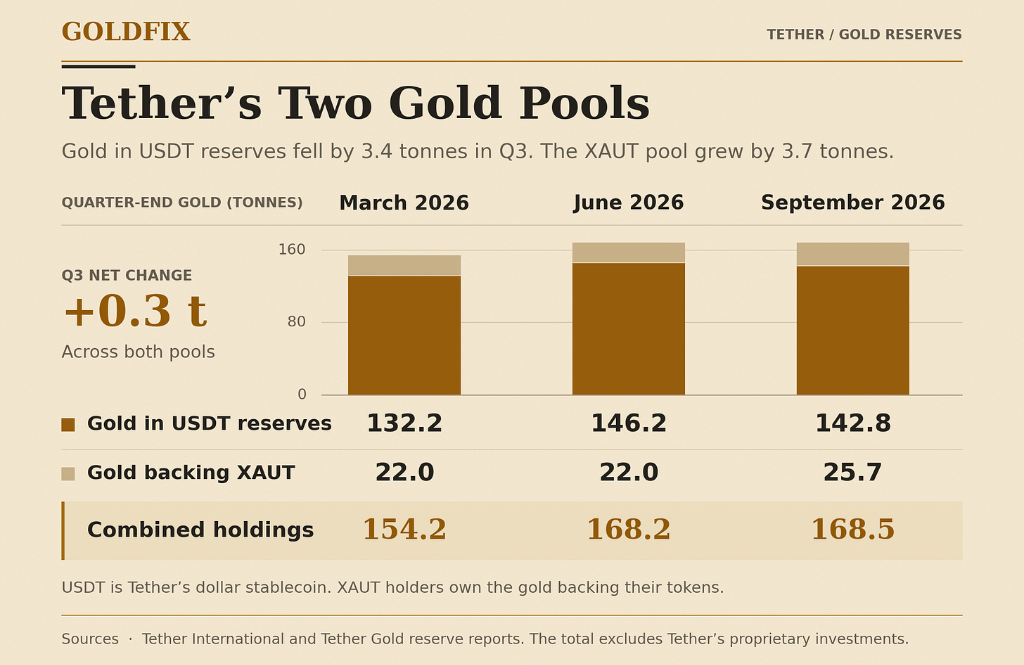
The Tether that the market repeatedly mentions did not experience massive selling. Its USDT reserves corresponding to its vault decreased by 3.4 tons in September compared to June, but the vaults corresponding to XAUT tokens increased by 3.7 tons during the same period, leading to a slight increase in total holdings from 168.2 tons to 168.5 tons.
Russia Continues to Sell Gold, Turkey Focuses on Reducing Holdings, Azerbaijan Rebalances at High Prices
The gold sales by the Central Bank of Russia mainly occur in the domestic market, driven by the finance ministry's use of the national wealth fund for budget financing. From January to October, Russia's gold holdings have seen a consecutive ten-month decline, totaling approximately 72 tons.
Compared to other sellers, Russia's reductions are more consistent. Turkey mainly faces financial pressure from exchange rates and energy imports, while Azerbaijan is rebalancing after gold holdings exceed the portfolio limit. Russia's gold sales directly serve fiscal financing needs and are not a one-time adjustment.
Azerbaijan's reduction is closer to a one-time rebalancing. The national oil fund sold 21.9 tons of gold in the first quarter, mainly due to rising gold prices increasing the proportion of holdings, pushing it past the portfolio limit. For the following six months, the gold holding remained at 178.1 tons.
Turkey net sold about 70 tons of gold in the first quarter, with the reduction mainly concentrated in March. At that time, rising energy import bills and defending the lira exchange rate brought financial pressure, and the central bank also used an additional 80 tons of gold for gold-to-foreign-exchange swaps.
The Central Bank of Turkey's Governor Fatih Karahan stated that the gold involved in the swap transactions will return to reserves upon maturity. By June, the remaining swaps had decreased to about 60 tons, with only 4 tons net sold directly in the second quarter. This indicates that Turkey's gold reduction was primarily a concentrated operation in March, rather than a continuous massive sell-off.
Saudi Arabia: Dollar Demand Sparks Market Speculation
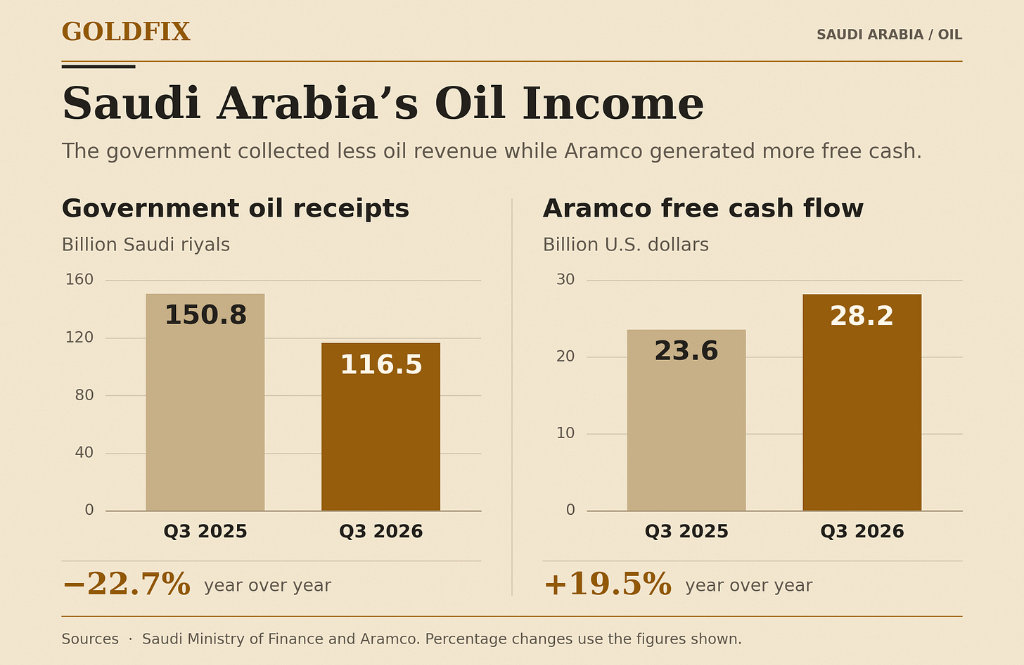
Saudi Arabia is also under scrutiny regarding fiscal and dollar liquidity pressures. In the third quarter, oil revenue fell by 23% year-on-year, and Riyadh recorded a deficit of 84.3 billion riyals while needing to maintain the peg of the riyal to the dollar. On the other hand, Saudi Aramco's revenue and other sales-related income rose from 111.5 billion dollars to 140.5 billion dollars, with free cash flow also increasing.
In October, due to threats from Houthi attacks, Bloomberg reported that Saudi Aramco is negotiating a 10 billion dollar revolving credit line to meet potential funding needs from disruptions in shipments.
The market is also watching whether Saudi Arabia raises dollars by selling gold or U.S. Treasury bonds. U.S. data shows that net sales of U.S. Treasuries by Saudi investors reached 18.7 billion dollars in March and April, though this includes private accounts, making it unclear what portion corresponds to the central bank. As of August, Saudi Arabia's official gold reserves stood at 323.1 tons, and at a price of 3,558 dollars per ounce, selling approximately 87 tons of gold would be required to raise 10 billion dollars. Currently, neither the Saudi central bank nor the public investment fund has disclosed such transactions, and there is no evidence that Saudi Arabia is conducting large-scale gold sales.
Qatar and the UAE also reported a slight decline in gold holdings in the third quarter. Qatar Energy estimates that restoring damaged facilities, which account for 17% of LNG export capacity, will take three to five years. However, Qatar's gold holdings remained unchanged from August to October, and it cannot be determined that it is in a phase of continuous selling based on this.
Tether: A Cooling Demand for Buying is More Notable than Selling
Tether's changes in gold holdings do not support claims of massive selling. In September, its USDT reserves corresponding to the vault decreased by 3.4 tons compared to June, but the vault corresponding to XAUT tokens increased by 3.7 tons during the same period, leading to a slight increase in total holdings from 168.2 tons to 168.5 tons.
These two categories of vaults correspond to USDT reserves and gold tokens held by customers, and the combined statistics are intended to measure the total physical gold demand for related projects, excluding Tether's own gold investments.
However, Tether's pace of accumulation has indeed significantly slowed down. Its declaration documents show that after accounting for changes in asset value, the company incurred losses of 4.21 billion dollars in the second quarter. From buying 14 tons of gold in one quarter to nearly ceasing accumulation recently, the cooling buying demand from Tether indicates that gold has lost an important marginal demand source.
免责声明:本文章仅代表作者个人观点,不代表本平台的立场和观点。本文章仅供信息分享,不构成对任何人的任何投资建议。用户与作者之间的任何争议,与本平台无关。如网页中刊载的文章或图片涉及侵权,请提供相关的权利证明和身份证明发送邮件到support@aicoin.com,本平台相关工作人员将会进行核查。