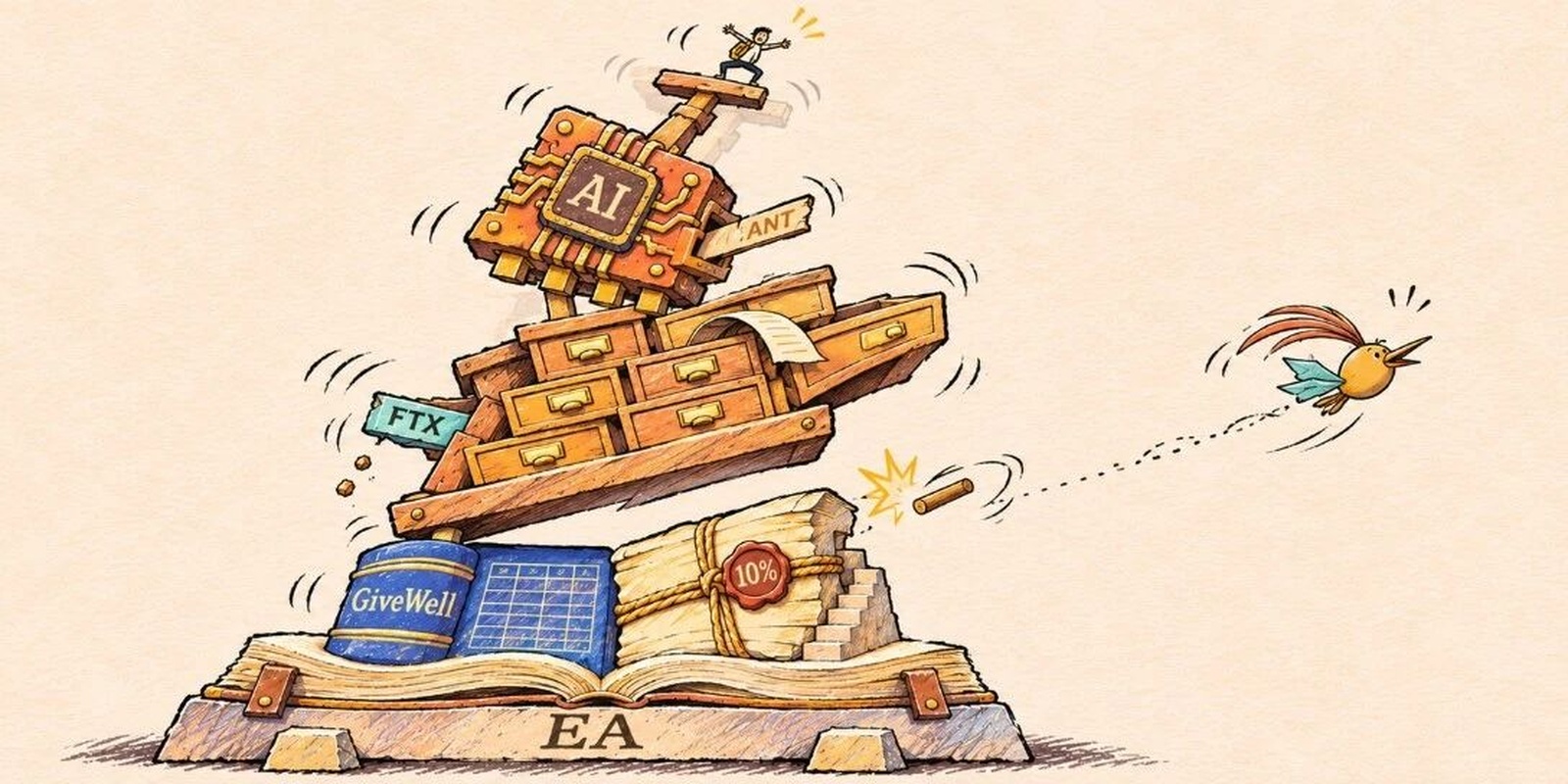
Is Aave just a lending protocol? How the three-tier architecture brings value back to AAVE.
Written by: Lilian Aliaga, OAK Research
Translated by: AididiaoJP, Foresight News
Data and disclosure note: This article is part of a collaboration between OAK Research and Aave. Data is as of early November 2026. Numbers are sourced from DefiLlama unless otherwise stated, with V4 deposit numbers from Aavescan, GHO finances from Aave's TokenLogic dashboard, and some product metrics reported by Aave or its service providers as indicated. Arguments and any illustrative revenue calculations are as per OAK Research.
Aave is no longer just a lending market. Over the past two years, it has gradually evolved into a three-tier architecture: an underlying lending infrastructure, the product layer built on top of it, and the institutional business.
This article outlines what the team has actually launched in these three tiers, and a question that runs through it all: how much of this expansion has truly flowed back to the AAVE token.
Introduction
Aave is the largest lending infrastructure in on-chain finance. It started in 2017 as ETHLend, rebranded to Aave in 2020, and went live. From an external perspective, it is increasingly harder to understand how its recent series of new products interact with each other, including stablecoins, a savings application for ordinary users, an institutional market for real-world assets, services providing backend support for third-party debit cards, treasury infrastructure, fiat on/off ramps, and developer tools to help AI agents prepare lending transactions.
The simplest way to understand it is to view it as a three-tier structure built around a core that has never changed: Aave transforms users' collateral into borrowing power. You deposit tokens, borrow other assets, and pay interest to the providers of funds. Everything else is handled by smart contracts in the background, as well as governance decisions on which assets can be listed and the risk levels the system can bear.
The base layer is the infrastructure: V3 and V4, the familiar lending engines. Above it is the product layer: GHO, Aave App, the treasury infrastructure that allows other applications to integrate Aave, and partners driving borrowing demand.
Running parallel to these two layers is the institutional layer: Aave Horizon aimed at tokenized securities and institutional funds, a custom V4 deployed for Coinbase tokenized stocks, and a dedicated V4 instance for RWA set to launch on Avalanche. Each layer feeds into the others.
So the argument is: Aave is no longer just a place to borrow money but a credit infrastructure upon which other products can be built, covering retail to institutional, consumer to backend. We continuously question how much of this expansion truly reaches the DAO and AAVE tokens.
Viewing the Business Through Numbers
Before discussing the tiers, let's anchor the business with some numbers. Aave is a lending infrastructure: users deposit assets and borrow other assets against collateral, or earn interest by providing liquidity.
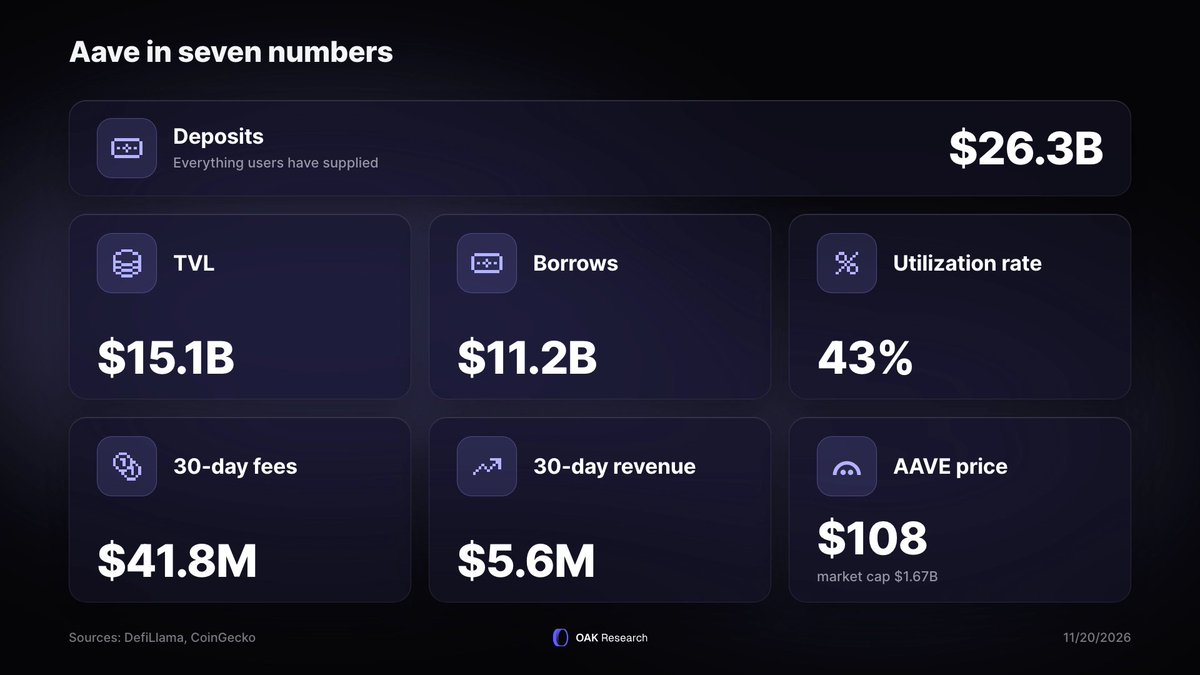
There are three numbers often mixed together, which is why you see a wide range in Aave's TVL figures.
Deposits are all assets users put into the protocol, including parts that are later borrowed and moved elsewhere. Subtracting the loans from the deposits gives the TVL, which is the portion truly locked in the protocol. Loans refer to the actual credit used at a given moment. Three numbers, three different things.
Then there's the question every business must ask: how much does it keep for itself? Here we must separate the fees generated by Aave and its retained income. The interest paid by borrowers is a fee, but most goes to the providers of funds, with the protocol retaining a small fraction determined by the reserve factor. This ratio varies by asset, so the numbers below represent mixed averages rather than a single switch.
V2 retained a higher proportion of fees, but it is a shrinking legacy book with limited liquidity.
V3 is the economic core, retaining about 13% as a mixed ratio.
V4 is newer and currently in a similar range.
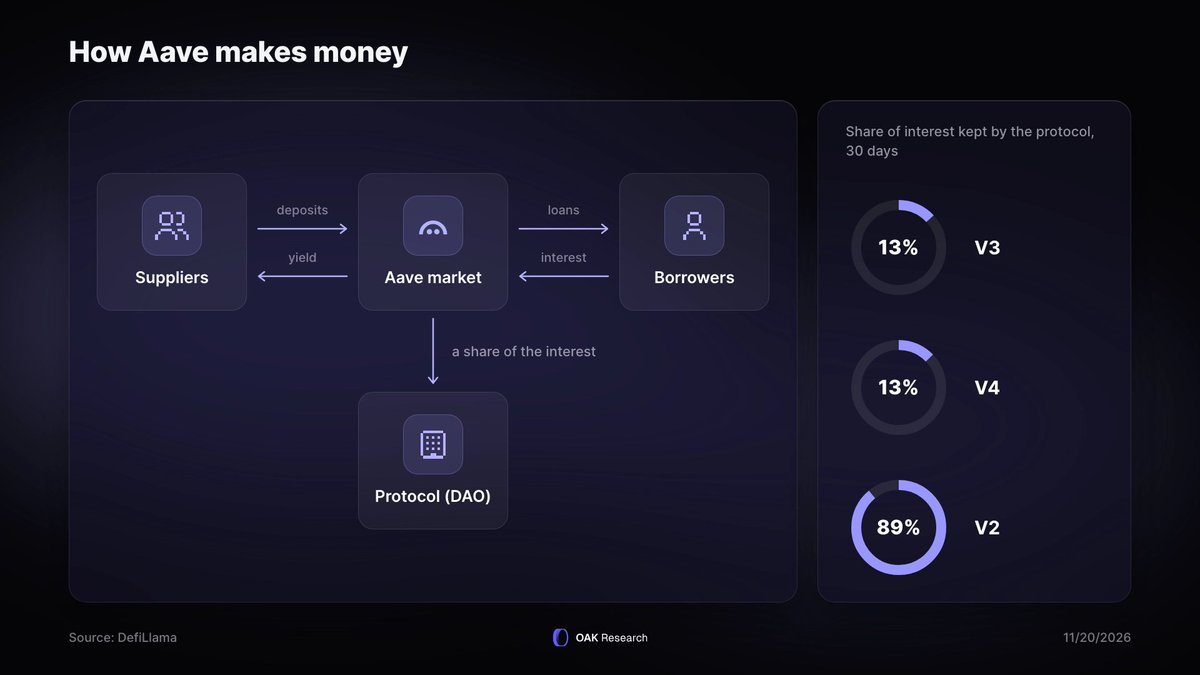
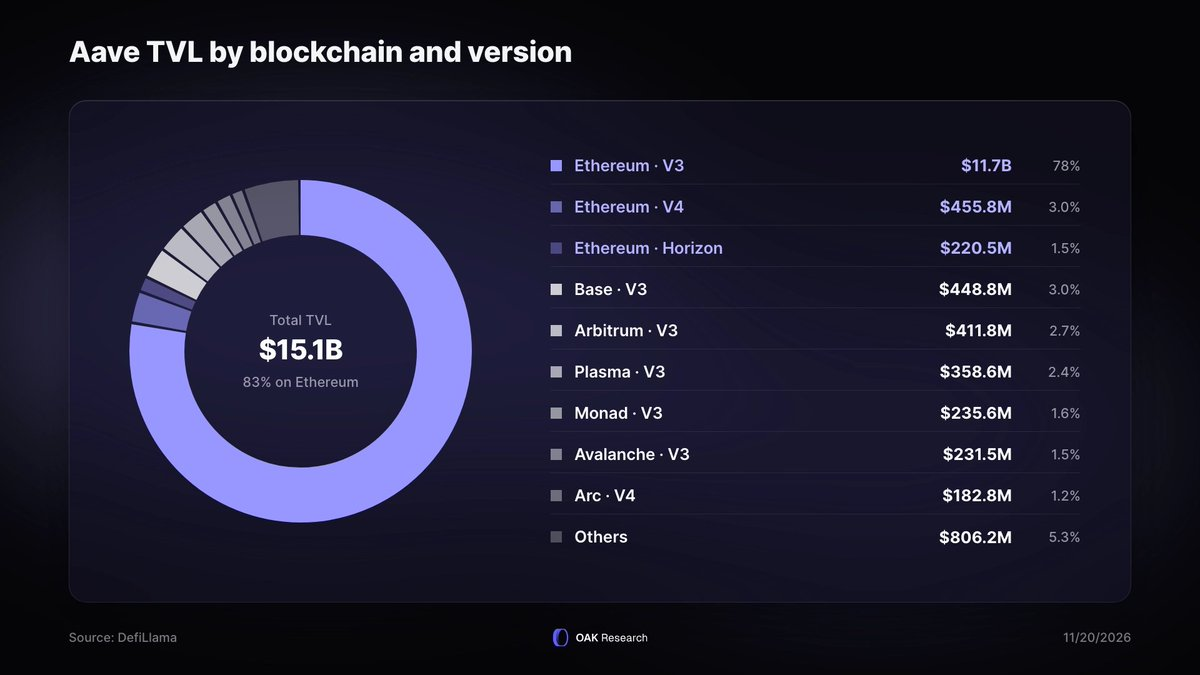
As of early November 2026, the key numbers show a highly concentrated business. V3 remains central, accounting for about 83% of total TVL on Ethereum alone. Most of the revenue stems from this same base.
This is not a weakness, but the starting point of the story. A significant part of what Aave is building involves a series of parallel efforts aimed at broadening revenue sources and reducing dependency on the Ethereum core: newer chains (like Base, Plasma, Monad, and Arc), externally curated V4 markets, and subsequent product layers.
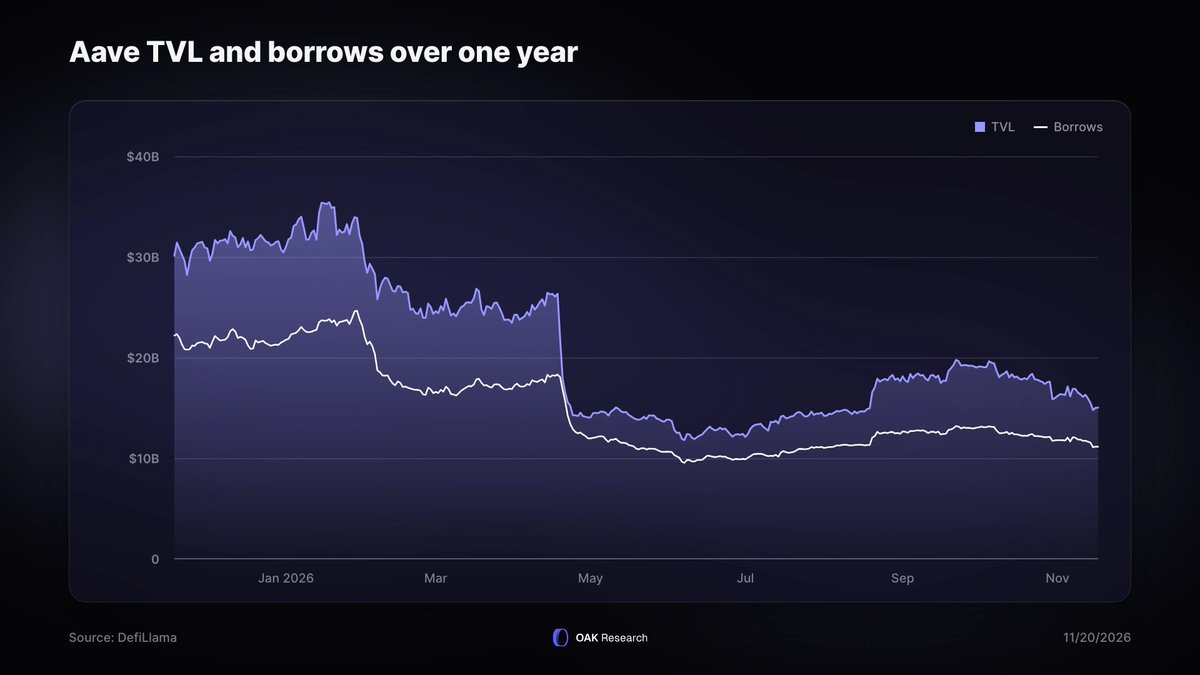
Over the past year, TVL has dropped from about $32 billion to around $17 billion, with borrowing also decreasing to about $12 billion. Most of the changes followed market trends, driven by collateral mainly being ETH and related assets, where price drops and deleveraging naturally shrink dollar-denominated deposits and loans. The structure of the business—V3 as the engine surrounded by an increasing number of markets—has not changed.
Infrastructure Layer: Aave V3 and V4
The Aave protocol is the infrastructure layer into which all other products plug in. Aave V3 launched in 2022 and deployed on Ethereum in early 2023, now operating across multiple networks, serving as the main economic engine. It holds the majority of Aave's TVL and outstanding loans, contributing about $4.8 million in monthly income to the DAO. When people talk about Aave's business today, they are mostly talking about V3.
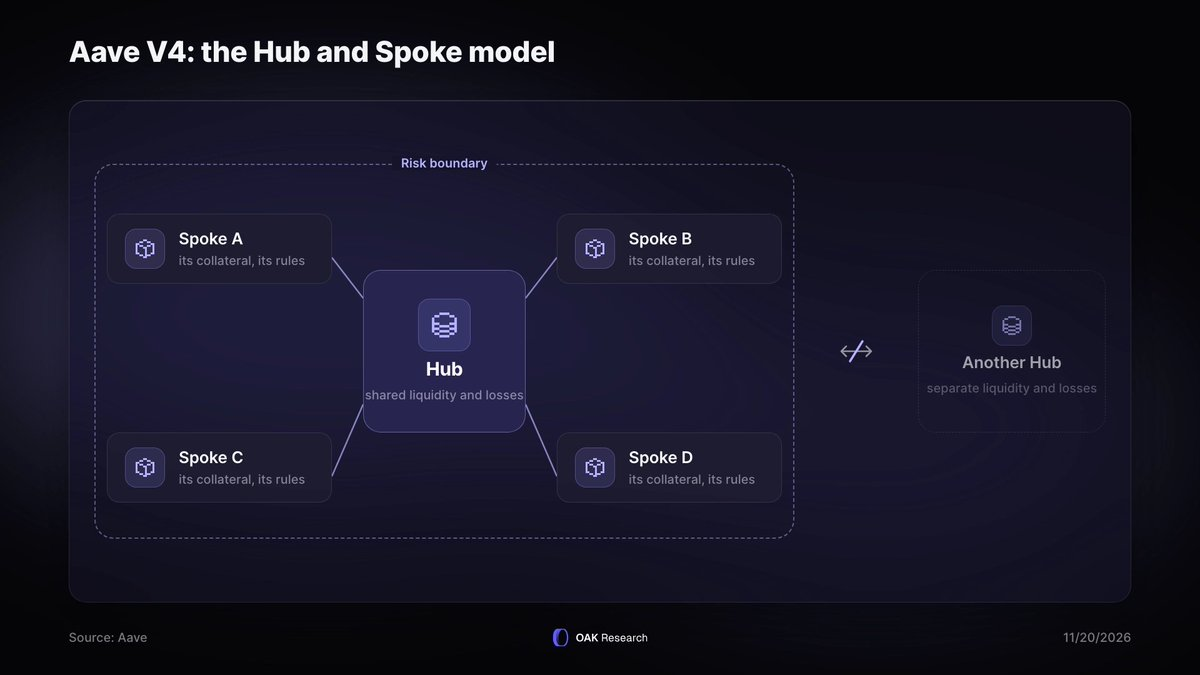
Aave V4 launched on March 30, 2026, on Ethereum and is the next generation of the Aave protocol. Its design separates liquidity from markets: a Hub concentrates liquidity, with Spokes (i.e., markets) plugging into it, each Spoke establishing rules for specific markets, including acceptable collateral and allowed limits.
Partners can launch specialized markets on top of the existing liquidity in the Hub without needing to source liquidity themselves. Alternatively, partners can operate their own Hub, completely isolating the risk, as done by Ether.fi. Aave's value does not only come from code, but also from the capital and risk management provided by its infrastructure.
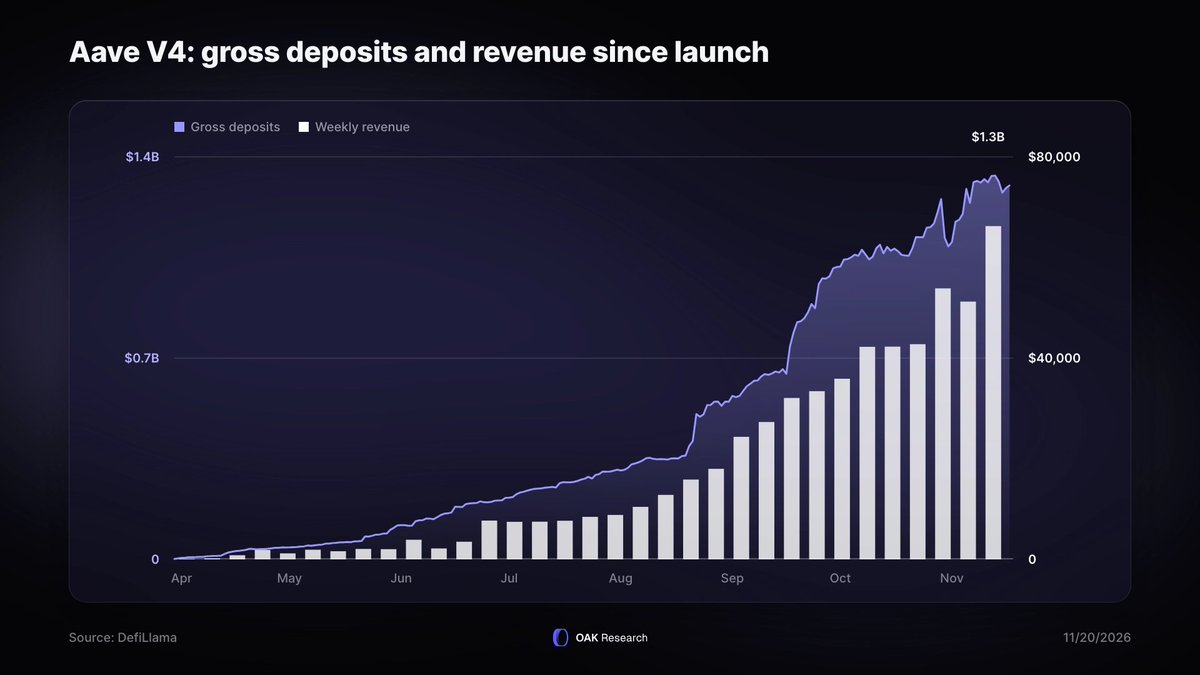
In terms of direct income, V4 is still in its early stages. Over the past thirty days, it generated about $1.03 million in fees, corresponding to about $140,000 in protocol revenue, based on around $1.8 billion in total deposits, while V3 generated around $4.8 million monthly. This gap is not surprising: V3 has been Aave’s flagship for years, with a large number of users and deposits naturally remaining there, as capital tends to be sticky and hard to move.
Importantly, viewing V4 solely through its fees misses the structural changes it has already brought, which are more important at this stage:
Ether.fi migrated the entire credit backend of its Cash Card to a dedicated V4 instance on Optimism and shares revenue with the DAO.
In October, Sentora launched the first externally curated Hub and market on V4, setting its own collateral, risk parameters, interest rates, and oracles, while the DAO retains contract ownership, routing every risk increase through a 48-hour time lock, and taking 50% of the Hub revenue. Its market deposits have exceeded $100 million.
Also in October, Steakhouse began running the Earn+ strategy for Ethena Pay on Aave V4 on Avalanche, building products on Aave's liquidity rather than operating its own market.
These are two versions of the same action: the curator operates their own market, or teams build products on Aave liquidity. In both cases, the growth will bring deposits, loans, and income to Aave.
This is also Aave's first time opening custom markets to third parties on this scale, bringing in new users: Ether.fi Cash users previously operated in Ether.fi’s own backend, while Sentora and its users historically used other venues.
Thus, V4 today is more of a platform story rather than a fee story, turning Aave into the infrastructure that other teams can build markets on and route revenue back. The numbers to track over the next year will be whether this structural demand translates into sustained growth in revenue lines.
It's worth observing where these demands are currently concentrated. Ether.fi's Spoke alone accounts for more than 96% of WETH loans on its Hub, while Maple Spoke in the Global Dollar Hub shows about $36 million in USDG borrowed.
These are young specialized markets, and the activity initially centers naturally; what needs to be observed is how borrowing demand spreads as more Spokes and curators come online.
Where Does Borrowing Demand Come From: Ethena and Pendle
The utility of the lending engine depends on whether there are parties willing to borrow its capital, so partners creating this demand belong to the infrastructure layer.
Liquidity and trusted brands are things many protocols have spent years trying to build, and Aave has both. The real work now is to give people reasons to borrow this capital, and partners are a significant part of that.
Ethena is the clearest example. Its synthetic dollar USDe and sUSDe carry yields, and once accepted as collateral, users can deposit, borrow stablecoins, and recycle to amplify exposure, with Aave financing the positions. Aave's 2025 summary credited this relationship with about $8.5 billion in Ethena-related deposits, peaking at over half of Ethena's stablecoin supply.
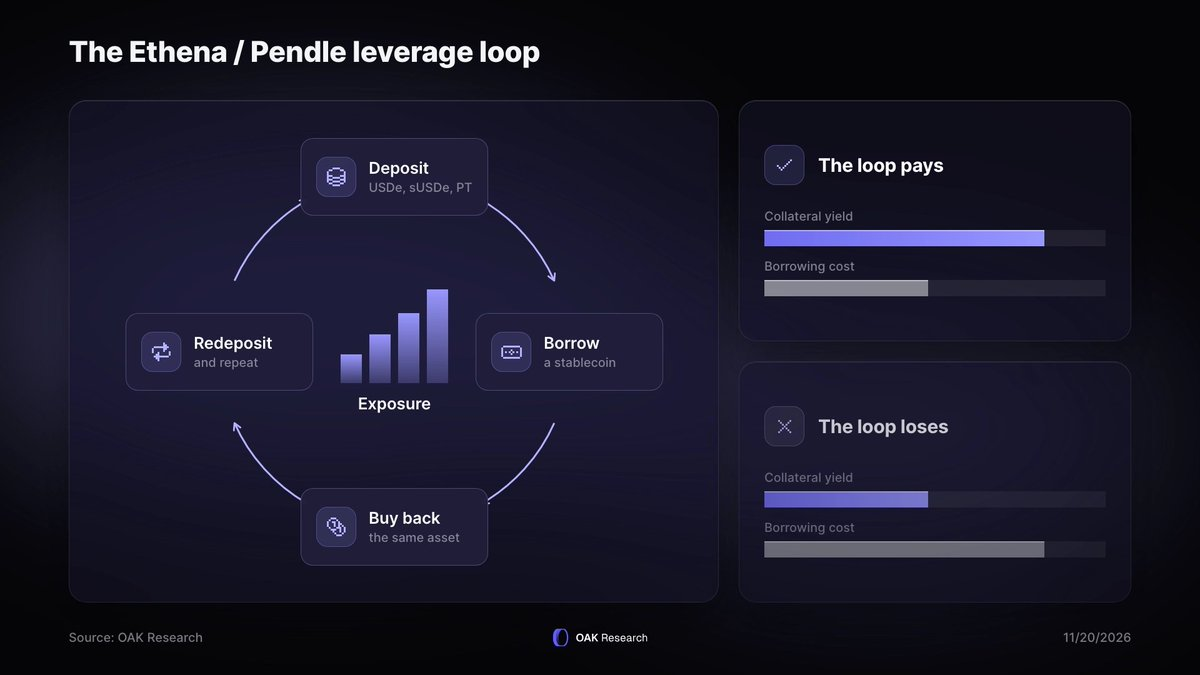
Pendle built different demand around the same idea. Its principal token represents interest-bearing asset principal purchased at a discount, redeemable at maturity, and once accepted as collateral, holders can finance positions until maturity.
Aave has become the preferred place for PT-supported loans and has reliably carried several PT maturities over the past year, which is the harder part to get right. These positions require monitoring because the debt is floating rate while token yields are fixed, but the records themselves are the focus. What both show is what Aave is truly pursuing when increasing collateral: not just another line of code, but assets that can form a lasting borrowing demand around it.
Product Layer
Widening the base is half the work. The other half is reaching more borrowers and providers and allowing other applications to embed Aave, rather than waiting for users to come on their own.
GHO, Native Stablecoin
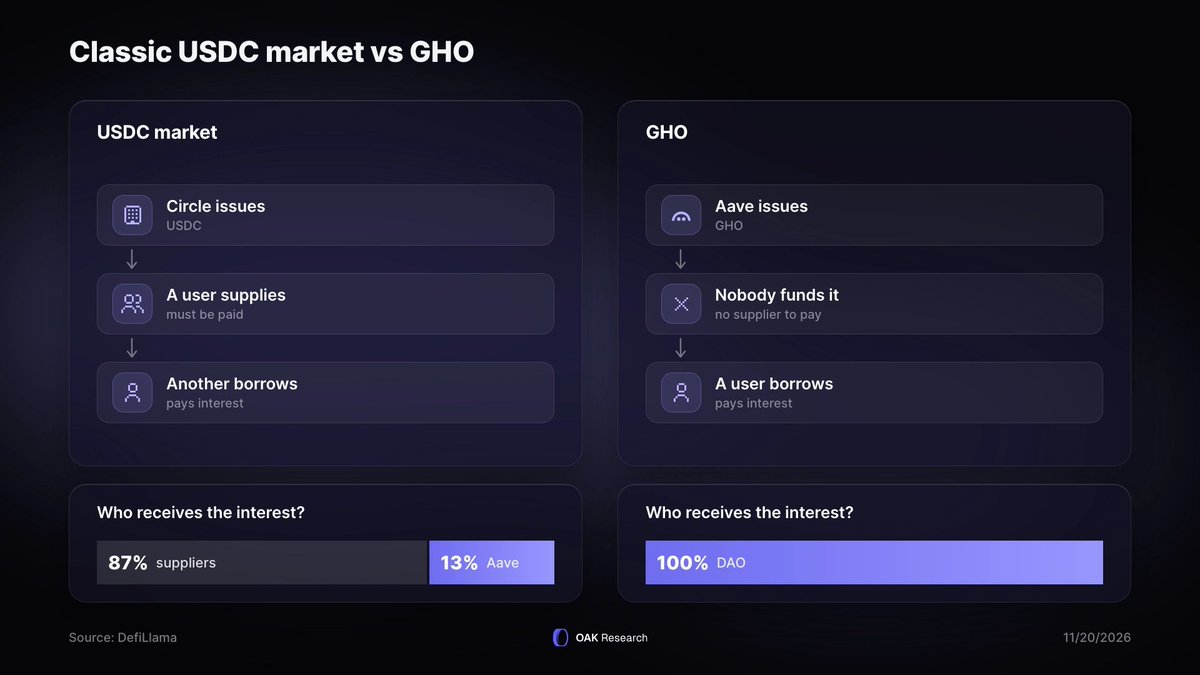
GHO is the most interesting line on the tokens. Aave captures value in multiple places, from the Pro interface to its markets, but what makes GHO unique is that the DAO retains 100% of the interest paid for borrowing GHO, rather than splitting it with suppliers as in typical markets.
Since Aave issues the stablecoin itself, it doesn't need others to provide the funds, so when a dollar of new GHO is minted and borrowed, all its interest returns to the DAO. This is somewhat analogous to how central banks profit from their own issued currency.
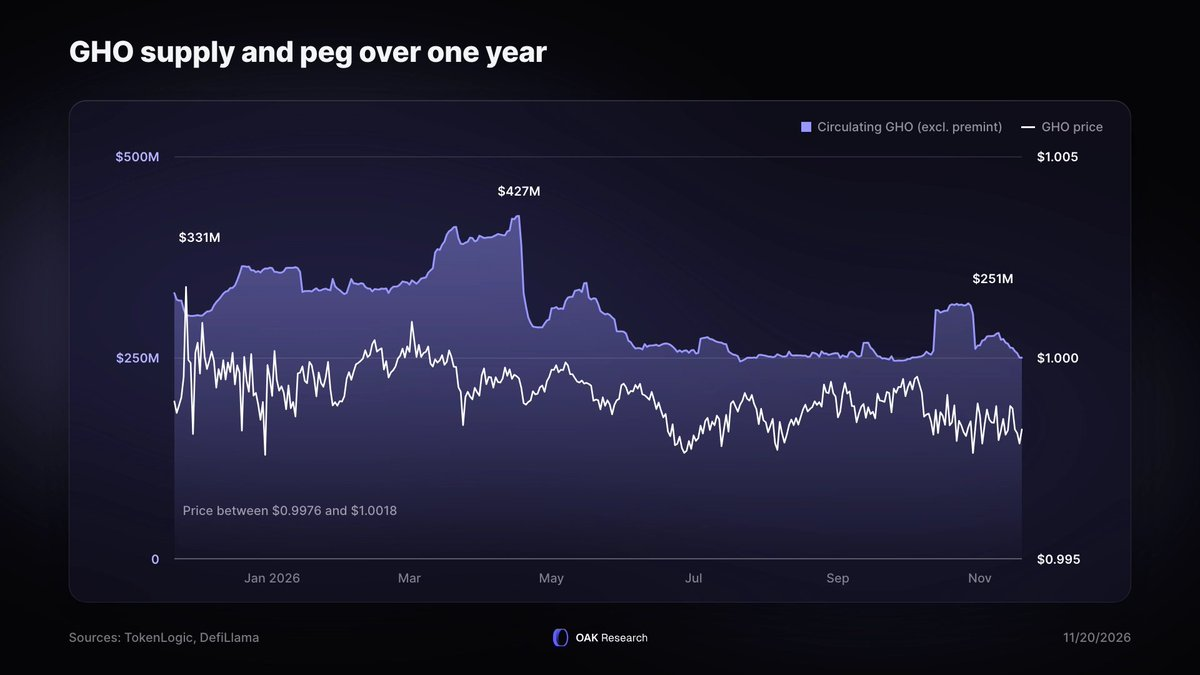
The top supply of GHO carries a lot of pre-minted buffers that are not actually in circulation. As of November 2026, DefiLlama revised its methodology to exclude it, reducing the figure from about 698 million to about 252 million, representing the GHO that was truly minted and in use, of which about 95% is on Ethereum.
The peg has remained between 0.9976 and 1.0018 throughout the year, so it's an accounting adjustment rather than a contraction. GHO also expanded to Monad since July, currently with a smaller deployed scale.
Based on the GHO financial data released by Aave, it is net profitable annualized. The profits come from the DAO retaining all borrowing interest, deducting rewards and growth incentives paid to sGHO depositors. It's worth noting that the spread is managed, not automated.
Occasionally, the DAO may set the GHO borrowing rate close to or below the sGHO yield to support demand, such as briefly done at the beginning of October, so profitability is a function of the annual book rather than a function of each dollar at every moment.
Meanwhile, sGHO allows holders to earn yield by depositing GHO, currently yielding about 4.5%. It is better seen as a base demand carrying pool for stablecoins. This is important for a relatively young stablecoin. Its yield is paid by the DAO, reflecting a solid balance sheet for the DAO rather than costs that require explanation.
Reaching Users: App, Kit, and Pro
Aave App is a mainstream mobile savings product. It is fully driven by Aave's own infrastructure, with Aave protocol and treasury as the base, providing users with stable on-chain savings rates closer to fixed rates than floating rates in DeFi, thus avoiding the volatility of floating rates.
It is currently in early release on iOS (Android starting November 17, 2026), and users join via invitation codes, having accumulated over $45 million in deposits, becoming one of the faster-growing on-chain savings applications.
Aave Kit goes a step further, allowing wallets, exchanges, or fintechs to integrate Aave's lending directly into their products. The clearest part here is the treasury launched in July 2026, letting any fintech integrate the same treasury infrastructure as Aave App, turning Aave's floating rates into predictable stable rates for users.
This is the core of the model: if a fintech with millions of users integrates Aave, the distribution is done by others while Aave provides credit.
Aave Pro is a high-level interface for managing V4 positions. It bundles asset swaps, collateral swaps, and loan swaps, with the fees from these swaps becoming actual revenue lines for the DAO, exceeding $2 million over the past twelve months. A dollar deposited through Pro remains a dollar in V4, so it is not a second TVL pool.
Driven by Aave: Products Built on the Backend
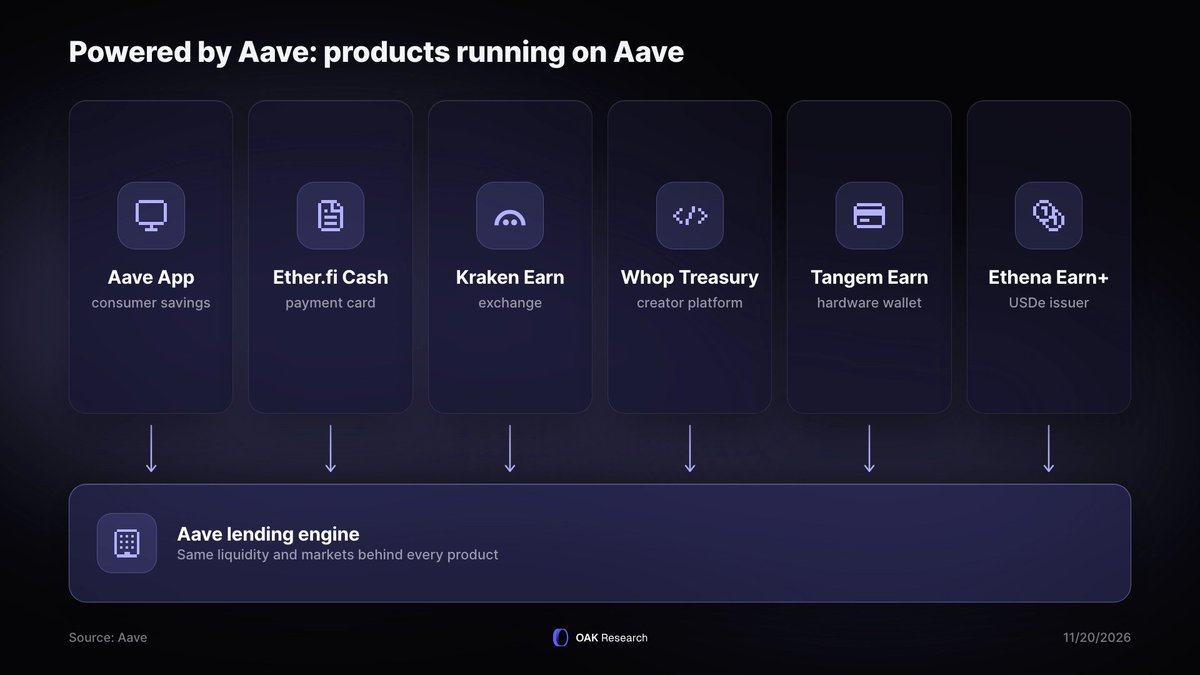
The clearest proof of the infrastructure argument is the increasing number of consumer products running Aave but never placing Aave's name before users. The model is always the same: one company owns the brand, application, and users, while Aave provides credit and yield engines underneath.
Most of these integrations don't have a customized revenue share, but each will increase deposits and loans to Aave's market, thus feeding the reserve factor as well.
The display of the whole model is Ether.fi's Cash Card. With over 100,000 active cards and annual spending close to $1 billion, it operates on a dedicated, permissioned Aave V4 instance on Optimism.
Ether.fi builds the brand, acquires users, and runs the experience, while Aave provides the credit engine and takes 20% of the revenue from that instance. At full scale, that instance is estimated to generate about $5 million to $6 million annually, translating to about $1 million to $1.2 million for the DAO each year.
Cash is likely the first of several such integrations, not a one-off, and the Aave App itself is expected to add cards. Being driven by Aave does not mean every dollar of interest reaches AAVE holders, but does mean that a clear, executable share will arrive.
Kraken DeFi Earn launched in January 2026, bringing the same logic to one of the largest exchanges. Users deposit cash or stablecoins, with funds routed to the treasury supplying Aave, marketing yields as high as approximately 8%. It operates on Kraken's application and Krak wallet, placing Aave behind savings products on mainstream exchanges rather than just crypto-native products.
Whop Treasury touches a very different demographic. Whop is a platform for creators and the gig economy, with over 21 million users and annual payments of about $3 billion, with its Treasury function allowing idle balances to earn yield. The underlying balances are allocated through the Veda treasury to Aave's Plasma market, so here Aave acts as a next layer source of yield rather than a direct integration.
Tangem brings it directly to the wallets themselves. Its Yield Mode allows hardware wallet holders to supply stablecoins to Aave directly from the app, through Tangem contracts deployed on each chain, without the need for external websites or WalletConnect steps.
Ethena Earn+ closes this list from the other side. The strategy behind Ethena Pay's Earn+ runs on Aave V4 on Avalanche, operated by Steakhouse. This reflects the same partnership described in the infrastructure layer, viewed from the product side.
Institutional Layer
The same lending logic is now extending beyond crypto. Aave is not building new businesses here, but applying its core—financing collateral—to a new balance sheet of assets.
Aave Horizon
Aave Horizon, launched in August 2025, is a specialized market where qualified investors can deposit tokenized real-world assets, such as Superstate and Centrifuge products or VanEck's vBill, and borrow stablecoins in USDC, RLUSD, or GHO. The appeal for tokenized treasury bonds is the same for ETH holders: extracting liquidity without selling exposure.
Importantly, its strategic point. Only qualified users can hold and use these assets on-chain, and Aave Horizon is currently the only lending market truly set up to handle them. Thus, it occupies an early position in a still small but potentially large category; should this addressable market expand, Aave is better positioned than anyone else to capture more of it.
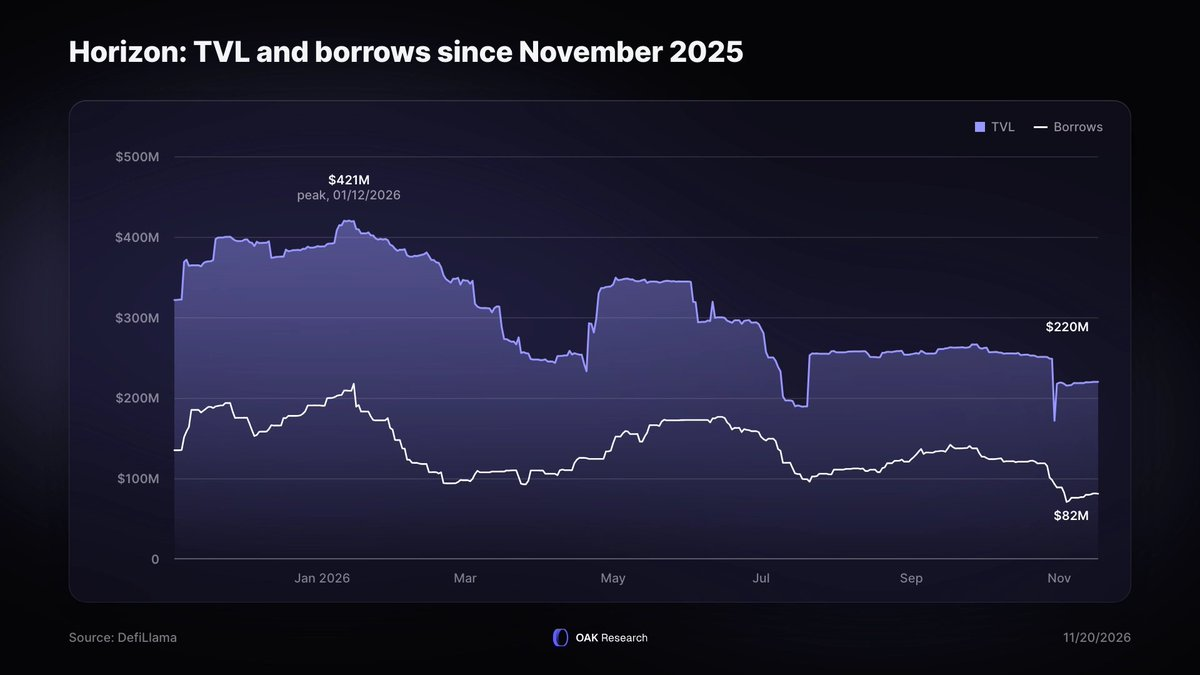
The numbers are designed to be early. DefiLlama shows Aave Horizon's TVL peaked at around $421 million in January 2026, down to about $253 million today, with loans around $122 million. The TVL excludes borrowed portions, so the total supply amount is higher, but the two track each other.
Whichever way, Aave Horizon remains early, situated within an institutional RWA category that is just beginning to take shape and is not being measured against any fixed targets.
The real difficulty of RWA lending is worth retaining because this is precisely what Aave is building for. Tokenized funds settle on-chain in seconds, while they have redemption windows and business day settlements underlying, so liquidations need not only price but also the rights to seize assets and the ability to turn them into cash timely.
Tokenized Stocks
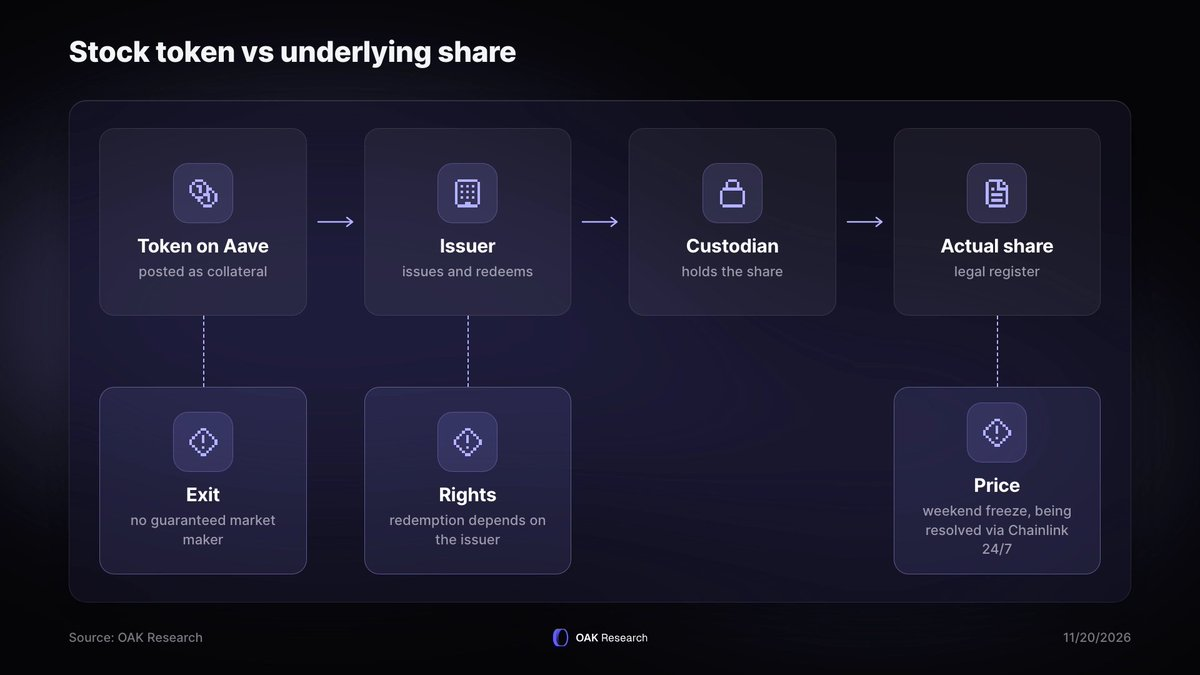
Separately from Aave Horizon, Aave V4 opened a market on Base on September 25, 2026, where qualified users outside the U.S. can borrow USDC against seven stock tokens issued by Coinbase (through Coinbase Onchain SPV entities, with Alpaca Securities holding the underlying stocks), namely Apple, Amazon, Alphabet, Meta, Microsoft, Nvidia, and Tesla.
The innovation lies not in the ability to lend stocks—this has long been possible—but in doing so through programmable on-chain infrastructure, betting on a category alongside Base and Coinbase, this launch also brings Aave into the Coinbase ecosystem, which was previously not a major partner.
The market has incentives, with rewards for depositing stock tokens, and USDC borrowing rates pushed close to free, making it a clear signal that Aave is nurturing a growth sector rather than extracting from it.
These tokens serve solely as collateral, so the market borrows USDC but never lends stocks, with collateral factors set by LlamaRisk, ranging from 65% to 79%, with collateral side caps around $29 million and borrowing side caps around $21 million. Deposits stood at about $9 million at the beginning of October, still early for a market that only opened at the end of September.
To measure the economic scale, even with $1 billion in loans, a 5% borrowing rate, and a 10% protocol share, annual income would be about $5 million (before incentives). This is modest at this stage as the category is being cultivated, expanding directly with the size of the market it bets on.
This category has real nuances, one of the main ones is already being addressed. Historically, these feeds only operated during market hours, which could leave outdated prices over weekends.
On October 29, 2026, Chainlink launched 24/7 pricing for tokenized assets with Aave as a launch partner, transitioning from weekly five-day, a few hours a day markets to an on-chain stock market that is always online. Rights and exit liquidity still need observation, but the direction is clearly toward a 24/7 global market.
The addressable market here—global stocks—is over $150 trillion, so even a small on-chain share would be significant.
How Much Revenue Can Flow Back to AAVE Tokens?
Pulling the layers together, the question holders care about is whether this money reaches their hands.
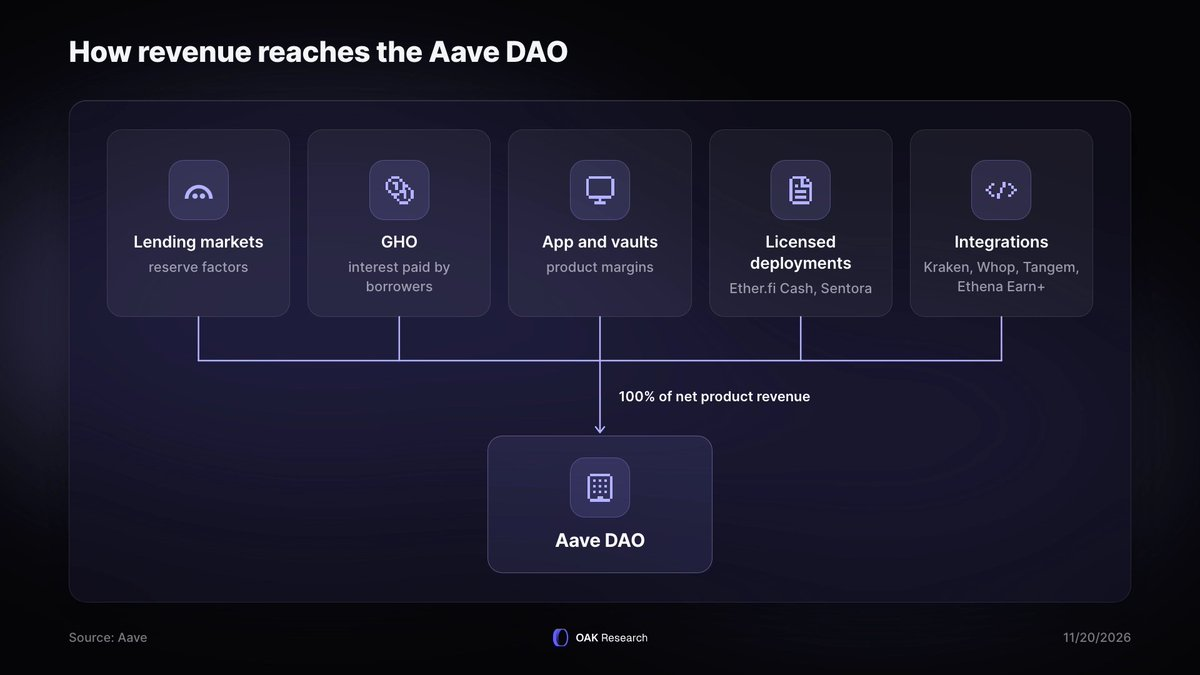
The first half of the answer is routing. Revenue from the protocol, infrastructure, and products now flows to the DAO through borrowing reserve factors, interest on GHO, profits from the App and treasury, and contractual shares from permissioned deployments (like Ether.fi Cash and Sentora market).
All service providers, including Aave Labs, are funded by the DAO, aligning everyone to keep revenue healthy. The "Aave Will Win" framework formally stipulates routing 100% of defined net product revenue to the DAO.
The second half is buybacks. Aave has been running a revenue-funded buyback program under Aavenomics since April 2025, buying back around $1 million weekly, having repurchased over 205,000 AAVE, approximately 1.28% of the total supply.
The program was paused in April and is being restructured under Aavenomics 3.0, a more automated version pairing buybacks with AAVE staking and burning.
Thus, the link between revenue and tokens is real and established; the current question is how the restructured mechanism will operate, not whether it exists.
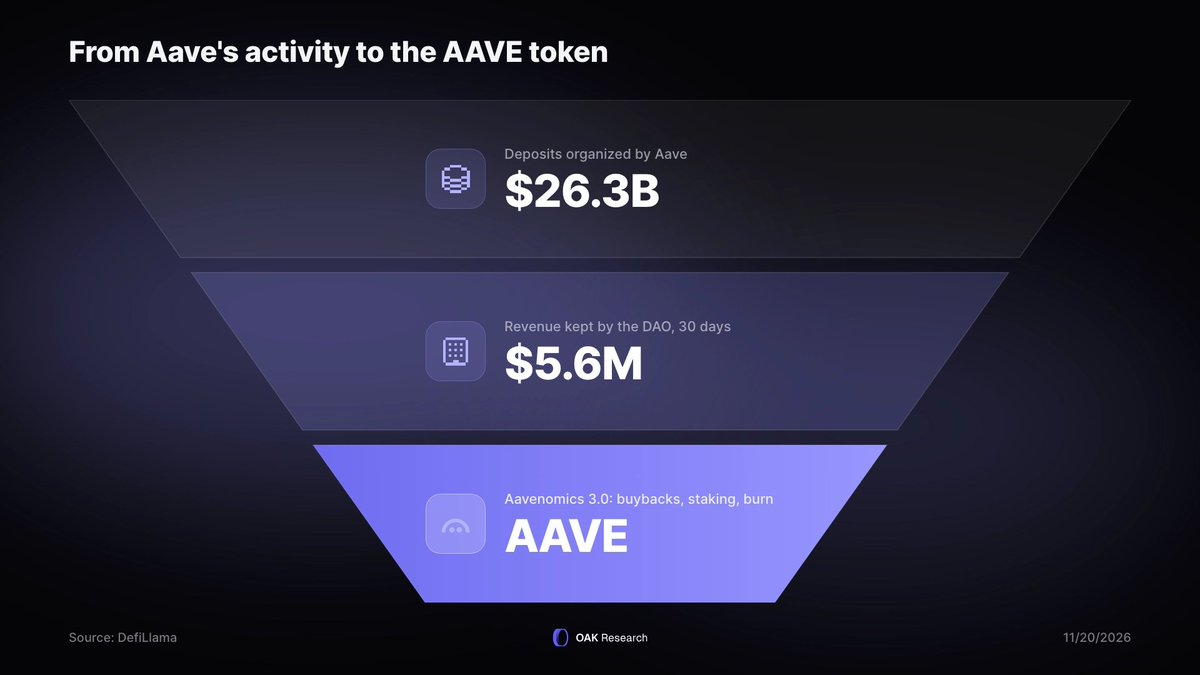
It helps to differentiate the three levels. There is the total financial activity organized by Aave, which can reach hundreds of billions of dollars, but most of this belongs to the capital of suppliers and borrowers, not revenue earned by the protocol.
There’s revenue that the DAO actually retains, resulting in around $5 million to $6 million monthly after paying suppliers and partners. Then there’s how these treasuries are deployed, through buybacks and the wider Aavenomics framework.
The initial set distinction between fees and revenue is precisely why this matters: the numbers that reach tokens are built on what the DAO retains, not on the headline activity.
Conclusion
From the three-layer view, the strategy is coherent and starting to produce compounding effects. On the infrastructure side, V4 is turning Aave into a platform on which others can build, with Ether.fi and Sentora already running markets and sharing revenue with the DAO.
On the product side, GHO is net profitable, Aave App places consumer savings products at the forefront, while the treasury provides backends for other fintechs, and routing income to the DAO has been formalized.
On the institutional side, Horizon and tokenized stocks open a category that is currently small but potentially very large, and the pricing infrastructure for 24/7 markets is now coming in.
There are still areas of work ongoing that need to be honestly articulated. V4's direct revenue is still limited, and the RWA lending market where Aave Horizon is situated is also in its formative stage, with some borrowing demand still relying on yield spreads that will vary with interest rates. These are all areas needing further build-out, not failures. Each piece has a clear path forward: there will be more curated markets and external integrations on V4, Horizon's corresponding RWA market is expected to continue expanding, and Aavenomics 3.0's buyback mechanism is a specific way to transform revenue into token value.
The thread throughout is that Aave has transformed itself from a standalone lending venue into a credit infrastructure that spans retail to institutional. The next twelve months are about how this infrastructure generates compounding effects and the increasing share of its revenue reaching tokens.
免责声明:本文章仅代表作者个人观点,不代表本平台的立场和观点。本文章仅供信息分享,不构成对任何人的任何投资建议。用户与作者之间的任何争议,与本平台无关。如网页中刊载的文章或图片涉及侵权,请提供相关的权利证明和身份证明发送邮件到support@aicoin.com,本平台相关工作人员将会进行核查。