Original | Odaily Planet Daily (@OdailyChina)
Author|Azuma (@azuma_eth)
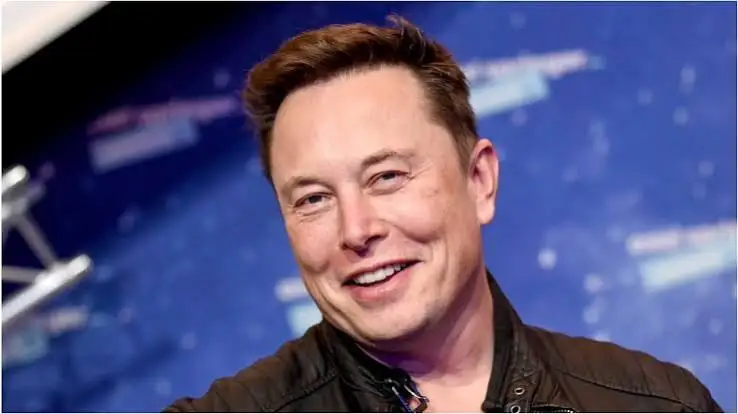
With Christmas approaching, Musk is set to give gifts to American children again.
But this time, the gift is not candy, nor is it a toy car, but actual shares of SpaceX stock.
On November 25, SpaceX announced it will donate 1 new issued Class A common stock to every activated Trump Account (Trump Child Investment Account). Musk later stated that he would match this amount. In other words, eligible children can theoretically receive two shares of SpaceX stock.
Based on SpaceX's closing price of $127.44 on November 25, the value of two shares is approximately $255. If estimated against the nearly 70 million accounts created previously disclosed by the White House, the total value of the gifted shares would be around $17.8 billion, close to $18 billion.
It is important to note that SpaceX's announcement specifically targets activated accounts, not all created accounts — the nearly 70 million only reflects the account creation scale previously disclosed. The actual number of accounts meeting the gift conditions has not been announced, but regardless of the final coverage, this is already a remarkably impressive gift share program.
Of course, Musk wouldn’t just do it for no reason. This seemingly generous share giveaway is ostensibly in support of the Trump administration’s push for child investment accounts, but underlying it is the “Trump-Musk alliance” attempting to bind the interests of the next generation of Americans in a political and commercial layout.
From Government Money to Billionaire Stock Donations
Trump Accounts, also known as 530A accounts, were established under a tax-deferred investment account plan authorized by then President Trump on June 9, 2025, based on the "Big and Beautiful" Act, aimed at creating government-funded savings accounts for American citizens' children born from January 1, 2025, to January 1, 2029.
Initial funding for Trump Accounts mainly comes from government grants, private donations, and family deposits. The federal government will provide an initial funding of $1,000 for each account; last December, Dell founder Michael Dell and his wife announced a donation of $6.25 billion to open accounts for children in families with a median income below $150,000, injecting $250 into each account; parents, friends, and other specific individuals can also deposit into designated accounts, but can only contribute a maximum of $5,000 per child per year.
On the investment side, Trump Accounts will be limited to low-cost investment funds or exchange-traded funds (ETFs) that track broad stock price indices such as the "S&P 500"; they cannot be used to invest in specific sector indices or specific industry indices. Fund usage is similarly restricted; before the child turns 18 on January 1 of that year, funds in the account cannot be withdrawn for any reason (unless the child passes away or funds are transferred to another similar restricted account). After the child turns 18, the treatment of this account will be the same as a traditional Individual Retirement Account (IRA).
On July 4 of this year, the U.S. Treasury officially announced the long-anticipated launch of Trump Accounts. Trump had previously called for billionaires, including Musk, to donate to Trump Accounts, and now SpaceX and Musk's actions are a formal response to this call.
More Like Dispersing Chips Than Giving Away Money
Unlike the Dells who directly offered cash, Musk and SpaceX opted to make the donation in the form of stocks, which is essentially a more effective way of dispersing chips.
From a breakdown of the plan, the accounting here is quite clever. The 1 share given by SpaceX is newly issued Class A common stock, which means the company does not need to generate direct cash outflow; the 1 share personally matched by Musk comes from his holdings, allowing him to make a political statement to the White House without needing to utilize massive cash reserves, while also leaving room for potential future charitable and tax planning.
More critically, the widely discussed “approximately $18 billion” is actually a highly idealized upper limit figure. As mentioned earlier, the gift share criteria are strictly tied to “activated accounts,” and the nearly 70 million only reflects the total number of accounts created. Considering actual activation rates and qualification screening, the final actual gift share scale and equity dilution ratio will likely be significantly lower than the numbers the market initially sees.
The secondary market also has no need to worry about selling pressure — the Trump Accounts rules require that funds in the account cannot be withdrawn before the child turns 18, meaning the batch of gifted SPCX shares will be in a state of mandatory lock-up for years or even decades to come. In other words, Musk has not only not created any short-term sell pressure for the secondary market, but instead has secured millions of super "diamond hands" for SpaceX.
Three Birds with One Stone
Regarding the reasons for the donation, SpaceX’s announcement provided a rather “official” statement: “The company is building the infrastructure of the future and is committed to making humanity a multiplanetary species, and ownership of the companies that create these systems should extend to the next generation of Americans, allowing them to benefit from long-term development.” This narrative aligns well with Musk’s consistent storytelling. From reusable rockets, to Starlink, to Mars colonization, SpaceX has long emphasized that what it is doing will change humanity's future.
But is it really that simple? Zooming out, SpaceX's willingness to give away real shares for this action conceals at least three deeper intentions.
The first layer is the conquest of the next generation's brand mindset. Musk has always excelled at managing retail investor consensus, and Tesla can enjoy a valuation premium far exceeding traditional automakers largely due to its large and loyal retail investor base. Now, through Trump Accounts, when children open investment accounts, they will see actual SpaceX shares. This “shareholder identity” built from a young age is more effective in cultivating the next generation's natural recognition of Starlink, commercial space, and even Musk's entire business landscape than any commercial advertisement.
The second layer is seeking a political and regulatory moat. This is the “direct financial linkage” mentioned earlier. As a giant heavily dependent on government contracts, spectrum approvals (FCC), and launch permits (FAA), SpaceX has often suffered setbacks in regulatory and partisan struggles. However, if millions of families across the United States have children holding SpaceX stock, the nature of the situation seems to change — in the future, attempts to overly suppress or make things difficult for SpaceX by regulators may very likely be labeled in the public opinion arena as “hitting the future livelihoods of American children.” Deeply binding commercial interests with the welfare of all is the highest form of daylight political maneuvering.
The third layer is to set an example for Trump Accounts. From the government-backed $1,000, to the Dells’ cash donation, to SpaceX’s direct stock gifts, Trump's promoted child investment system is quickly completing its leap from a “welfare policy” to a “capital consensus.” With Musk leading the way, other American tech giants closely related to the White House, or similarly valuing local public opinion, will likely find it difficult to remain on the sidelines.
A Ticket to Bind the Next Generation
Returning to the title, Musk isn’t truly aiming for any kind of “egalitarianism”; he is simply bringing the next generation of America aboard his big ship in the most American capitalist way.
For the American children receiving this Christmas gift, these two shares of SpaceX stock are not a $255 pocket money that can be spent tomorrow on candy or toys; rather, they are a rights certificate that cannot be cashed out in advance and deeply ties them to SpaceX’s long-term fate. When these children turn 18 and truly have the right to utilize this asset, whether these two shares amount to merely a meager college living expense or become a “genesis chip” that can change the trajectory of their lives, depends on whether SpaceX can truly deliver on the grand narratives of Starship, Starlink, and space computing in the next decade and beyond.
But regardless of the outcome, this transaction seems to be profitable for Musk — he has secured the attention and votes of an entire generation of Americans with a stock distribution that entails zero selling pressure and low cash consumption.
免责声明:本文章仅代表作者个人观点,不代表本平台的立场和观点。本文章仅供信息分享,不构成对任何人的任何投资建议。用户与作者之间的任何争议,与本平台无关。如网页中刊载的文章或图片涉及侵权,请提供相关的权利证明和身份证明发送邮件到support@aicoin.com,本平台相关工作人员将会进行核查。