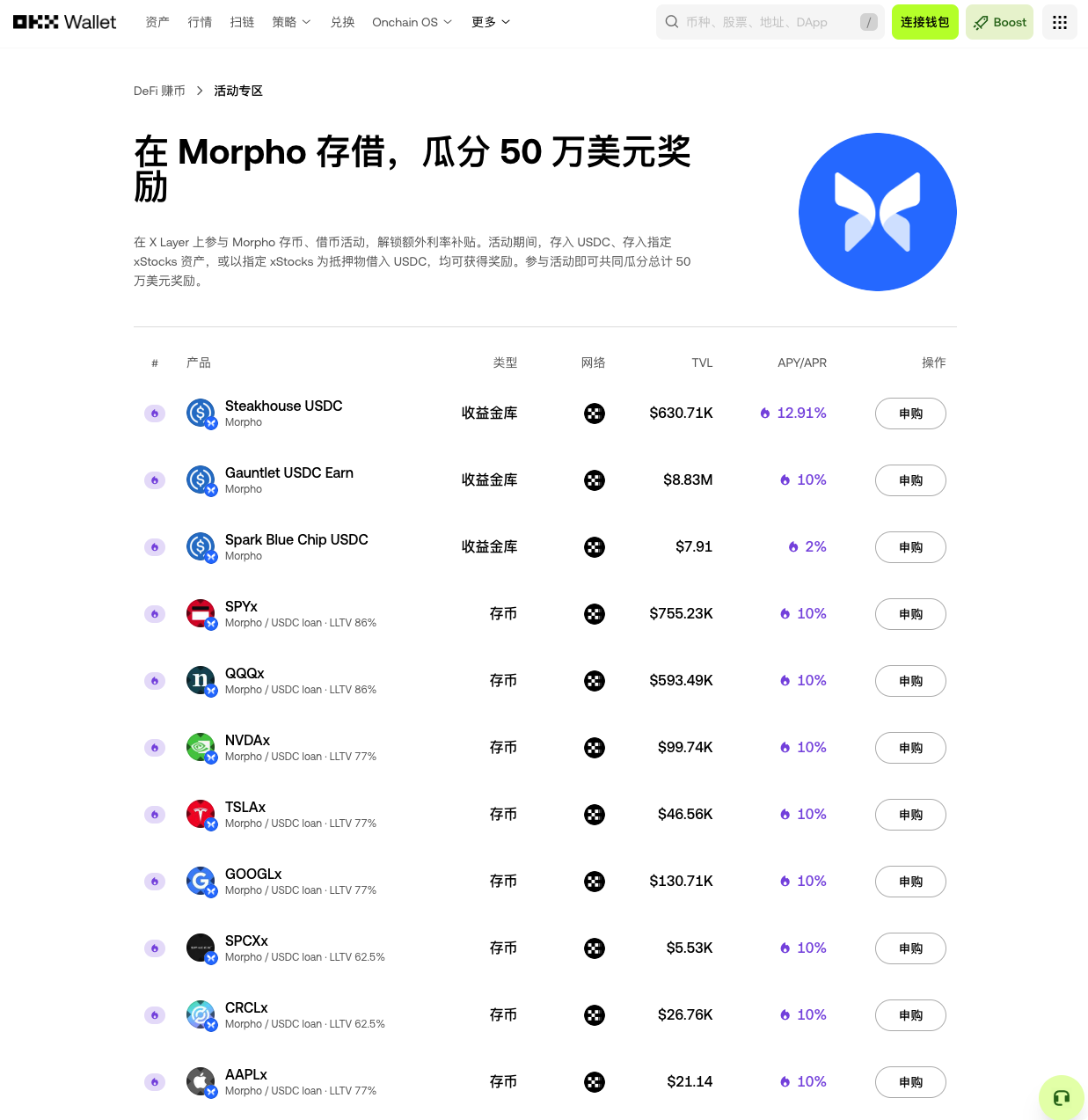
The trading of US stock tokens is expanding from "buy and hold" to a more flexible use of funds. OKX Wallet recently announced that leveraged trading now supports US stock tokens from xStocks. Users can long eight stock tokens, including SPYx, QQQx, NVDAx, and TSLAx, on X Layer with up to 4x leverage based on the Morpho protocol.
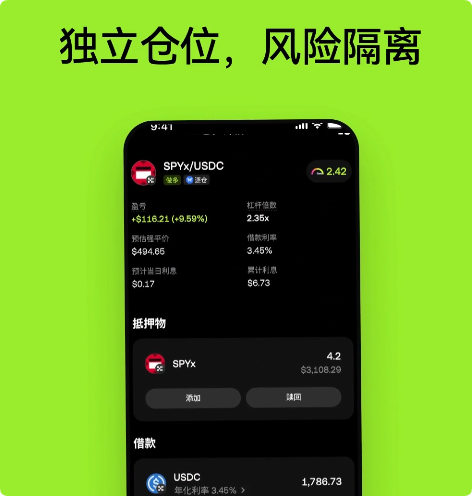
The official statement emphasizes that positions in different assets are independent of each other, and risks are calculated separately. The actual leveraged positions can also participate in xLiquidity rewards.
This means users do not have to mix various stock tokens into one risk basket, but can separately establish positions for SPYx, QQQx, or NVDAx, and view each position's collateral, borrowing, interest rate, and liquidation distance individually. However, the maximum of 4x is the upper limit of leverage available for the product, not a recommended leverage, nor a guarantee of 4x returns.
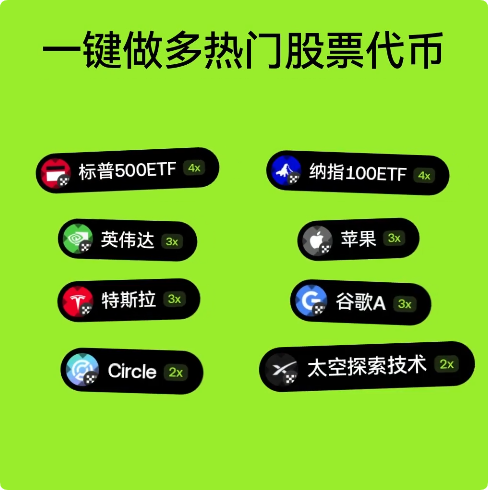
One-time coverage of 8 popular stock tokens
The official update lists SPYx, QQQx, NVDAx, and TSLAx, and states that other stock tokens are also supported. From the supporting interface, the popular assets displayed include:
- SPYx: token related to the S&P 500 ETF;
- QQQx: token related to the Nasdaq 100 ETF;
- NVDAx: token related to Nvidia;
- TSLAx: token related to Tesla;
- GOOGLx: token related to Google A;
- AAPLx: token related to Apple;
- CRCLx: token related to Circle;
- SPCXx: token related to SpaceX.
SPYx and QQQx show a maximum of 4x, while assets from single companies like Nvidia, Apple, and Tesla show a maximum of 3x, and Circle and SpaceX related assets show a maximum of 2x. The specific available multiples, interest rates, and risk parameters should refer to the current product page of OKX Wallet.
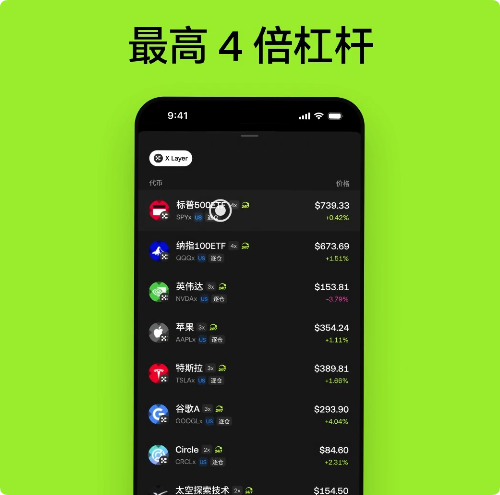
The risk structures of these assets are not the same. SPYx and QQQx are closer to index exposure, while single company tokens are more susceptible to impacts from earnings reports, product developments, regulatory news, and market sentiment. The same leverage applied to different assets may result in completely different actual volatility and liquidation pressures.
Why is "independent positions" more important than a single total position?
The official introduction states that the positions of each asset are independent, and risks are calculated separately.
In practical use, this means users need to check the position status of each asset individually. For instance, the price change of the SPYx position will not automatically become the same liquidation position just because the user holds QQQx or NVDAx at the same time. Users can individually manage collateral, loan amounts, and exit plans for each asset.
Independent positions offer two main benefits.
First, the sources of risk are easier to identify. If NVDAx drops quickly due to company news, users can handle the NVDAx position separately rather than immediately adjusting all stock tokens.
Second, fund allocation is easier to layer. Users can allocate lower leverage to index tokens and use a more conservative scale for highly volatile single stock tokens. This does not mean that risk disappears, but it helps prevent a mistake in one position from affecting the entire account.
However, independent positions do not equate to independence from the market. Assets like SPYx, QQQx, and NVDAx may fluctuate in sync during times of declining risk sentiment. If multiple positions use high leverage, they may appear to be managed separately, but the overall funds could still face concentrated withdrawals.
What does 4x leverage actually mean?
The essence of leverage is to control a larger nominal position with less own capital.
To illustrate with a simplified example, without considering interest, fees, and price impact: if a user invests 1,000 USDC and uses 4x total position, the nominal trading size may be close to 4,000 USDC, of which about 3,000 USDC comes from borrowed funds. At this point, if the asset price rises by 10%, the nominal position's floating profit would be about 400 USDC; relative to the 1,000 USDC own funds, the apparent return rate would be about 40%.
However, the reverse is also true: if the asset price drops by 10%, the floating loss could also approach 400 USDC. Additionally, interest on borrowed funds, trading costs, slippage, and potential liquidation fees must continue to be deducted. The actual outcome is determined by the collateral rate, interest rate, price oracles, and liquidation rules and will not strictly equal this simplified example.
Therefore, what 4x leverage truly amplifies is sensitivity of positions to price fluctuations, rather than guaranteed returns. During continuous price pullbacks, highly leveraged positions may hit the liquidation line before users judge a reversal.
What problem does "order position, clear at a glance" solve?
The supporting interface displays order confirmation and position details. Users can see the USDC amount, SPYx amount, loan size, loan interest rate, loan term, and collateral changes on the confirmation page.
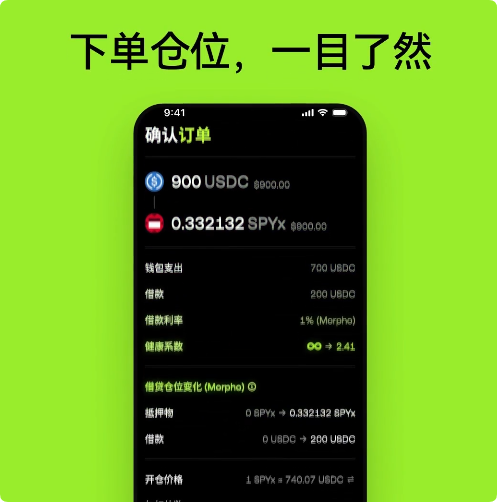
This kind of concentrated information display is important because leveraged trading cannot only look at "how much to buy." Users also need to know:
- How much own capital was actually invested;
- How much USDC was borrowed;
- How the borrowing interest rate has changed;
- What the current collateral value is;
- How much buffer there is until the position reaches the liquidation line;
- Whether the operation for closing positions or supplementing collateral is smooth.
By placing this data at the confirmation stage, the interface can help users re-check the transaction structure before submitting. A clearer display on the confirmation page does not mean lower trading risk; it merely makes the risks more visible.
The role of Morpho in this product pathway
The official introduction shows that the leveraged function for US stock tokens is based on the Morpho protocol and is deployed on X Layer.
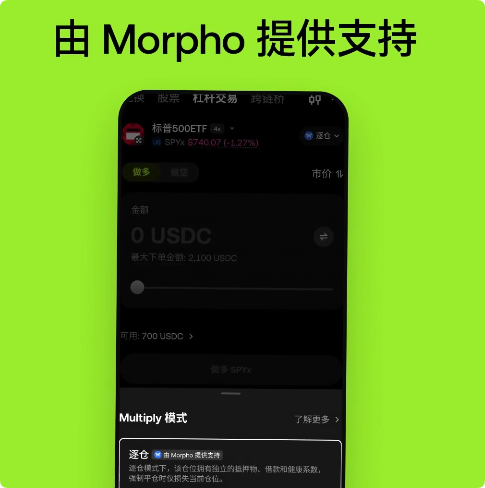
In the product structure, users use stock tokens as collateral to borrow USDC, creating a larger long position in stock tokens. The loan interest rate, collateral rate, liquidation threshold, and available liquidity directly affect the position's safety margin.
Users need to pay special attention to four metrics:
- Loan interest rate. Changes in interest rates will affect the holding cost. Even if the asset price remains unchanged, the borrowing cost can continue to erode position profits.
- Collateral rate and liquidation threshold. The higher the leverage, the smaller the price buffer to liquidation typically is.
- Market liquidity. In cases of insufficient liquidity, closing positions may incur significant price impacts and slippage.
- Oracle price. Lending protocols rely on price data to assess collateral value, and abnormal market conditions or price source fluctuations may impact position handling.
"Based on Morpho" does not mean that Morpho guarantees principal or returns. Smart contracts, market parameters, and liquidity can all change.
Why can leveraged positions still participate in xLiquidity?
The official statement indicates that the actual positions after leverage can also participate in xLiquidity rewards.
From an opportunity perspective, this provides a new combination logic: users form larger actual positions of stock tokens through leverage and then participate in liquidity incentives according to the activity rules. Theoretically, users may face three variables simultaneously: changes in asset prices, borrowing costs, and reward income.
However, rewards cannot be regarded as a fixed offset for leverage interest. Whether xLiquidity rewards have eligibility thresholds, how they are calculated, when they are issued, and whether returns change after the activity ends all need to adhere to real-time rules. If the asset price drops or the position is liquidated, rewards cannot automatically cover the loss of principal.
More importantly, users should not blindly increase leverage for the sake of amplifying incentives. The proper analysis order should be: first assess whether one is willing to bear the price risk of the stock token, then evaluate borrowing costs, and lastly assess whether the reward is worth participating in.
Which assets are more suitable for close observation?
SPYx and QQQx: Leveraged Pathways for Indexed Assets
SPYx and QQQx represent two important exposures in the US stock market. The former is closer to large-cap blue chips and the S&P 500, while the latter leans towards large technology and growth stocks.
Their advantage is that the logic of the assets is relatively easy to understand, and market attention and trading demand are usually higher. However, "indexation" does not equate to low risk. QQQx is more sensitive to technology stock valuations and interest rate changes, while SPYx can also be influenced by macroeconomic conditions and overall market pullbacks.
NVDAx, TSLAx, GOOGLx, and AAPLx: Stronger Company Event-Driven
Single company tokens are more susceptible to influences from earnings reports, product cycles, regulatory policies, and changes in investor expectations. Nvidia may be affected by AI capital expenditure and chip demand, Tesla may be influenced by delivery data, autonomous driving progress, and valuation changes, while Google and Apple will be impacted by advertising, cloud business, hardware ecosystems, and regulatory environments.
The potential volatility of these assets is more concentrated. Even if the product supports 3x leverage, it does not mean that users should use 3x leverage.
CRCLx and SPCXx: Higher Theme Elasticity, Liquidity Needs to Be Checked
Circle and SpaceX related tokens are more theme-driven. Thematic assets may rise rapidly due to news propulsion, but they can also quickly retract as market enthusiasm wanes.
For these types of assets, users should focus on checking TVL, order book depth, bid-ask spreads, and the price impacts of large trades before trading. If they cannot exit promptly, higher leverage may turn ordinary volatility into liquidation risk.
A Safer Participation Process
- Update OKX Wallet to the latest version that supports this feature and enter the US stock token leveraged trading entry.
- Select the target stock token and first verify the token symbol, network, and product description.
- Check the current available leverage, borrowing interest rate, collateral rate, and liquidation parameters.
- Prioritize using lower leverage or small amounts to test the complete process.
- On the order confirmation page, verify own funds, borrowing amounts, actual positions, interest rates, and opening prices.
- Reserve funds for supplementing collateral or early repayment, and do not use the entire balance for opening positions.
- After opening positions, monitor each independent position separately, rather than just looking at the total asset change in the account.
- If participating in xLiquidity, verify the activity eligibility, reward calculation, and claiming rules individually.
Registering or using OKX while filling out the invitation code AICOIN88 can enjoy a 10% fee discount, with specific applicability and discount eligibility as per OKX page and local rules.
Conclusion: More possibilities also mean more variables to manage
OKX Wallet has combined US stock tokens, Morpho lending, X Layer, and xLiquidity rewards into the same product pathway. Users can long SPYx, QQQx, NVDAx, TSLAx, and other stock tokens with up to 4x leverage, and manage risks through independent positions.
This is suitable for users who wish to improve fund utilization efficiency and are willing to understand the collateral lending mechanisms. For beginners, the most important thing is not to pursue the highest multiples but to understand how much principal was invested in each transaction, how much USDC was borrowed, where the liquidation line is, and how to handle situations when the market reverses.
Exclusive benefits for AiCoin users
Use OKX Web3 Wallet to "Invest in World Assets"!
Bind invitation code 【AICOIN88】, enjoy 10% savings on trading costs (Gas optimization and more benefits)!
Download/update OKX Web3 Wallet now and catch the trend:
https://jump.do/xlink?checkProxy=true&proxyId=24
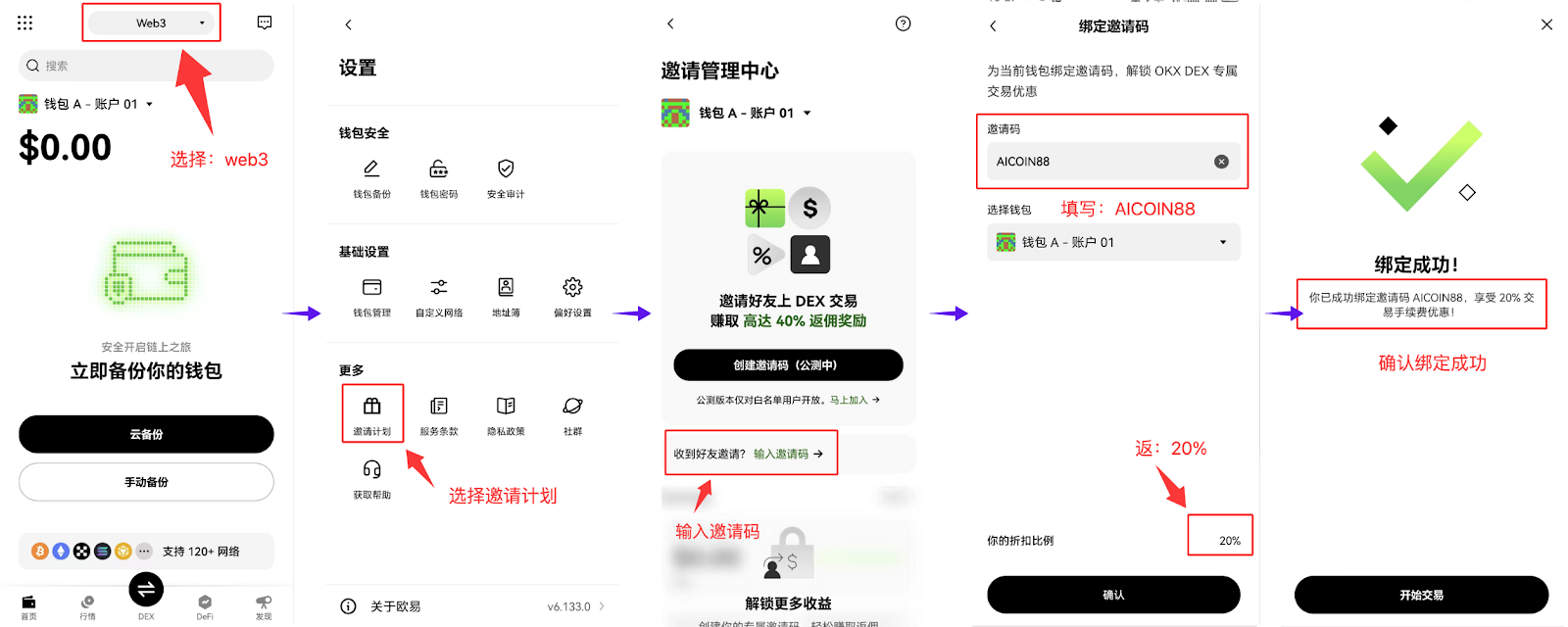
Use exclusive invitation code 【AICOIN88】 to bind OKX Wallet, the web can also operate conveniently!
https://web3.okx.com/ul/joindex?ref=AICOIN88
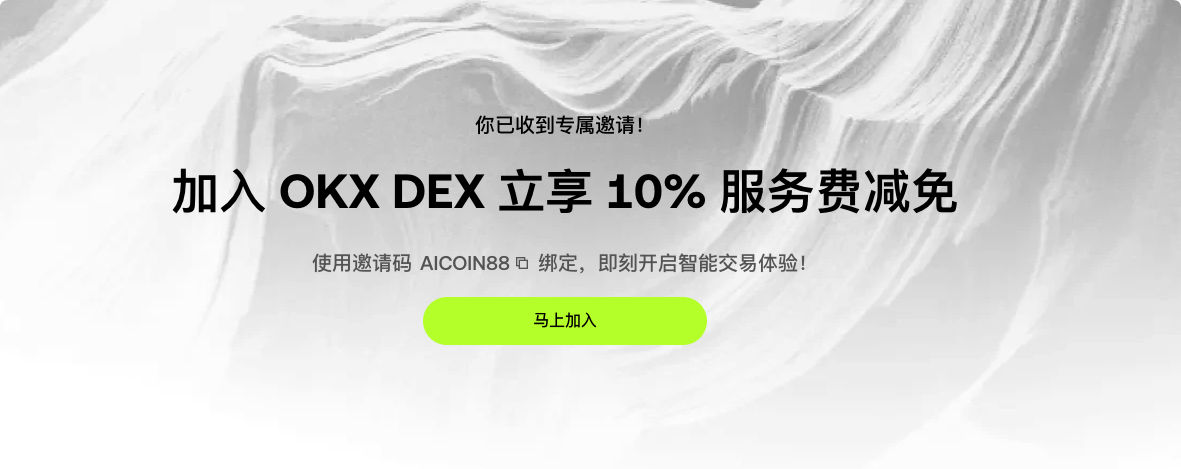
Don't wait, set up OKX Wallet, bind the offer, and gain new wealth!
免责声明:本文章仅代表作者个人观点,不代表本平台的立场和观点。本文章仅供信息分享,不构成对任何人的任何投资建议。用户与作者之间的任何争议,与本平台无关。如网页中刊载的文章或图片涉及侵权,请提供相关的权利证明和身份证明发送邮件到support@aicoin.com,本平台相关工作人员将会进行核查。