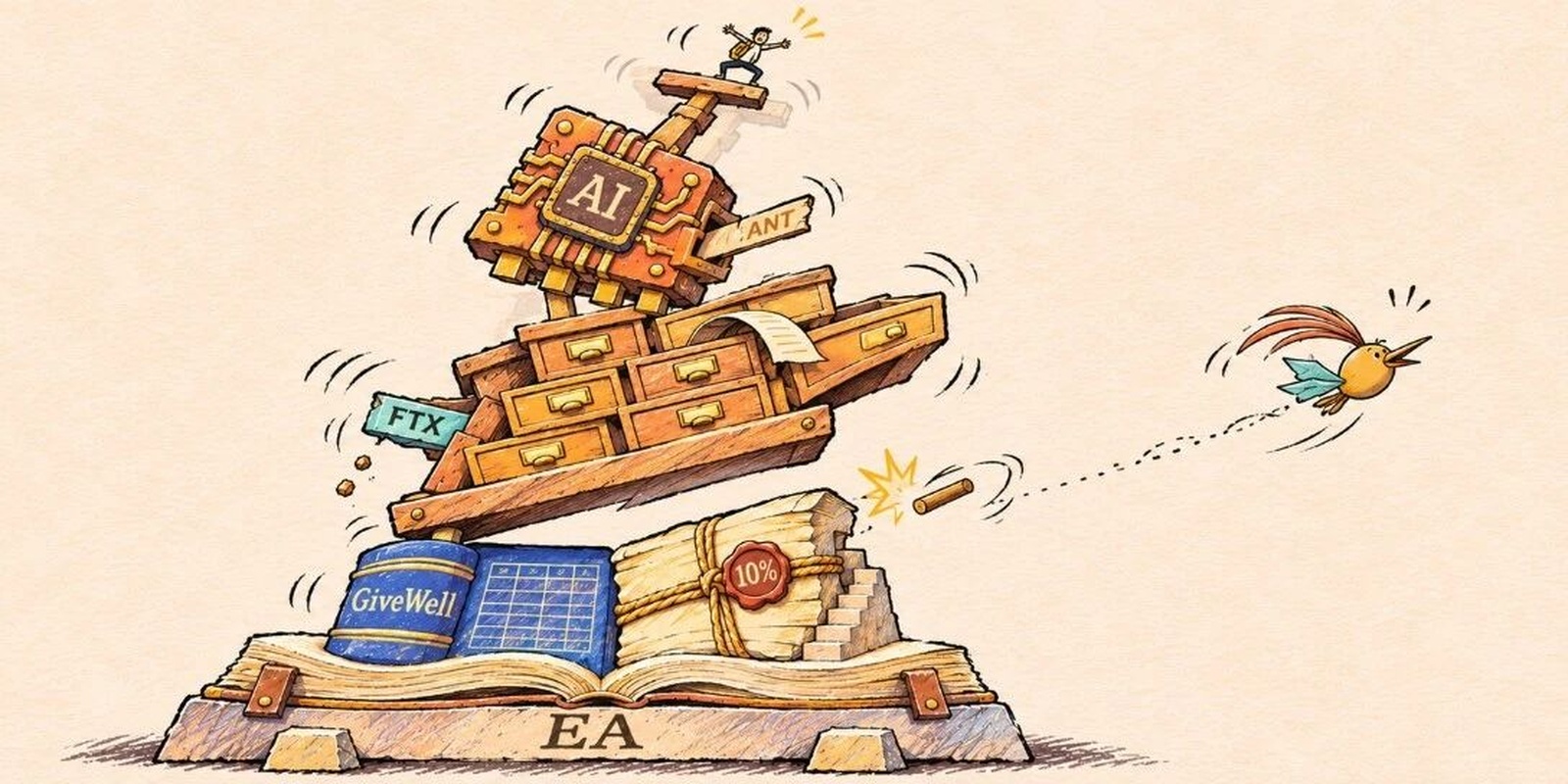
The Ethereum Foundation selling coins does not affect the fundamentals; the value of tokens depends on whether cash flow is returned, and investment still returns to the three standards of corporate culture, business model, and price.
Written by: Dao said Blockchain
1. "Is there a relationship between the project and token value?"
Whether there is a relationship between the project and the token depends on the circumstances:
If the project value has appropriate channels to feedback to the token, then in the long run, there must be a relationship between the project and token value;
Otherwise, the project may have no relationship with the token value at all.
What does it mean for "the project value to have appropriate channels to feedback to the token"?
First, it depends on whether the project itself generates cash flow;
Second, it depends on whether the project team can return the generated cash flow to the token holders.
In the crypto ecosystem, token buybacks are a very common way to provide feedback. This is represented more richly in traditional stock markets:
Generally, we refer to "good companies" in traditional stock markets that have either bought back and destroyed stocks or provided cash dividends to stockholders. There is another type of company that neither pays dividends nor buys back; then we see whether the company uses cash flow to reinforce its economic moat.
If a project/company neither pays dividends, nor buys back, and does not use money wisely in its business but instead spends it recklessly, then in this case, the project/company has no relationship with its stock value/token value.
I used to often cite Uniswap as an example, saying this project is good, but the token value is questionable, because at that time its cash flow did not have a channel to feedback to its token, hence there was no relationship between its project and token value.
Of course, now it has improved with buybacks, and that improvement is quite good.
2. The Ethereum Foundation has been selling Ethereum, so why do you think it still has potential?
Under the current fundamentals, let's not talk about the Ethereum Foundation selling coins; even if BMNR sells coins, it does not affect my view of Ethereum, the reasons I have already written too many articles about.
This question reminds me of another category of articles I wrote before, which concerns the issue of founders or core teams selling stocks/tokens.
I have cited two cases:
One is the sale by a special person within Tencent over a decade ago or even earlier; the other is Huang from NVIDIA selling stocks.
In the Tencent case, a person very closely related to Tencent’s founder sold stocks not long after the company went public and during some subsequent events.
In NVIDIA's case, Huang has sold stocks multiple times, also causing considerable skepticism and speculation from the public.
These behaviors have often triggered public panic, especially Tencent’s sales which frequently sparked strong media scrutiny and suspicion of potential illegal profit-making using insider information.
On the other hand, many investors were optimistic about Tencent and NVIDIA and instead bought in and continued to hold during such times.
Years later, looking back, those battle-hardened investors have achieved returns far exceeding those obtained by the initial sellers.
In these two cases, the Tencent case has often been used by well-known investors to illustrate the principle: many times, the founder’s understanding of the enterprise may not be deep enough, and they may not recognize the potential and value of the business.
The purpose of bringing up these examples in my article was not to say we should be indifferent to these events, but to say investment is not because someone's status is high or their identity special that it necessarily means their actions are "smart" or their views are "accurate."
No matter how much "commotion" there is from the outside, or how big the "impact" is, their true effect on the intrinsic value of an enterprise is often unrelated to their status and identity.
Investment ultimately still needs to return to the three standards I shared: corporate culture, business model/economic moat, and appropriate price; that is, do these "events" really affect corporate culture, business model/economic moat, and appropriate price?
If we do not return to these three standards and do not clarify these issues, then once there is a slight breeze from the outside, of course, one would feel anxious and doubt.
Returning to Ethereum, my citing of Tencent and NVIDIA cases is not to say that the Ethereum Foundation does not understand Ethereum's potential and value, nor is it to judge whether the Ethereum Foundation's actions are right or wrong, but to express that from the above three standards, such actions do not affect my judgment of Ethereum.
The Ethereum Foundation selling coins is actually just a part of it; there's also Vitalik selling coins, BMNR selling coins, traditional American financial capital selling coins,......
If these issues are not thoughtfully considered before buying/holding Ethereum, then there would be many future concerns; there would be endless worries, and burdens,......
免责声明:本文章仅代表作者个人观点,不代表本平台的立场和观点。本文章仅供信息分享,不构成对任何人的任何投资建议。用户与作者之间的任何争议,与本平台无关。如网页中刊载的文章或图片涉及侵权,请提供相关的权利证明和身份证明发送邮件到support@aicoin.com,本平台相关工作人员将会进行核查。