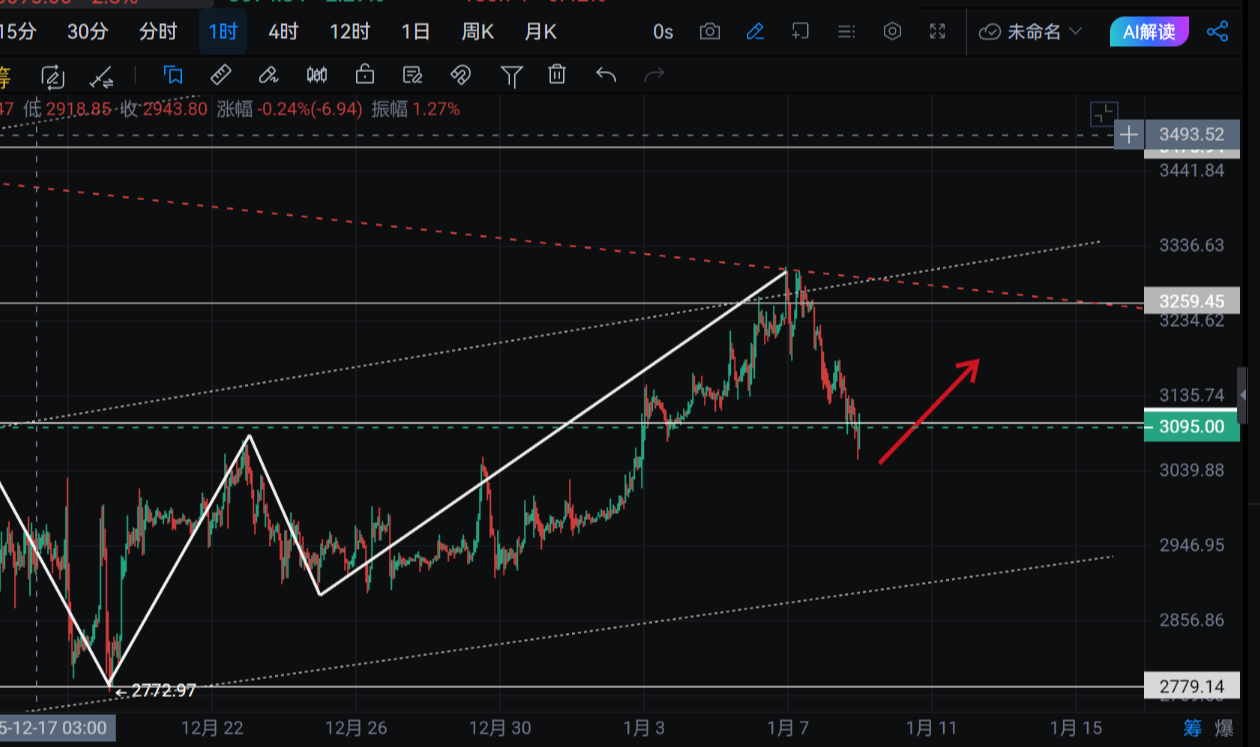
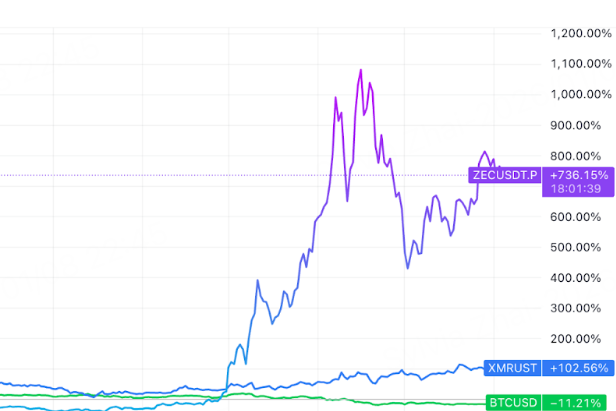
In early January, the wealth management division of Bank of America included BTC alongside gold and high-quality growth stocks in its latest internal roadshow and client communication materials as "strategically holdable assets." For the first time, it systematically discussed the path for banks to engage with crypto assets through compliant products in several closed-door salons. This change marks a further shift in traditional financial channels' attitudes towards crypto assets and opens a new entry point for high-net-worth funds to participate in this emerging asset class through bank balance sheets.
Changes in Funding and Preferences
● Increased Client Risk Appetite: The latest round of surveys by Bank of America among high-net-worth clients and family offices shows that more than half of the respondents plan to increase their allocation to high-volatility assets in the next 12 months, with the three main directions focused on: technology growth stocks, gold and related commodities, and exposure to crypto assets like BTC through compliant structures. Compared to the previous survey, the proportion of clients planning to "completely avoid crypto" has significantly decreased, reflecting a gradual shift of risk-averse funds towards a "defensive + offensive" combination.
● Dual Role of Hedging and Offense: In the roadshow materials, Bank of America placed BTC alongside gold, emphasizing both assets' properties of "hedging against currency devaluation and tail risks" in the context of rising inflation expectations and expanding fiscal deficits. However, compared to gold, BTC and Ethereum have significantly higher historical volatility and deeper drawdowns, making them play the role of "offensive high β targets" in clients' asset allocation frameworks, viewed by some high-net-worth clients as leveraged vehicles betting on the reconstruction of technology and finance paradigms.
● Indirect Holdings through Bank Products: The survey indicates that a considerable number of clients, even if interested in BTC, are unwilling to open accounts on exchanges or hold private keys directly, preferring to:
● Gain exposure through bank or brokerage-end spot ETFs, structured notes, thematic funds, etc.;
● View crypto assets as part of an "alternative asset basket," managed by wealth advisors alongside hedge funds, private equity, and commodity-linked products;
● Replace a portion of high-volatility tech stock positions with a small percentage of BTC, achieving risk exposure rebalancing while keeping the overall risk budget unchanged.
Resonance of ETF and Bank Channel Signals
● Spot ETFs Lower Entry Barriers: Since the U.S. approved a package of BTC spot ETFs, the participation path for institutions and high-net-worth funds has been significantly simplified. Bank of America repeatedly cites data on ETF scale expansion and increased trading volume in its client materials, emphasizing:
● ETF holdings are transparent, can be traded within traditional brokerage accounts, and the settlement process is consistent with stocks and funds, addressing high-net-worth clients' core concerns about custody security and compliance;
● Some ETFs have already been integrated into mainstream private banking and family office platforms, allowing them to be directly included in asset allocation reports and risk monitoring systems, facilitating unified management by wealth advisors.
● Bank Balance Sheets and Compliance Requirements: For large commercial banks, including Bank of America, directly holding BTC on their balance sheets is still constrained by capital adequacy ratios, risk weights, and accounting standards. Therefore, the more realistic approach currently is to:
● Participate in the distribution of ETFs, trusts, and structured products in a brokerage and custody capacity, keeping crypto asset exposure "on the client asset side" rather than directly counting it as the bank's proprietary investment;
● Collaborate with compliant custodians and trading platforms to introduce underlying liquidity while maintaining control over risk and compliance;
● Include BTC exposure in the "high-volatility alternative asset" category in internal risk models, corresponding to higher capital usage and stricter limit management.
● Demand for Derivatives and Yield Enhancement: With the opening of spot ETFs, some high-net-worth clients have begun inquiring about options, structured notes, and other yield enhancement and risk hedging tools. In short:
● Some clients wish to generate additional income while holding BTC exposure by selling call options, Range accruals, etc.;
● Others seek to buy protective put options and option hedging structures to reduce the risk of significant drawdowns;
● These demands are driving banks to accelerate their layout in derivatives design and pricing, and within the bounds of compliance, to include BTC in the underlying asset pools of structured products.
Intersection of Macroeconomic and Banking Business Logic
The current reassessment of BTC by traditional financial institutions is not merely due to price increases but is related to multiple dislocations in the macro environment and banking business logic. On one hand, in a context of persistently high interest rates and sticky inflation, gold and BTC, as "non-sovereign assets," are being repackaged as tools to hedge against risks in the monetary system and fiscal expansion. For high-net-worth clients, asset portfolios are not only about nominal returns but also about preventing long-term erosion of real purchasing power. On the other hand, after interest rates peaked, banking wealth management faces pressure from "product homogenization," as traditional bonds and fixed-income products lose their appeal, necessitating the search for new narratives and new tracks to maintain client stickiness and management fees. This makes the inclusion of BTC in asset allocation discussions not just a "personal interest" of front-line advisors but gradually a recognized differentiation weapon at the operational level.
At the same time, commercial banks view BTC from the perspective of balance sheet management, which is entirely different from investment banks or proprietary hedge funds. The primary task of banks is to control capital usage and liquidity risk, which determines that for a considerable period, their participation in crypto assets will primarily be "light asset, heavy intermediary," relying more on channels, custody, and product design to earn fees and management fees rather than large-scale proprietary holdings. This model not only addresses regulatory concerns about systemic risk but also allows banks to leverage their advantages in KYC, anti-money laundering, and risk control systems to become the "gatekeepers" for high-net-worth funds entering the crypto world. From a macro perspective, it is this mode of intervention that allows assets like BTC to gradually embed into the traditional financial system rather than remain completely detached from it.
The Game Between Banks and Crypto Native Players
There is a clear divergence of opinions within the market regarding BTC's role in high-net-worth asset allocation. Crypto native players often emphasize characteristics such as "decentralization, censorship resistance, and permissionless," viewing self-custody as part of a value consensus and hoping to directly capture capital inflows through on-chain applications and protocols. In contrast, banks and traditional wealth management institutions focus more on compliance, risk control, and process controllability, preferring to package BTC through ETFs, trusts, and structured products, integrating this high-volatility asset into existing risk control and compliance frameworks. This difference leads to inherent tensions between the two sides in terms of product forms, fee structures, and information disclosure.
For some high-net-worth clients, the advantages of bank channels lie in familiarity and controllability: clear asset statements, relatively mature tax handling, and family governance structures that are easy to integrate with trusts and estate planning, without the need to bear the risks of managing private keys. In contrast, while crypto native channels may be more attractive in terms of fees and liquidity, they require clients to invest more effort in understanding technical risks and operational details. This has led to an interesting situation: within the crypto community, there is both anticipation and caution regarding banks' involvement, with the hope for greater incremental capital and mainstream recognition, while being wary of BTC becoming overly financialized and caught in the "regulatory and leverage cycle" of traditional finance. From a strategic perspective, this means that for some time to come, institutions and high-net-worth clients willing to embrace bank channels will engage in a long-term game of liquidity and discourse power with native players who insist on on-chain self-custody and the spirit of decentralization.
Key Time Windows and Subsequent Evolution Paths
Looking ahead to the next few quarters, BTC's position in high-net-worth asset allocation will largely depend on several key nodes. First is the further clarification of regulatory policies and accounting standards. If regulatory agencies provide a more operable framework regarding risk weights, capital requirements, and information disclosure, commercial banks will have greater room to expand product lines with BTC as the underlying asset without significantly raising capital costs. Second is the feedback loop between the macro environment and asset performance. If inflation expectations rise again and monetary policy shifts towards easing, and BTC and gold demonstrate relatively strong performance during this phase, it will reinforce their image as "hedging tools + growth options" in the minds of high-net-worth clients; conversely, it will weaken their priority in asset allocation.
At the same time, as the spot ETF market matures, derivative tools and structured products will further diversify, potentially leading to yield enhancement, capital preservation, and multi-asset combination products centered around BTC, allowing more conservative clients to tentatively allocate under controlled risks. The wealth advisor teams of banks and brokerages will gradually form a standardized solution on "how to embed a small BTC exposure in traditional asset portfolios" through ongoing market fluctuations and client feedback. For participants in the crypto market, it is crucial to closely monitor whether bank channel funds choose to increase positions against the trend during price corrections and heightened volatility or prefer to follow the cycle at high levels, as this will directly impact the evolution of funding structures and volatility characteristics in the next cycle of BTC.
Join our community to discuss and grow stronger together!
Official Telegram community: https://t.me/aicoincn
AiCoin Chinese Twitter: https://x.com/AiCoinzh
OKX Benefits Group: https://aicoin.com/link/chat?cid=l61eM4owQ
Binance Benefits Group: https://aicoin.com/link/chat?cid=ynr7d1P6Z
免责声明:本文章仅代表作者个人观点,不代表本平台的立场和观点。本文章仅供信息分享,不构成对任何人的任何投资建议。用户与作者之间的任何争议,与本平台无关。如网页中刊载的文章或图片涉及侵权,请提供相关的权利证明和身份证明发送邮件到support@aicoin.com,本平台相关工作人员将会进行核查。