Author: Chloe, ChainCatcher
Last month, just a few hours before attending a state banquet with King Charles III, Donald Trump's second son Eric Trump posted a five-paragraph long article on X defending himself. The trigger was a controversy under his name: he had continuously claimed to investors that a public cryptocurrency company he was running, "American Bitcoin," could mine Bitcoin at about half the market price, which was debunked by a report from Forbes.
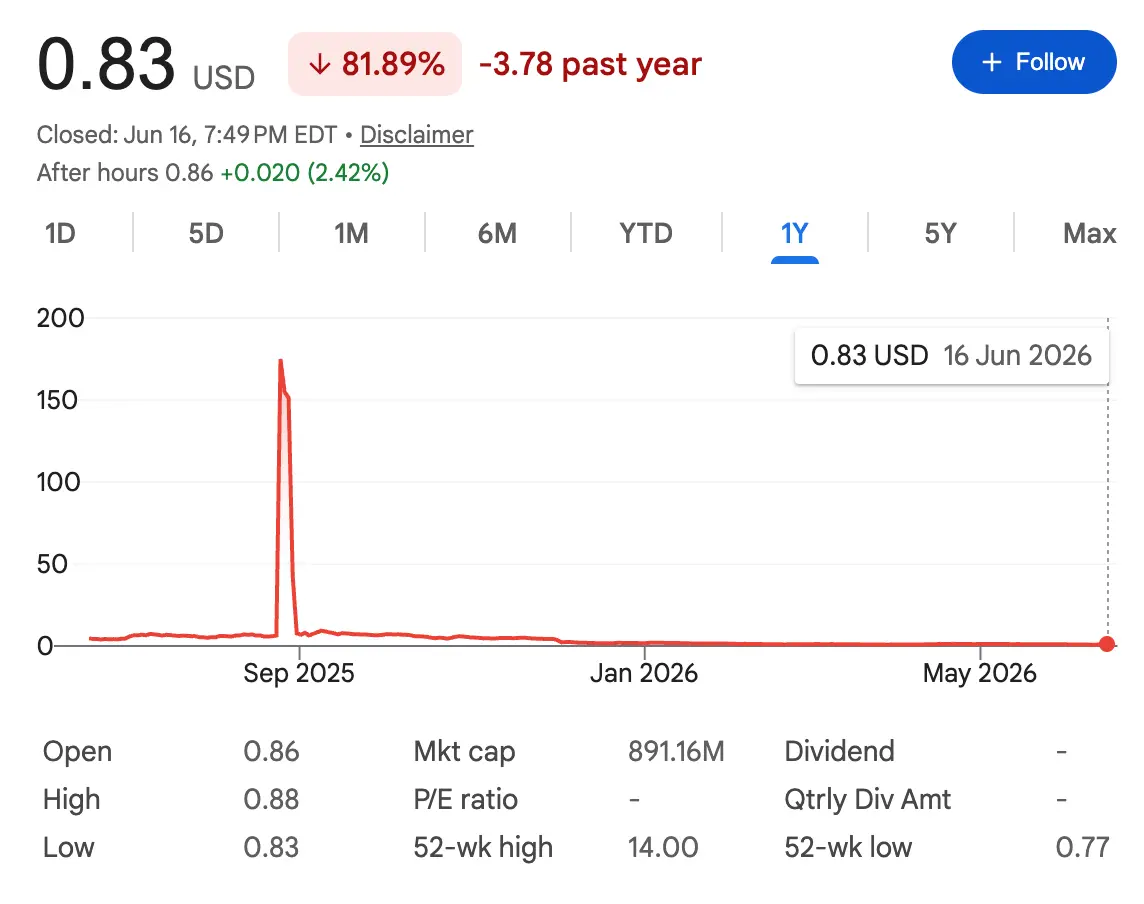
As of June 17, 2026, the stock price of American Bitcoin (NASDAQ code ABTC) has fallen to about $0.83, crashing approximately 90% from its high of about $175 at the end of last year and $14 at its initial public offering price.
Next, Eric shifted the focus of his post to another old issue that had weighed on him for nearly a decade: the 2017 investigation by Forbes into the children's cancer charity foundation he founded. He wrote that the outside attacks were "insane," insisting he was just a "young person wholeheartedly trying to save dying children" back then.
Undeniably, he did have some good deeds; over the years, the foundation has donated more than $25 million to St. Jude Children's Research Hospital in Tennessee, and it operates efficiently, focusing on fundraising and delegating execution to others. However, on the flip side, there were misleading rhetoric, hasty accounts, a board entangled in conflicts of interest, and an open loyalty to Trump that were also evident in the cryptocurrency industry.
The Trump family always manages to evade scandals
Through a Freedom of Information Act request, Forbes obtained thousands of pages of documents that revealed that between 2011 and 2016, his foundation redirected at least $500,000 in donations back to the family business through a series of transactions, most of which were never reflected in tax returns.
These documents also explain why the Trump family always manages to evade scandals. Their approach is: first, they loudly fight back on television or social media, then they use lawyers to bury paper records, and finally, they adjust their actions just enough to comply with regulations and avoid punishment, while fundamentally, nothing has changed; when the storm blows over, they reemerge confidently as victims, asking the public to trust them once again, and there are always enough people willing to believe.
Eric's foundation has played this script from start to finish: nine years after being embroiled in scandal, the renamed organization is still operational, with fundraising efforts expanding year after year and annual expenditures exceeding $500,000, almost entirely conducted at venues under Trump’s name.
Conflicts of interest are evident, even the White House is involved
The foundation initially had good intentions. It started with Eric and his wealthy friends wanting to do something good. When filing with the IRS in 2007, they wrote: "Our family has three golf courses available in New York and New Jersey." The application promised not to sign lease agreements with any company managed by its leaders. For the first three years, this was indeed the case, spending about $50,000 annually and raising hundreds of thousands.
However, starting in 2010, employees of the Trump Organization began to join the board, and the expenditures skyrocketed to $142,000 the following year. Former club director Ian Gillule pointed directly to Trump in an interview: early on, the foundation used the venues for free, and bills often vanished, leading Trump to be dissatisfied. What mattered to him was not the "charitable help" but rather that despite donating so much, there were no formal records or designations left; thus he ordered that, regardless of whether it was his son, everyone had to be charged.
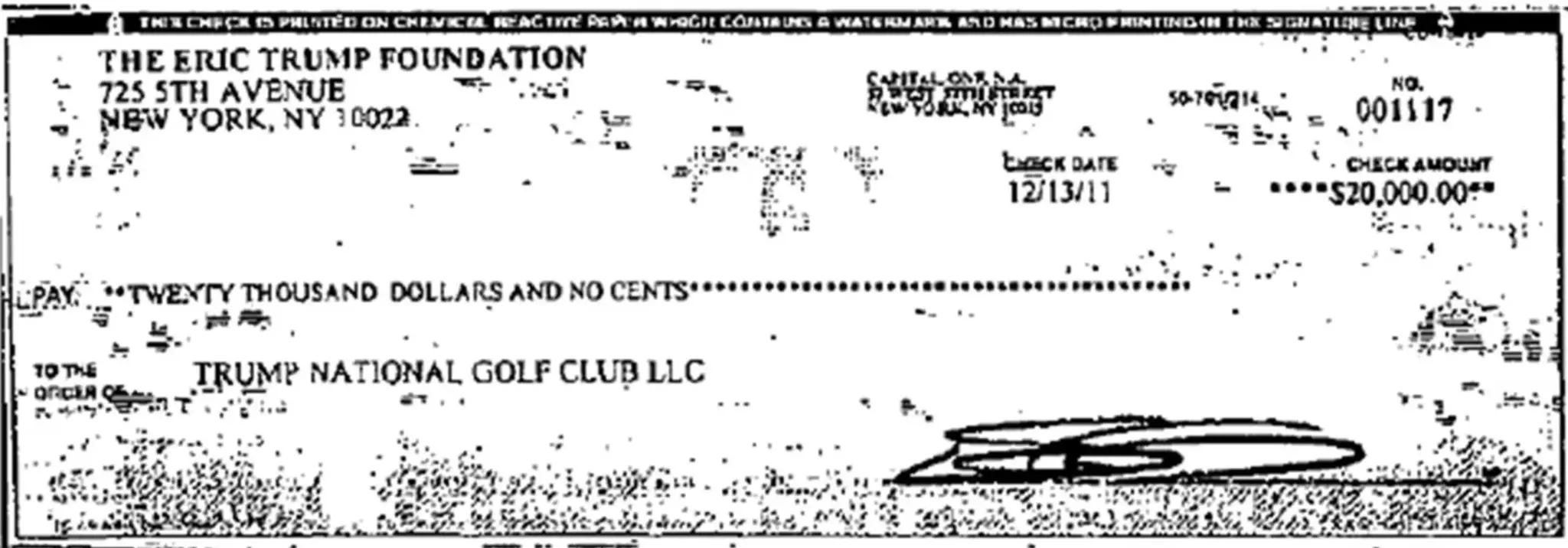
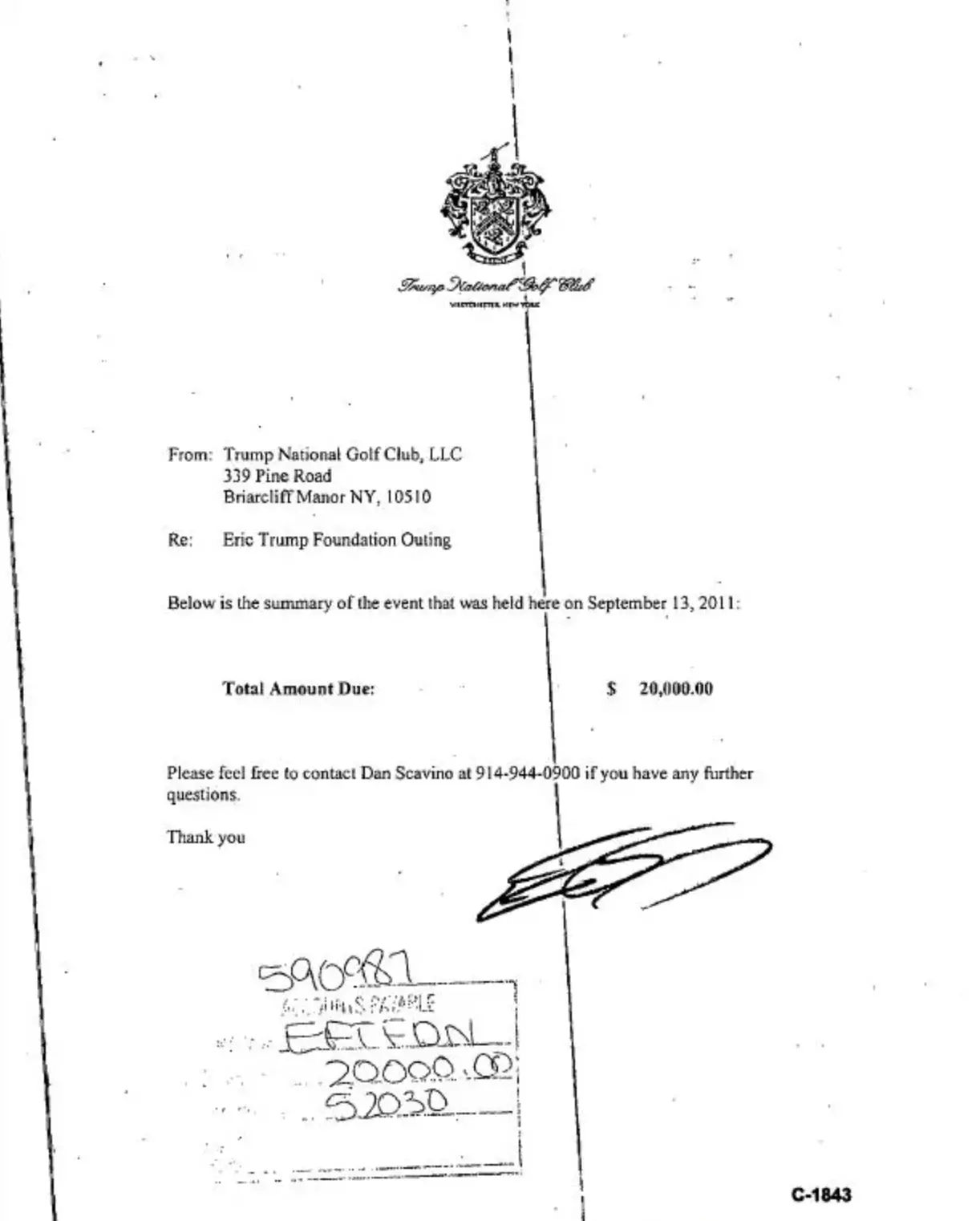
As a result, everyone was charged. After events in 2011, the Trump National Golf Club billed the foundation $20,000, with a note on the copy obtained by Forbes stating: "For questions, please call Dan Scavino." The conflict of interest is evident; Dan Scavino is now the White House Deputy Chief of Staff, and at the time was both the club's general manager and a board member of the foundation; the bill bore Eric's signature, although it was unclear which identity he was signing under. Subsequently, bills were issued every year: the club collected $100,000 in 2013 and $99,000 in 2016, with even the Trump SoHo Hotel and Mar-a-Lago getting their share.
Toxic candy wrapped in a beautiful coating
"Dear friends," Eric wrote in the 2014 fundraising gala manual, the foundation "has one of the lowest cost rates in the world," insisting on only using Trump-owned venues, full-time volunteers, donated catering, and volunteer celebrities, so St. Jude could receive nearly all the funds.
However, the books do not match this rhetoric. The gala featured Hooters waitresses and mini Eric bobbleheads, and many of the performers were from "The Celebrity Apprentice," with Eric claiming they all performed for free, despite him signing checks for performance fees exceeding $90,000. The auction items "were all donated by others," but in reality, the foundation spent at least $65,000 procuring them, and in 2012, purchased an item for $6,040 that only sold for $3,310. Transportation costs were also significant, with just one vendor, Sunny's, charging over $35,000.
Moreover, donations also flowed to other charitable organizations, several of which had more direct ties to family interests; at least three had held fundraising events at Trump courses. In 2013, Eric even spent $1,600 from the foundation to purchase a decorative copper distiller and an antique bottling machine near his family's winery. Of course, the foundation did donate significant amounts to St. Jude, increasing from $220,000 in 2007 to $2.9 million in 2016, when Trump was first elected.
Eric as a victim, thinking he "didn't get rewarded for his kindness"
Politics soon brought the foundation into the spotlight. At the end of 2016, Daily Beast and the Associated Press revealed its transactions with Trump clubs, while The New York Times reported that an investment manager bid nearly $60,000 in a fundraising auction just to have coffee with Ivanka Trump. The issue was not just public relations: under New York state and federal law, such related transactions should have been voted on by the board, documented, and disclosed on tax forms.
Thus, Eric decided to reorganize and separate from the family: all Trump Organization employees withdrew, including himself; he stated that during his father's term, he wanted to avoid "perception issues" and would not personally fundraise before leaving office, and the foundation was renamed Curetivity, promising that all donations would go to St. Jude. Superficially, it seemed like a return to the original intention, but Eric still refused to change his tone, telling Forbes a month after the board meeting: "We use the world's top venues 100% for free, which is precisely why the cost rate is the lowest in history."
On the day the report was published, he appeared on Fox News, framing the scrutiny from various quarters as a political conspiracy against him, comparing himself to a victim, saying, "I raised tens of millions of dollars, but what I got in return was hatred."
Two days later, the attorney general's office wrote to request access to the accounts. The investigation severely injured the foundation's vitality: donations in 2017 sharply declined by more than two-thirds, falling below $1 million, while administrative and legal expenses soared from nearly zero to about $50,000 annually. By the end of the year, the attorney general sent another letter citing multiple issues, including financial statements not conforming to accounting standards, ignoring related transaction regulations, misleading marketing, and threatening to revoke fundraising eligibility.
Since then, the accounts became increasingly opaque. After Eric left the board, the occasionally marked "related-party transactions" disappeared, and the "rent/venue fee" column was always blank, while fundraising expenses dropped from $384,000 in 2016 to $111,000 in 2017. By the end of 2018, the attorney general's office informed that the investigation had shifted to compliance rather than enforcement, and Eric made a return, reappearing on promotional materials and eventually being titled the "founder" of Curetivity, with fundraising expenditures bouncing back to a new high of $392,000 in 2019. As for how much flowed back to the Trump Organization, it is now impossible to determine under the ambiguous accounts.
Today, fundraising events continue under Trump's name one after another: in 2020, an event was held at Mar-a-Lago costing $309,000, and in recent years, events have also been hosted at Trump courses in North Carolina and Jupiter, Florida. If charges are comparable to previous years, Curetivity alone could generate about $200,000 annually for Trump's business ventures, accumulating over a million in 20 years.
The same script has moved into the cryptocurrency industry
This approach of "beautiful rhetoric, value returning to family" did not stop at charitable foundations; it has now almost unchanged moved into American Bitcoin.
Previously, Eric packaged this company as a "money-printing machine," publicly claiming it could mine at a discount of 53% below spot prices, with each Bitcoin costing about $57,000. This sounds very similar to the foundation's "lowest cost rate in the world." However, like with the charitable foundation, the accounts do not match up.
The journalist responsible for this investigation is Dan Alexander, the same one who exposed the foundation nine years ago. He found that about 70% of the Bitcoin the company possessed was not mined but rather acquired through a constant issuance of new stocks followed by purchases in the public market; once depreciation and operational costs were accounted for, the total cost for each Bitcoin was actually close to $90,000, far exceeding Eric's claimed $57,000.
Today, the company's stock price has fallen about 90% from its high of about $175 at the end of 2025 and $14 at the initial public offering, with retail investors estimated to have lost around $500 million; financially, it has been bleeding, showing a net loss of about $81.8 million in the first quarter of 2026, while insiders are experiencing a completely different situation.
Founders initially acquired shares at almost no cost; even after the stock price crashed by 90%, Eric's personal holdings are still valued at about $70 million; during the same period, his net worth is estimated to have risen to $300 million. Even the aftermath of this script feels eerily similar: when questioned, Eric did not directly respond to Forbes's calculated costs and dilution but instead countered with impressive figures like quarterly revenue growth and holding over 7,000 coins, while also venting on X that Forbes had become a political weapon and a disgrace to journalism.
In September last year, Eric stood in the center of a party at the West County Club, hosting Curetivity's 19th fundraiser, surrounded by several key business partners. Since his father was re-elected, his net worth has soared from an estimated $40 million in 2024 to the current $300 million.
免责声明:本文章仅代表作者个人观点,不代表本平台的立场和观点。本文章仅供信息分享,不构成对任何人的任何投资建议。用户与作者之间的任何争议,与本平台无关。如网页中刊载的文章或图片涉及侵权,请提供相关的权利证明和身份证明发送邮件到support@aicoin.com,本平台相关工作人员将会进行核查。


