Fusaka Upgrade Challenges Modular Blockchain Narrative
Author: Nishil Jain
Translated by: Blockchain in Plain Language
Introduction: The Evolution of Ethereum and Its Challengers
We have witnessed the rise and fall of many grand ideas in the crypto space. Many teams have attempted to capture market share by claiming the shortcomings of Ethereum's base chain (too expensive, too slow, not scalable, or overly restrictive for developers).
However, over time, Ethereum has proven these claims to be false.
The Merge upgrade demonstrated Ethereum's ability to successfully transition to a Proof-of-Stake mechanism.
The Dencun upgrade refuted the notion that Rollups would always be unable to scale due to high costs.
The recently launched Fusaka upgrade challenges the narrative that Ethereum cannot meet the high throughput demands of Rollups, which is a fundamental premise for many Modular Chains to survive.
Modular Blockchains and Data Availability (DA)
At the end of 2023, a team proposed the concept of modular blockchains, which centers around building blockchains as three independent and interchangeable modular components: Execution, Settlement, and Data Availability (DA). This team is Celestia.
Data Availability (DA): Ensures that the data of new blocks is published to the network, allowing nodes to verify DA by downloading all data.
Celestia's Positioning: The Celestia network is designed specifically to provide the Data Availability module.
Modular Vision: Projects can build their own blockchains like a puzzle by selecting different existing infrastructures, such as using Arbitrum Orbit for execution, Ethereum for settlement, and choosing data availability services like Celestia, EigenDA, or Avail DA.
Celestia's initial bet was that Ethereum's low throughput and high gas fees in 2023 made it unsuitable for Rollups with high throughput requirements.
Impact of Dencun and Pectra Upgrades
The profit margins for Rollups on Ethereum were once very thin. However, Ethereum's upgrades changed this situation:
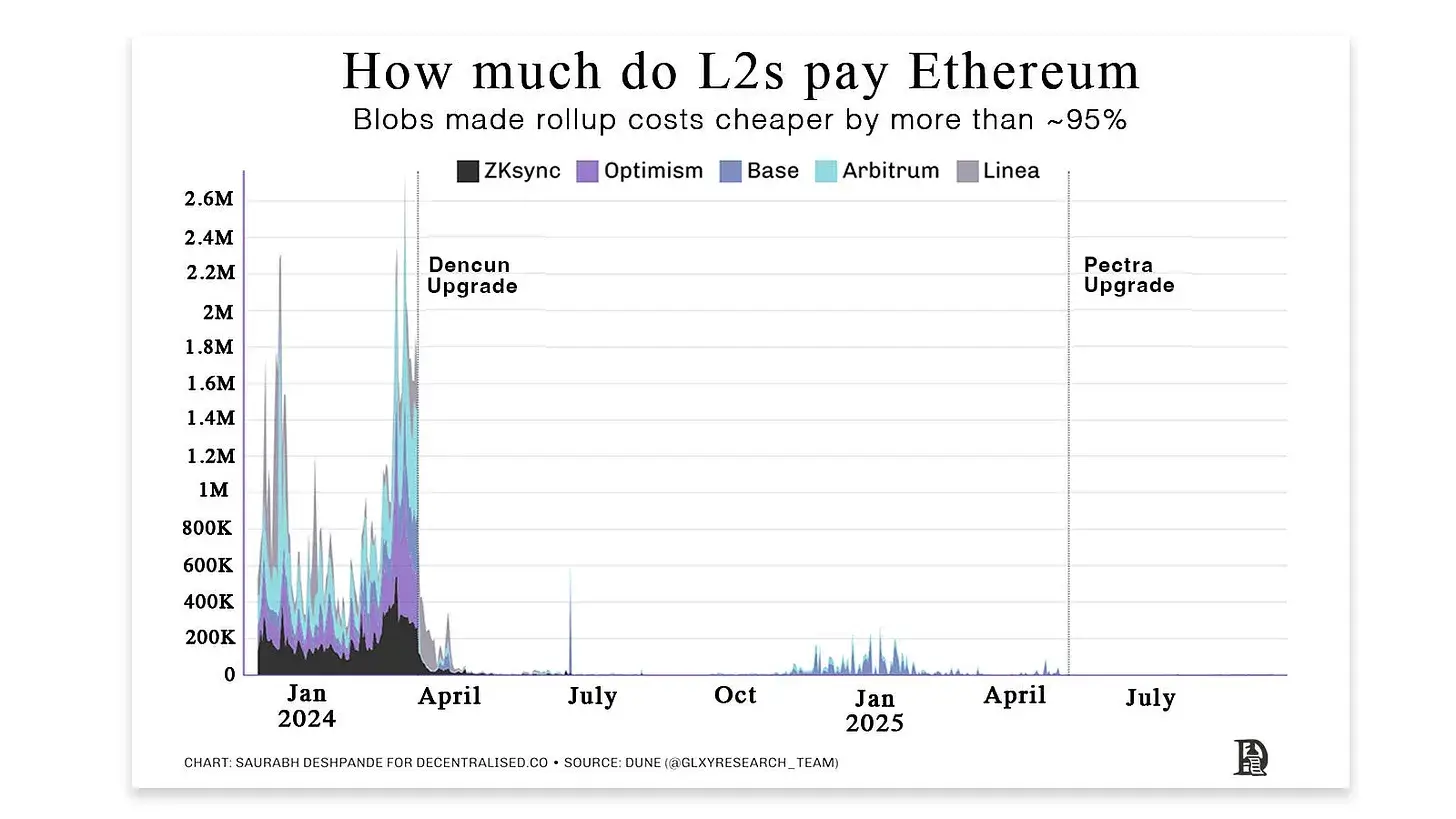
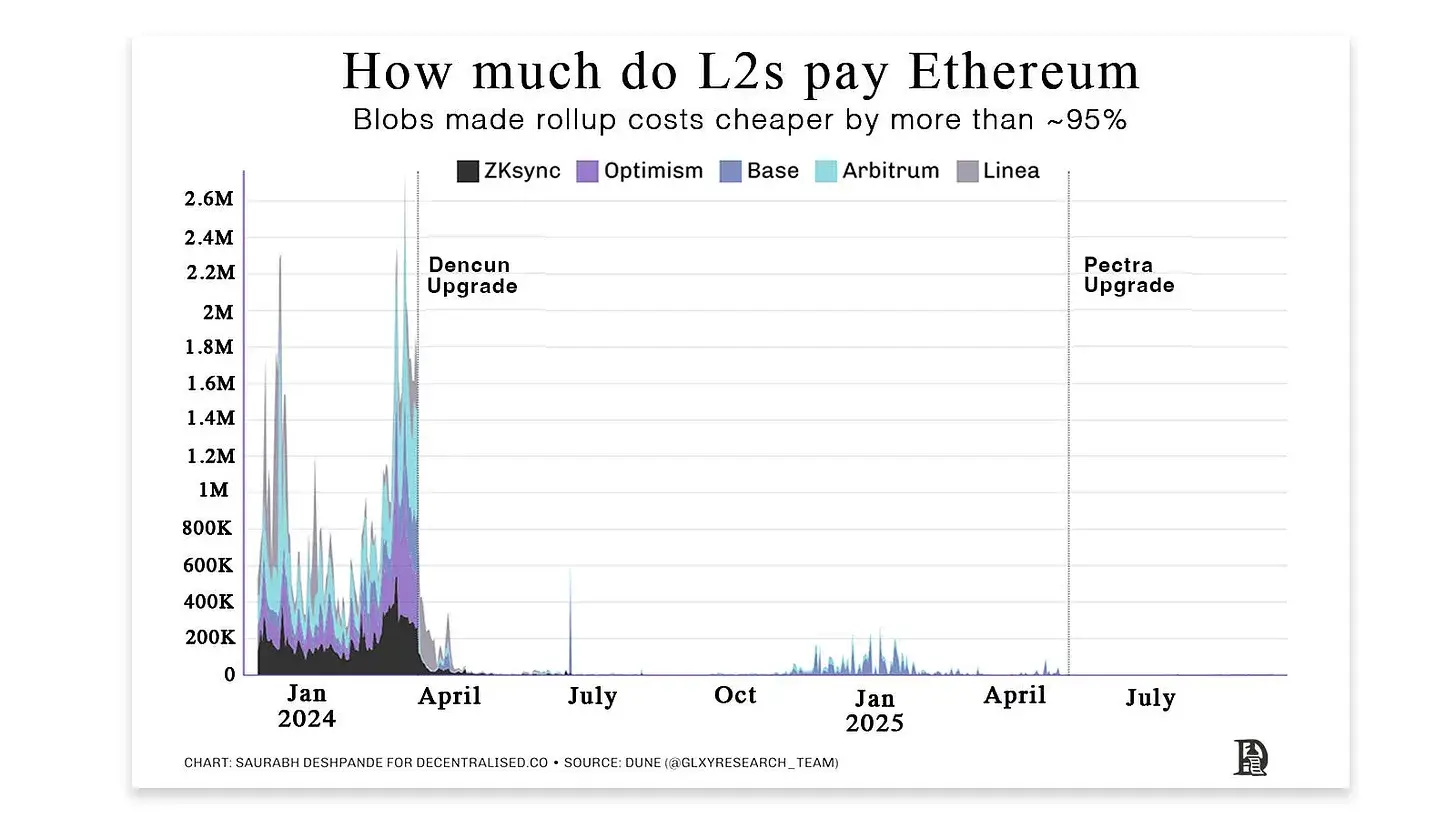
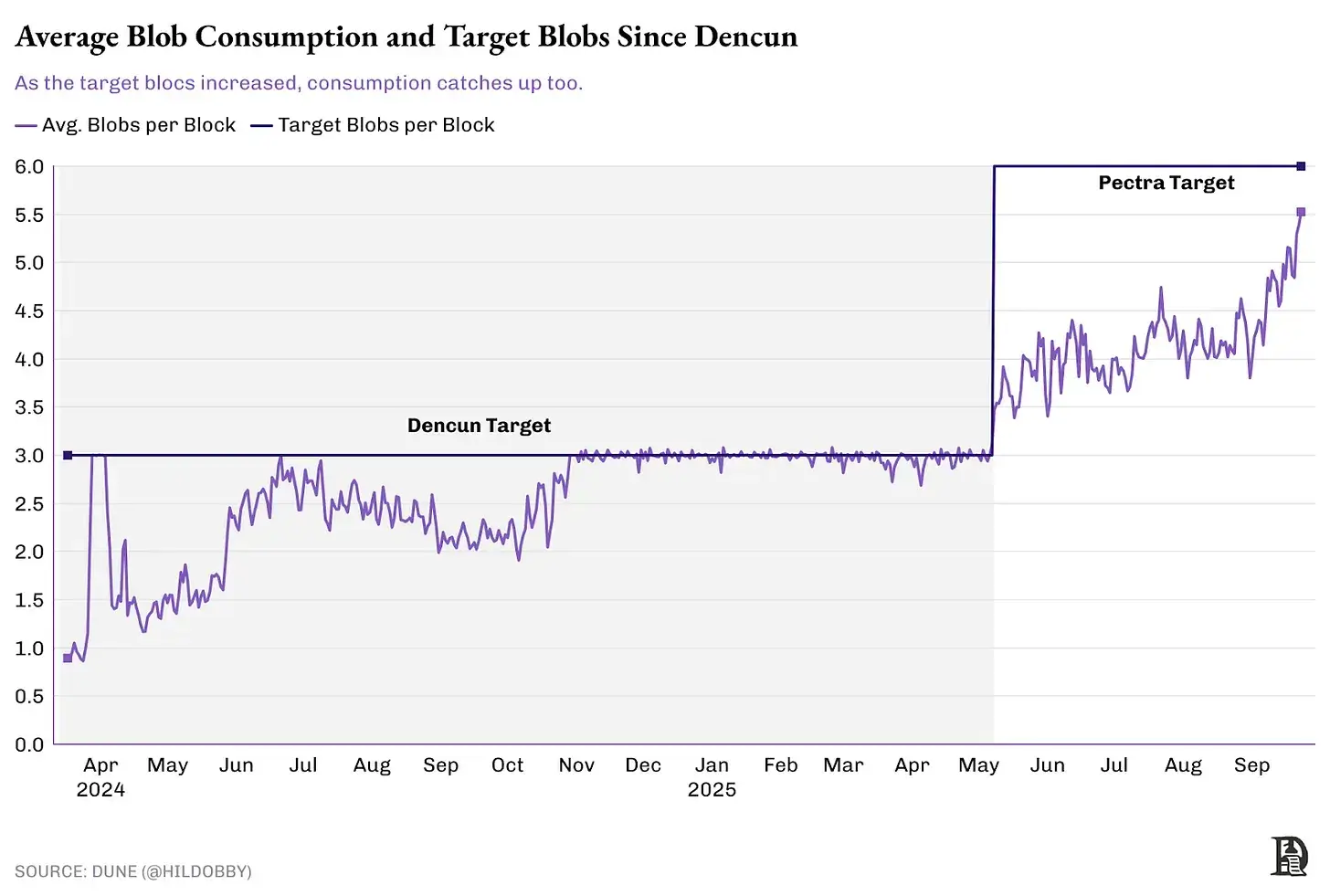
The Dencun upgrade introduced a new space called “Blob” to store Rollup data, replacing the previously used “Calldata”. Blobs are about 95% cheaper than Calldata. This was the first step in reducing Rollup costs.
The Pectra upgrade increased the number of Blobs per block, raising the target to six Blobs per block.
These upgrades significantly reduced L2 transaction costs, from about 50 cents to around 3-4 cents, allowing Rollups to pass on cost savings to users.
Celestia's core vision is to separate DA from execution, enabling easy scaling of blockchains by alleviating the burden on the underlying L1. However, despite the realization of the multi-Rollup vision, market share has been captured by Ethereum. These upgrades have allowed Ethereum to provide DA solutions for over 55 Rollups, securing a total locked value (TVL) of over $40 billion.
Fusaka Upgrade: PeerDAS Challenges Modular DA
Today, the modular DA layer is facing adoption dilemmas. In contrast, Ethereum processed 41,000 Blobs in the past 24 hours.
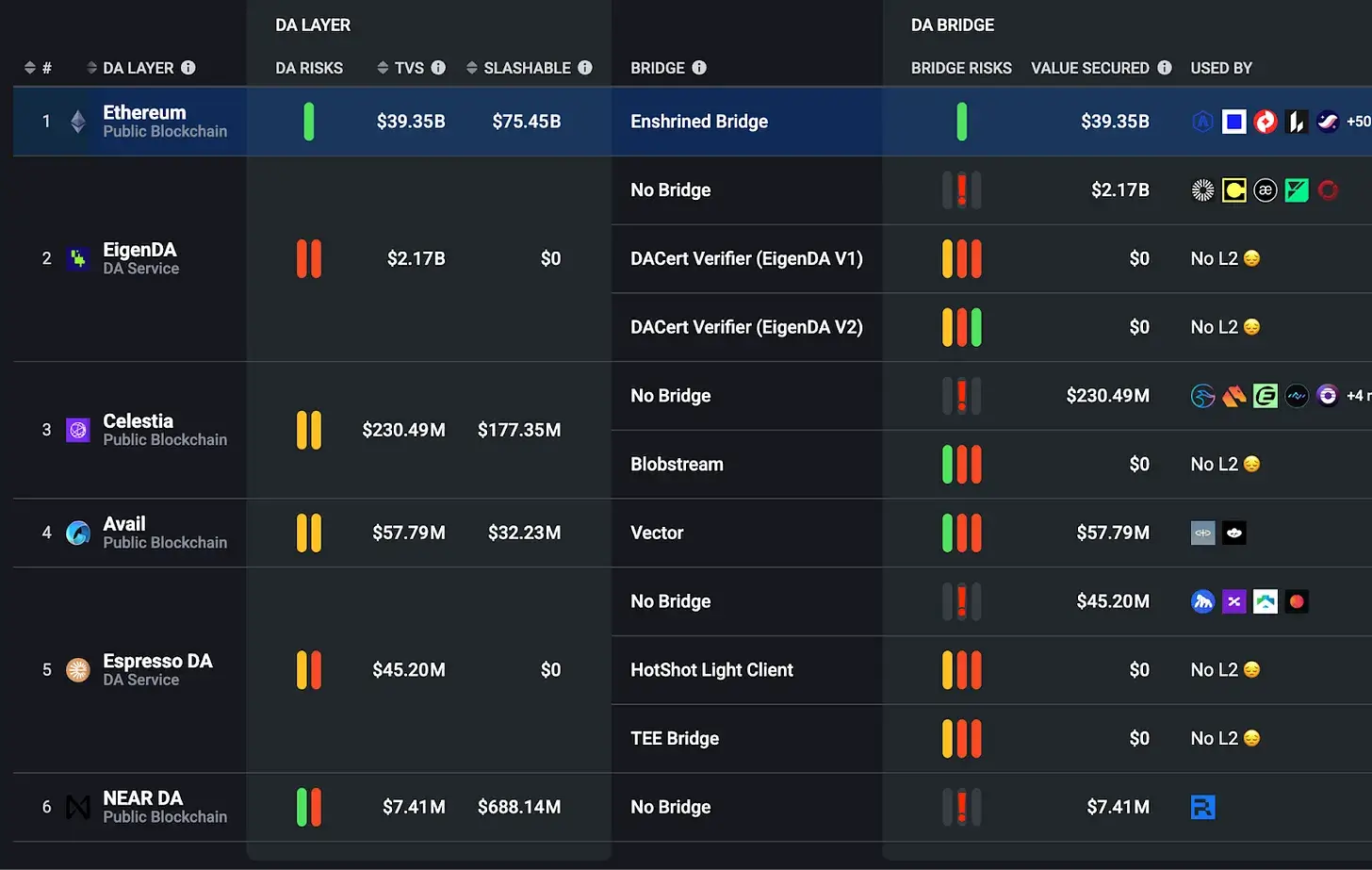
Ethereum's recent Fusaka upgrade implemented PeerDAS (Peer Data Availability Sampling), a new data sampling method that significantly improves the efficiency of verifying data availability.
How PeerDAS Works: Each node checks a small portion of random data and collaborates collectively to ensure the network has complete data.
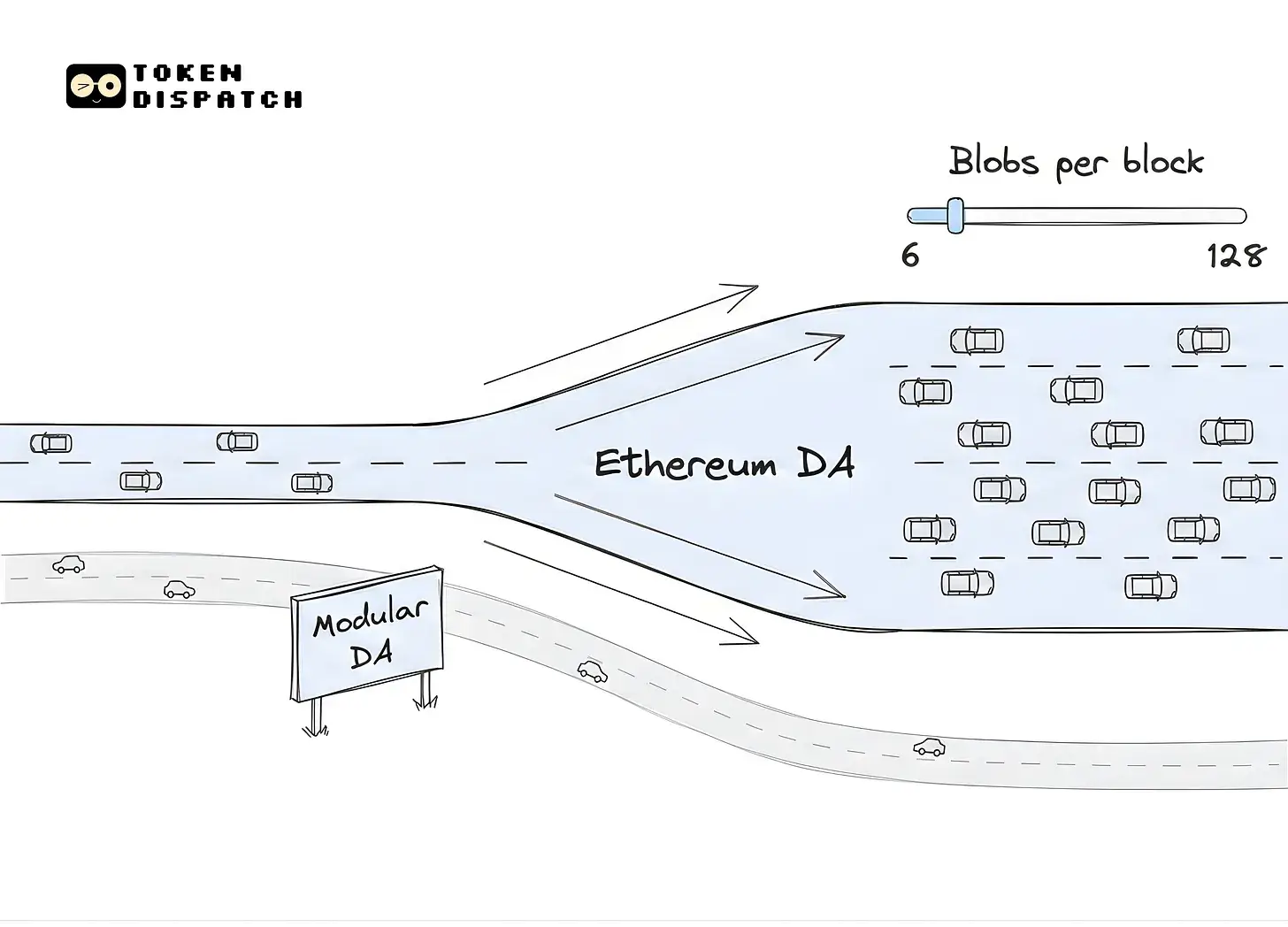
Capacity Increase: Through sampling, Ethereum has raised its capacity target from about 6 Blobs to approximately 10-15 Blobs per block, providing a method to increase the number of Blobs over time without hard forks.
Long-term Scaling: Blob capacity is expected to double each month after implementing PeerDAS, gradually increasing from 10 Blobs/block to 128 Blobs/block.
Decentralized Assurance: All these expansions can be achieved without forcing home stakers (small validators) to upgrade hardware.
Fusaka sets Ethereum's Blob limit at 128 Blobs/block, equivalent to about 16MB/block, which is double the capacity currently offered by Celestia.
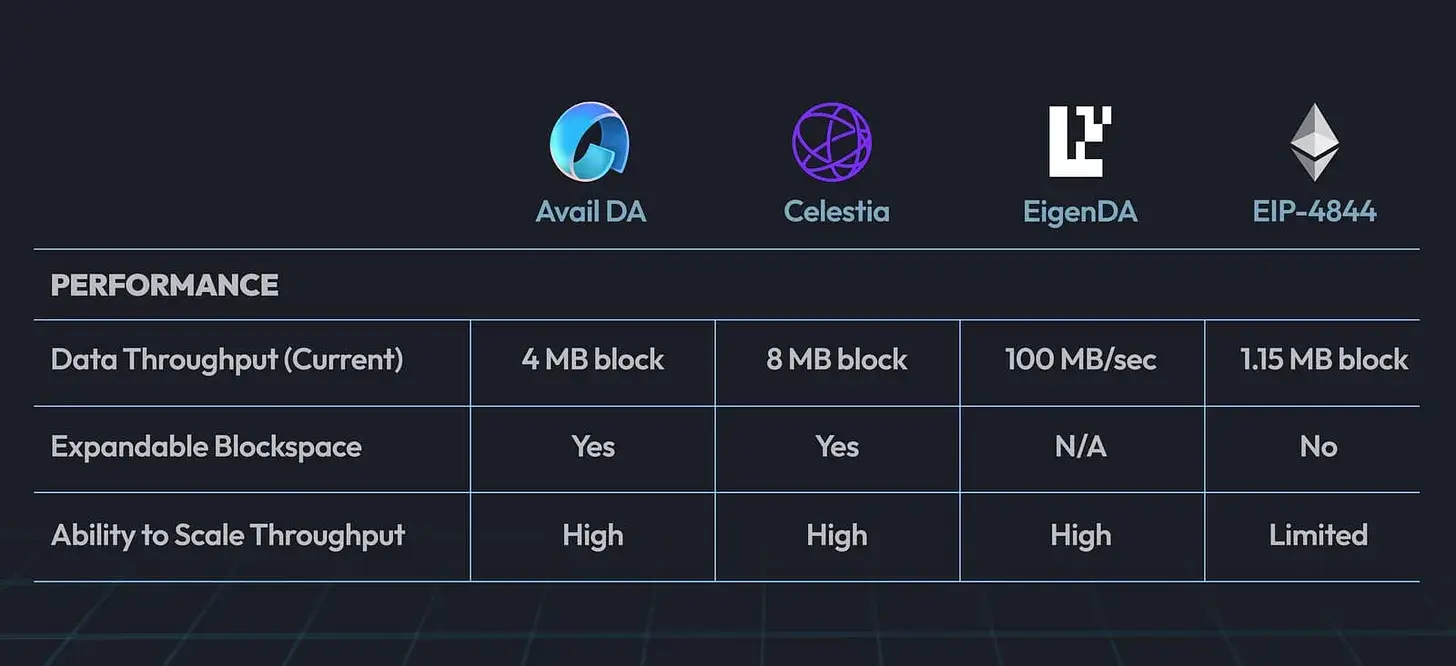
Fusaka marks a significant milestone for Ethereum: it successfully expanded transaction capacity without centralizing the network by increasing hardware requirements.
Other EIPs: PeerDAS is just one of the 13 EIPs (Ethereum Improvement Proposals) implemented in this upgrade.
Gas Limits and Blob Fees: Fusaka also includes increased gas limits and introduces a base fee floor for Blobs determined by execution costs, ensuring that Blob fees do not drop to zero, which could potentially increase what validators are paid per Blob.
Rollups now have a more predictable and scalable data layer, eliminating the ongoing concern of network overload during peak usage periods. This stability allows Rollup teams to focus on infrastructure upgrades, such as decentralized sequencers, experimenting with low-latency designs, and driving smoother user experiences without worrying about sudden fluctuations in DA costs.
Looking Ahead
Nevertheless, attention must be paid to the actual performance of PeerDAS:
Stability of Capacity Growth: After Fusaka, Blob capacity starts at 10 Blobs/block, with an expected doubling each month. Whether these monthly increases can be smoothly advanced will be the true test of PeerDAS.
Impact of Blob Pricing: The new price floor enhances validator incentives, but the specific impact on Rollup user experience remains unclear.
Article link: https://www.hellobtc.com/kp/du/12/6155.html
Source: https://www.thetokendispatch.com/p/dawn-of-ethereum
免责声明:本文章仅代表作者个人观点,不代表本平台的立场和观点。本文章仅供信息分享,不构成对任何人的任何投资建议。用户与作者之间的任何争议,与本平台无关。如网页中刊载的文章或图片涉及侵权,请提供相关的权利证明和身份证明发送邮件到support@aicoin.com,本平台相关工作人员将会进行核查。


