Event Overview
Recently, the Hong Kong Financial Services and the Treasury Bureau (FSTB) and the Securities and Futures Commission (SFC) completed consultations on the regulatory framework for virtual asset trading and custody services, and released a summary indicating that most respondents support including these services under a licensing regime. Regulatory authorities plan to submit a new bill to the Legislative Council next year, aiming for full legislative regulation of virtual asset traders and custodians by 2026. According to existing information, the new framework will establish a licensing system for virtual asset service providers and virtual asset custodians based on the Anti-Money Laundering and Counter-Terrorist Financing Ordinance (AMLO), while also expanding the regulation of advisors and asset managers. The SFC has initiated a new round of consultations on this matter, setting January 23, 2026, as the deadline for public opinions. Following the announcement, the overall sentiment in the market and community has been optimistic, generally viewing it as a key step for Hong Kong to solidify its position as a global crypto hub. However, there are significant concerns regarding rising compliance costs and higher licensing thresholds, particularly among small OTC and startup teams who express worries about their future viability.
Regulatory Framework
From a system design perspective, the core of Hong Kong's proposed framework is to unify virtual asset service providers (VASP) and virtual asset custodians under the AMLO framework, enhancing anti-money laundering and counter-terrorist financing compliance through a licensing system. Regulators intend to require institutions providing virtual asset trading matching, market-making, and related brokerage services to operate under a license, while custodians must meet higher standards in asset segregation, hot and cold wallet management, and private key security, and undergo regular audits and continuous compliance disclosures. Meanwhile, the SFC has launched a consultation to expand regulation to virtual asset advisors and asset managers, planning to include licensed entities providing virtual asset investment advice, portfolio management, and related structured products under unified regulation, with January 23, 2026, set as a key date for collecting public opinions. Under the current system, Hong Kong has already implemented licensing arrangements for virtual asset trading platforms and some asset management activities, but the scope mainly focuses on centralized platforms for retail and professional investors. The new rules extend the boundaries to custodians, advisors, and broader asset management, linking with existing securities and futures licenses: on one hand, embedding virtual asset businesses into the existing compliance framework, and on the other hand, establishing separate VASP and custodian licenses under AMLO to avoid regulatory vacuums and inconsistent standards.
Market and Sentiment
In terms of market opinion, the views of institutions and KOLs show a typical duality. Local leading institutions like HashKey Capital believe that Hong Kong's improvement of the virtual asset regulatory framework will provide a clear compliance path for sovereign funds, banks, and traditional asset managers, likely attracting more institutions to allocate digital assets, thereby accelerating the innovation of Web3 infrastructure and applications. Ethereum co-founder Vitalik Buterin also commented by sharing that Hong Kong's gradual approach to virtual asset regulation is "worth noting," believing it helps balance innovation incentives and systemic risks. Meanwhile, local anonymous commentators and some OTC operators point out that the new rules may significantly raise compliance thresholds, requiring substantial investments in KYC, AML systems, audits, and capital adequacy, which could squeeze the survival space for small OTC platforms and grassroots entrepreneurial projects. Despite the controversy, the overall sentiment in the community remains optimistic, due to two main reasons: first, Hong Kong has clearly positioned itself as a global crypto and Web3 hub, competing for offshore funds and project headquarters through a predictable legal framework; second, the clarity of policy expectations helps reduce uncertainties related to "regulatory crackdowns" and policy reversals. From the perspective of funding and participant structure, some funds may remain in a wait-and-see mode in the short term, awaiting the implementation of detailed rules and transitional arrangements, but the expectation of increased institutional allocation and cross-border funds entering through compliant channels is strengthening. This structural shift is seen as a more favorable long-term factor for price stability.
Regulation and Security
The real pressure from the security dimension is one of the key backgrounds for Hong Kong's strengthening of trading and custody regulation. According to recent reports from security agencies like Kaspersky, families of malware targeting cryptocurrency users are rapidly evolving, with a significant increase in complex trojans (such as Stealka) aimed at wallet credentials and transaction authorization information, often spread through social engineering, phishing websites, and disguised update programs, leading to users' assets being wiped out in one go. As the global market value of crypto assets and the scale of single-point custody rise, hacker attacks are increasingly targeting exchanges and custodians, making security protection a regulatory and systemic risk issue rather than just a technical problem. Under the AMLO framework, anti-money laundering and counter-terrorist financing requirements will compel exchanges, custodians, and OTCs to reshape their risk control practices: they must strengthen customer due diligence (CDD), transaction monitoring, and suspicious transaction reporting, refine handling rules for high-risk jurisdictions, privacy coins, and on-chain mixing services, and establish cross-border information-sharing mechanisms. At the same time, stricter identity verification and on-chain analysis will inevitably touch on user privacy, and rising compliance costs may compress the pace of product iteration, creating long-term structural tensions between security and privacy, prudent regulation and innovative freedom. The challenge of Hong Kong's new framework lies not in whether to regulate, but in how to seek a sustainable balance between multiple security needs and openness.
Bull-Bear Game
Surrounding this round of Hong Kong's crypto regulatory upgrade, both bullish and bearish sides have seen starkly different prospects under the same set of rules. Supporters emphasize the positive effects of standardization and transparency: under a unified licensing system, custody security, asset segregation, transaction transparency, and risk disclosure will be institutionalized, making it easier for institutions and high-net-worth funds to assess and bear risks. This not only helps attract banks, brokerages, and family offices to enter the market but also enhances overall fund security and market credibility, providing a longer-term development track for the industry. Some in the tech community also believe that clear compliance boundaries will drive innovation in infrastructure and regulatory technology (RegTech), creating new entrepreneurial spaces. Opponents worry that an overly broad regulatory scope and high standards will directly compress the survival space for small OTCs and early-stage innovative projects, as many OTC platforms relying on offline networks and flexible settlement mechanisms may struggle to meet capital adequacy, systemic audits, and continuous compliance reporting requirements, forcing them to exit or go underground, weakening OTC liquidity. For trading depth, if most liquidity concentrates on a few licensed giants, the order depth and price discovery efficiency of leading platforms are expected to improve, but the difficulty of listing long-tail tokens and local new projects will increase, potentially reducing local "zero to one" innovation testing grounds. For project parties, Hong Kong is expected to become a "showcase" for institutions and compliant funds, but in the early financing and token issuance stages, they may choose to complete initial issuances in jurisdictions with looser legal environments, then return to Hong Kong in a compliant manner to achieve a compromise path of "project going abroad + funds returning."
Global Comparison
Observing Hong Kong's new regulations within the global regulatory landscape, it can be seen that major financial centers are forming compliance paths with different emphases. Some jurisdictions emphasize investor protection and retail restrictions, such as certain European and American countries that classify a large number of tokens as securities through strict securities laws, enhancing information disclosure and sales restrictions; other regions focus on industrial development and tax advantages, adopting "regulatory sandboxes" or lenient tax systems to attract exchanges and projects. In contrast, Hong Kong attempts to build a bridge between traditional capital market advantages and virtual asset innovation: on one hand, aligning with international anti-money laundering standards based on AMLO; on the other hand, releasing signals of "developing under regulation" to the industry through specialized VASP and custodian licenses. At a more macro level, countries like India and China have been reported to actively hold Bitcoin as reserves or research subjects, while some central banks in developing countries have begun using high-frequency data to monitor crypto market behavior, indicating that crypto assets are gradually transitioning from a phase dominated by retail speculation to strategic resource allocation at the sovereign and institutional levels. If Hong Kong's new regulations can align with this trend, it will form a unique competitive advantage in the global compliance network: first, it can provide compliant custody and trading infrastructure for institutions and sovereign funds holding Bitcoin or stablecoins; second, leveraging local rule of law and financial engineering capabilities to offer structured products and risk management tools for global funds. Of course, there will still be room for regulatory arbitrage, as some high-risk, high-leverage, or highly anonymous businesses may choose to migrate to jurisdictions with looser or less transparent regulations, which also means that Hong Kong, under its "quality first" positioning, consciously gives up a portion of high-risk traffic in exchange for a higher institutional credibility premium.
Market Outlook
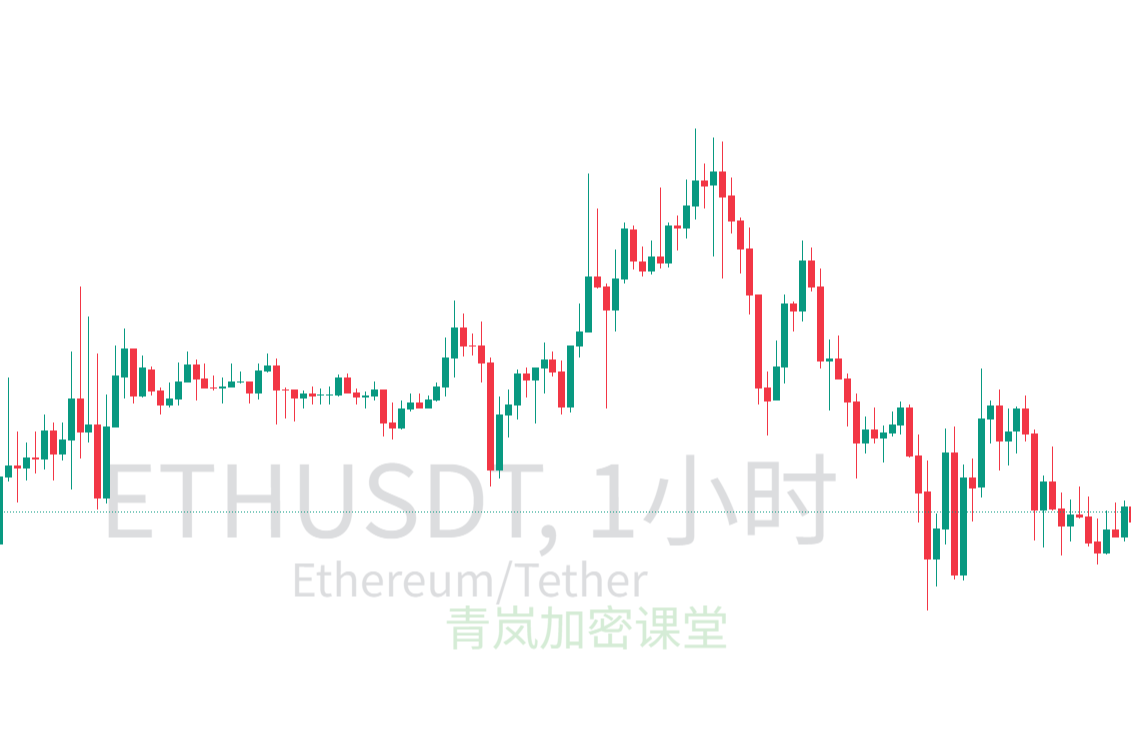
From a timeline perspective, Hong Kong's current round of regulatory upgrades can be roughly divided into three stages: the first is the legislative promotion period, from the current consultation summary to the submission and approval of the new bill. During this stage, the market will mainly trade around the details and boundaries of the rules, with expectations dominating volatility, and funds primarily in a wait-and-see and structural layout mode; the second is the rule implementation period, when the VASP and custodian licenses under the AMLO framework officially take effect. Transitional arrangements and rectifications of existing businesses will bring short-term friction, with some platforms and OTCs that fail to meet requirements gradually exiting or transforming, and compliance costs being fully accounted for in financial reports and valuations; the third is the institutional entry period, when the regulatory chain stabilizes and pilot cases mature, banks, brokerages, asset managers, and some foreign sovereign funds will be more motivated to layout virtual assets and Web3-related investments through Hong Kong, increasing the proportion of medium- to long-term funds, and the volatility structure may shift from a "retail-dominated high-frequency emotional market" to an "institution-dominated medium-cycle trend market." Future market performance will heavily depend on three key conditions: first, the degree of strictness of regulatory details; if overly rigid restrictions are placed on product innovation, DeFi interactions, and cross-chain assets, it may stifle Hong Kong's technological vitality; second, the speed and transparency of license implementation; if approval efficiency is too low or standards are inconsistently enforced, it will damage the industry's confidence in Hong Kong; third, the global macro liquidity environment; if major central banks enter easing or maintain relatively high liquidity around 2026, Hong Kong, with its clear compliance framework, is expected to capture a new round of crypto allocation demand. In the long run, this new regulatory framework will reshape the balance between industry security, compliance costs, and innovation space: asset security and systemic robustness will significantly improve, compliance will become part of the entry threshold and moat, while teams and platforms that truly possess both technical and compliance capabilities will gain greater survival and expansion space in an environment with higher thresholds and clearer rules.
Join our community to discuss and grow stronger together!
Official Telegram community: https://t.me/aicoincn
AiCoin Chinese Twitter: https://x.com/AiCoinzh
OKX Benefits Group: https://aicoin.com/link/chat?cid=l61eM4owQ
Binance Benefits Group: https://aicoin.com/link/chat?cid=ynr7d1P6Z
免责声明:本文章仅代表作者个人观点,不代表本平台的立场和观点。本文章仅供信息分享,不构成对任何人的任何投资建议。用户与作者之间的任何争议,与本平台无关。如网页中刊载的文章或图片涉及侵权,请提供相关的权利证明和身份证明发送邮件到support@aicoin.com,本平台相关工作人员将会进行核查。