Written by: KarenZ, Foresight News
On December 18, the Base App launched by Coinbase officially announced the end of its Beta testing phase, fully opening to users in over 140 countries and regions worldwide. This marks a key step for Coinbase in building an on-chain ecological entry and realizing the vision of Web3 for the masses.
Evolving from the early purely tool-based "Coinbase Wallet" to the current "Base App," this product aims to define a new form of on-chain "super app" that deeply integrates social, trading, payment, and complex on-chain interactions.
As Base head Jesse Pollak stated, its core vision is: "Making on-chain interactions as simple as online ones."
The All-in-One Landscape of Base App
The Base App is no longer limited to traditional asset management; it is a comprehensive platform that integrates social, payment, and chat functionalities.
I previously provided a detailed introduction to the Base App in the article "Base Upgrade: Coinbase's Blockchain Ambition" during the A New Day One event hosted by Base on July 2025. The Base App has the following four core features:
- A closed loop of social and creator economy: Integrating Farcaster and Zora protocols. Every post made by users can be converted into tradable digital assets through Zora, achieving true "posting equals monetization." At the same time, selected trading dynamics are directly integrated into social interactions, making "on-chain discovery" intuitive and social.
- On-chain functionality and payment experience: Supports buying and selling cryptocurrencies, exploring built-in Mini apps (such as trading platforms, prediction markets, lending platforms, games, and content tipping platforms), and allows for free and instant USDC transfers using NFC, with the ability to earn yields by holding USDC.
- Ecologically interconnected Mini Apps: Similar to WeChat Mini Programs, the Base App includes mini applications covering DeFi, prediction markets, games, and more.
- Smart wallets and quick payments: Users automatically receive a Base account (supporting multi-chain smart wallet identity) and Base Pay (a quick payment method based on USDC) upon registration.
- Private communication and AI collaboration: The chat function is based on the XMTP encryption protocol, ensuring privacy and security. Users can not only send and receive USDC directly in conversations or form communities of up to 250 people but can also call on AI agents to assist in executing complex combination trades or portfolio management.
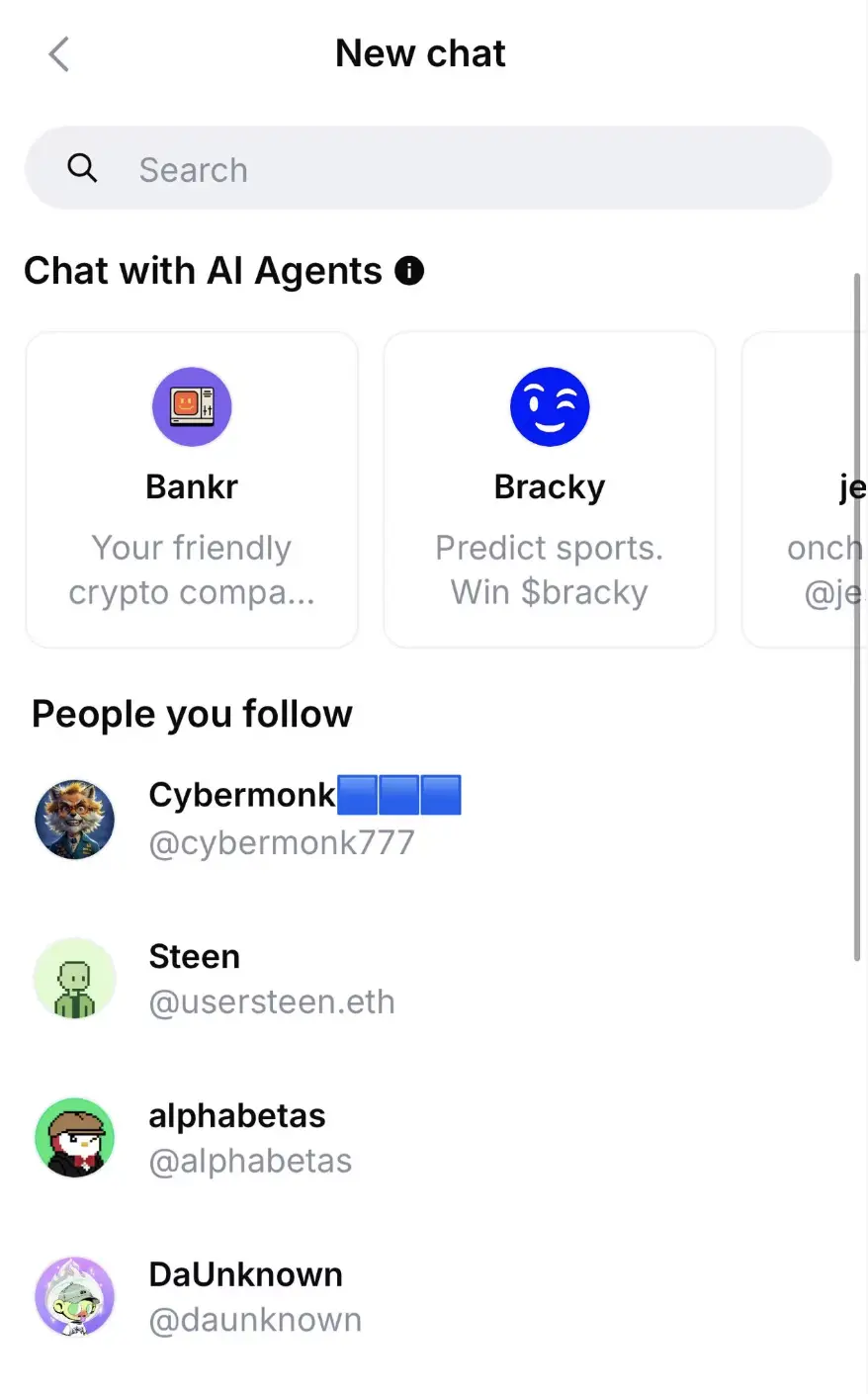
How is the experience? What kind of App is this?
In practice, the UI design of the Base App is extremely minimalist, and the interactions are relatively smooth.
"Seamless" onboarding: Say goodbye to mnemonic anxiety
For newcomers, the most convenient aspect is the absence of mnemonic phrases and the need to back up 12 words. Private key management is entirely handled by Passkeys, allowing users to create on-chain accounts in seconds. This experience is almost indistinguishable from registering a regular Web2 social account, significantly lowering the entry barrier for non-crypto users.
Seamless integration of social and finance
In the main feed of the trading section, content posts that generate revenue from creators will display a real-time market button, allowing one-click navigation to the trading page.
The platform also highlights large transactions or concentrated buying behaviors, making it easier for users to follow trades. Additionally, there is a convenient "hidden operation"—double-tapping on a post or creator's coin of interest allows for quick purchases at a preset amount.
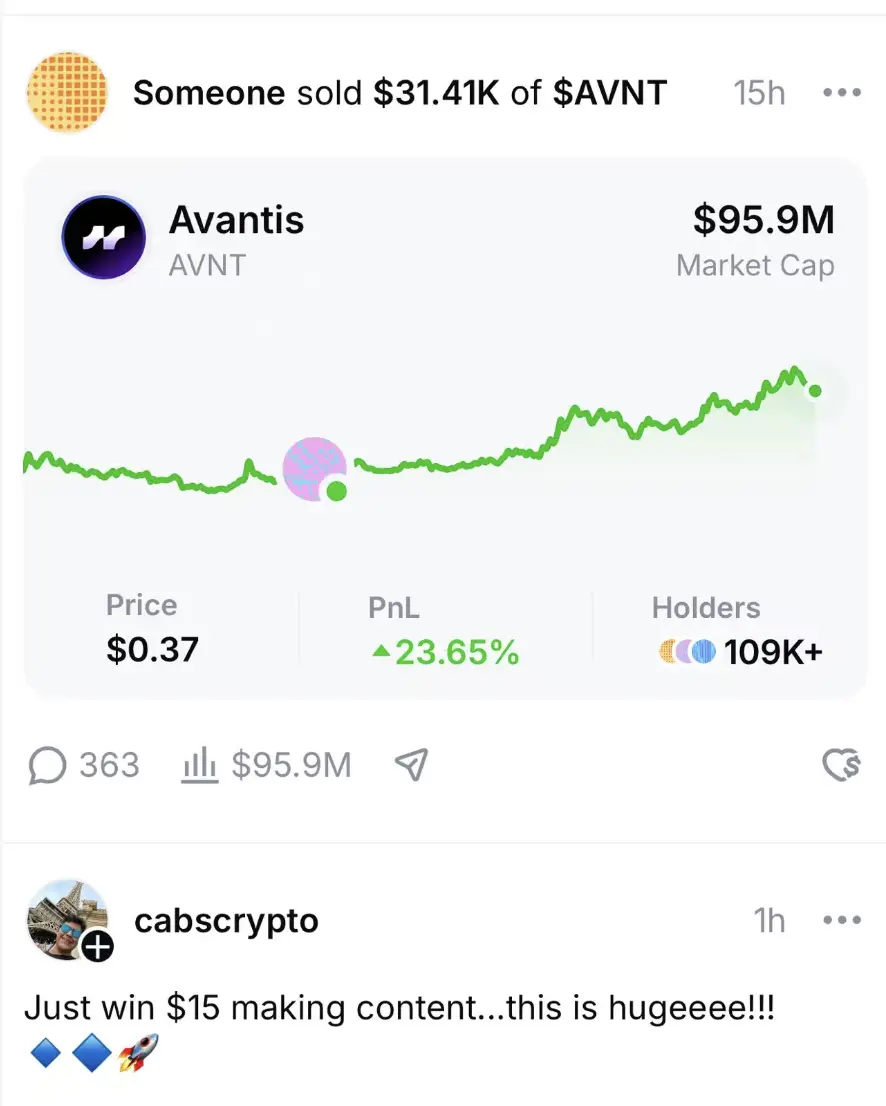
The discussion section focuses on pure content information streams that have not yet generated revenue.
According to official descriptions, the feed algorithm will personalize recommendations based on user interactions (likes, comments, follows), interest test results, as well as content timeliness, relevance, and diversity. Users can also interact with links or Mini Apps shared by others directly in the feed.
On-chain identity centered around "people"
When you open the Base App, you no longer see a cold string of 0x… codes, but rather Basenames. The Base App is deeply integrated with the on-chain identity system, making transfers as simple as sending red envelopes to WeChat friends. Names are no longer just symbols but serve as "digital IDs" that traverse the entire ecosystem.
Transactions: Gas sponsorship
To achieve an optimal experience, the Base App employs a "Gas sponsorship" model in many scenarios, with network fees covered by the official. However, it is important to note that this convenience is not entirely free: when exchanging tokens (Swap) or performing cross-chain operations within the app, a fee of approximately 1% (on Base) still applies.
Rich Mini Apps
The "Search" section of the Base App encompasses all integrated Mini Apps, covering applications in trading, gaming, creator platforms, DeFi platforms, prediction markets, music, and more. The Mini Apps homepage currently features selected applications such as the derivatives protocol Avantis, Web3 fantasy football game Football.Fun, DeFi protocol Gauntlet, lending protocol Morpho, and Moonwell.

Weekly automatic distribution of USDC holding yields
The wallet page of the Base App supports one-click activation of USDC yields, currently with an APY of approximately 3.35% (adjusted by Coinbase), with rewards accumulated daily and distributed weekly (U.S. users need to link their Coinbase accounts).
What are the challenges?
As an emerging platform, the Base App still faces some obvious pain points or challenges in actual use:
- The "island effect" of social features: For a product positioned as an "on-chain super app," user scale is its lifeline. If the user base of the Base App is insufficient, it will directly lead to its core functions falling into a "negative cycle." With fewer active users, content updates in the information flow will slow down, and retention rates will gradually decline.
- Quality of the information flow needs optimization: The current social feed algorithm is still opaque, and the content pool is filled with speculative content and useless information, with a relative lack of quality deep interactions.
- "Liquidity trap" of on-chain transactions: Its social trading section relies on showcasing "concentrated purchases" to guide following trades. If the user base is too small, this trend detection loses statistical significance, and users may only see random operations by a few individuals.
- Boundaries of security defenses: Convenience also brings risks. "Phishing links" disguised under beautiful social dynamics still exist, and for novice users accustomed to Web2 security protections, misoperations may lead to authorization leaks, which remains a severe challenge in the on-chain world.
Of course, for the current stage of the Base App, its biggest challenge is not the lack of powerful features, but how to efficiently convert Coinbase's hundreds of millions of users and stabilize retention rates.
Conclusion
The full opening of the Base App marks a shift in the focus of the Base ecosystem from "building roads and bridges" to "stock competition" and "user onboarding."
By integrating wallets, trading, social, creator economy, payments, Mini App ecology, and yields into one, it has built a powerful on-chain traffic entry. For developers, the Mini Apps framework provides a shortcut to directly reach Coinbase's vast user base.
Although there is still a long way to go in content governance and user attraction, the Base App undoubtedly provides a clear template: the future of Web3 should not be an isolated wallet, but rather an on-chain society that is warm, interactive, and profitable.
免责声明:本文章仅代表作者个人观点,不代表本平台的立场和观点。本文章仅供信息分享,不构成对任何人的任何投资建议。用户与作者之间的任何争议,与本平台无关。如网页中刊载的文章或图片涉及侵权,请提供相关的权利证明和身份证明发送邮件到support@aicoin.com,本平台相关工作人员将会进行核查。


