The global tax regulatory network of 48 countries has tightened overnight, bringing anonymous cryptocurrency transactions into the light.
During the New Year's holiday, while most people were immersed in the joy of the New Year, the cryptocurrency market experienced a thrilling "roller coaster" ride. Cryptocurrencies, led by Bitcoin, plummeted late on January 1, with Bitcoin dropping from $89,000 to around $87,000.
In just 24 hours, the total liquidation amount across the cryptocurrency network exceeded $228 million, with 163,900 investors liquidated, most of whom were bullish investors.
This New Year's shock not only exposed the vulnerability of the cryptocurrency market but also revealed the profound changes the global crypto asset market is undergoing under the new regulatory framework.

1. Regulatory Impact
● On January 1, 2026, the crypto asset market faced a global regulatory earthquake. According to the report framework on crypto assets released by the Organisation for Economic Co-operation and Development (OECD), 48 jurisdictions, including the UK and the EU, officially began collecting standardized crypto asset data.
● This framework, known as CARF, requires crypto service providers to collect more detailed customer information, verify tax residency, and report users' balances and transactions to local tax authorities annually.
● For ordinary investors, this means that starting in 2026, crypto trading platforms and specific wallet providers in the EU will require users to provide detailed information such as tax residency and tax identification number. This data will be reported to tax authorities for the first time in 2027 and automatically exchanged among EU member states.
2. Market Reaction
The new regulatory framework quickly triggered a chain reaction in the market. On January 1, Bitcoin's price rapidly fell from $89,000 to around $87,000, with a decline of over 1% within 24 hours.
● Other mainstream cryptocurrencies also fell in response: Cardano dropped over 3%, Dogecoin fell over 2%, and XRP decreased by over 1%. Market panic spread, leading investors to sell off their crypto assets.
● The liquidation data revealed the brutality of this drop. On January 1 alone, 163,900 investors faced liquidation, with long positions liquidated at $157 million and short positions at $71 million.
The largest single liquidation occurred in the Hyperliquid-BTC-USD trading pair, valued at $5.8577 million.
3. Price Context
● In fact, this New Year's drop is not an isolated event but part of Bitcoin's ongoing adjustment. Since reaching a historical high of $126,000 in October 2025, Bitcoin has cumulatively dropped over 30%.
In December 2025, Bitcoin experienced a monthly decline of over 22%, marking its worst monthly performance since December 2018.
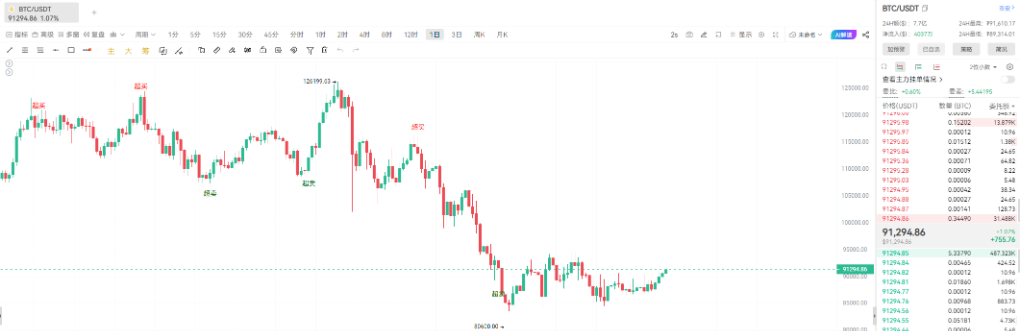
● Analysts point out that Bitcoin is currently trapped in a "compressed range of fluctuations." The complex macroeconomic backdrop, tightening liquidity, and declining risk appetite make it difficult for Bitcoin to regain upward momentum below $90,000.
Options market data also confirms the standoff between bulls and bears: Put options are concentrated around $85,000, while call options are distributed in the $100,000 to $120,000 range.
4. Institutional Dynamics
In response to market turbulence, major crypto institutions quickly reacted. Exchanges and platforms attempted to stabilize market sentiment through strategic adjustments and rule optimizations.
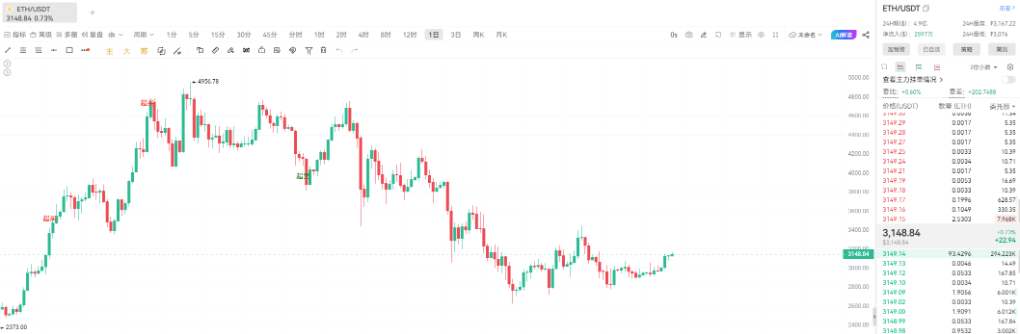
These measures alleviated market panic to some extent, with Bitcoin's price gradually stabilizing above $88,000 on January 2. Ethereum also maintained above the $2,900 mark.
5. Regulatory Shift
On the last day of the New Year's holiday, the market received signals of a possible regulatory shift. Personnel changes at the U.S. Securities and Exchange Commission (SEC) were interpreted by the market as an important sign that the U.S. crypto regulatory environment might turn more favorable.
● This change occurred against the backdrop of a broader regulatory transformation. In 2025, U.S. crypto regulation underwent a decisive reset: Gary Gensler resigned as SEC chairman, ending an era focused on enforcement.
● The new SEC chairman, Paul Atkins, was sworn in on April 21, 2025. He previously served as an SEC commissioner from 2002 to 2008 and co-chaired the Token Alliance since 2017.
● Under Atkins' leadership, the SEC's regulatory focus has clearly shifted from "regulation through enforcement" to supporting compliance and promoting innovation.
6. MEME Coin Movements
While mainstream cryptocurrencies struggle under regulatory pressure, the MEME coin sector has shown remarkable movements, with PEPE standing out.
● PEPE coin entered a frenzy mode on January 3, with a significant price increase and trading volume surging several times within 24 hours.
● Technical analysis indicates that PEPE's chart shows support signals at Fibonacci levels 1.414 and 1.618, suggesting a potential recovery cycle is forming. Analysts predict that if trading volume can confirm a long-term breakout trend, PEPE's price could aim towards $0.02 in 2026.
7. Trend Outlook
The market turbulence during the New Year actually reveals several key trends that the crypto market may face in 2026.
● Global regulatory convergence has become an irreversible direction. The global implementation of the CARF framework is just the beginning, with more countries set to introduce their own crypto asset regulatory guidelines. The EU's DAC8 directive also takes effect on January 1, 2026, requiring crypto asset service providers to collect specific user data and report it to tax authorities for the first time in 2027.
● At the same time, the "pure speculation cycle" is fading away. Major research institutions believe that the traditional four-year halving speculation cycle is diminishing, with future value being driven by structural maturity. In 2026, value will focus more on "ownership tokens" with income-sharing models and projects with real-world applications.
● Another important trend is the integration of artificial intelligence and crypto technology. Several institutions predict that AI agents will become major economic participants, driving the development of "Know Your Agent" identity protocols and machine-native settlement layers.
These technologies will surpass human manual operations, reshaping the infrastructure of crypto finance. Privacy protection will also become an increasingly important topic. With increased regulatory transparency, privacy coins may encounter new development opportunities.
As of the evening of January 3, Bitcoin has regained the $90,000 mark, Ethereum remains above $3,000, and XRP has risen over 6%.
The short-term panic in the market seems to have passed, but the liquidation experiences of nearly 300,000 investors over the three days of New Year serve as a warning of risks for the crypto market in 2026.
The perspective of the co-founder of the cryptocurrency information platform Coin Bureau may be worth pondering: "Although Bitcoin is expected to reach new historical highs, the new peak will not significantly surpass the previous level of $126,000, and a bear market may follow the new high."
Join our community to discuss and grow stronger together!
Official Telegram community: https://t.me/aicoincn
AiCoin Chinese Twitter: https://x.com/AiCoinzh
OKX benefits group: https://aicoin.com/link/chat?cid=l61eM4owQ
Binance benefits group: https://aicoin.com/link/chat?cid=ynr7d1P6Z
免责声明:本文章仅代表作者个人观点,不代表本平台的立场和观点。本文章仅供信息分享,不构成对任何人的任何投资建议。用户与作者之间的任何争议,与本平台无关。如网页中刊载的文章或图片涉及侵权,请提供相关的权利证明和身份证明发送邮件到support@aicoin.com,本平台相关工作人员将会进行核查。


