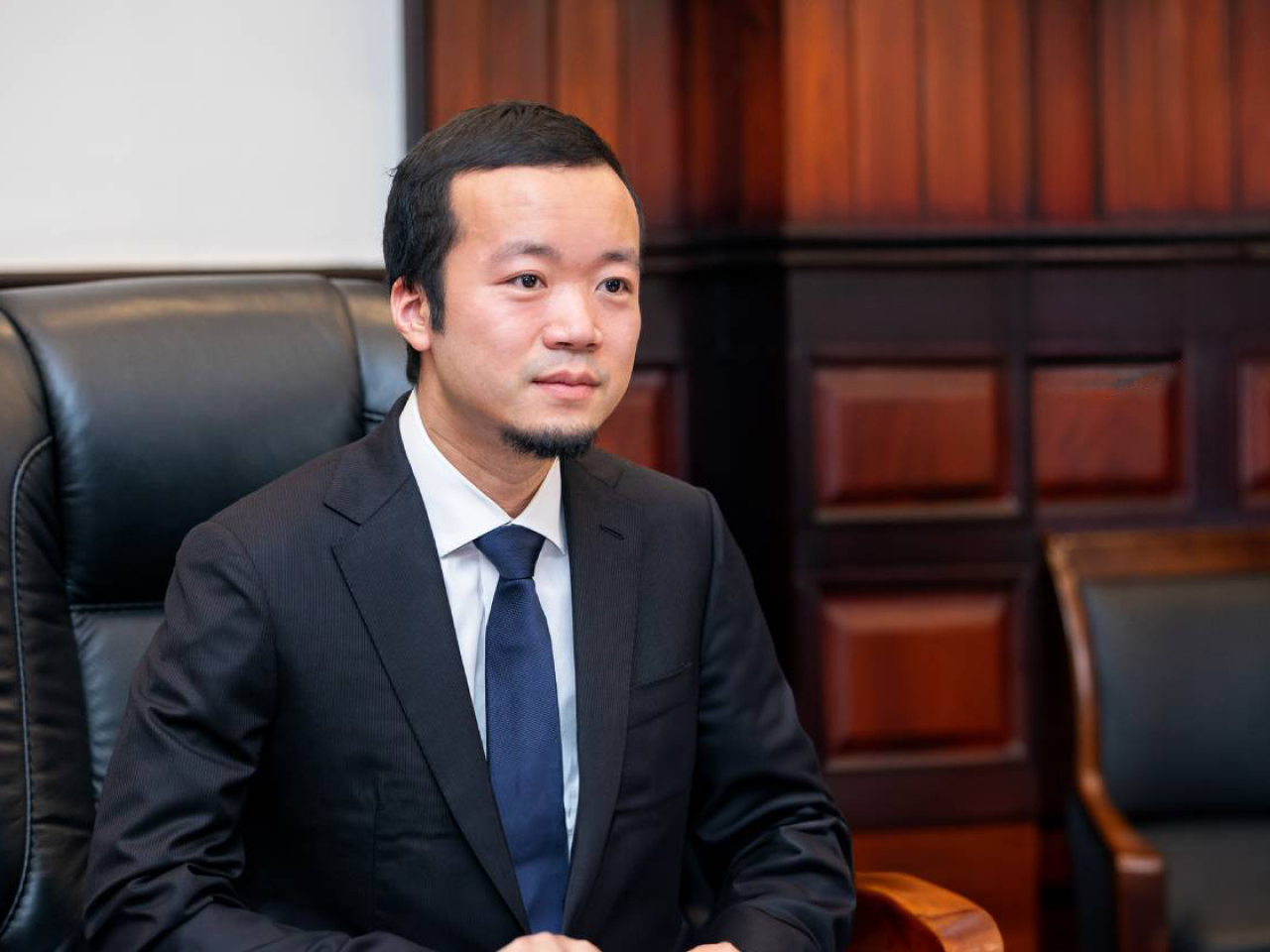
Written by: CoolFish
"In Cambodia, there is a saying that if a steel coin falls from the sky, it must belong to the Prince Group." This is how netizens in Cambodia express it. While this may be an exaggeration, it gives us a glimpse into the power of the Prince Group in Cambodia.
However, with the heavy-handed actions from multiple countries, this "house of cards" built on bones and fraud has collapsed.
On January 7, according to the Cambodia-China Times, Prince Group owner Chen Zhi was arrested in Cambodia and has been deported back to China for investigation by relevant authorities. This "business prodigy," who once traveled in luxury car convoys, returned home on private jets, and even laundered money by purchasing Picasso paintings, ultimately could not escape the law's net.
Just last October, the U.S. Department of Justice charged Chen Zhi with orchestrating online fraud activities that caused billions of dollars in losses to victims worldwide, and announced the seizure of over $14 billion worth of Bitcoin.
The Huione Group, located in Cambodia, was identified as a major money laundering institution in this operation. As a result, this financial giant, which claimed to be the "Alipay of Cambodia," began to shut down, with notices of "withdrawal suspension" posted on its doors.
I. Chen Zhi - Short stature, large forehead, speaking with a Fujian accent
Chen Zhi's story begins in Xiaoaotown, Lianjiang County, Fuzhou City, Fujian Province. He came from an ordinary family, with an economic level considered average in Lianjiang County.
Before going to Cambodia, he worked in various jobs in China, including as a network administrator, with various accounts of his specific experiences. Some fellow villagers claim he worked as a network administrator in internet cafes in Guangdong and Jiangsu for 2-3 years, then engaged in data trading, and even ran a matchmaking website and a gaming social website. It is said that he capitalized on the rise of the online game "Legend of Blood" to form a team and establish private servers (pirated servers), earning his first pot of gold.
According to the website of his personal investment Singapore fund management company, DW Capital Holdings, Chen Zhi is described as "a young business prodigy." In 2011, he entered the Cambodian real estate market, developing "unknown waters." He gradually expanded and established the Prince Holding Group.
Netizens in Fujian have expressed that many locals believe that if he hadn't engaged in "Western markets," he wouldn't have gotten into trouble so quickly. Locals cannot pinpoint the exact year he went to Cambodia, but they "all know it was for fraud."
"Such a person should have been caught long ago."
II. If he hadn't engaged in Western markets, he wouldn't have gotten into trouble so quickly
The U.S. Department of Justice's indictment describes Chen Zhi's group as a criminal empire built on forced labor and fraud.
"This is a criminal organization built on the suffering of others. Trafficked workers are imprisoned in prison-like compounds and forced to carry out industrial-scale online fraud, causing losses to thousands of victims worldwide."
The documents indicate that since around 2015, Chen Zhi has established and operated at least ten fraud compounds throughout Cambodia. These compounds are surrounded by high walls and barbed wire, where thousands of cross-border workers seeking job opportunities are trafficked and forced to execute large-scale online fraud under the threat of violence.
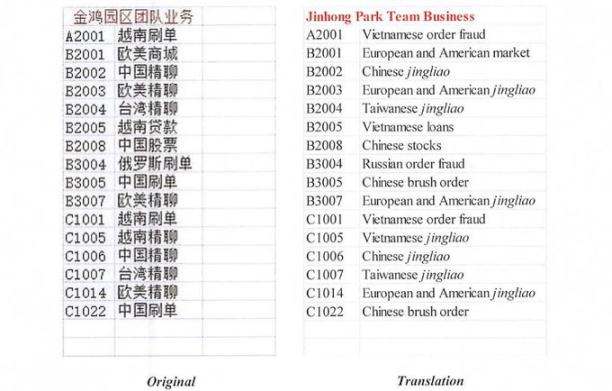
The indictment specifically names three compounds: Jinbei Compound, Golden Wealth Technology Park (Jinyun Compound), and Mango Park (Jinhong Park).
Defendant Chen Zhi was directly involved in the management of these fraud compounds and maintained records related to each compound, including ledgers tracking profits and detailed records of which rooms were running which fraud schemes. For example, the "mobile phone wall" within the compound—composed of thousands of mobile phones and millions of mobile numbers—facilitated various fraud schemes.

Additionally, the indictment points out that Chen Zhi was directly involved in acts of violence against individuals in forced labor camps and possessed video evidence of the Prince Group's use of violence, including photos depicting beatings and other torture methods.
The defendant communicated directly with his subordinates, instructing them to beat those who "caused trouble." In one instance, he even explicitly stated that victims should not be "killed." (Images can be found in the lawsuit.)
In 2015, he founded the Prince Group and subsequently expanded into various sectors, including banking, finance, and tourism, becoming one of Cambodia's largest corporate groups.
In Conclusion
In fact, prior to the joint charges from the U.S. and the U.K., there had already been actions taken against Chen Zhi's gang domestically.
In 2020, the Beijing Municipal Public Security Bureau established a special task force to investigate the "Prince Group's major cross-border online gambling crime syndicate in Cambodia"; in 2023, the Wenguang Court in Sichuan Province began hearing a major case involving the establishment of an online casino. The individuals involved were identified as partners of those with interests in the Prince Group, targeting Chinese citizens, with the amount involved exceeding 5 billion yuan.
With Chen Zhi's arrest and return for investigation, the once-mighty "Prince" empire has finally come to an end.
As often said in police and criminal dramas: Justice may be delayed, but it has never been absent in the face of ultimate judgment.
免责声明:本文章仅代表作者个人观点,不代表本平台的立场和观点。本文章仅供信息分享,不构成对任何人的任何投资建议。用户与作者之间的任何争议,与本平台无关。如网页中刊载的文章或图片涉及侵权,请提供相关的权利证明和身份证明发送邮件到support@aicoin.com,本平台相关工作人员将会进行核查。


