On January 22, 2026, at 8:00 AM UTC+8, the Dutch Senate held a debate on the reform of the Box 3 asset tax. One of the core contents is the plan to impose annual capital gains tax on stocks, bonds, and crypto assets starting from 2028, covering both realized and unrealized gains. The biggest contention surrounding this reform centers on one question: does the state have the right and capability to levy income tax on unrealized gains? Despite criticism, the majority of parties, including VVD, CDA, PVV, D66, and GroenLinks-PvdA, still expressed support for the continued advancement of the reform. For crypto investors, this is not just an adjustment of legal language; it also means that expectations of tax burdens, holding behaviors, and even cross-border capital flows may need to be rewritten.
From Virtual Returns to Real Gains: A Sharp Turn in Tax Logic
● Institutional Origins: The current Box 3 system is based on the assumption of "virtual returns," where assets are presumed to earn a fixed percentage of returns each year, and taxes are levied based on this assumed income, regardless of actual gains or losses. For a long time, this model, disconnected from reality, has caused significant dissatisfaction among taxpayers, especially families and middle-class groups holding highly volatile assets, who feel that the state is "imagining income out of thin air" and taxing non-existent income.
● Judicial Alarm: This dissatisfaction ultimately erupted at the judicial level—the Dutch Supreme Court ruled that the current Box 3 taxation method, based on a uniform assumed return rate, is illegal and infringes on taxpayers' property rights and the principle of fair taxation. This ruling serves as a countdown alarm for the government: the old system must be replaced, or the existing tax base will be legally unsustainable, putting fiscal and policy authority at greater risk.
● Direction of Reform: Under the dual pressure of court rulings and public pressure, the government's new proposal shifts to taxing capital gains and annual actual returns, incorporating financial assets such as stocks, bonds, and crypto assets into a unified framework. Compared to the one-size-fits-all approach based on "virtual returns," taxing based on real price changes and dividends, interest, etc., is seen as more aligned with economic reality and more easily accepted by society as an extension of the logic of "tax only when there are gains."
● Undetermined Details: Although the direction is set, the current Box 3 reform remains in the debate and legislative refinement stage, with technical details such as how to accurately distinguish different asset classes, how to handle assets with extremely low liquidity or high volatility, and how to set exemption and buffer mechanisms yet to be finalized. For crypto assets, how they are specifically classified and valued will directly impact future tax bills and compliance costs.
Taxing Unrealized Gains: Verbal Support from Legislators and Underlying Concerns
● Support Camp: In the Senate debate on January 22, mainstream parties—including the People's Party for Freedom and Democracy (VVD), Christian Democratic Appeal (CDA), Party for Freedom (PVV), Democrats 66 (D66), and the GroenLinks-PvdA alliance—generally expressed support for the direction of the reform. This cross-party consensus reflects a rare agreement among forces across the political spectrum on the necessity of reform in the face of judicial rulings and fiscal pressure.
● Verbal Reservations: However, support does not mean unconditional agreement. Several media outlets quoted legislators stating that "taxing unrealized gains is not ideal," a sentiment that repeatedly surfaced during the debate, indicating that even those in favor of reform recognize that the current design still has structural flaws. For highly volatile assets like crypto, the challenge of how to avoid the burden of "paper wealth" turning into real cash pressure during significant fluctuations is a problem they openly acknowledge but find difficult to resolve.
● Triple Controversy: The controversy surrounding the taxation of unrealized gains focuses on three aspects: first, legal legitimacy—should tax obligations be tied to "disposable income"; second, liquidity pressure—when assets appreciate only on paper but cannot be quickly liquidated, taxpayers may be forced to sell assets to pay taxes; third, fairness—holders of high-volatility assets may face "amplified taxation" on paper gains during bull markets, while bear market pullbacks may not receive proportional compensation, leading to asymmetric treatment of risk bearers.
● Flawed Progress: In the context of the Supreme Court ruling the current system illegal and the fiscal gap, most legislators understand that "maintaining the status quo" is nearly impossible. Thus, political calculations shift to choosing one of two dilemmas: rather than continuing to delay and endure legal risks and fiscal holes, it is better to accept a "flawed proposal" and take steps forward, with the intention of correcting deviations through future legislation and detailed regulations. This is also why criticism and support coexist within the same camp.
Annual Loss of 2.3 Billion Euros: How Fiscal Gaps Drive Legislation
● Key Figures: According to estimates cited by several industry media, if the Box 3 reform is delayed, the Dutch treasury is expected to lose about 2.3 billion euros in tax revenue each year. This figure was frequently mentioned during the debate, serving as a "hard indicator" for the Ministry of Finance to push for accelerated legislation and representing a significant and irreplaceable source of income in future budgets that legislators cannot ignore.
● Budget Pressure: 2.3 billion euros is not an abstract number; it is directly linked to the welfare system, public services, and existing political commitments. For a country that heavily relies on social security and public infrastructure, such a gap may mean having to make cuts or concessions in areas like healthcare, education, pensions, or green transitions. Any adjustments to welfare programs will quickly provoke backlash among voters, potentially jeopardizing the political future of those advocating for such changes.
● Policy Trade-offs: Between the Ministry of Finance and the parliament, a game of "time versus perfection" is actually unfolding: the finance department prefers to launch a workable framework as soon as possible, even if it is not perfect, rather than continue to linger in legal gray areas and income gaps; some legislators advocate for a longer period of refinement and testing, but this means enduring tax losses over several budget years. Ultimately, reality often drives both sides toward compromise: prioritizing the timely implementation of the reform by 2028, and then gradually addressing loopholes in subsequent revisions.
● Crypto Cannot Be an Exception: Within this fiscal logic, crypto assets are just a part of the entire asset pool and are unlikely to become "exempt samples." Once the goal is defined as "expanding the tax base and stabilizing income," excluding certain high-volatility and potentially high-appreciation assets will be seen as unfair to other asset holders and taxpayers, and will undermine the legitimacy of the reform in the eyes of the public. Therefore, including crypto assets in the annual capital gains tax scope is almost an inevitable choice under fiscal pressure.
Coins in Wallets Become Tax Bill Numbers: The Real Impact on Crypto Investors
● Unified Perspective: According to the current debate framework, under the new tax system, crypto assets will be treated alongside stocks and bonds as subjects to annual capital gains tax, covering both realized and unrealized gains. This means that as long as your wallet shows a paper appreciation at the end of the year, even if you have not sold to cash out, this increment may enter the tax base and translate into a specific amount on the tax bill, changing the previous intuition that "as long as you don't sell, you don't pay taxes."
● Adjustments for Local Investors: For local Dutch crypto investors, the first impact is on holding periods and position management logic. The long-term strategy of "holding high-volatility assets" may become costly due to continuous taxation on annual paper appreciation, prompting some to shift towards shorter-duration, smoother-return allocations. At the same time, the complexity of tax reporting will significantly increase, requiring investors to record more detailed position changes and valuation data, leading to a rising demand for professional tax tools or advisors.
● Reconsideration of Cross-Border Capital: In the global competition for crypto capital flows, investors use the "tax burden friendliness" of different jurisdictions for horizontal comparisons. If the Netherlands clearly includes unrealized gains in the tax scope, its attractiveness to some high-net-worth investors may decline, being viewed as a heavier tax burden and stricter rules. However, on the other hand, a clear and stable institutional framework may attract compliance-oriented institutions, reducing the "invisible costs" brought by policy uncertainty.
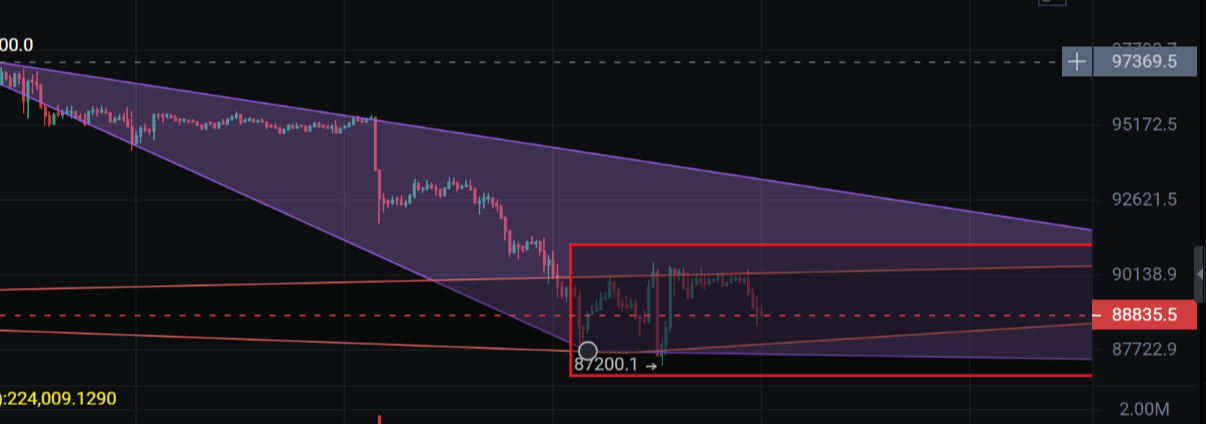
● Sentiment and Risk Appetite: According to on-chain and off-chain analysis institutions, current market sentiment has tilted towards "if we cannot regain key levels, downside risks dominate." In this already bearish environment, rising tax burden expectations will further compress investors' risk budgets: already concerned about price pullbacks, they now also have to consider future tax bills, and the cumulative effect may prompt some to conservatively reduce leverage and cut speculative positions, weakening the crypto market's ability to absorb new funds and high-risk narratives.
European Tax Reform Chain Reaction: Will the Netherlands Become a Model or a Warning?
● Broader Context: The Dutch Box 3 reform is not an isolated event but a reflection of the tightening fiscal conditions and widening wealth gap in Europe and the United States, leading to stricter taxation on capital gains and high-net-worth assets. Whether concerning family wealth, offshore structures, or diversified asset portfolios, policymakers are increasingly concerned about the structural issues of "assets off the books, income offshore," attempting to capture these increments through more refined tax system designs.
● Model or Cautionary Tale: If the Netherlands ultimately implements the taxation of unrealized gains, other EU countries are likely to closely observe its operational effects. One possibility is that if the taxation proceeds smoothly, the tax base remains stable, and social backlash is controllable, it will be seen as a "template to emulate"; another possibility is that if it triggers large-scale controversy, execution costs are too high, or frequent litigation occurs, the Dutch experience will be used by neighboring countries as a cautionary tale to demonstrate that "taxing paper gains is unrealistic."
● Industry Medium-Long Term Signals: For the crypto industry, the signals are relatively clear: compliance costs and demands for tax transparency will continue to rise, whether in transaction records, proof of asset sources, or cross-chain and cross-border flows, the costs of leaving "traces" will be higher. Meanwhile, the traditional narrative of "moving to avoid taxes" may temporarily heat up, but under the framework of automatic information exchange and multilateral tax cooperation, achieving complete tax arbitrage through simple migration is becoming increasingly difficult.
● The Tug-of-War Between Tax Base and Innovation: From the perspective of European policymakers, there must be repeated weighing between "expanding the tax base and locking in high-net-worth assets" and "retaining innovation and venture capital domestically." The crypto industry, as an emerging intersection of technology and finance, is seen as a significant tax source on one hand, while also being a key ecosystem for attracting entrepreneurs and technical talent on the other. How to upgrade the tax system without "scaring away" innovation will become one of the main lines of repeated negotiations within Europe in the coming years.
Taxes, Innovation, and Capital Migration: The Crypto Asset Exam Before 2028
The Box 3 reform's inclusion of unrealized gains in the tax scope essentially fills fiscal and institutional gaps in a more aggressive manner, but it creates new dissatisfaction and uncertainty at both political and market levels. For crypto investors, the real focus should not be on emotionally viewing this as an "apocalypse," but rather on calmly assessing their holding structures, liquidity arrangements, and residency choices, conducting stress tests and risk management before the rules are fully implemented.
Moving forward, there are many variables that will influence the landscape: first, further modifications to the bill's details during the legislative process, especially regarding buffer and exemption designs for high-volatility assets; second, whether the EU will form some kind of coordinated policy to reduce fierce tax competition among member states; third, whether global capital will "vote with their feet," redefining geographical distributions between compliance and tax burdens. It is certain that this tax reform in the Netherlands is a systemic experiment conducted under high pressure, and its success or failure will not only affect the country's finances and social trust but will also profoundly influence how a new balance can be found between crypto assets and traditional financial assets in terms of taxation.
Join our community to discuss and grow stronger together!
Official Telegram community: https://t.me/aicoincn
AiCoin Chinese Twitter: https://x.com/AiCoinzh
OKX Benefits Group: https://aicoin.com/link/chat?cid=l61eM4owQ
Binance Benefits Group: https://aicoin.com/link/chat?cid=ynr7d1P6Z
免责声明:本文章仅代表作者个人观点,不代表本平台的立场和观点。本文章仅供信息分享,不构成对任何人的任何投资建议。用户与作者之间的任何争议,与本平台无关。如网页中刊载的文章或图片涉及侵权,请提供相关的权利证明和身份证明发送邮件到support@aicoin.com,本平台相关工作人员将会进行核查。