Written by: David, Deep Tide TechFlow
In 2025, crypto companies raised $3.4 billion in the U.S. stock market.
Circle and Bullish each raised over $1 billion, and Gemini saw a 14% increase on its first day on Nasdaq. By January 2026, BitGo rang the bell on the NYSE, with a first-day increase of 24.6% and a market value of $2.6 billion.
These pioneers have proven one thing: Wall Street is willing to pay for compliant crypto infrastructure.
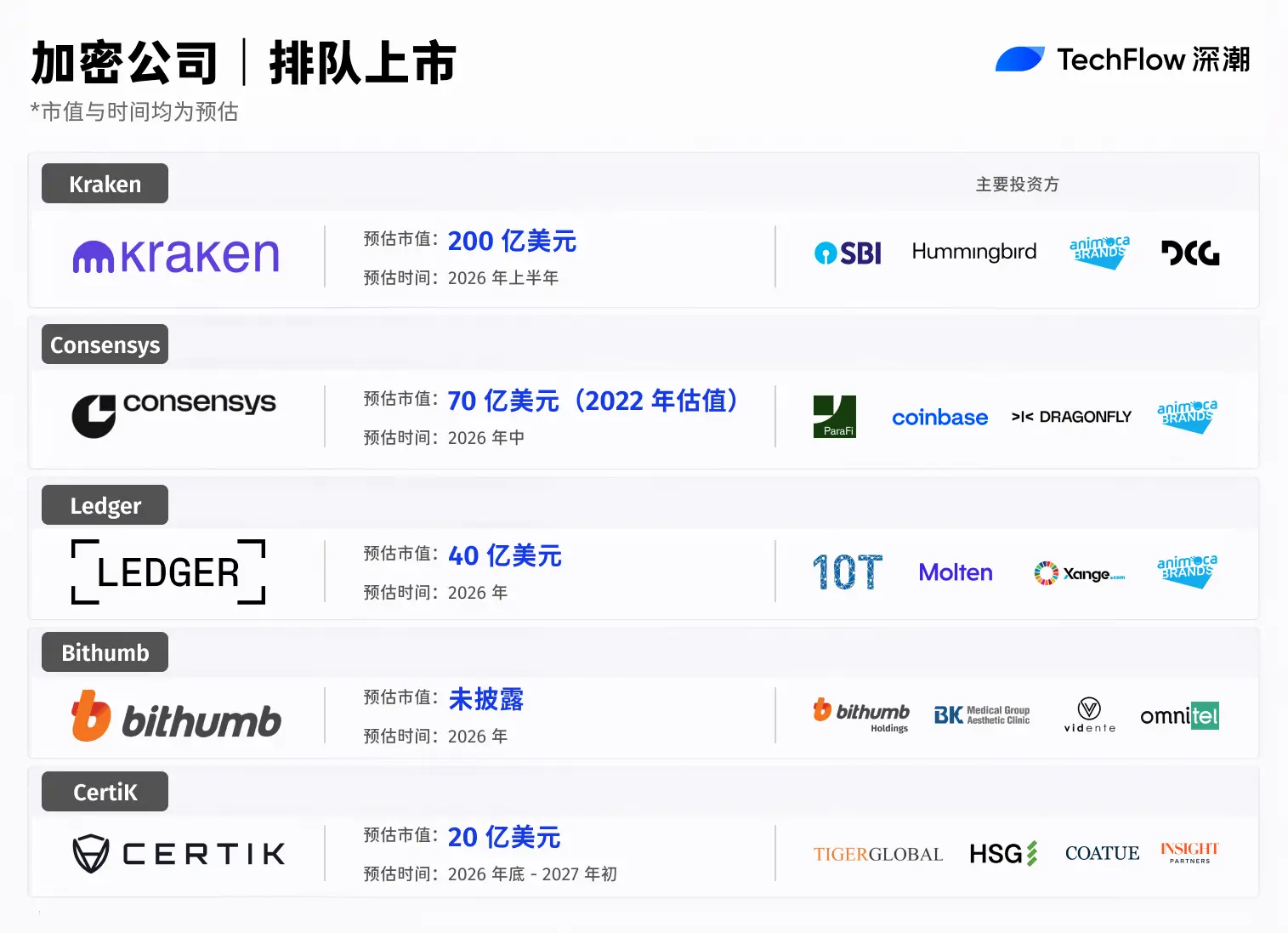
The pipeline for 2026 is thicker. Kraken, Consensys, and Ledger are all lining up to go public, with valuations ranging from several billion to $20 billion. Even CertiK, which conducts security audits, announced its IPO plans in Davos.
Exchanges, wallets, custody, security… the "water sellers" of the crypto industry are collectively heading to the public market.
When will these companies go public, what will their valuations be, and what are the risks? Let's take a look one by one.
1. Kraken, a $20 billion compliance sample
Estimated Market Value: $20 billion
Estimated Time: First half of 2026
Kraken is one of the oldest exchanges in the crypto industry, founded in 2011, a year earlier than Coinbase. However, its listing comes five years later than Coinbase. During this time gap, it faced an SEC lawsuit, settlement negotiations, and business restructuring, ultimately receiving a dismissal from the SEC in March 2025.
The financial data is also solid:
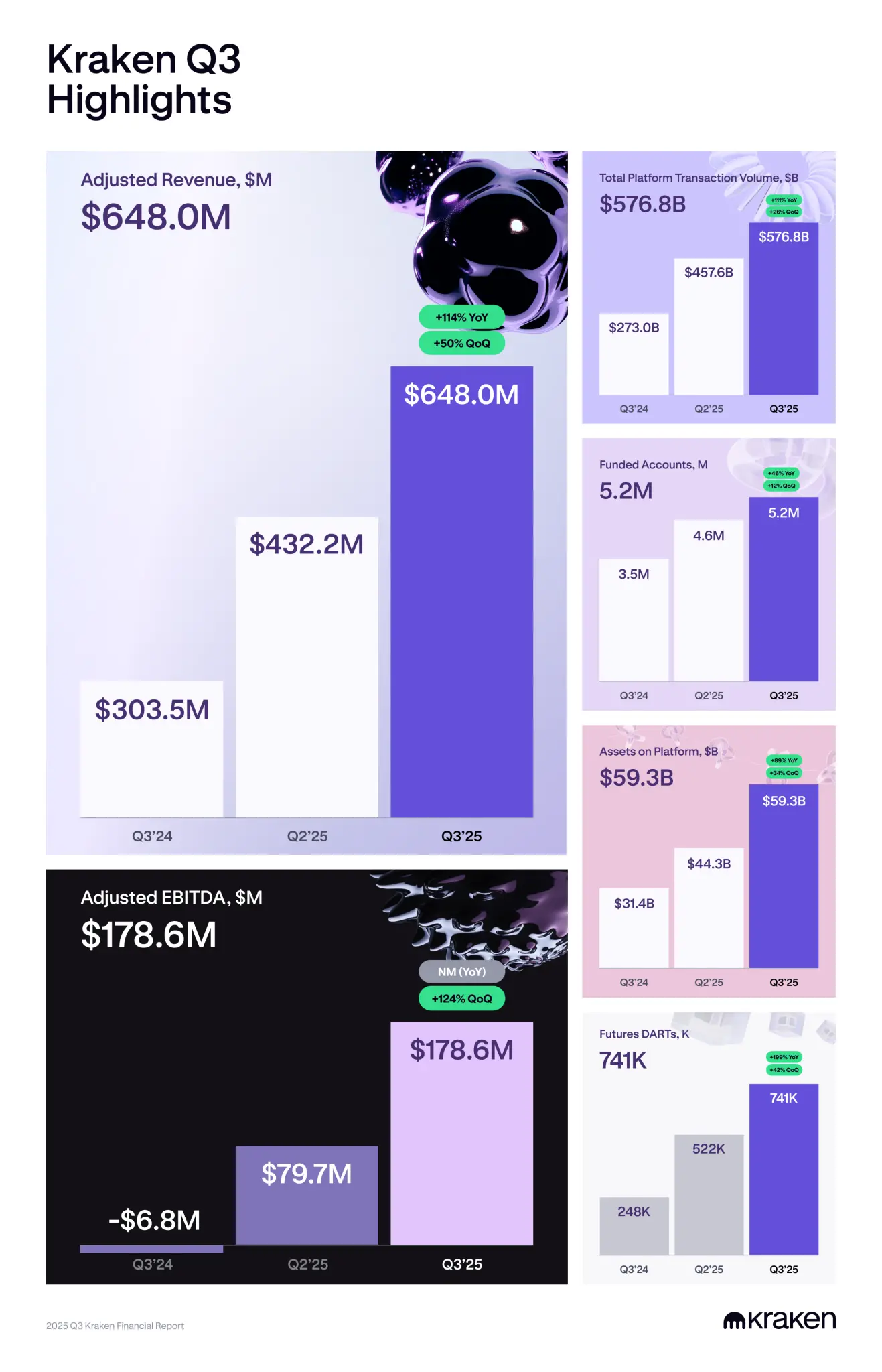
In 2024, revenue reached $1.5 billion, with adjusted EBITDA exceeding $400 million. In Q3 2025, single-quarter revenue was $648 million, a 50% year-on-year increase. The platform manages assets worth $59.3 billion, with quarterly trading volume of $576.8 billion.
In November 2025, Kraken completed $800 million in pre-IPO financing, valuing the company at $20 billion. The list of investors includes Citadel Securities, Jane Street, and DRW. The entry of these top traditional financial market makers indicates their bet that crypto exchanges will become part of financial infrastructure.
In the same month, Kraken secretly submitted its S-1. The goal is to go public in the first half of 2026.
If successful, it will become the second mainstream crypto exchange to be listed on the U.S. stock market after Coinbase, and the first to complete the full listing process in the "post-Gensler era."
2. Consensys, the parent company of MetaMask wants to go public
Estimated Market Value: $7 billion (2022 valuation)
Estimated Time: Mid-2026
Consensys owns some of the most valuable products in the crypto industry: the MetaMask wallet with 30 million monthly active users, the Infura node service supporting most Ethereum dApps, and the Linea L2 network. It acts as the "plumber" of the Ethereum ecosystem, with almost all developers using its tools.
The company was founded by Ethereum co-founder Joseph Lubin, and was valued at $7 billion during a $450 million funding round in 2022. It is currently preparing for an IPO in collaboration with JPMorgan and Goldman Sachs, targeting mid-2026.
The prospectus is expected to highlight the revenue from MetaMask Swaps, a feature that allows users to trade tokens directly within the wallet, charging a fee of 0.875% per transaction. In 2025, MetaMask also added native Bitcoin support, expanding from a pure EVM wallet to a multi-chain wallet, attempting to keep users within its ecosystem.
The suspense around Consensys's IPO lies in the fact that it is simultaneously working on the MASK token and the IPO. How will these two matters be coordinated? Will there be conflicts of interest between token holders and shareholders? This issue could become a new case in crypto company governance.
3. Ledger, the hardware wallet wants to tell a software story
Estimated Market Value: $4 billion
Estimated Time: 2026
Ledger has sold over 6 million hardware wallets, managing over $100 billion in Bitcoin for users. However, it does not want to be just a "device seller."
In recent years, CEO Pascal Gauthier has frequently appeared in New York. The story he tells investors is that Ledger aims to become "the Apple of the self-custody space."
The key to this transformation is Ledger Live, an application that integrates hardware wallets, software wallets, staking, and DeFi interactions. It is shifting from selling hardware to selling subscription services, moving from one-time revenue to recurring revenue.
Wall Street has bought into this story.
On January 23, the Financial Times reported that Ledger is in talks with Goldman Sachs, Jefferies, and Barclays for a NYSE IPO, targeting a valuation of over $4 billion. This figure is nearly three times the $1.5 billion valuation in 2023.
Supporting this valuation is performance.
In 2025, the company's revenue is expected to reach hundreds of millions, with Gauthier stating it will be "a record year." After the FTX collapse, the phrase "Not your keys, not your coins" has become popular again, with both institutions and retail investors shifting towards self-custody.
Last year, the amount stolen in the crypto industry reached a record high of $17 billion, which ironically became a selling point for Ledger.
However, hardware wallets are still too difficult for the average person to use. Ledger's growth ceiling depends on whether it can lower this barrier.
4. Bithumb, the comeback of the Korean giant
Estimated Market Value: Not disclosed
Estimated Time: 2026
Listing Location: KOSDAQ in South Korea (also considered Nasdaq)
Bithumb was once the largest exchange in South Korea but was later overtaken by Upbit. Now, Upbit holds over 80% of the Korean market, leaving Bithumb with only 15% to 20%.
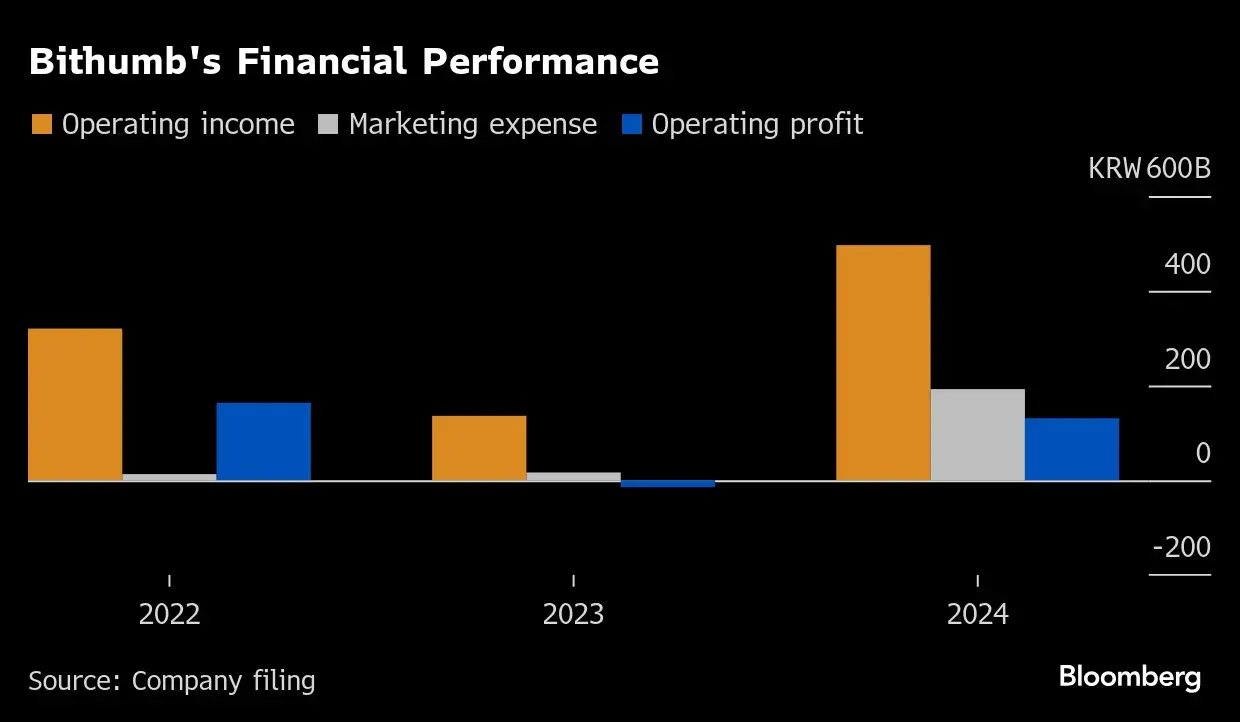
In 2024, Bithumb launched a zero-fee campaign, pulling its market share back to around 25%. This is a money-burning battle for users, possibly aimed at generating momentum for the IPO.
Samsung Securities is acting as the underwriter, with plans to go public on KOSDAQ in the second half of 2025, although Nasdaq was also considered. Currently, the timeline has been pushed to 2026.
However, Bithumb states that this IPO is not for fundraising. The company has over 400 billion won (approximately $300 million) in financial assets, so it is not short on cash. The purpose of going public is to "establish market trust" and allow internal governance and finances to undergo public audits.
The background to this statement is that Bithumb has faced numerous troubles in recent years.
In 2023, it was searched by the Korean tax authorities, suspected of fraudulent trading. Several executives were investigated for alleged bribery related to listing coins, and former CEO Lee Sang-jun stepped down. A service interruption in 2017 led to a six-year lawsuit, resulting in a ruling to compensate users.
To prepare for the IPO, the company made personnel adjustments. Former chairman Lee Jeong-hoon returned to the board; he had previously been prosecuted for fraud related to acquisitions but was acquitted this year. The new CEO is his confidant.
South Korea has 18 million crypto users, with daily trading volumes often exceeding those of the stock market.
Bithumb's IPO signals the institutionalization of the Korean crypto market. However, given its historical baggage, investors will closely monitor its governance issues.
5. CertiK, the controversial leader in security audits
Estimated Market Value: $2 billion
Estimated Time: Late 2026 - Early 2027
On January 23 at the Davos Forum, CertiK CEO Gu Ronghui announced that the company is advancing its IPO.
This is the largest security audit company in the crypto industry, founded in 2018 and headquartered in New York, serving over 5,000 clients and auditing assets protected by code worth approximately $600 billion.
The list of investors is indeed impressive, with Binance being the earliest and largest financial supporter, along with SoftBank Vision Fund, Tiger Global, Sequoia, and Goldman Sachs. In 2022, during its Series B3 funding round, it was valued at $2 billion.
However, CertiK is also one of the most controversial companies in the crypto space.
Last year, the incident with Kraken caused quite a stir. CertiK discovered a vulnerability in Kraken that allowed for arbitrary account top-ups, and during testing, approximately $3 million was transferred out. CertiK claimed it was a "white hat operation," while Kraken accused it of extortion. The two parties publicly clashed, and while the money was eventually returned, CertiK's reputation suffered.
Earlier, CertiK had also audited Huione Guarantee in Cambodia. This platform was used for money laundering, trading hacking tools and personal data, and even selling stun guns to scam parks in Southeast Asia. CertiK later apologized, but this incident highlighted issues with the security company's own risk control.
Gu Ronghui stated that going public is "the natural next step for continuous expansion of products and technology."
However, once the IPO prospectus is made public, these controversies will be repeatedly questioned by investors. Whether CertiK can rebuild trust will be its biggest test on the road to going public.
Overall, the clustering of crypto companies going public in 2026 may not be a coincidence.
The regulatory environment is changing. SEC Chairman Gensler has left, and the new chairman has a more favorable attitude towards crypto, with lawsuits against Kraken and Consensys being withdrawn. The window of opportunity has opened, and those ready are moving forward.
The capital structure has also reached its limit. These companies have raised many rounds in the private market, with an increasing number of shareholders and employee options becoming harder to cash out. Coinbase has been public for five years, proving that crypto companies can survive in the public market. Those in line have no reason to continue waiting.
However, for ordinary investors, this batch of IPOs needs to be differentiated.
Kraken and Ledger have real revenue and clear business models; Consensys has the entry-level product MetaMask but is also working on a token, and the relationship between shareholders and token holders has not yet been clarified. CertiK has a brand but is controversial, while Bithumb is purely a local Korean story.
When the opportunity arises, make sure to understand what you are buying.
For the companies, going public is just the beginning.
Whether they can establish themselves in the public market will depend on whether these companies can change the label of "crypto" to "financial infrastructure." Coinbase took five years to convince Wall Street that it is not just a trading platform.
The road ahead for this batch is still long.
免责声明:本文章仅代表作者个人观点,不代表本平台的立场和观点。本文章仅供信息分享,不构成对任何人的任何投资建议。用户与作者之间的任何争议,与本平台无关。如网页中刊载的文章或图片涉及侵权,请提供相关的权利证明和身份证明发送邮件到support@aicoin.com,本平台相关工作人员将会进行核查。


