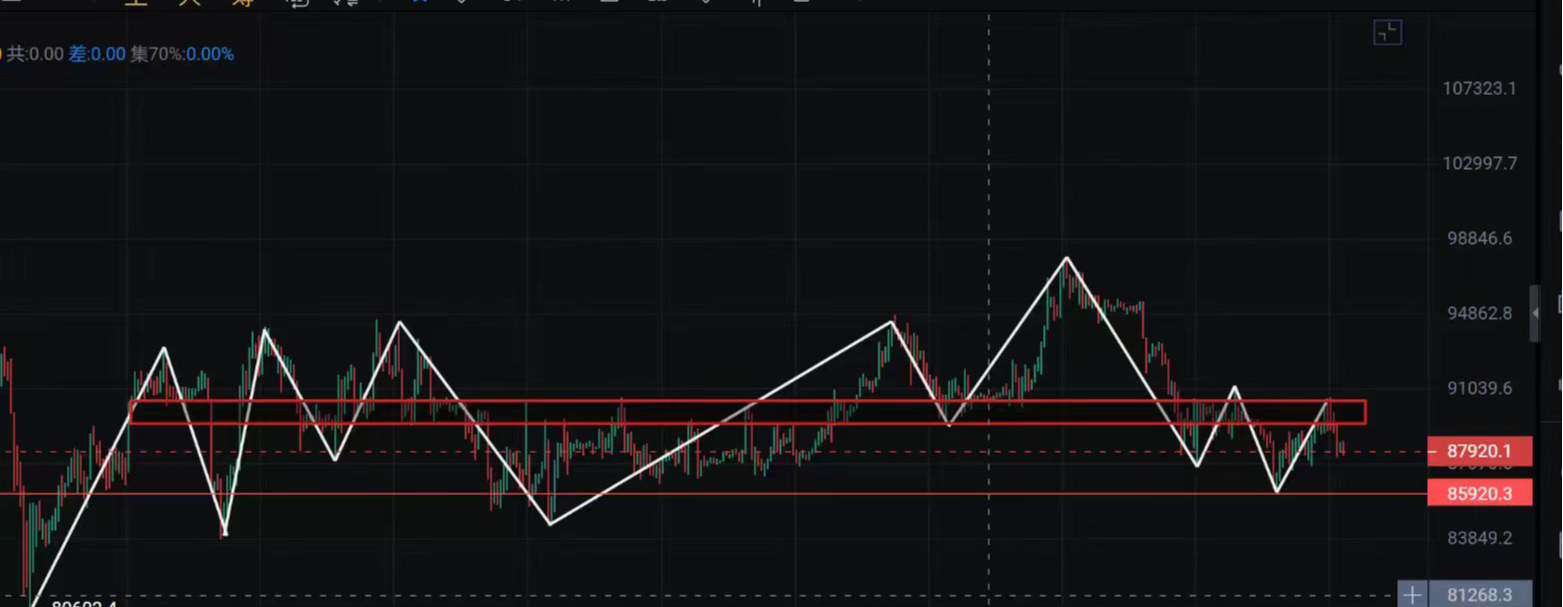
On January 29, 2026, as the Federal Reserve's interest rate path expectations showed a clear divergence, Gate, HTX, and StandX collectively accelerated their contract product lines on the same day: Gate launched multiple perpetual contracts for U.S. stocks, including MSFT and IBM, at 19:00 (UTC+8); HTX introduced new contracts and trading competitions centered around BIRB and SOMI; and StandX brought gold and silver perpetual contracts on-chain, recording over $1 billion in trading volume within 24 hours under a single source metric. Meanwhile, ETH's price fell from above and dropped below $3,000 to $2,920, intertwining with institutional disagreements over whether "current rates are close to the upper end of the neutral range and whether further rate cuts are needed," forming the macro backdrop for a new round of pricing games in the crypto market. In the current environment where traditional assets are being tokenized and interest rate and liquidity expectations are highly uncertain, crypto derivatives are being reshaped into the main stage for capital games.
U.S. Stock Contracts Land on Exchanges: Wall Street Time is Rewritten
● Launch Rhythm and Leverage Setting: According to single-source information, Gate's contract stock section launched perpetual contracts for U.S. stocks like MSFT and IBM at 19:00 (UTC+8) on January 29, targeting users who wish to participate in U.S. stock volatility with crypto funds. Unlike traditional high-leverage coin-based contracts, this batch of products has a leverage ratio of only 1-2 times, deliberately lowering liquidation sensitivity, resembling "cross-market allocation tools with a bit of leverage," providing users who typically only engage in spot or light contracts with a relatively gentle entry in terms of cost and risk.
● Differences in Trading Structure: Under the traditional brokerage framework, participating in U.S. stocks requires access to T+0 trading with open and close market hours, fiat currency margin, strict KYC, and local/cross-border regulation; whereas trading U.S. perpetual contracts on crypto exchanges means 24-hour continuous matching, using USDT or coin-based as margin, and a highly integrated account system. This allows users to seamlessly switch between ETH, BTC, and contracts like MSFT and IBM, but at the same time, it also detaches from traditional securities regulatory boundaries, making leverage control and information disclosure more reliant on the exchange's own rules.
● Product Motivation of Exchanges: In a period of sideways price movement and limited incremental mainstream coin spot trading, introducing U.S. stock contracts brings new volatility "material" and trading scenarios to the platform. On one hand, low leverage extends users' holding time, benefiting daily fees and funding rate income; on the other hand, it also extends the risk appetite and trading habits of crypto-native users to Wall Street targets—users can bet on the fundamentals and macro expectations of Microsoft and IBM without leaving the exchange ecosystem.
Gold and Silver Break $1 Billion in 24 Hours: An On-Chain Amplifier of Risk Aversion
● Trading Volume Data and Interpretation: After StandX launched gold and silver perpetual contracts on January 29, according to single-source metrics, the total trading volume for these products exceeded $1 billion within 24 hours. In the absence of third-party audits and more detailed breakdown data, this scale needs to be treated with caution: it may reflect concentrated demand for traditional safe-haven assets from crypto funds during a period of macro uncertainty, but it may also include amplification effects from internal liquidity guidance, market-making activities, and incentive behaviors.
● The Cryptoization of Safe-Haven Roles: In traditional finance, gold and silver have long served as hedging tools against inflation and tail risks. When economists from Deutsche Bank state that "current rates are close to the upper end of the neutral range," while Global X emphasizes that "real rates may still be high, potentially prompting another rate cut," the market's understanding of future rates and inflation paths becomes torn. In this environment, crypto users can use on-chain gold and silver perpetual contracts to hedge against inflation and interest rate fluctuations in the fiat system with USDT or other crypto assets, or to bet against central bank policy errors.
● Intertwined Correlation and Speculation: When gold and silver derivatives are moved to crypto exchanges, sharing the same matching engine and margin pool with assets like BTC and ETH, the price linkage between spot gold and silver and crypto assets may be further amplified. Risk aversion and pure leveraged speculation overlap within the same contract product: some funds hope to hedge systemic risks through long gold and silver contracts during periods of interest rate opacity, while others utilize high volatility periods for short-term arbitrage. This structure may lead to higher short-cycle volatility in gold and silver prices on-chain, while also introducing traditional commodities into the "24-hour, high-leverage, high-frequency trading" crypto context.
From BIRB to SOMI: Small Coins Become Traffic Accelerators
● Activity Profile and Prize Pool Size: Unlike "traditional asset-like" U.S. stocks and gold and silver, HTX launched BIRB and SOMI contracts within the same time window and introduced a 20,000 USDT prize pool trading competition around these two small coins. The brief did not disclose more detailed participation thresholds, profit distribution, and rule specifics, so the only confirmed key information is limited to contract targets and prize pool size, demonstrating the exchange's typical strategy of concentrating and amplifying capital attention through reward mechanisms.
● Amplified Leverage and Short-Term Profit Expectations: During a phase where mainstream coin prices are fluctuating or even correcting, and ETH has fallen below $3,000, the combination of small coin contracts and trading competitions can quickly boost trading volume and capital turnover. Participants often have higher expectations for short-term profits and are willing to take on higher leverage and volatility risks; the platform, in turn, maintains overall heat through this type of high-volatility product by leveraging fees, funding rates, and potential liquidation profits when mainstream coins are relatively calm, translating the "calm macro narrative" into "intense market performance."
● Polarization of Product Structure: On one end are U.S. stocks and gold and silver, which carry traditional financial labels and have relatively clear risk perceptions, while on the other end are high-volatility small coin contracts like BIRB and SOMI. Together, they form the contract product spectrum of the exchange. The former helps the platform connect with users interested in macro and cross-market allocation, while the latter firmly captures funds with extreme risk appetites, achieving a "stable and aggressive" free switch under the same margin and account system, thereby enhancing user stickiness and overall trading depth.
Interest Rate Divergence Tears Expectations: The Crypto Market Stands on the Edge of Liquidity
● Direct Conflict of Institutional Views: Deutsche Bank economist Christoph Balz believes that "current rates are close to the upper end of the neutral range," suggesting that the rate hike cycle is roughly ending, with subsequent policies leaning towards maintaining the status quo or slight adjustments. Meanwhile, Scott Helfstein from Global X points out that "real rates may still be high, potentially prompting the Fed to cut rates again soon," emphasizing the dislocation between nominal rates and inflation, arguing that if the economy and prices are under pressure, easing remains necessary. These two narratives anchor "high maintenance" and "further easing," creating directional divergences in market pricing.
● Economic Data Creates Multiple Narratives: Current macro data presents a contradictory combination of weakening employment momentum but overall stable unemployment rates, providing material for three distinctly different scripts: "soft landing," "re-inflation," and "recession." If interpreted as a soft landing, the market can expect profit improvements alongside moderate rates; if concerned about re-inflation, caution is needed against rising long-end yields; if betting on recession, risk aversion and rate cut expectations will rise. Different funds' interpretations of the same set of data directly reflect on government bond yield curves, stock market valuations, and crypto asset risk appetites, driving the contract market to form more intense directional games.
● ETH Pullback Resonates with Leverage Demand: In this context, ETH fell from $3,000 to $2,920, which itself is an amplified feedback to subtle changes in liquidity expectations. A slight shift in the interest rate path could trigger a re-pricing of the "future discount rate," amplifying price volatility through the contract market. Price pullbacks compress some leveraged longs but also stimulate dual demand for buying the dip and short hedging, causing contract positions and trading demand to rise in sync, further increasing the weight of derivatives in the overall market structure.
Derivatives Become the New Battleground: Exchanges Bet on the Divergence Itself
● The True Target of Amplification is Volatility: Whether it's Gate's U.S. perpetual contracts, StandX's gold and silver contracts, or HTX's small coin contracts and trading competitions around BIRB and SOMI, they essentially revolve around one core variable—volatility. As long as there is sufficient divergence regarding future interest rates, economic direction, corporate earnings, or small coin narratives, opposing positions will form on both sides, converting into trading volume and fee income. The product innovation of exchanges does not directly bet on price direction but constructs a "as long as there is controversy, there is profit" structural business model.
● Why Derivatives Outperform Spot: In an environment of interest rate path divergence and contradictory economic data, contracts have several key advantages over spot: first, higher capital utilization, allowing users to control larger nominal exposures with less margin; second, well-developed shorting tools, facilitating hedging against spot and macro risks; third, richer strategy space, including cross-asset hedging, volatility trading, and event arbitrage. These features make funds more inclined to enter the contract market during heightened uncertainty, pricing and managing risks in a more flexible manner rather than passively holding spot while waiting for direction to clarify.
● Expansion of User Structure: With the addition of U.S. stock and precious metal contracts to exchanges that originally only hosted assets like BTC and ETH, the user structure is also changing. In addition to traditional crypto speculators, there are now players who hope to participate in U.S. stocks and gold and silver trends using crypto funds like USDT: they may come from traditional finance, have a clear framework for macro and asset allocation, but choose to conduct leveraged and hedging operations through crypto channels. This cross-border flow not only increases the capital depth of the crypto market but also gradually transforms the platform from a "crypto exchange" to a "global 24-hour derivatives platform."
Dancing in Uncertainty: The Race of Contract Innovation and Regulatory Gaps
In the current landscape, on one hand, interest rate expectations are torn by divergences from institutions like Deutsche Bank and Global X, and macro data fails to provide a single directional signal; on the other hand, the prices of mainstream crypto assets like ETH are pulling back, and volatility is rising. This combination has not caused exchanges to retract their lines; rather, it has prompted them to accelerate the launch of U.S. stocks, gold, silver, and small coin contracts to simultaneously accommodate both risk aversion and high-leverage speculation demands, allowing various macro narratives to ultimately converge on the contract order books.
However, it is important to emphasize that currently, some trading volume and leverage information surrounding U.S. stock and gold and silver contracts comes from a single source, lacking transparent disclosure under a unified regulatory framework. Data such as StandX's gold and silver contracts breaking $1 billion in 24 hours should be evaluated after understanding the metrics and possible incentive behaviors. Users participating in these traditional asset-like contracts using crypto funds like USDT must not only pay attention to the macro and fundamental risks of the targets themselves but also remain vigilant against systemic technical failures, liquidity exhaustion, and counterparty risks unique to the crypto market.
Looking ahead, if the Federal Reserve's policy path becomes clearer and interest rate and inflation expectations converge, overall market volatility may decline. Whether the current contract business, which heavily relies on macro divergences and emotional fluctuations, can maintain its heat remains uncertain. At that time, platforms may need to retain users through richer structured products and risk management tools, while regulators may accelerate compliance and rule-making for related businesses against the backdrop of traditional assets being widely tokenized and cross-market risk transmission becoming increasingly tight. In this long-term game surrounding interest rates, risks, and volatility, the innovation of derivatives and regulatory intervention will inevitably clash and rebalance over the coming years.
Join our community to discuss and grow stronger together!
Official Telegram community: https://t.me/aicoincn
AiCoin Chinese Twitter: https://x.com/AiCoinzh
OKX Benefits Group: https://aicoin.com/link/chat?cid=l61eM4owQ
Binance Benefits Group: https://aicoin.com/link/chat?cid=ynr7d1P6Z
免责声明:本文章仅代表作者个人观点,不代表本平台的立场和观点。本文章仅供信息分享,不构成对任何人的任何投资建议。用户与作者之间的任何争议,与本平台无关。如网页中刊载的文章或图片涉及侵权,请提供相关的权利证明和身份证明发送邮件到support@aicoin.com,本平台相关工作人员将会进行核查。