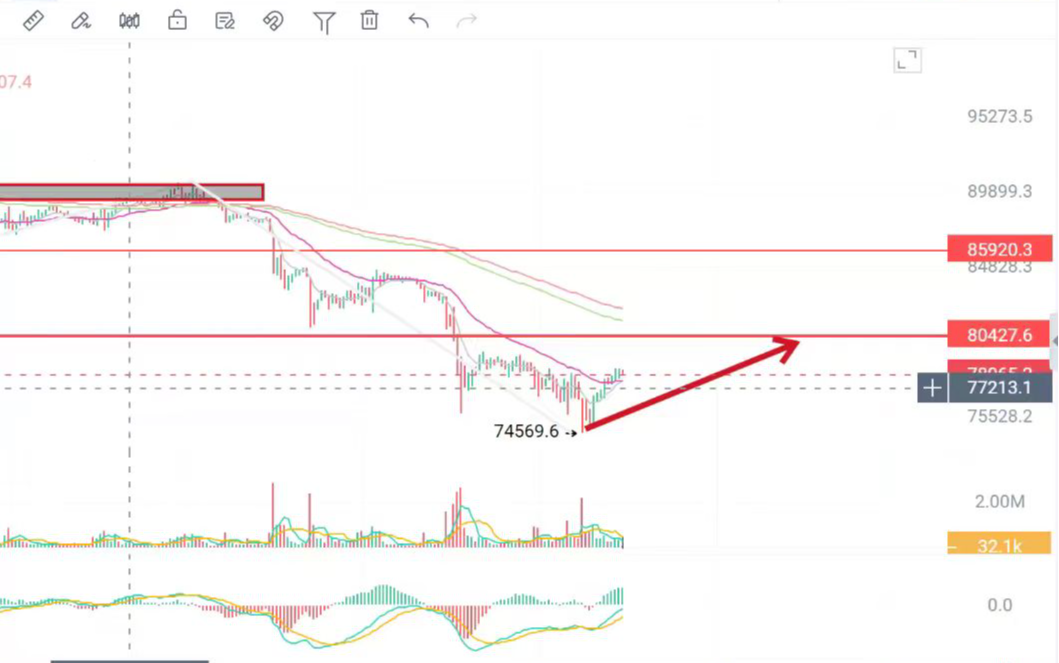
From January 26 to February 1, 2026, Strategy (formerly MicroStrategy) made another move during the high volatility phase of Bitcoin, increasing its holdings by approximately $75.3 million to acquire 855 BTC. After this transaction, its total Bitcoin holdings rose to 713,502 BTC, with a cumulative investment of about $54.26 billion, making it an extreme example of an enterprise-level Bitcoin treasury. Behind these numbers lies an increasingly sharp contradiction: while Bitcoin prices fluctuate at high levels and market sentiment swings between optimism and caution, a publicly traded company continues to choose to increase its position, which some view as a continuation of "long-term faith," while others interpret it as "a gamble in the latter half of the cycle."
713,502 BTC Hoarding: An Extreme Example of Corporate Treasury
● Evolution of Holdings: Since the initial announcement of incorporating Bitcoin into its balance sheet, Strategy has transitioned from tentative allocation to large-scale, systematic hoarding. The current volume of 713,502 BTC far exceeds the early idea of "replacing part of cash" and is closer to making a deep bet on a single high-volatility asset using the corporate balance sheet, with its Bitcoin position evolving from a marginal allocation to the center of the company's narrative and valuation.
● Strategic Logic: Within Strategy's framework, Bitcoin is viewed as a long-term reserve asset superior to cash and some government bonds, due to reasons including fiat currency inflation dilution, limited government bond yields, and Bitcoin's scarcity and global liquidity. Treating Bitcoin as a "treasury asset" essentially uses an asset believed to have long-term appreciation potential to combat the diminishing purchasing power of fiat currency, a logic that makes the company willing to endure short-term volatility in exchange for potential long-term revaluation.
● Returns and Risks: When a corporate treasury is highly exposed to high-volatility assets like Bitcoin, both return expectations and risk exposure are amplified. During price uptrends, the nominal value of the balance sheet and net asset value per share can quickly inflate, creating a dual dividend of stock price and influence; however, once a deep correction occurs, the same leverage will inversely affect financial statements and market expectations, transmitting volatility from the asset level to credit and governance levels.
● Displacement from Traditional Thinking: Traditional corporate balance sheets emphasize the balance of liquidity, safety, and returns, with cash, short-term notes, and high-rated bonds forming a "solid foundation," while risk assets are usually placed on the periphery of the investment portfolio. Strategy, however, has almost done the opposite, pushing Bitcoin to a core position. This extreme Bitcoinization strategy has gained a premium in valuation and influence but has also reshaped the overall risk profile of the company at the cost of asset concentration and performance volatility.
The Bookkeeping Game of Average Price $87,974
● Transaction Breakdown: This round of increased holdings occurred between January 26 and February 1, with Strategy purchasing 855 BTC for approximately $75.3 million, at an average price of about $87,974 per coin. In terms of timing and price range, this appears more like a phased acquisition during multiple pullbacks within a high volatility range rather than a panic buy, reflecting its rhythm in executing a predetermined buying strategy within the set price range.
● Buffer Space: According to disclosed data, its overall average holding cost is about $76,052 per coin, significantly lower than the price of this increase. Even after increasing its holdings at high prices, Strategy still retains a certain buffer of unrealized gains, but this buffer heavily relies on the current price remaining above the cost line. Once the price falls below the overall cost line, the corporate balance sheet will shift from "unrealized gains" to "unrealized losses," and emotional and regulatory inquiry pressures will rise simultaneously.
● Impact on Financial Reports and Stock Prices: Continuing to buy in a high volatility range means that every central price shift of Bitcoin will be magnified in financial statements. In the short term, even a slight price pullback can lead to significant book volatility, affecting earnings per share, asset impairment expectations, and market judgments on the company's earnings quality. For stock prices, Bitcoin volatility not only affects valuation anchors but also reinforces the market pricing narrative of "MSTR = high-leverage Bitcoin ETF."
● Decision-Making and Risk Tolerance: Continuing the rhythm of "buying on pullbacks" implies a high level of confidence within the company regarding the long-term logic of Bitcoin and assumes the ability to withstand significant drawdowns and long-term sideways pressure. This assumption includes: the capital market's willingness to continue accepting high-volatility narratives, creditors' sufficient tolerance for fluctuations in collateral asset prices, and a general alignment of risk preferences between management and shareholders.
Institutional Divergence: BlackRock Buys, Family Offices Wait
● Comparative Case: In parallel with Strategy, global asset management giant BlackRock transferred 6,918 BTC to Coinbase Prime during the same period, amounting to approximately $538 million at the time. This action is widely interpreted as providing liquidity and custody support for its related products or accounts, also constituting another explicit signal of "institutional entry" in public opinion, forming two different institutional holding paths compared to Strategy's corporate treasury logic.
● Family Office Attitude: Meanwhile, a J.P. Morgan report shows that 89% of family offices do not hold any crypto assets, a stark contrast to the proactive actions of leading institutions like BlackRock and Strategy. For many family offices, crypto assets are still viewed as an emerging asset class lacking a long-term verifiable performance history and clear regulatory framework, with the risk-reward ratio not widely recognized.
● Differences in Risk Preference and Constraints: Large asset management firms and publicly traded companies often engage with Bitcoin through specialized products or treasury strategies under well-established compliance frameworks and ample research resources, with investment cycles potentially spanning multiple market cycles. In contrast, many family offices prefer capital preservation and intergenerational transfer, being more sensitive to tail risks and facing more complex compliance and tax considerations in certain jurisdictions, making them more conservative and slow in crypto asset allocation.
● Divergence and Debate: This institutional divergence directly reflects the debate over Bitcoin's position in the market: on one side, it is argued that leading institutions' continued accumulation and infrastructure improvements indicate that the long bull cycle is still in its early to mid-stages; on the other side, it is emphasized that when traditional funds have not yet followed suit on a large scale and family offices are generally cautious, the current price level may reflect an excessive prepayment for future growth, exhibiting characteristics of a local bubble. These two narratives draw entirely different conclusions from the same data, exacerbating market uncertainty.
Retail Sentiment Echoes: Some Buy the Dip, Some Reduce Holdings
● Demonstration Effect: Strategy has repeatedly emphasized its corporate treasury strategy of "continuing to accumulate on pullbacks," which has been continuously reiterated and reinterpreted in the retail market. For some investors, a publicly traded company’s mechanical buying in a high-volatility environment constitutes a model of "time for space" long-term holding, reinforcing the path-dependent belief that "as long as the cycle is long enough, prices will eventually rise."
● Social Media Amplification: Each large purchase announcement quickly spreads on social media and is packaged into two contrasting narratives—supporters view it as a "beacon of institutional faith," proving that there is still capital willing to support at high levels; skeptics interpret it as "high-level bag holders," believing that such behavior amplifies market bubbles while externalizing systemic risks onto innocent shareholders and followers. This narrative divide, in turn, exacerbates emotional volatility.
● Overlapping Views: Bernstein analysts have suggested that Bitcoin may be bottoming around the $60,000 range, providing some macro background support for Strategy's continued accumulation. If the "bottoming at $60,000" judgment is combined with "corporate treasuries continuing to buy," some market participants may view this as a resonance of multiple signals, enhancing their bullish belief in the medium to long term; however, for more cautious funds, this may also be seen as a typical consensus clustering area, requiring caution against the risks of uniform optimistic expectations.
● Behavioral Divergence: Under the same information flow, different investors made completely different choices: some chose to chase high or accumulate in batches driven by the "institutional buying + bottoming theory" narrative, fearing missing the next significant price increase; others viewed it as a selling signal, choosing to reduce holdings at high prices and lock in previous gains; and some maintained a wait-and-see approach, waiting for more obvious divergences in price and sentiment. This micro-level behavioral divergence constitutes an invisible market structural force within macro volatility.
Under the Shadow of Regulation: Global Control Concerns Rise
● Concerns about Concentration and Manipulation: As giants like Strategy and BlackRock continue to accumulate Bitcoin holdings, market concerns about price manipulation and single-point risks are intensifying. On one hand, large concentrated holdings increase the potential influence of a single entity on market liquidity and prices; on the other hand, if these giants reduce their positions for reasons such as liquidity, compliance, or strategic adjustments, it could trigger a chain reaction at relatively limited liquidity points.
● Regulatory Echoes: Against this backdrop, the Korean Financial Supervisory Service has upgraded the VISTA system to combat crypto trading manipulation, becoming a typical signal from the regulatory side. By enhancing monitoring of abnormal trading, manipulation patterns, and cross-platform behaviors through technical means, regulatory agencies aim to create a stronger deterrent effect on market participants and convey a clear attitude that "the crypto market is no longer a regulatory vacuum."
● Heightened Tension: On one side, corporate treasuries, Wall Street institutions, and asset management giants continue to enter the market, further embedding Bitcoin into the mainstream financial system; on the other side, regulatory authorities in various countries continuously emphasize anti-manipulation, anti-money laundering, and transparency requirements, attempting to constrain this emerging asset using traditional financial rule frameworks. The impulse for capital expansion and the tightening pace of regulation intertwine on the same timeline, forming one of the most tension-filled narratives in the Bitcoin market today.
● Future Compliance Pressures: In a more stringent regulatory environment, large concentrated holders are likely to face higher compliance and information disclosure requirements, including aspects such as holding structure, trading rhythm, risk management, and internal controls. For companies like Strategy, which regard Bitcoin as a core reserve asset, finding a balance between maintaining strategic flexibility and meeting regulatory transparency will directly impact their valuation premium and policy risk premium in the capital market.
A Gamble Cycle or an Extreme Experiment in Restructuring the Balance Sheet
During the high volatility phase of Bitcoin, Strategy continued to increase its holdings, using 855 BTC and $75.3 million as chips, establishing itself as the most typical example of an "enterprise-level Bitcoin treasury," while also pushing the controversy surrounding this model to new heights. Supporters see a coherent long-term reserve asset logic: using time to digest volatility and using cycles to test allocations; skeptics focus on its amplifying effects on asset concentration, financial report volatility, and shareholder rights.
In the current macro narrative, institutional accumulation coexists with family office caution, and Wall Street expansion is framed alongside regulatory tightening: on one side, leading forces like Strategy and BlackRock continue to increase Bitcoin's weight in asset allocation, while on the other side, regulatory agencies, including those in Korea, upgrade tools and strengthen anti-manipulation and transparency requirements. The interplay of these multiple forces makes the transition of Bitcoin from a "marginal speculative asset" to a "mainstream asset candidate under regulatory scrutiny" filled with uncertainty.
The real suspense lies in how Strategy's balance sheet elasticity will be repriced if Bitcoin experiences a deep correction in the next phase or even remains long-term near the cost zone, and whether its shareholders' tolerance for high-volatility strategies will undergo a qualitative change. When the decision to increase holdings at high levels is retrospectively examined, whether the so-called "long-term faith" is a forward-looking layout that transcends cycles or a pro-cyclical gamble that amplifies risks will no longer be an abstract discussion.
In the next complete cycle, the price path of Bitcoin and the global regulatory trajectory will likely jointly determine the success or failure of this enterprise-level experiment: if prices continue to rise under a gradually clarifying regulatory framework, Strategy may be seen as a pioneering case of "restructuring corporate balance sheets"; conversely, if prices and liquidity come under pressure while regulatory costs rise, this model may also be viewed as a textbook risk warning. Regardless of the outcome, Strategy has pushed the boundaries of "corporate holdings" to the limits of the current cycle.
Join our community to discuss and become stronger together!
Official Telegram community: https://t.me/aicoincn
AiCoin Chinese Twitter: https://x.com/AiCoinzh
OKX Benefits Group: https://aicoin.com/link/chat?cid=l61eM4owQ
Binance Benefits Group: https://aicoin.com/link/chat?cid=ynr7d1P6Z
免责声明:本文章仅代表作者个人观点,不代表本平台的立场和观点。本文章仅供信息分享,不构成对任何人的任何投资建议。用户与作者之间的任何争议,与本平台无关。如网页中刊载的文章或图片涉及侵权,请提供相关的权利证明和身份证明发送邮件到support@aicoin.com,本平台相关工作人员将会进行核查。