Author: David Hoffman
Translation: Jiahua, ChainCatcher
There is a "good coin" problem in the crypto space.
Most tokens are garbage.
Most tokens have not been treated by teams with the same seriousness as equity in legal and strategic terms. Since historically teams have never given tokens the same level of respect as equity companies, the market naturally reflects this in token prices.
Today, I want to share two sets of data that have given me some optimism about the state of tokens in 2026 and beyond:
MegaETH's KPI plan
Cap's stablecoin airdrop (Stabledrop)
Conditionalizing Token Supply
MegaETH has locked 53% of the total supply of MEGA tokens in a "KPI plan." The core idea is: if MegaETH does not meet their KPIs (Key Performance Indicators), these tokens will not be unlocked.
Therefore, in a bear market where the ecosystem is not growing, at least no more tokens will flow into the market and dilute holders. Only when the MegaETH ecosystem truly achieves growth (as defined by KPIs) will MEGA tokens enter the market.
The KPIs of the plan are divided into four scoreboards:
- Ecosystem growth (TVL, USDM supply)
- MegaETH decentralization (progress in the L2Beat phase)
- MegaETH performance (IBRL)
- Ethereum decentralization
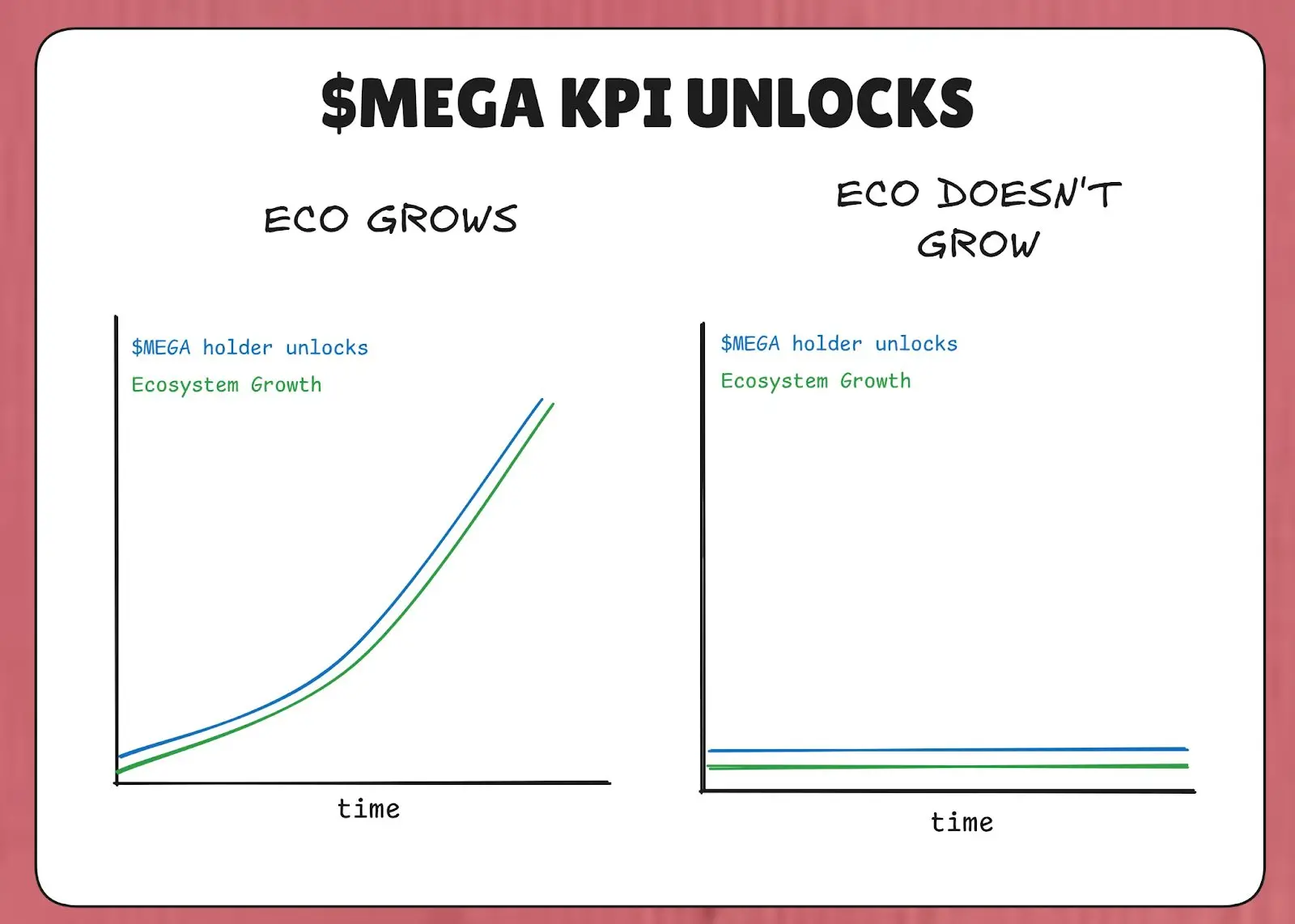
Theoretically, as MegaETH meets its KPI goals, the value of MegaETH should correspondingly increase, thereby buffering the negative price impact of MEGA dilution on the market.
This strategy feels very much like Tesla's compensation philosophy for Elon Musk of "only being rewarded for delivering results." In 2018, Tesla granted Musk an equity compensation package divided into several tranches, which would only vest when Tesla simultaneously achieved continuously increasing market cap and revenue targets. Elon Musk could only earn $TSLA when Tesla's revenue increased and its market cap grew.
MegaETH is attempting to transplant some of this logic into their token economics. "More supply" is not a given—it's a right that the protocol must earn by truly scoring on meaningful scoreboards.
Unlike Musk's Tesla benchmarks, I do not see a market cap target for MEGA in Namik's KPI goals—this may be for legal reasons. But as a public investor in MEGA, this KPI is certainly interesting to me.
Who Gets New Supply Matters
Another interesting factor in this KPI plan is which investors will receive MEGA when the KPIs are met. According to Namik's tweet, those who unlock MEGA are those who stake MEGA into the locked contract.
Those who lock more MEGA for a longer time will gain the right to access 53% of the MEGA tokens entering the market.
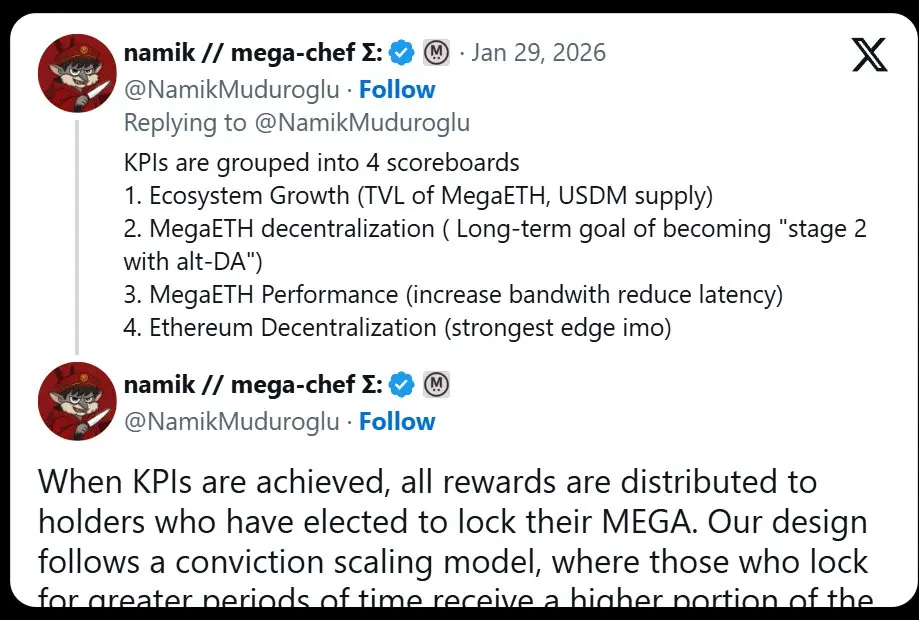
The logic behind this is simple: distribute the dilution of MEGA to those who have already proven to be MEGA holders and are interested in holding more MEGA—those who are least likely to sell MEGA.
The Trade-off of Alignment of Interests
It is worth emphasizing that this also brings risks. We have seen similar structures encounter serious problems historically. See this excerpt from Cobie's article: “ApeCoin and the Death of Staking”
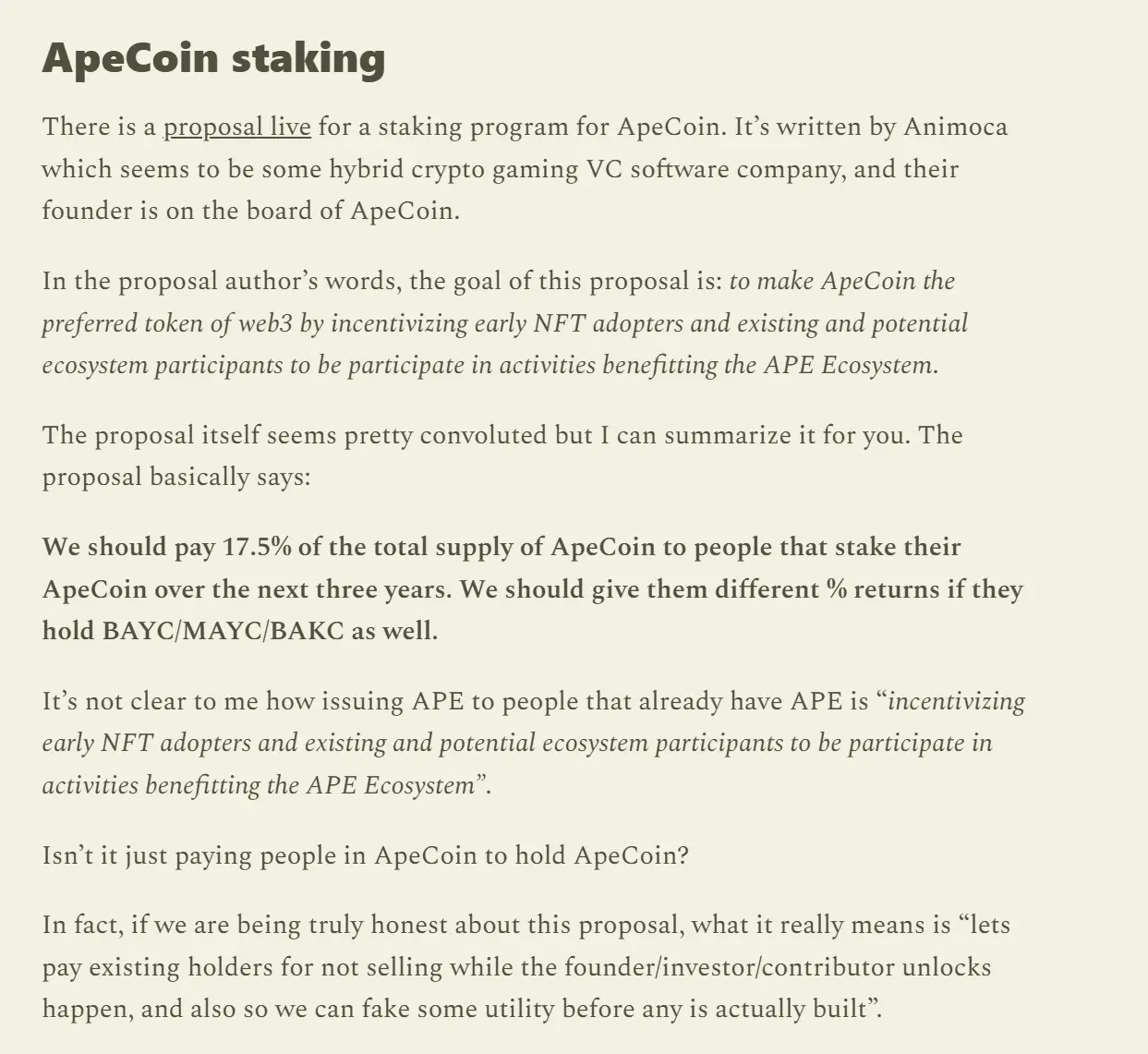 If you are a token pessimist, a crypto nihilist, or simply bearish, this alignment of interests issue is what you are concerned about.
Setting token dilution based on KPIs that should reflect the growth of the MegaETH ecosystem is much better than any ordinary staking mechanism we saw during the yield farming era of 2020-2022. During that time, tokens would be issued regardless of whether the team made fundamental progress or whether the ecosystem grew.
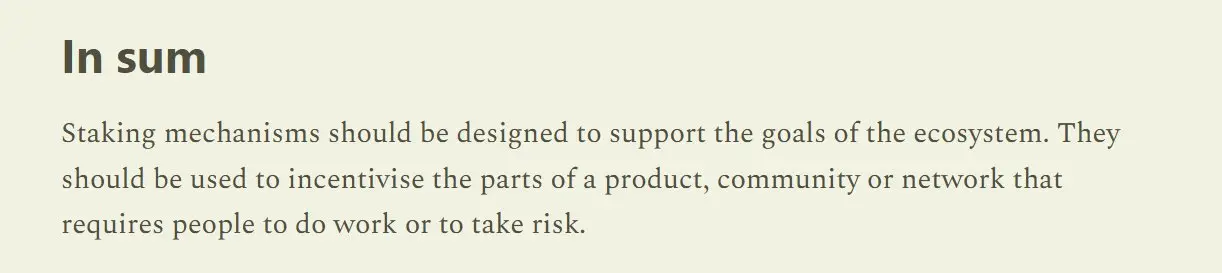
So, ultimately, MEGA's dilution is:
Constrained by the corresponding growth of the MegaETH ecosystem
Diluted to those least likely to sell MEGA
This does not guarantee that the value of MEGA will rise as a result—the market will do what it wants. However, this is an effective and honest attempt to address what seems to be a core underlying flaw affecting the entire crypto token industry.
Treat Your Tokens Like Equity
Historically, teams have distributed their tokens in a "scattergun" manner within the ecosystem. Airdrops, farming rewards, grants, etc.—if what they were distributing was truly valuable, the teams would not engage in these activities.
Because teams distribute tokens as if they were worthless governance tokens, the market prices them as worthless governance tokens.
You can also see this same moral principle in MegaETH's approach to CEX (centralized exchange) listings, especially after Binance opened MEGA token futures on its platform (a tactic Binance has historically used to extort tokens from teams).
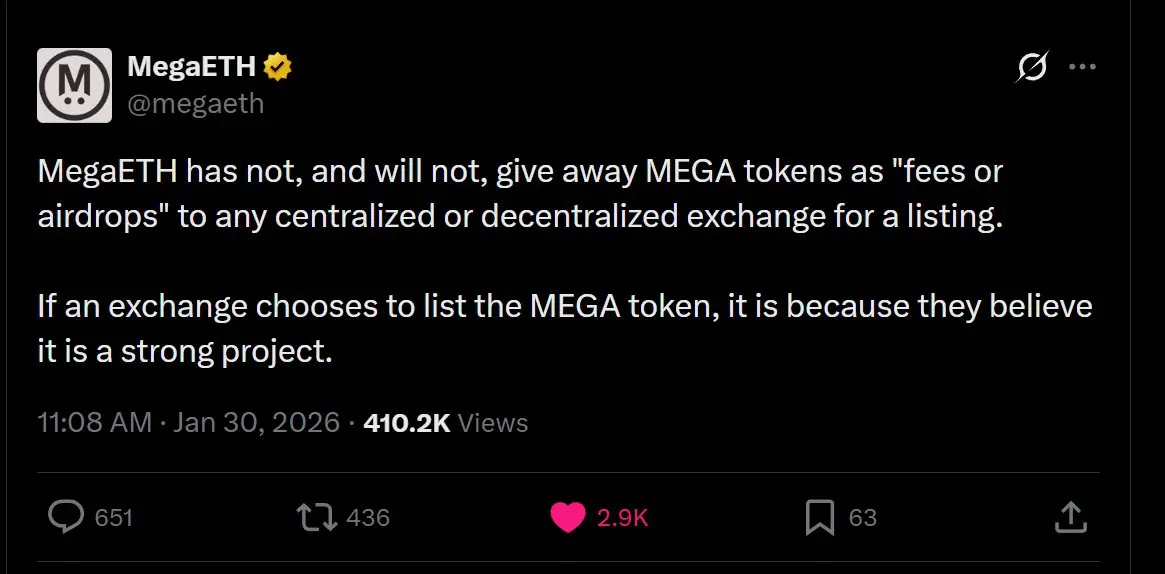
I hope teams start to be more selective about token distribution. If teams begin to treat their tokens as treasures, perhaps the market will respond in kind.
Cap's "Stablecoin" Airdrop
The stablecoin protocol Cap did not adopt the traditional airdrop method but instead launched a "stablecoin airdrop" (Stabledrop). They did not airdrop their native governance token CAP but distributed their native stablecoin cUSD to users who farmed through Cap points.
This approach rewards points farming users with real value, thereby fulfilling their social contract. Users who deposited USDC into Cap's supply side took on the risks and opportunity costs of the smart contract, and the stablecoin airdrop correspondingly compensated them.
For those who want CAP itself, Cap is conducting a token sale through Uniswap CCA. Anyone seeking CAP tokens must become a real investor and put in real capital.
Filtering Committed Holders
The combination of the stablecoin airdrop and token sale filters out committed holders. Traditional CAP airdrops might flow to speculative volume manipulators who could sell immediately. By requiring capital investment through the token sale, Cap ensures that CAP flows to participants willing to take on all downside risk in exchange for upside potential—these individuals are more likely to hold long-term.
The theoretical basis is that this structure increases the probability of success for CAP by establishing a concentrated holder base aligned with the protocol's long-term vision, rather than using an imprecise airdrop mechanism that hands tokens to those only focused on short-term profits.
Token Design is Maturing
Protocols are becoming increasingly smart and precise in their token distribution mechanisms. No longer are there scattergun-style, net-like token emissions—MegaETH and Cap are choosing to be highly selective about who can receive their tokens.
"Optimized distribution" is no longer in vogue—this may be a malignant legacy left over from the Gensler era (the former chairman of the SEC known for his tough regulatory stance on cryptocurrencies). Instead, both teams are optimizing concentration to provide a stronger holder base.
I hope that as more applications launch in 2026, they can observe and learn from some of these strategies, even improving upon them, so that the "good coin problem" is no longer a problem, and all we have left are "good coins."
免责声明:本文章仅代表作者个人观点,不代表本平台的立场和观点。本文章仅供信息分享,不构成对任何人的任何投资建议。用户与作者之间的任何争议,与本平台无关。如网页中刊载的文章或图片涉及侵权,请提供相关的权利证明和身份证明发送邮件到support@aicoin.com,本平台相关工作人员将会进行核查。


