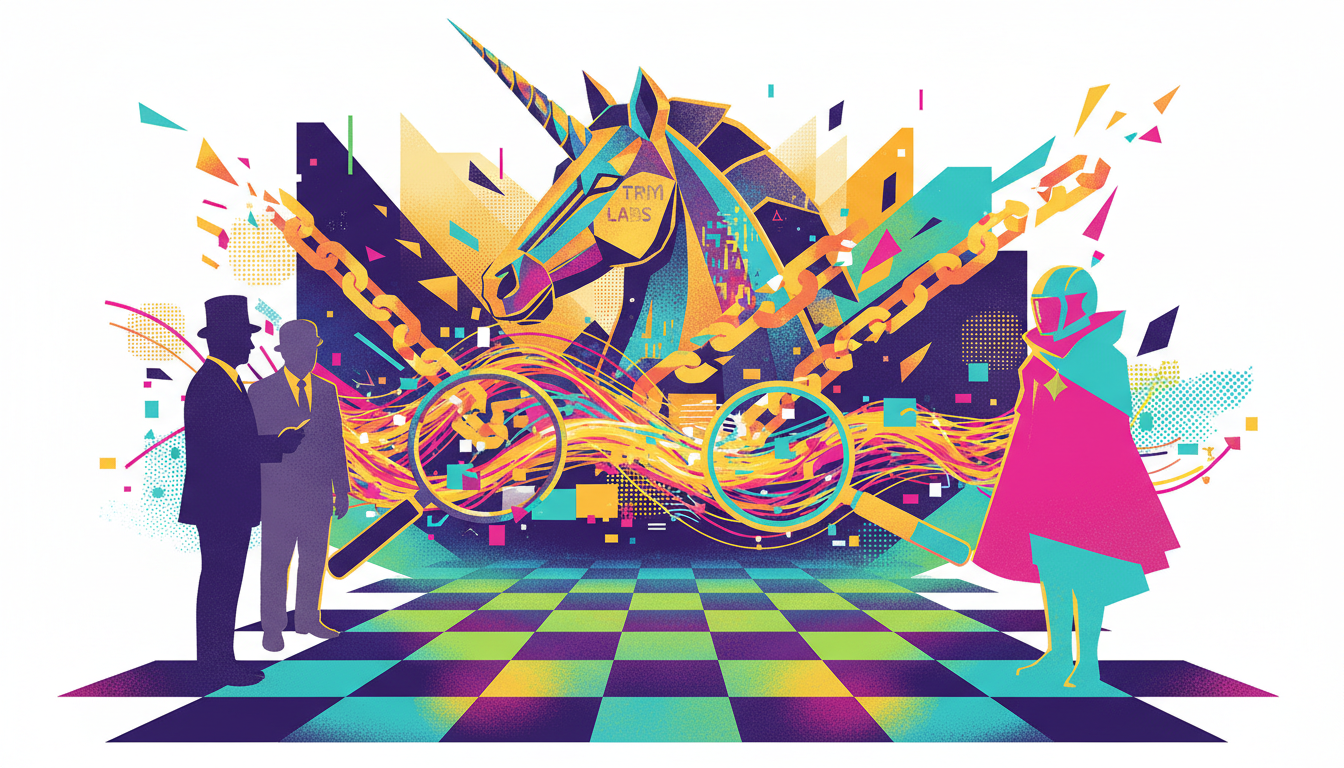
On February 4, 2026, Binance founder CZ publicly named the account @weibnb on the X platform, accusing it of engaging in fraudulent activities by allegedly fabricating photos with himself and impersonating identities such as "former BNB Chain executives." This action quickly caused a stir in the crypto community. On one hand, the account has approximately 863,000 followers on X and has long operated under titles like "former BNB Chain CRO," leading many users to psychologically regard it as an "official former executive." On the other hand, CZ personally denied the authenticity of the photos and pointed out issues with the account's behavior, causing the trust built on "titles + photos" to collapse instantly. This incident exposed the crypto community's heavy reliance on celebrity photos, conference images, and impressive titles, while also revealing the extreme fragility of this "visual endorsement trust mechanism."
AI Photos and Fake Titles: The Illusion of Authority with 860,000 Followers
● Fabricated Authority Photos: From the disclosed information, @weibnb is suspected of using AI-generated fake photos with CZ, paired with real BNB Chain event photos from Korea as its homepage header and materials, creating a visual narrative of "sharing the stage with CZ and deeply participating in core activities." This technique stitches together real event photos with fictional relationships, making it difficult for users unfamiliar with the details to discern which parts are fabricated, thereby amplifying its "sense of authority."
● Fake Executive Titles as a Pathway: The account claims to be a "former BNB Chain CRO" and continuously reinforces its persona of having held important positions within the Binance ecosystem in tweets and personal descriptions. This provided initial trust chips for its subsequent endorsements of various projects, "official perspective interpretations," and even being treated as a resource entry by some media or project parties. For many ordinary users, the title "former CRO" is sufficient to be seen as a strong endorsement, while the underlying authenticity is rarely scrutinized.
● The Dual Fog of Followers and Packaging: When the figure of 863,000 followers, polished event photos, professional jargon, and industry-specific language come together, @weibnb is packaged as a typical image of a "senior former executive from Binance." Under this psychological preconception, ordinary users often forgo necessary verification processes, equating "follower count + photos + titles" simply with "credibility," making it difficult to perceive risks at first glance, only realizing they were on the edge of a trust trap after CZ's public debunking.
The Founder Who Was Blocked: A Common-Sense Short Circuit of Self-Proclaimed Former Executives
● The Anomalous Detail of Blocking CZ: A dramatic detail in this incident is that CZ discovered he was blocked by the @weibnb account. He publicly shared this fact on X, viewing it as an important clue to suspect the other party's true identity— for an account claiming to have worked with CZ and identifying as a "former BNB Chain executive," actively excluding the project founder and former superior from visibility is fundamentally at odds with common sense.
● Conflict Between Executive Identity and Behavioral Logic: From industry common sense, a genuine former BNB Chain executive, even if they have left, would rarely directly block the project founder in public, especially when still relying on the "former employer's halo" to build their personal brand. Blocking not only cuts off public interaction with core figures but also equates to refusing to engage in "on-stage dialogue" on key reputation issues, which is in clear conflict with the professional image and basic logic of maintaining a network that a "former executive" should uphold.
● Public Opinion Amplifying Doubts: Several media outlets, including Planet Daily, highlighted in their reports that "the @weibnb account has blocked CZ, which is clearly contradictory to its self-claimed identity as a former BNB Chain executive." This narrative quickly gained traction in the Chinese community. For ordinary users, there is no need for complex technical verification; simply understanding that this behavior is "common sense off" is enough to raise their guard. The blocking action transformed from a platform feature into a "red flag signal" for the community to identify suspicious identities, accelerating collective questioning and distancing from the account.
The Cult of Celebrity Photos in the Crypto Circle: A Fragile Sample of the Trust System
● The Inertia of Photo Culture: In the crypto industry, taking photos with celebrities, showcasing conference badges, and displaying offline event photos have long been viewed as a form of implicit endorsement mechanism. Whether founders, fund partners, or early evangelists, they are accustomed to proving their "presence in the circle," "resources," and "connections with core figures" through collective photos at public events. This visual culture is especially prevalent during bull markets and has become a standard template for packaging numerous projects and KOLs.
● AI Amplifying Small Circle Vulnerabilities: As Golden Finance commented, "using AI to synthesize photos has become a new trend in crypto fraud," meaning that fraudsters are no longer limited by real physical scenarios and can generate "stage photos" and "backstage photos" in bulk without any actual contact with celebrities. In an industry that already heavily relies on "small circle trust" and "offline event photos," AI technology effectively amplifies existing structural vulnerabilities—what once required time to mingle and attend meetings to obtain "photo endorsements" can now be generated by models in seconds.
● The Structural Absence of Celebrity Refutations: In reality, genuine celebrities and project founders cannot individually verify all photos, images, and promotional materials related to them, nor can they refute every fabricated image one by one. As a result, when AI-generated "fake photos" circulate on social media, ordinary users often find themselves on the asymmetric information side: unable to verify on-site details and difficult to see timely clarifications from the parties involved. In an environment where "real and fake photos" and "real and fake authorities" are mixed, individual users can hardly establish a solid recognition system based on personal experience; this incident is merely a collective manifestation of this dilemma.
CZ and Binance's Security Narrative: From Back-End Risk Control to Front-End Alerts
● Data-Supported Security Image: From publicly available data, Binance handled 38,648 erroneous recharge cases in 2025, returning approximately $48 million to users. These seemingly trivial yet numerous "recovery operations" form the foundation of Binance's brand narrative of "safety and recoverability": the platform is willing to incur operational costs for user errors, accumulating a public image of being a "safety net for asset security" through details, and laying the groundwork for its discourse power on security-related issues.
● SAFU and Protective Wall Discourse: At the same time, Binance's SAFU fund recently added 100 million USDC, further reinforcing its safety commitment of "having funds to back up in extreme risk scenarios." Whether it is erroneous recharge handling data or the expansion of SAFU, both are essentially adding bricks to the "protective wall" of the safety story, making users think first of "Binance will bear part of the risk" when facing various hacker attacks, exit scams, and system uncertainties.
● From Back-End Risk Control to Front-End Debunking: This time, CZ personally stepped to the front, naming an account with 863,000 followers suspected of using fake photos to commit fraud, further extending Binance's safety narrative— not only managing risk control, compensation, and fund reserves on-chain and at the system level but also actively cleaning up the risk sources of "disguised Binance executives" in the social media public opinion arena. What users see is no longer just a cold risk control system and fund pool, but an image of a founder who personally reminds on the public opinion battlefield that "this person is not one of us," thus forming a closed loop between back-end risk control and front-end alerts.
Media Reporting and Public Opinion Diffusion: The Amplification Curve of a Debunking Incident
● Information Diffusion Chain: After CZ issued the warning, several crypto media outlets, including PANews and BlockBeatsAsia, quickly reported, disseminating key information such as "the @weibnb account is suspected of fabricating photos with CZ, claiming to be a former BNB Chain CRO while blocking CZ himself" in news summaries and alerts to a broader community. What originally occurred as a tweet on the X platform was channeled through media outlets into Telegram groups, industry communities, and news app pushes, completing the diffusion path from a single platform incident to a "public warning" across the entire Chinese circle.
● The Media's Role in "Secondary Verification": In this process, the media, on one hand, helped ordinary users build a more complete event picture by organizing timelines, quoting key points from CZ's posts, and referencing secondary opinions from Planet Daily, serving a sort of "secondary verification" intermediary role; on the other hand, due to a lack of further identity and technical details, the media itself also finds it difficult to provide deeper conclusions on "whether it is fraud" or "specific methods of operation," merely building an information bridge between celebrity accusations and the account's public image, which has inherent limitations.
● Balancing Speed and Authenticity: In the current context of AI forgery and social fraud evolving in parallel, media outlets face a new paradox when handling similar incidents: the faster they relay celebrity debunking, the more timely they can alert users, but it may inadvertently give suspicious accounts higher exposure; if they overly pursue verification completeness, they may miss the best warning window. Finding a balance between "speeding up" and "verifying authenticity," such as more clearly marking terms like "suspected" and "to be verified" in titles and texts, avoiding excessive embellishment of account personas, may become a norm that industry media needs to explore together in the next stage.
Photos Are No Longer Reliable: How Users Can Add a Layer of Protection for Themselves
The core risk revealed in this case is that, with the support of AI technology, titles and photos are no longer sufficient to constitute credible endorsements; instead, they may become amplifiers of the "illusion of trust among acquaintances." A well-packaged "former executive account" can capture hundreds of thousands of followers in a short time with just a few composite photos and a seemingly professional title, while the true identity and qualifications remain outside scrutiny. For ordinary users, it is essential to discard the old habit of "judging credibility based on profile pictures and photos" and instead establish a more rational verification path: for so-called "former executives" or "former core members," cross-referencing resumes across multiple platforms and comparing them with publicly available information from official channels of BNB Chain or Binance, rather than solely relying on the self-description of a prominent account; when it comes to financial decisions, placing the focus of trust on official announcements and certified accounts from project parties and trading platforms, rather than making decisions based solely on a social media "familiar face." Looking ahead, as AI and social fraud techniques continue to evolve, the industry needs to establish more transparent and standardized identity verification and professional certification mechanisms, such as verifiable professional profiles and on-chain reputation systems; on the other hand, celebrities and institutions also need to proactively and systematically establish clarification and debunking processes, replacing "photo worship" with "verifiable identities," allowing trust to return to facts and structured evidence.
Join our community to discuss and become stronger together!
Official Telegram community: https://t.me/aicoincn
AiCoin Chinese Twitter: https://x.com/AiCoinzh
OKX Benefits Group: https://aicoin.com/link/chat?cid=l61eM4owQ
Binance Benefits Group: https://aicoin.com/link/chat?cid=ynr7d1P6Z
免责声明:本文章仅代表作者个人观点,不代表本平台的立场和观点。本文章仅供信息分享,不构成对任何人的任何投资建议。用户与作者之间的任何争议,与本平台无关。如网页中刊载的文章或图片涉及侵权,请提供相关的权利证明和身份证明发送邮件到support@aicoin.com,本平台相关工作人员将会进行核查。