Author: Unchained
Translation: Baihua Blockchain
When the “Middle Eastern sparks” on Twitter collide with Wall Street’s “economic iceberg”, global assets are undergoing a “stress test” in the Middle East. As the military actions by the US and Israel against Iran escalate, Gabon and US Treasury bonds are oddly fluctuating, while Bitcoin at the eye of the storm displays an unexpected vigilance— is this the “gift” of a safe-haven asset, or the calm before the storm?
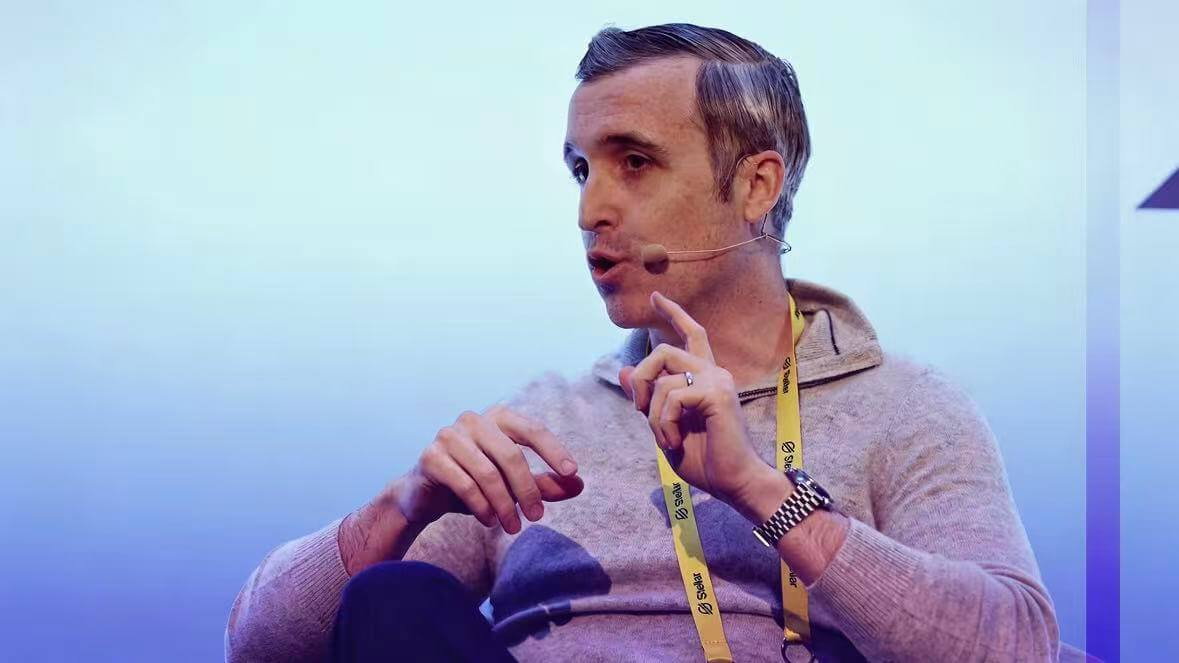
In this issue of dialogue, we have invited top crypto venture capitalist Rob Hadick. He will unveil the fog of geopolitics and take you directly to the market's most secret prayers: the frenzy of derivatives on the Hyperliquid chain, and the dark games inside Washington regarding the myth of stablecoins. When war, greed, and a new crypto order meet at the same crossroads, will ordinary investors see through this profound game crossing national borders? This is not only a recap of the conflict, but also a survival investment guide for finding long-term certainty in a chaotic era.
Part One: The Turmoil of Geopolitics and Macro Markets
Host:The current market situation indeed experiences fluctuations when major geopolitical events occur in the world. After the US and Israel attacked Iran, the dollar has risen above $80/barrel, with both gold and the dollar increasing. Bitcoin, meanwhile, has actually performed quite steadily, not even keeping pace with the fluctuations of other safe-haven assets. Can you briefly tell us what you have observed in the past 48 hours?
Rob:Yes, this is clearly a very delicate moment for cryptocurrency in the macro environment. In fact, this subtlety existed even before the escalation of the Iranian regime. I had avoided calling it “war” for a long time, but with Peter Heges and Trump using that term within 24 hours, I think we can start referring to it as the “Iran War.”
Over the weekend, the performance of cryptocurrency was surprisingly good. Although global stock markets fell overnight (the S&P opened down about 1.25%), there were at least some gains. People seem very fragile, very stable, but not yet to the point of collapse. We are still observing what will happen in the coming weeks.
The initial market narrative was: we have cut off the command chain of many Iranian leaders, and the conflict is expected to end soon. But it now seems that may not be the case. Trump stated yesterday that he expects the conflict to last at least four weeks. In line with his style, if he says four weeks, the actual time might be longer, which means ongoing economic risks will significantly increase.
The market was already discussing a stagflation or an impending stagflation, and now if Middle Eastern oil production continues to be disrupted, coupled with potential blockades of the Strait of Hormuz, the risk of stagflation increases further. From a macro perspective, we are facing a very dangerous moment, as the market itself is fragile. Hence, the current performance of Bitcoin and cryptocurrency is positive, as they have not only not collapsed but have even shown slight recovery. The crypto market looks just as fragile as the stock market, but if the stock market does actually collapse, I am not sure how the market can respond.
Host:Yes. The earthquake you described, a good example is the movement of the US 10-year Treasury bonds. In fact, it is on the rise, which is somewhat contradictory to the conventional safe-haven logic where “dollar rises, bond prices rise (originally falling)”. How do you view this anomaly?
Rob:I think a clear point is that the market is concerned about accelerating inflation, while also being wary of intensifying inflation, i.e., entering stagflation.
On the other hand, Kevin Walsh is expected to enter the Federal Reserve around mid-May. The market is speculating whether he will execute a hawkish agenda or succumb to political pressure—Trump clearly wants interest rate cuts. This uncertainty confuses people.
Another overlooked story: the termination of the ruling on the IIPA, considering that previous tariff methods belong to administrative overreach, which is illegal. Trump then immediately announced another legal tariff, with a term of at least 180 days and tariffs up to 15%. Now traders in different markets are in complete disarray over this entirely different conclusion.
Part Two: The Game Between Long-Termism and Short-Term Risks
Host:Yes, I think so too. The panic proves that the fluctuations in Federal Reserve personnel have interest rate cut expectations, reflecting the complexity of inflation and tariffs intertwined. I want to broaden the topic a bit to see how the recent epidemic impacts things. As you mentioned, the timeline of infectious diseases is highly uncertain. Trump seems to want to replicate the urgency of President Maduro’s ousting, but the situation in Iran is completely different. If it is a genuine regime change, is it a change in Afghanistan or not? In a country with a population of 93 million, this could be very bloody and chaotic. I don’t think four weeks can settle it.
In this context, how do you position yourself? How are the investors you interact with positioning themselves? Reference history (such as last year's tariff storm or the Iranian nuclear missile facilities), markets often rebound in a V-shape, but will this time be different?
Rob:That's right. We are quite different from many listeners; we hold a very long-term view of the market, with investment assumptions often lasting a year or even several years. While we look for entry points, we primarily focus on the broader global macro context.
I have a core observation. First, the good performance of cryptocurrency and Bitcoin over the weekend is a crucial positive signal. Although some people say Bitcoin is a store of value and should rise along with commodities, its performance has not aligned with that for several months. Now it shows low correlation, and trading patterns indicate that sellers are almost exhausted; most are long-term investors. This sets up a good foundation for the long-term trajectory of cryptocurrencies.
Second, there are indeed too many real risks in the short term. The stock market briefly rebounded after NVIDIA’s unexpected results but quickly fell back. It is now very sensitive, and the panic was not caused by a well-known institutional report. I expect the long-term trend for cryptocurrency remains positive (institutional adoption, market structure improvement), but if the S&P 500 index corrects the market by 10-15% due to impending hunger issues, it will be hard for Bitcoin to fend for itself.
Host:Interestingly, I saw an article in the Financial Times over the weekend saying that traders are feeling overwhelmed, with the entire market dropping by 3% based on a single blog report. Because it is so typical.
I want to emphasize one point: the long-term prospects of the crypto ecosystem may be the best. Whether it's Wall Street's progress on asset tokenization or the strong demand for stablecoins, if you have long-term scale, these things are very positive.
Rob:That's right.
Host:This morning, I researched options positioning data on Deribit, which coincidentally echoed your point of view. Currently, the largest open interest is concentrated on the $60,000 put options, especially with strong consistency in the coming days. This means in the short term, people are frantically hedging against downside risks. But once we reach the end of the month, the $900,000 and $1,000,000 call options become the focus. This sentiment of “short-term view, long-term view” becomes very strong.
Rob:I am not a military expert, but I think pricing the theory of this conflict as a blockade strike like last June may be wrong. The news sentiment this morning has shifted to adjustment. Initially, everyone thought it would end quickly, but now the US cannot even fully enter Iranian airspace, which means the opponent's air defense systems are still effective.
Moreover, Trump mentioned wanting a regime change yesterday, but it is unclear who could become the “pro-US leader” may already be under resistance. The information is very disordered, and there are leaks from the CIA indicating the US is not prepared for aerial defense, being concerned about regional missile interceptions. All signs indicate that the length and extent of the conflict are exceeding expectations.
Part Three: Geopolitical Conflicts in Cryptocurrency Performance
Host:I previously worked in the US for five years, and although I wasn't involved in joint weapons, I understand that once bullets start flying, any “well-laid plan” might fail. When Iran feels its existence is threatened, they will come out all guns blazing.
Do you think the market has priced in the risks of Iran? If listeners want to protect against downside risks, what advice would you offer?
Rob:I think the market is pricing in quite accurately at the moment. The stock market fell a bit, while Bitcoin hovered and slightly rose, which is reasonable. Options data also shows that everyone is doing short-term defenses and long-term layouts.
As for risks, aside from Iran, there are concerns about artificial intelligence and job warnings. For example, Block announced a 40% judgment, which is rare in the history of companies of that size. We need to monitor whether these signals will spread.
Host:Another interesting point. Bitcoin has previously been “unfairly treated” whenever events occur over the weekend because it is the only asset traded 24 hours. But now there are tokenized stocks and tokenized commodities. Have you observed any highlights in the trading of these assets over the weekend?
Rob:Indeed. There was huge trading volume on Hyperliquid over the weekend, especially for HYPEToken, which has risen by about 12% since the attack began.
Host:Perhaps HYPE has now become the “safe-haven asset” in cryptocurrency.
Rob:Very likely. In the HIP-3 market of Hyperliquid, we observed a sharp increase in trading volume for our tokenized commodities (such as silver and crude oil). Crude oil is definitely the most active asset over this weekend.
Moreover, tokenized stocks have serious structural issues over the weekend: how do market makers hedge? If US stocks open with a 10% drop on Monday, how will people trading on-chain over the weekend settle? Currently, many on-chain spot stocks are actually packaged through SPVs, which is very clumsy, and non-tradable securities cannot be redeemed. I am more optimistic about on-chain derivatives than this simple packaging.
Host:So in the coming days, which indicators will you focus on to judge the situation?
Rob:I don’t really look at candlestick charts. What matters most to me is whether “conflict de-escalation” dialogues appear. If Trump and Israeli media begin discussing ongoing conflicts, escalating seriousness, or increasing focus on bombings, that signals a long-term war. This will reflect whether the Oval Office suddenly reacts. If crude oil rushes to $100, it will be a significant blow to all risk assets, including cryptocurrencies.
Part Four: Dubai's Position and the Legislative Progress of the Clarifying Act
Host:Before turning to policy topics, let’s talk about Dubai. Dubai has been trying to position itself as a crypto hub, with a large conference at the end of April. But now war is at the doorstep, and even missile debris has struck hotels in Dubai. If nuclear weapons are no longer immune to Iranian retaliation's security zone, what does that mean for its status as a crypto hub?
Rob:This is indeed something to observe. It's unfortunate that missile debris hit the hotel needed at Palm Island. Although there is some propaganda from Iranian state media, the current situation makes the expatriate community uneasy. The frontier is very forward-looking in regulation (like the ADGM framework), and if the conflict ends quickly, the momentum won’t stop; but if the destruction continues, people will be reluctant to move. I originally planned to speak in Dubai in eight weeks, but if the situation remains the same in four weeks, whether it can continue as planned is in question.
Host:Understood. Let’s shift gears and talk about the Clarifying Act. The White House specifically wants banks and the crypto industry to share benefits reached on stablecoins, but clearly that hasn’t happened. What insider information have you heard?
Rob: Polymarket currently predicts the probability of the bill passing has risen to 70%, but it depends on who you ask.
The core limitation of the conflict is that: last year’s version was relatively consistent, but the Senate’s version introduced many industry objections regarding profit sharing, asset tokenization definitions, and developer protection.
The most challenging issue is “profit sharing.” Issuers like Coinbase want to refund part of the interest income generated from stablecoins to users (as loyalty rewards or cashback). But bank lobbying groups are very strong, fearing that this would effectively turn stablecoins into “money market funds” or “bank deposits,” thus undermining banks' net interest margin. If banks cannot take a step back on earnings, this bill is very difficult.
Host:Banks offer almost 0% interest on deposits, while stablecoins provide 3.5%, which indeed poses an existential crisis for banks. What kind of compromise do you think they could accept?
Rob:The bottom line that banks might accept is: issuers cannot “programmatically” pay profits directly to end-users. But after the issuer makes money, they can independently decide how to distribute these profits as “rewards” to customers.
This is actually already happening. If the law prohibits stablecoin issuers from using income for marketing or cashback, that’s not just protecting the status quo; it would actually roll back financial technology. Right now, we must fight on two fronts: one to advance the Clarifying Act legislation and the other to navigate the OCC (Office of the Comptroller of the Currency) regulatory rules, preventing them from imposing stricter limitations.
Host:It is indeed challenging. I worked at Citigroup, and banks have high regulatory costs and insurance fees. But I think the competitive environment should be fair.
Rob:That’s right. Another good signal is that Scotland understands the importance of this bill. As long as a compromise can be reached and voted on before Memorial Day, there is hope. If it drags past that point, political interference during election year could complicate everything.
Part Five: The New Fund of Dragonfly and Industry Judgments
Host:Finally, let’s talk about your company. Dragonfly's fourth fund raised $650 million, which is quite impressive, congratulations. In the current environment, why choose this scale of $650 million? What will be your key focus areas going forward?
Rob:Thank you. We have been deploying capital in “bad markets” and raising funds in “good markets.” Although there is currently geopolitical turmoil, from an industry cycle perspective, now is a good time to invest in businesses because the influx of capital is low and there’s no blind FOMO.
We see strong structural tailwinds: widespread adoption of stablecoins and asset tokenization, and truly product-market fit (PMF) DeFi products like Hyperliquid. This is the best time to build new financial rails.
Why $650 million instead of $2 billion? Because we want to stay focused. The VC industry has a perpetual game: to be an “asset management company” earning a 2% management fee, or to be a high-return VC chasing a 20% carry? Some large funds have to expand their investment aperture to manage more money, even venturing into unfamiliar fields.
We choose to keep a focused scale, focusing on stablecoins, crypto finance, digital rails, and on-chain assets. We don't want to lower standards for the sake of scale; we want the best returns in the vertical fields.
Host:“Expanding the radius” is indeed a euphemism for “lowering standards.”
Rob:Haha, whether lowering standards or investing in completely different verticals, that is not our intention.
Host:Understood. This is a great summary. Rob, thank you for sharing today, and we must invite you back in the future.
Rob:Thank you, Steve, I also look forward to it.
Host:Thank you all for listening.
Article link: https://www.hellobtc.com/kp/du/03/6245.html
Source: https://www.youtube.com/watch?v=mXGDt1radY0
免责声明:本文章仅代表作者个人观点,不代表本平台的立场和观点。本文章仅供信息分享,不构成对任何人的任何投资建议。用户与作者之间的任何争议,与本平台无关。如网页中刊载的文章或图片涉及侵权,请提供相关的权利证明和身份证明发送邮件到support@aicoin.com,本平台相关工作人员将会进行核查。


