A renowned nonprofit think tank in Washington, D.C. pointed out during discussions about the news challenges of the AI era in 2024:
“The current environment forces journalists to prioritize speed over accuracy in breaking news situations.”
The recent conflict in Iran is a typical example: schools bombed, successor leaders assassinated, neighboring countries launching attacks... Western media often provides highly impactful headlines at the first moment to capture attention and swiftly shape public opinion.
However, there is one place that often demonstrates "real judgment" earlier than the media—prediction markets.
Here, the probabilities of events like "Will Hezbollah strike Israel?" or "Will a certain country take military action against Iran?" are not driven by emotions or institutional narratives, but are results formed by traders voting with real money.
More intuitively, if a trader is confident that something will happen, they will bet "yes," and this action itself will raise the probability of the event occurring. This constraint-based expression mechanism allows prediction markets to become a source of information distinct from traditional media.
Two events in the Middle East over the past week perfectly illustrate this point.
Drone Attack on British Base in Cyprus
On the evening of March 1, British Prime Minister Keir Starmer announced in a pre-recorded video statement that the UK agreed to allow the US to use its bases to strike Iranian missile facilities. Hours later, the British Royal Air Force base in Akrotiri, Cyprus, was reportedly attacked by a suspected drone.
Following the incident, several mainstream media outlets, including the BBC, The Independent, and Reuters, quickly published reports, using phrases such as "Iran missiles" and "Iranian drone" in their headlines or text, directly linking the attack to Iran.
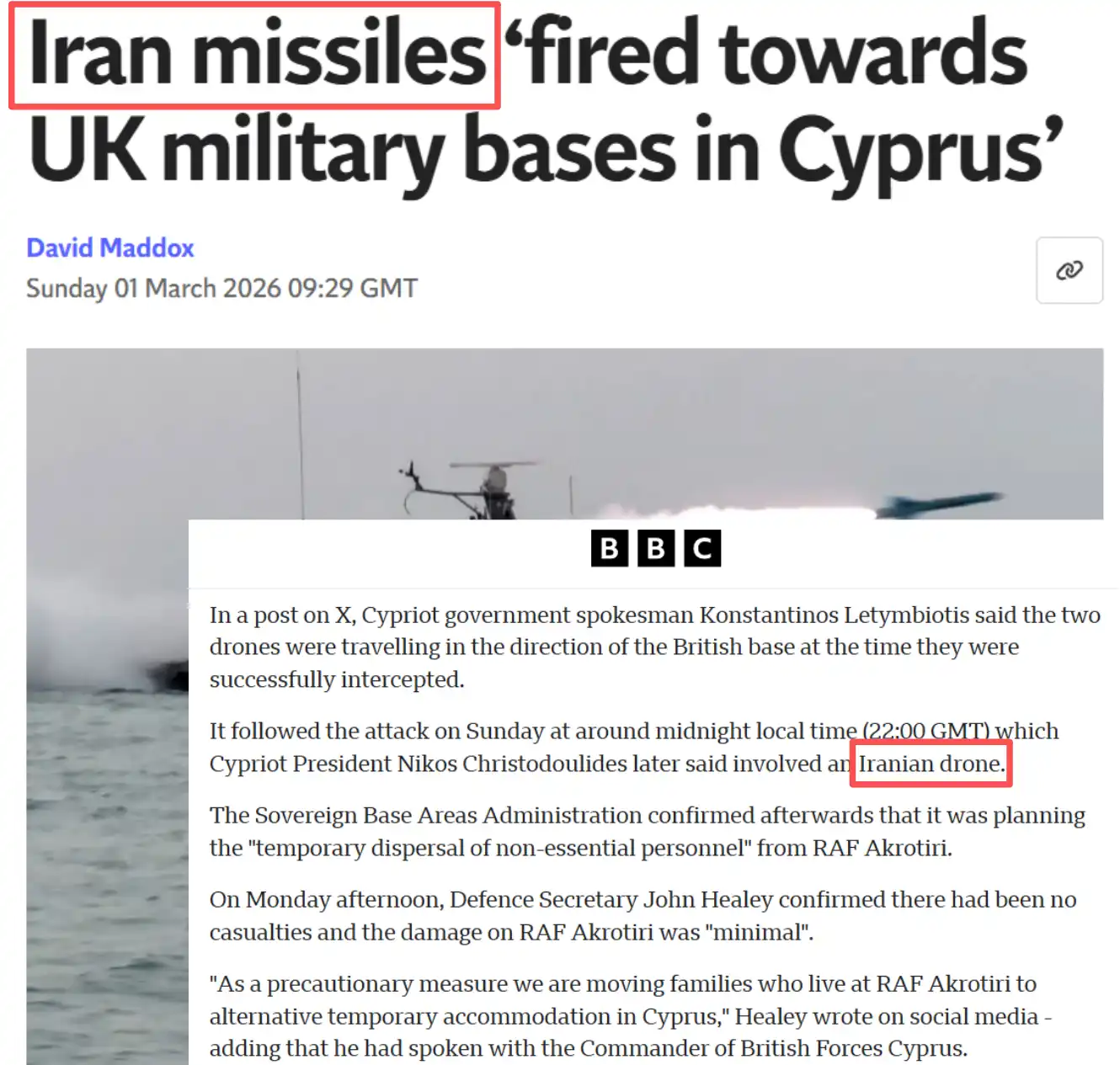
These reports swiftly made front pages, leaving readers with a clear impression: Iran is directly attacking a NATO ally’s base.
However, at the very moment the incident occurred, the relevant market on the prediction market platform Polymarket—"Will Iran strike Cyprus before March 31?"—showed a different reaction: after the media reports were released, the market did see some typical "buy the news" trades, leading to a temporary increase in probability. But unlike the media’s opinion atmosphere, the market's probability quickly fell back to a level close to that before the attack about 30 minutes later.
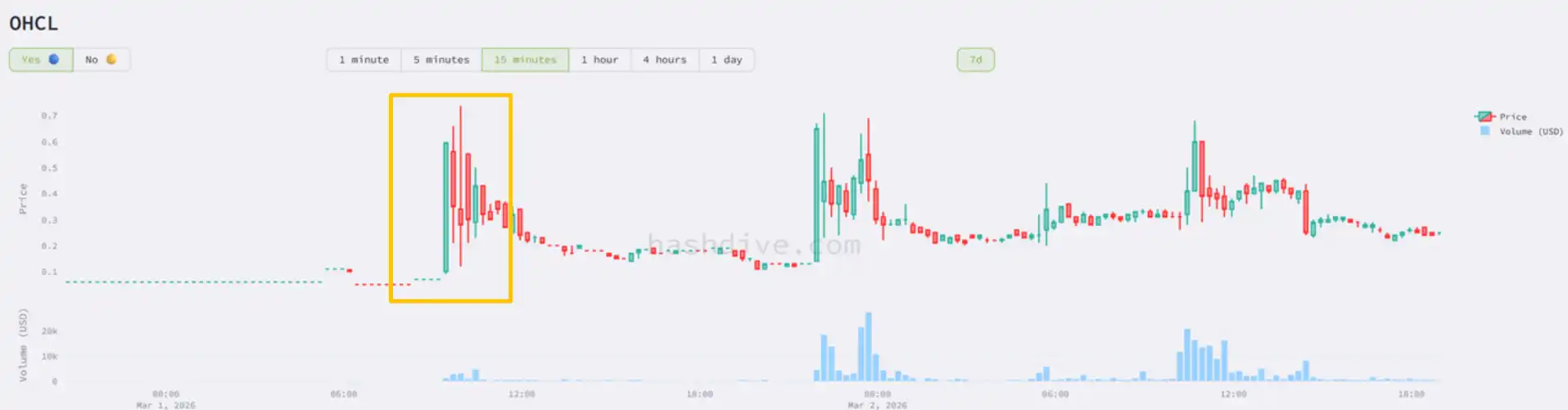
Clearly, this group of people most sensitive to sudden information did not fully believe the media narrative.
Hours later, the UK Ministry of Defence issued a statement saying that "there is currently no evidence that this attack came directly from Iran." Following this, media outlets revised their reports, suggesting that the attack was more likely from Hezbollah, a proxy armed group of Iran in Lebanon, and pointed out that the previously mentioned "Iranian drone" actually referred to "Iran-designed Shahed drones," rather than implying that the "attack was directly launched by Iran."
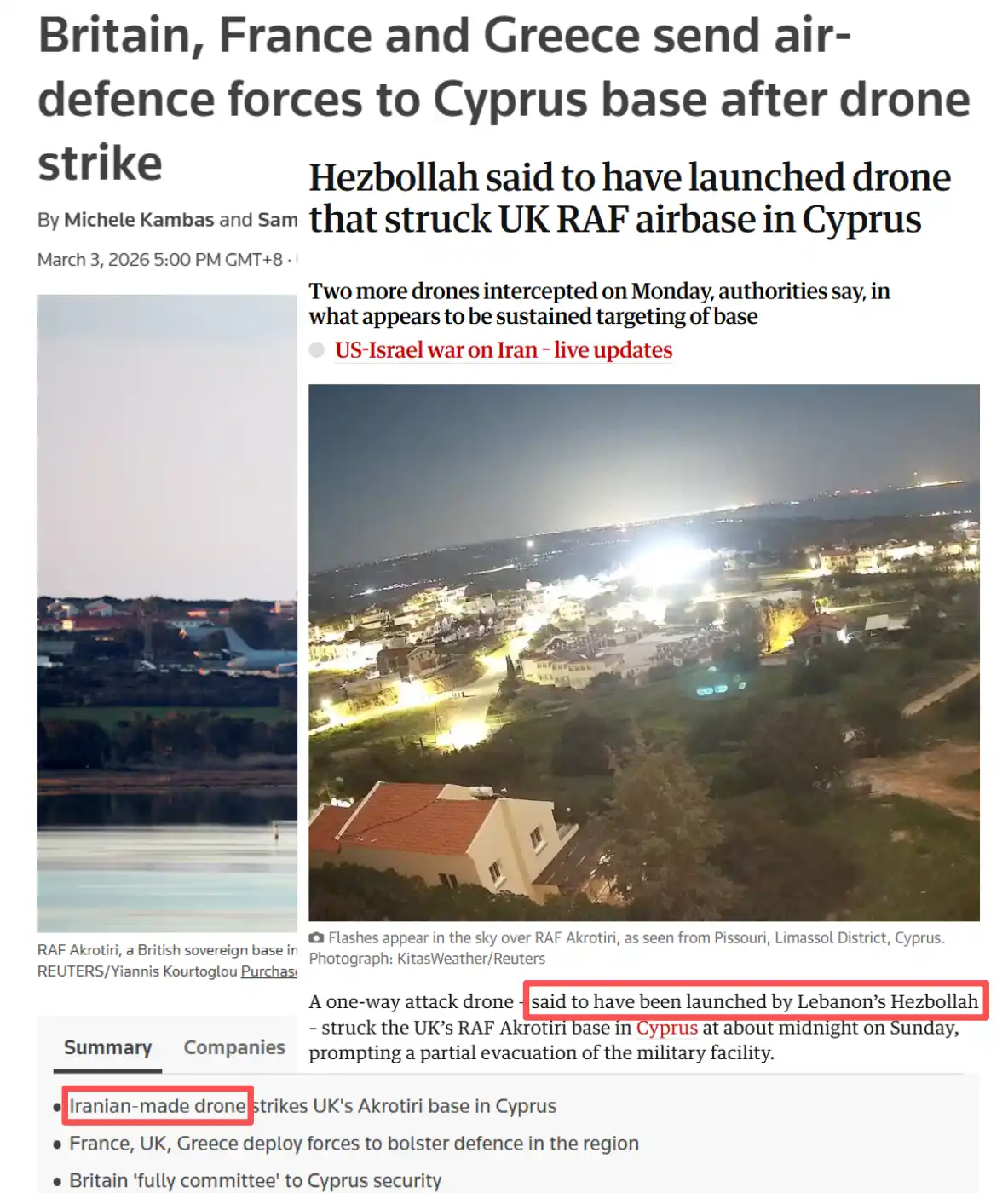
In other words, the media amplified Iran's direct responsibility through its narrative framework in the initial stages, while the prediction market maintained a more cautious judgment from the beginning.
Israeli Media Hails UAE Striking Iran
A similar situation arose again this week. On March 8, several Israeli media outlets claimed that the UAE had carried out strikes against Iran for the first time on its territory. The reports described this action as a "symbolic retaliation" against Iran's previous attacks on Gulf countries.
This narrative quickly created the impression that Gulf countries were joining a military action against Iran.
Similar to the Cyprus incident, the market probability on Polymarket for "Will the UAE strike Iran before March 31?" saw a temporary rise after the reports were released, but quickly fell back within about an hour.
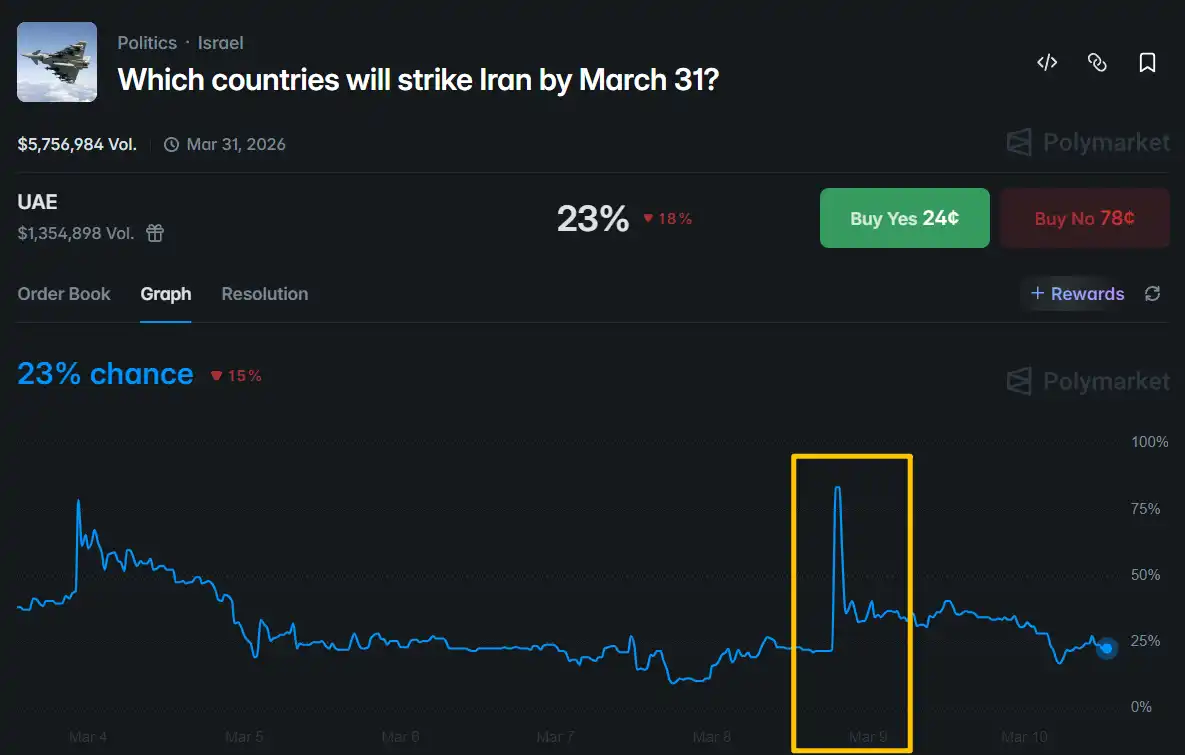
Shortly after, Ali Rashid Al Nuaimi, chairman of the UAE Federal National Council’s Defense, Interior, and Foreign Affairs Committee, directly labeled the reports as "fake news" on X and candidly stated, "If we did something, we would have the courage to announce it publicly."
From the perspective of information dissemination, the Israeli media's information output likely aimed to create a narrative atmosphere of a regional united counterattack against Iran, thereby psychologically increasing pressure on Iran and encouraging regional allies to openly support US-Israeli actions.
Filtering out this media noise, by focusing solely on prediction market probability changes allows one to realize much earlier that such reports may not be reliable.
Why Are Prediction Markets More Reliable?
As the global political environment gradually shifts from the post-Cold War phase of openness to a more pronounced polarization and geopolitical competition, information dissemination increasingly becomes a strategic tool.
In such an environment, the importance of traditional media is further amplified. Media are not only news channels but also crucial platforms that influence public stances and policy discussions.
The differences in positions among various institutions in the US media ecosystem are very evident: CNN has long been criticized by Trump and, by covering many school shooting incidents, attracted a vast audience that supports stronger gun control. Meanwhile, gun manufacturers are one of the important political benefactors of the Republican Party.
When news reports are not just "information" but gradually become tools for shaping public attitudes, the reliability of traditional media as a purely informational source inevitably faces challenges.
In this environment, prediction markets provide a completely different information mechanism: since the probability of each event is based on the traders' decisions about the direction of that event, profit-seeking traders must invest corresponding amounts to guarantee their judgments.
In this round of the Iran conflict, these participants might include open-source intelligence analysts, military enthusiasts, speculators, or even insiders involved in the frontline or rear of the conflict. Regardless of their background, the only mode of expressing opinions is by placing bets, and each bet represents a participant's true judgment based on their own understanding.
The accuracy of these genuine thoughts has been repeatedly proven over the past few years in a series of predictions like elections, interest rates, and non-farm payrolls, outperforming traditional polls and expert predictions.
Seeing Outcomes in Advance Based on Prediction Market Data
As mentioned earlier, when we consider prediction market probabilities as sources of information, we are essentially observing the results of a group of traders using their funds to guarantee their future judgments.
However, pure market probability still has a problem: the levels of participants vary, and some may just be following trends. Therefore, some analytical tools further filter the data, one commonly used indicator being the weighted market probability (Market Strength).
In other words, past participants who made more accurate predictions and achieved higher trading returns have a greater influence on the final probability. Compared to ordinary market probabilities, this indicator is closer to what is described as "smart money judgment."
One simple metaphor can help understand this: looking only at market probabilities is like having 10 people from different industries give you anonymous investment advice; while if you refer to weighted market probabilities, it’s as if you also know these 10 individuals' professional backgrounds and investment returns, naturally valuing those with higher long-term returns more.
With this in mind, let's look at a current question that the whole world is focusing on: whether other countries will join the US and Israel in striking Iran. According to the current probabilities in prediction markets, the likelihood of other countries joining the strikes this month is 51%; but if you look at the weighted market probability, the likelihood of such strikes occurring is only about 25%.
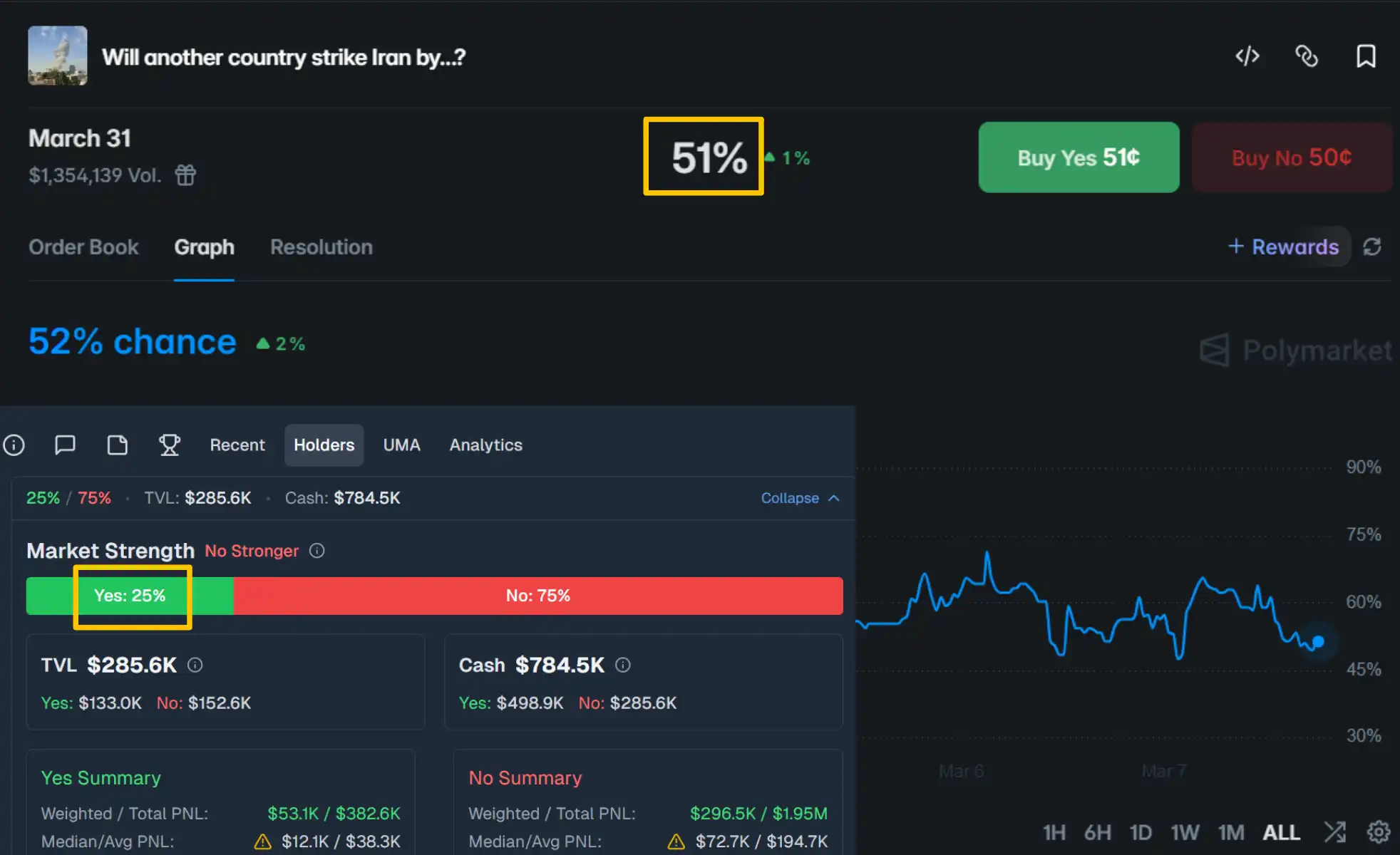
This result is in stark contrast to recent media narratives. On the surface, news reports are filled with signals of Gulf countries condemning Iran, European warships heading to the Middle East, and the escalating regional situation, suggesting that a larger scale of conflict is imminent; however, in the prediction markets, many long-time active traders familiar with geopolitics generally believe that the likelihood of other countries directly striking Iran this month is not high.
In an era of highly fragmented information, prediction markets may not replace news, but they are becoming a new mechanism for information calibration. When media narratives continuously amplify emotions and positions, market prices provide a constrained collective judgment based on funding.
For those wishing to understand the real world, the difference between these two signals themselves is essential information.
免责声明:本文章仅代表作者个人观点,不代表本平台的立场和观点。本文章仅供信息分享,不构成对任何人的任何投资建议。用户与作者之间的任何争议,与本平台无关。如网页中刊载的文章或图片涉及侵权,请提供相关的权利证明和身份证明发送邮件到support@aicoin.com,本平台相关工作人员将会进行核查。


