Author: Chloe, ChainCatcher
On February 26, 2026, on-chain detective ZachXBT officially unveiled the truth behind the insider trading case at Axiom Exchange: a senior business developer abused backend privileges for ten months, illegally profiting over $400,000 by tracking KOL's private wallets for early positioning. This report not only concluded the case but also settled the high-stakes prediction betting on Polymarket, which involved as much as $40 million and took the entire market's breath away.
However, there are still aftershocks beyond the truth. Prior to the investigation's revelation, the market unanimously pointed its fingers at Meteora, whose implied probability surged to as high as 43%. This was not groundless speculation, as data from crypto asset platform RootData indicated that behind Meteora was a new Malaysian startup team led by Meow and Ben Chow, who built a full-stack matrix covering traffic entrances, trading aggregation, and liquidity facilities from the ruins of Mercurial Finance in the Solana ecosystem.

From past controversies over LIBRA, the MET airdrop scandal to the Upbit listing news, Meteora’s development history has always hovered in the gray area of “information asymmetry arbitrage.” Although ZachXBT finally focused its sights on Axiom, the various clouds of suspicion surrounding Meteora seem to have never truly been answered.
From Mercurial to "Jupiter System," the underlying connections have always been linked
The starting point can be traced back to 2021,aliases Meow and Ben Chow founded Mercurial Finance on Solana, positioning it as a stablecoin asset management protocol on Solana, aiming to become the Solana version of Curve. During that liquidity-rich bull market cycle, Mercurial not only secured support from Alameda Research but also completed an IEO (Initial Exchange Offering) on the FTX platform with personal endorsement from SBF, at one point accounting for 10% of the total value locked (TVL) in the Solana ecosystem, making it quite remarkable.

In 2022, the collapse of the FTX empire heavily impaired Mercurial. However, the two founders did not choose to liquidate and exit but instead initiated a rebuilding path called the "Phoenix Plan": splitting the business into two. Meow led Jupiter, aiming to address the liquidity fragmentation in Solana by defining optimal prices through routing algorithms; Ben Chow took the helm of Meteora, focusing on developing a dynamic liquidity market maker (DLMM) model with high capital efficiency. This apparent division was a business focus, but in reality, it formed a complementary flywheel of two independent brands, maintaining links in shareholder structure and underlying logic.

On the traffic end, Jupiter adopted an aggressive strategy. According to crypto asset data platform RootData, in January 2025,Jupiter successfully created the shortest path for retail investors to purchase meme coins directly via Apple Pay or credit cards by acquiring Moonshot, flattening the continuously high barriers in the crypto industry to consumer-level standards.
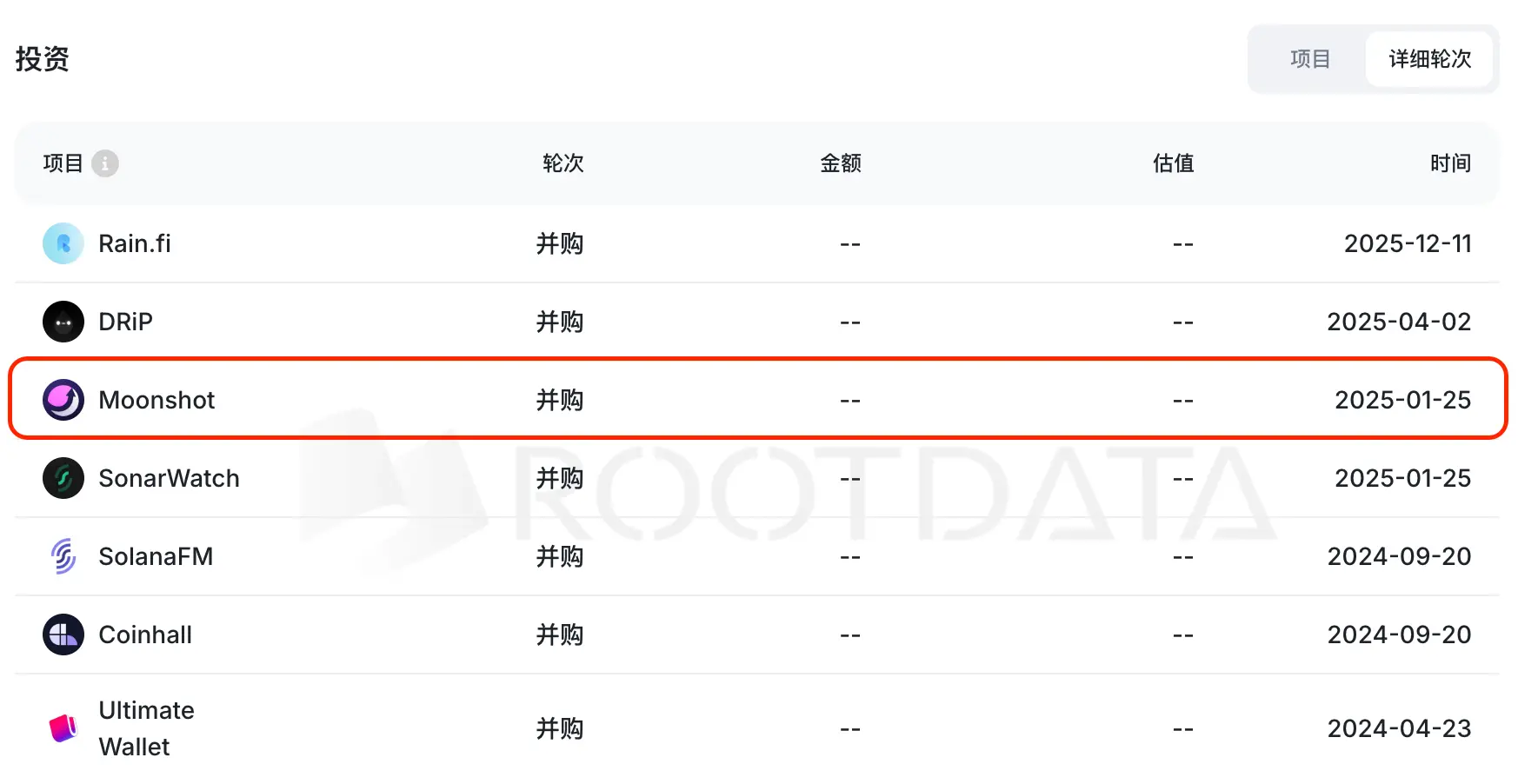
This layout successfully transformed actual monetization power during the TRUMP token frenzy: as substantial retail flow surged through Moonshot, these buy orders accurately coincided with the initial liquidity established by the TRUMP team at Meteora. This closed-loop of "capturing traffic at the front-end and executing trades at the back-end" enabled Meteora to achieve a single-day trading volume of $7.6 billion, accounting for 20% of the DEX trading share across the entire Solana chain.

At the same time, Jupiter's flagship DEX aggregator has evolved into the cornerstone of the Solana ecosystem. It is no longer limited to token swaps but has introduced perpetual contracts, lending markets, prediction markets, and other continuously iterated products. Thus, Moonshot, Jupiter, and Meteora have built an entire closed-loop ecosystem from fiat entry, front-end traffic, trading routing, multifunctional products, to automated market making, completing a transformation from "project party" to "ecological controller."
The airdrop controversy of Meteora and suspicions about the Upbit listing
Although vertical monopolies bring efficiency, the ensuing information asymmetry and suspicions of power abuse always loom over the Jupiter system. Among these, the airdrop distribution of Meteora (MET) and the Upbit listing storm raised questions from the outside world about whether this was truly "community-first."
On October 23, 2025, Meteora welcomed its Token Generation Event (TGE). At that time, the total token supply was 1 billion, and 48% of the total supply (i.e.,480 million tokens) was completely unlocked and entered circulation at once. The team claimed that this move was intentional, aiming for "real price discovery," but the market's response was extremely harsh, with MET plummeting from $0.90 to $0.51 within hours of opening, a single-day drop of over 55%.

According to on-chain data analysis in the early stages of TGE, there were significant holes in the fairness of the airdrop distribution. The top four claiming addresses took away about 45.94 million tokens, accounting for 28.5% of the total claimed amount. The behaviors of these addresses were abnormal:
Suspect address 1 (3vAau...ae): claimed 12.15 million MET (then worth $6.31 million). This address not only previously claimed a Mercurial (MER) airdrop but also had sold over 30 million JUP to exchanges in the past, and the same dumping methods have now been applied to MET.
Address 2 and 3 related addresses: these two addresses exhibited extremely high synchronization, with their JUP transfer amounts precisely locked at 2,622,632.41 multiple times, and their activity times were completely coincident, suggesting they may belong to a group controlled by the same power.
Address 4: claimed 10 million MET. Strangely, this address was created after the snapshot time and has never participated in any liquidity addition or staking activities. This "creation out of thin air" for claiming completely deviates from the logic of the point system.
If the airdrop distribution is a manifestation of power corruption and abuse, then the information leak about the exchange listing touches upon the industry's gray area. On November 18, 2025, Meteora officially launched on Upbit, but even before the official announcement was released, sources claimed to have learned of the information and profited through insider leaks. Although there is no direct evidence pointing to the core teams of Jupiter or Meteora, the combination with the MET airdrop controversy has labeled the community with distrust.
LIBRA scandal: Ben Chow's resignation and the responsibility roshambo
Rewinding to February 2025, the LIBRA token endorsed by Argentine President Javier Milei emerged, with a market value soaring to $4.6 billion in just a few hours before nearly crashing to zero, leading totens of thousands of investors suffering losses exceeding $280 million. Public opinion quickly turned its fire towards the Meteora and Jupiter teams,accusing the team of providing "verified" labels and liquidity support for LIBRA, despite knowing the token launch was subject to running ahead by scientists and wash trading behavior. Although the team insisted the verification was only to guard against counterfeit coins and not an endorsement, the public was not convinced.
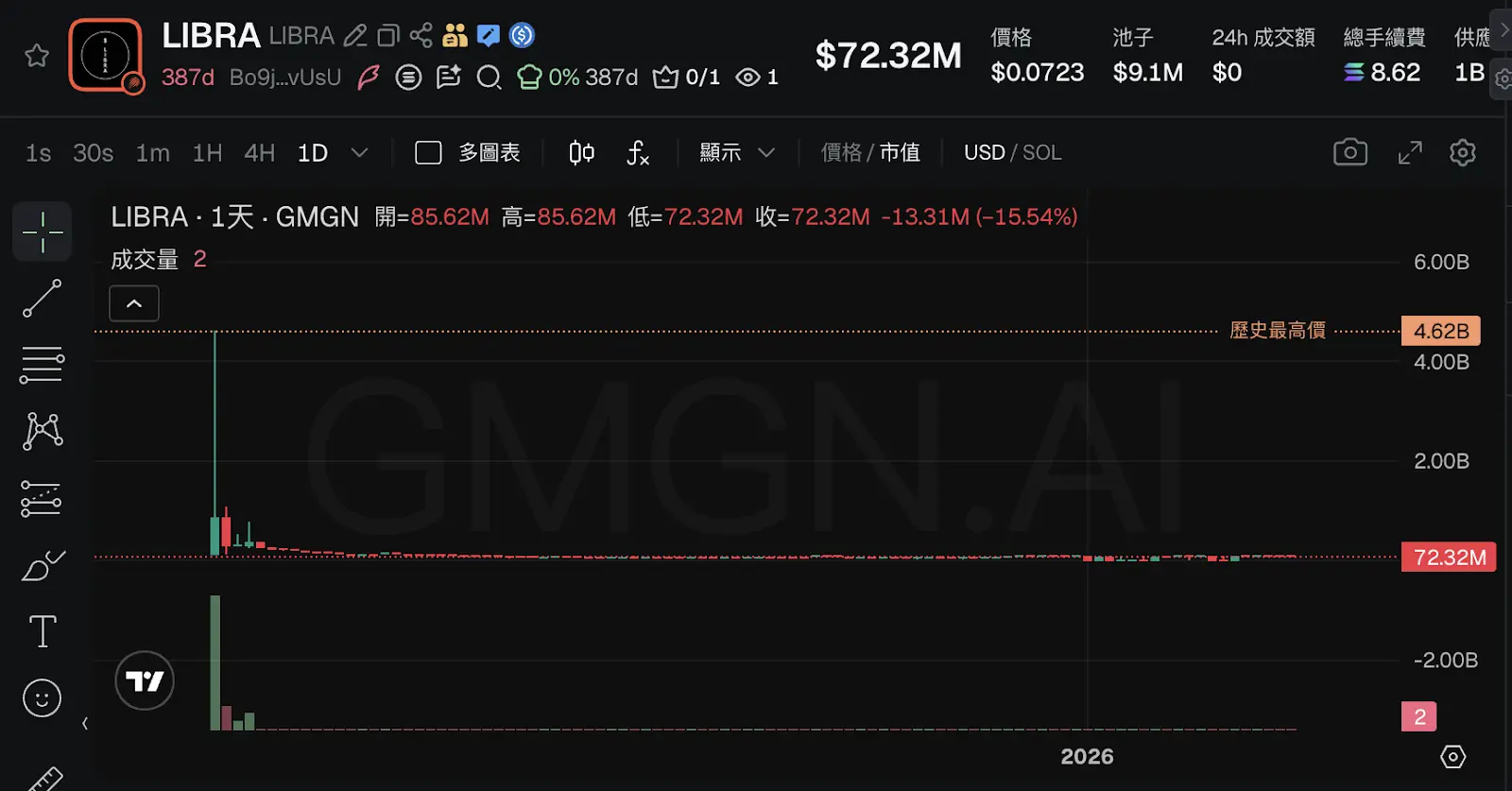
Under pressure from public opinion, Ben Chow, a core leader of Meteora, announced his resignation andhired the law firm Fenwick & West to conduct an independent investigation. However, this move triggered a secondary crisis: Fenwick & West was deeply embroiled in a class-action lawsuit stemming from the FTX collapse, with the outside world accusing the firm of helping SBF blur the lines between FTX and Alameda Research funding.
The community's response was nearly unanimous in ridicule, using a law firm entangled in its own legal battles as an “independent investigation” into the ethical issues of former FTX projects. This approach of "handling disputes with controversies" led the public to further doubt whether the Jupiter system truly intended to move towards transparency. Although Meow eventually stated under public pressure that they would reassess the choice of legal advisors, no follow-up explanation was provided.
The double-edged impact of vertical monopolies on the DeFi ecosystem
For ordinary users, vertical monopolies mean extreme efficiency. When you deposit through Moonshot, seek routing via Jupiter, and ultimately complete transactions in Meteora's pools, since the entire chain is optimized by teams from the same system, the transaction failure rate and experience fatigue are minimized. Additionally, because the team controls both ends of traffic and liquidity, they can swiftly support tokens with phenomenal potential like TRUMP, thereby maintaining Solana's vigor and on-chain activity.
Yet for the entire ecosystem, this high concentration and high risk almost equate. When one team simultaneously controls front-end traffic, trading routing weight, lending markets, and liquidity pools, any security issues regarding core private keys, or if core members are compelled to halt due to legal disputes, liquidity may face severe blows in a short period.
More concerning is the issue of “innovation monopoly.” Jupiter controls most order flow routing on Solana, and new DEX virtually lose the basic conditions to gain traffic unless they integrate into Jupiter’s ecosystem. This oligopolistic pattern at the routing level essentially constitutes an invisible market threshold — not determined by product quality but by the proximity of relationships with Jupiter. Even more worrisome is that Jupiter also participates in liquidity business through Meteora, presenting clear conflicts of interest between "deciding the direction of traffic flow" and "benefiting from the traffic."
Conclusion: The shadow of the Jupiter system and the answers the market has yet to secure
ZachXBT ultimately exposed Axiom, but this does not mean Meteora, or the entire Jupiter system is innocent; it might only indicate that the scope of ZachXBT’s investigation did not cover that area, or that there is insufficient direct evidence.
The controversies surrounding Meteora are not strictly black or white legal issues; they compose a series of overlaps in gray areas: the use of information asymmetry, airdrop disputes, choices of legal advisors, and even the recurring "we only provide infrastructure" excuse following several high-profile token collapses.
This startup team from Malaysia has indeed demonstrated its product execution capability to the market over the past three years, but they have also fully arbitraged every regulatory gray area with their business logic. Trust in the crypto industry has never been easy; when the traffic entrance, transaction execution, and liquidity of an ecosystem are controlled by the same interest community, the costs ultimately fall on retail investors.
The betting game on Polymarket has ended, but the market has yet to secure answers regarding Jupiter and Meteora.
免责声明:本文章仅代表作者个人观点,不代表本平台的立场和观点。本文章仅供信息分享,不构成对任何人的任何投资建议。用户与作者之间的任何争议,与本平台无关。如网页中刊载的文章或图片涉及侵权,请提供相关的权利证明和身份证明发送邮件到support@aicoin.com,本平台相关工作人员将会进行核查。


