Author: Shadow Exchange

Since its launch on the Sonic platform over a year ago, the Shadow protocol has generated $26.52 million in revenue ($46.60 million when considering rebases) with token issuance expenses of only $21.61 million. This means the Shadow protocol has a net surplus of $4.91 million (approximately $25 million when considering rebases).
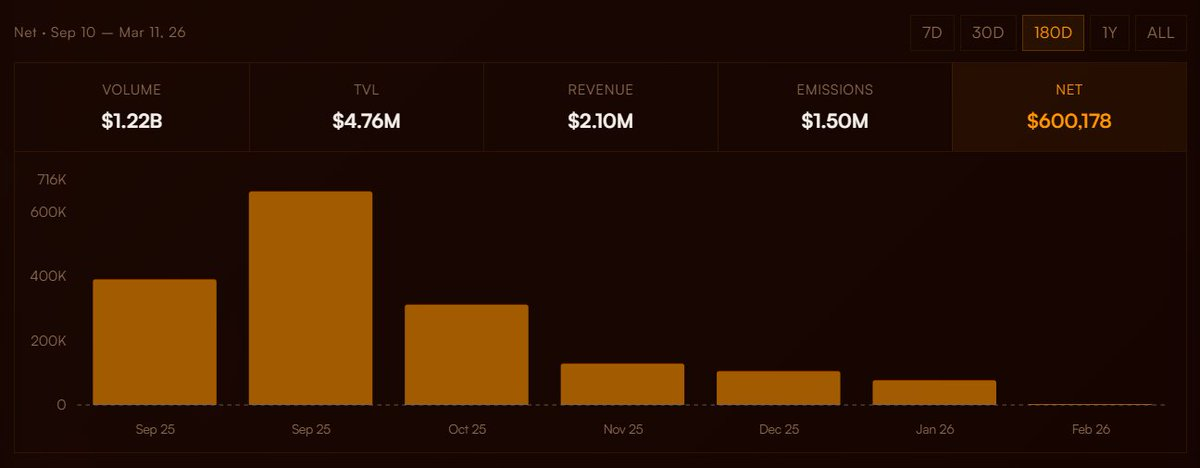
Importantly, although overall activity on Sonic has declined, Shadow has maintained net profitability over the past 180 days. During this time, the protocol generated $2.10 million in revenue, while issuance amounted to $1.50 million, yielding a net surplus of $600,000.
In 2026, our focus will be on continuing to develop based on this foundation: dedicating efforts to concentrate liquidity in the most productive areas, internalizing more value lost by Shadow, eliminating idle supply, and continuously building $xSHADOW.
New Focus
Revenue creation through liquidity has always been the core operation of Shadow. Rewards naturally flow to those pools that incur actual fees, and this mechanism is one of the cornerstones of the protocol.
The change today is in our focus. Over the past few months, we have actively concentrated funds into assets that can build the deepest and most durable liquidity while enhancing internal arbitrage profitability. For example:
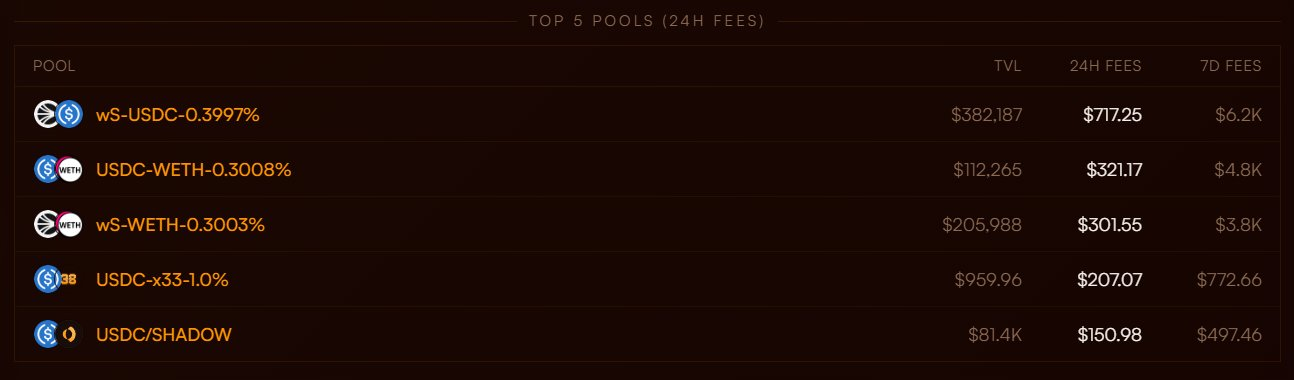
The significance of these trading pairs goes beyond mere appearances or TVL. After analyzing the market structure of multiple blockchains, one thing became very clear: the vast majority of trading volume in core assets comes from arbitrageurs and professional market makers who are responsible for maintaining market equilibrium.
In certain blockchains, this activity is very high and can even be taken for granted. However, this is not the case on the Sonic blockchain. This means that more work needs to be done at the DEX level, and Shadow chooses to directly invest in this rather than relying on liquidity and volume to appear on their own.
This creates a clearer economic cycle:
- Ample liquidity attracts and supports arbitrage/market making fund flows
- This fund flow generates fees and MEV opportunities
- The resulting income flows back to protocol participants
Meanwhile, we are comprehensively reducing emissions. $S / $USDC remains the most important liquidity pool in the ecosystem, but in the current market environment, increasing liquidity that can directly improve market depth for internal arbitrage efficiency is a wise move.
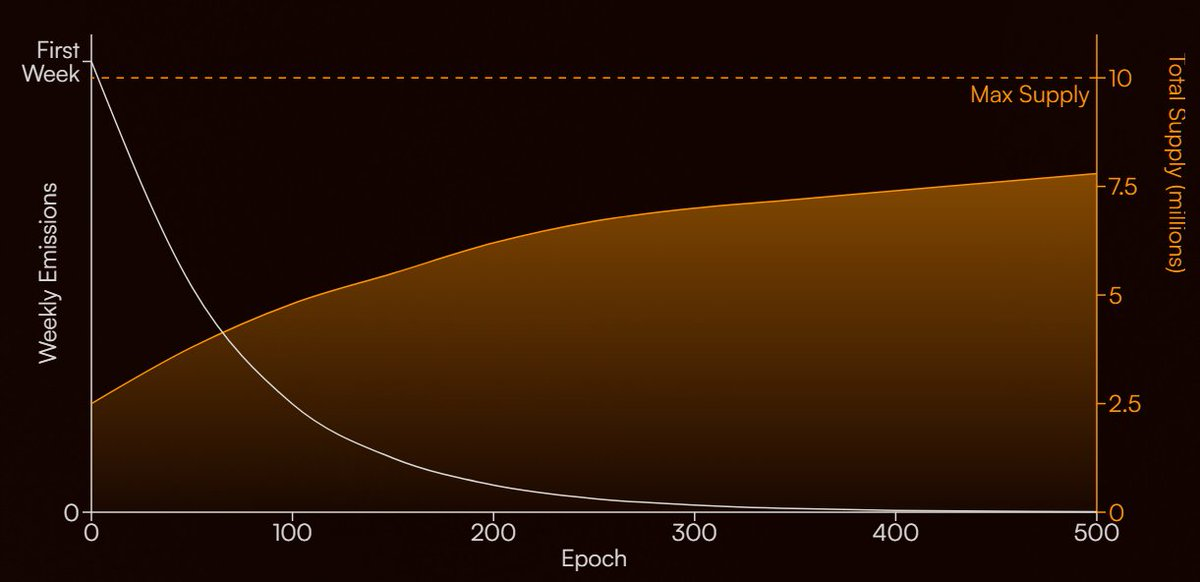
Our initial goal was simple: for every unit of $SHADOW token issued, the value created should exceed the cost. This goal has remained unchanged since the inception of Shadow.
Now, our goal is to further enhance sustainability by increasing revenue streams and improving the value created by the liquidity we choose to support.
We have collaborated with certain market makers and professional liquidity providers to help establish deep liquidity in core markets and will continue to expand partnerships in appropriate areas. If you or your team are interested in deploying deep liquidity on Shadow, please contact us directly.
Reverse Arbitrage
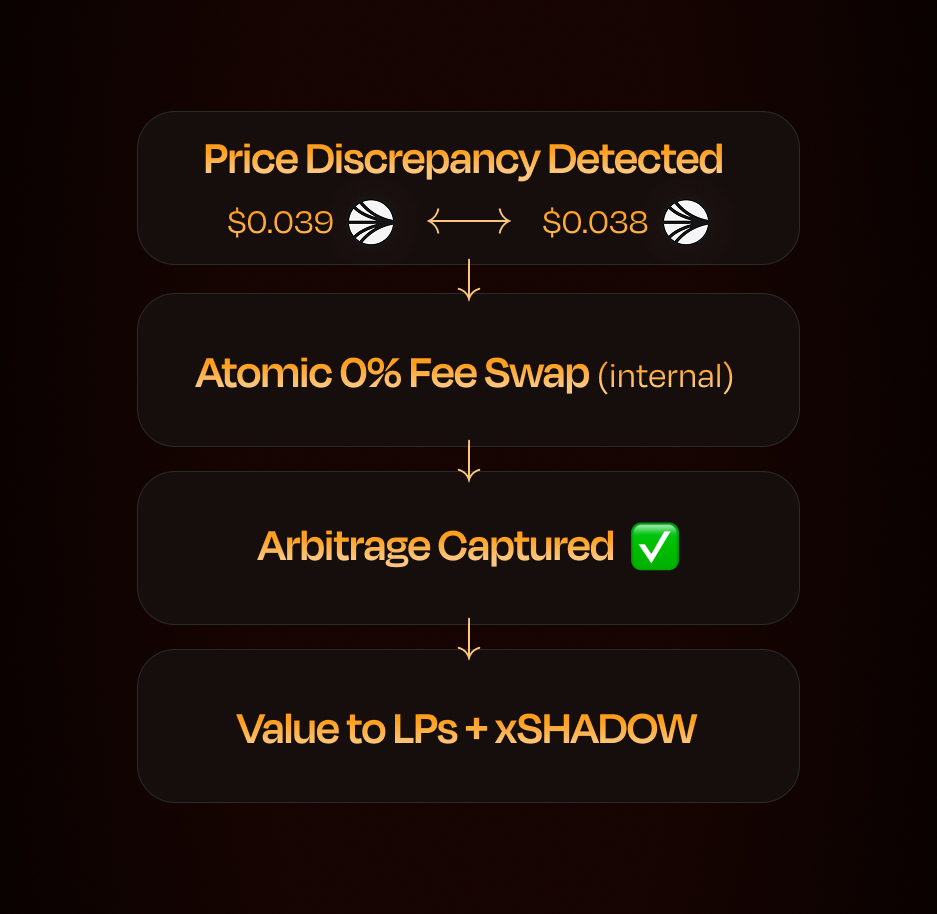
Shadow is deploying a permissioned reverse arbitrage bot, combining it with concentrated liquidity positions in core assets to capture it before external bots extract MEV.
How It Works
As an exchange operator, Shadow can execute 0% fee swap transactions atomically within its liquidity pools in the same block. The bot does not need to monitor the mempool or participate in gas auctions. It can identify price discrepancies in the Shadow liquidity pool and execute corrective trades before external arbitrageurs take action.
External bots must pay standard trading fees, which create a no-arbitrage range around the liquidity pool price, making trading within this range unprofitable for them. The higher the fees, the wider the range, and the more missed opportunities.
The Shadow arbitrage bot operates internally at 0% fees, meaning there are no price ranges. Any price difference, no matter how small, can be captured. Shadow can capture spreads that would be uneconomical for any other operator and retain value within the protocol, utilizing concentrated liquidity to precisely target these opportunities where they arise.
Scaling
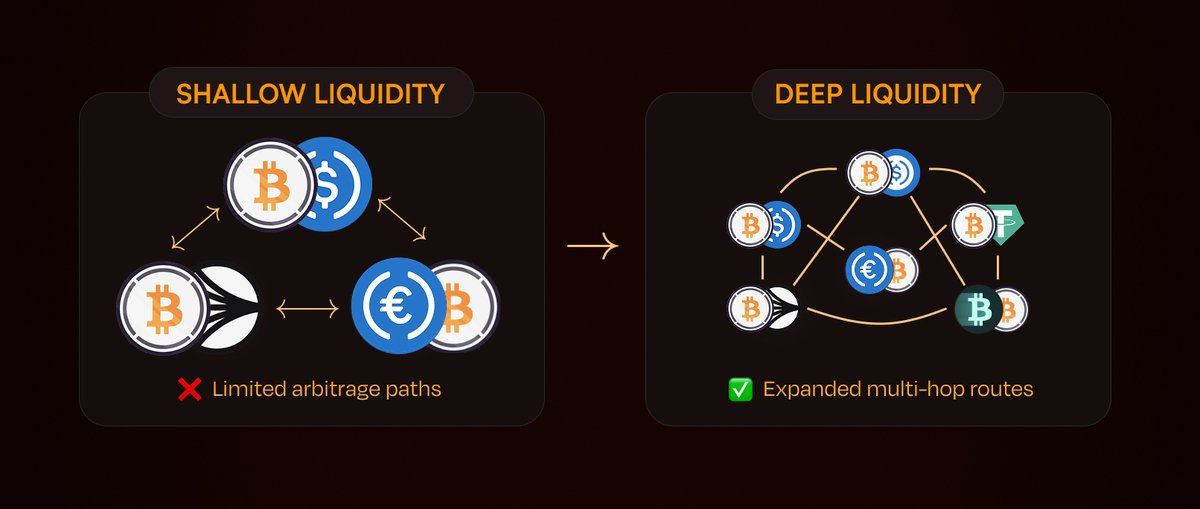
The relationship between liquidity and arbitrage income is not linear. Deeper pools support larger trades while also creating more arbitrage opportunities. More truly deep pools mean more price relationships, more trading paths between assets, and more ways that Shadow can capture value before external bots intervene.
Importantly, the growth of this income does not rely entirely on Sonic. Every new trading pair, protocol, and venue expands the potential number of arbitrage paths. Stablecoins, wrapped assets, bridging assets, cross-chain paths—each adds to the arbitrage space. As Shadow narrows spreads and deepens liquidity in core revenue trading pairs (such as $S, $ETH, and $BTC), internalized MEV and arbitrage income will become increasingly important.
LP Protection

Internalizing MEV can directly protect liquidity providers from three forms of value loss: LVR (loss vs. rebalancing), where arbitrageurs trade off outdated liquidity pool prices; adverse selection, where harmful liquidity systems systematically extract value from liquidity provider (LP) positions; and external bot extraction, where value completely flows out of the ecosystem.
Shadow intercepts this value and returns it to participants.
This is crucial because the costs of arbitrage are not evenly distributed across different venues. Lower liquidity venues bear more price adjustment costs. In CEX-DEX arbitrage, the depth of CEX is almost infinite, meaning that DEX LPs bear almost all rebalancing costs. Shadow’s rollback bot breaks that dynamic by capturing spreads before external arbitrageurs exploit that imbalance.
Dynamic Fees
Dynamic fees work in conjunction with the Bot, further reinforcing this advantage. When market volatility is high, fees spike sharply to capitalize on volatility and protect LPs from adverse fund flows at critical moments. When the market is stable, fees decrease to remain competitive, enhance execution efficiency, and achieve healthy trading volume. Unlike passive systems that only adjust after volatility has already reflected in liquidity pool metrics, Shadow’s fee model monitors data from CEX and DEX, pricing risk before arbitrage opportunities arise.
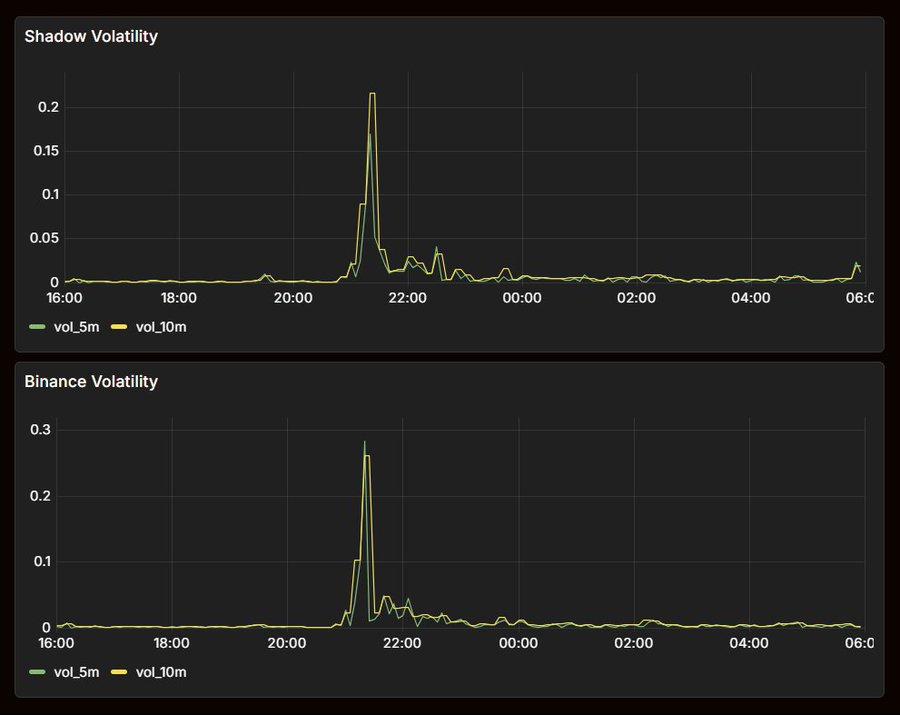
The underlying mathematical principle is simple:
Each arbitrage event extracts value from the liquidity pool, but the extracted value is divided into two parts: the fees returned to the LP and the remaining profits kept by the arbitrageur.
When the fee-to-volatility ratio is high, fees absorb the vast majority of the extracted value, with 86-95% returned to liquidity providers as fee income. Combined with Sonic's sub-second block generation time, the operating conditions of the Shadow liquidity pool have made it so that the fee barrier has almost eliminated all liquidity risk value (LVR). Now, the rollback bot captures the remaining value.
In other words, dynamic fees recapture most of the value during normal trading periods, while internal arbitrage compensates for any leaks. Liquidity risk value can never be completely eliminated, but dynamic fees and internal arbitrage can reduce it to as low a level as possible.
Value Distribution
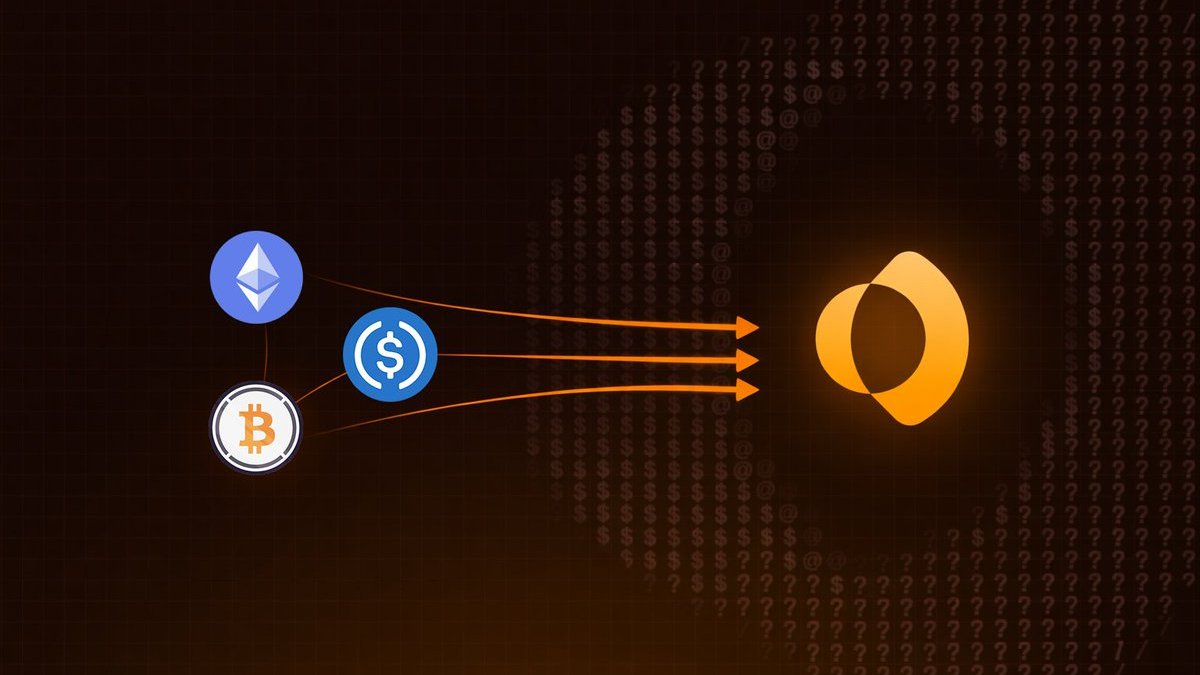
All captured value flows back to protocol participants through the x(3,3) system, with no team share. The captured value circulates back through voting incentives and the SHADOW buyback mechanism to the trading pairs that originally created the trading opportunities, thus the liquidity that generates revenue is the liquidity that benefits.
This is also where Shadow's approach differs from fee auction designs proposed by models like Uniswap.
In Uniswap's fee auction structure, arbitrageurs essentially bid on how to profit from LPs, and the resulting profits flow into the protocol token rather than back to the LPs that bear the LVR. Shadow's model is the opposite:
Fees are optimized to minimize LVR as much as possible, and 100% of the value captured by the Bot is returned to the protocol and its participants. Since all profits flow back, LPs are much better off structurally than they would be without internalization mechanisms at all.
Token Burn
The initial issuance of Shadow tokens was 3,000,000 $SHADOW. Today, the total supply is approximately 4,332,675 $SHADOW. Since the initial token economic model, three allocation categories have largely remained idle: partners, reserves, and community incentives.

These tokens contribute no substantial value to liquidity, governance, or protocol growth; their main role is to artificially inflate the total token count.
We will burn these tokens.
This burn will remove 900,000 $SHADOW, equivalent to 30% of the initial supply and approximately 20.8% of the current total supply. After the burn, the effective supply will be reduced to about 3,432,675 SHADOW.
The idle token supply merely serves to inflate numbers without benefiting anyone. Burning these tokens will bring the actual supply of Shadow closer to the true economic condition of the protocol.
xSHADOW Vaults

Users can now automate operations through x33, which automatically votes and compounds yields into positions. This is very effective for passively holding xSHADOW assets, but it lacks fine-tuned control, as all the value will be recaptured in $x33 / $SHADOW, even if users prefer to hold other assets.
xSHADOW Vaults are designed for this purpose. They provide users with the same governance and yield exposure while allowing users to choose how to achieve their yields.
The first two strategies will target $S and $USDC, with more strategies to be introduced in the future.
How It Works:
The system automatically handles the following cyclical workflow:
- Automatic voting to maximize weekly rewards
- Automatic claiming of fees, voting rewards, and rebases
- Automatic conversion of rewards to the target assets chosen by the user
Ultimately, users can enjoy the benefits of xSHADOW without any actions required, without being locked into perpetual compounding in x33 or SHADOW.
Why This Matters

Discussions about vertical integration are increasing, with a widespread belief that blockchains need to directly own their economic stacks to return value to their native tokens. The usual perspective is that independent applications are structurally mismatched with L1 servers, optimizing their own tokens while blockchains only charge gas fees. This view treats each application as a value extractor, overlooking the possibility that protocols can do the opposite.
Since its launch, Shadow has generated over $26 million in revenue and has maintained net profitability. The $S treasury will directly use this revenue, trading fees, and voting incentives to buy $S tokens. The entire process is automated, executed on-chain, and verifiable without anyone executing it. This is not a promise of future buybacks; it’s a reality.
A protocol that is profitable, sustainable, and now directly invests profits into on-chain $S tokens aligns much more with the ecosystem's philosophy than any original proposal that has yet to deploy revenue into $S tokens. The standard to measure the degree of integration is not ownership of codebases; what truly matters is whether actual value can be verifiably flowing into assets.
Towards 2026
As Shadow enters 2026, it has demonstrated the goals that most protocols are still striving to achieve: a sustainable economic model with positive net earnings.
Shadow is no longer a protocol attempting to prove itself profitable; it has achieved that.
Our next step is to optimize the model: centralizing issuance in the areas with the most abundant liquidity, internalizing more value created from trading and arbitrage, providing better ways for users to realize protocol yields through xSHADOW Vaults, and removing supplies that have not been productive.
These measures complement each other, turning deeper liquidity into more revenue, and more revenue into stronger sustainability, while stronger sustainability ultimately brings a better product experience for all Shadow participants.
With the launch of reverse arbitrage and xSHADOW Vaults, we will release more content.
Wishing you all the best in 2026, let us achieve together!

免责声明:本文章仅代表作者个人观点,不代表本平台的立场和观点。本文章仅供信息分享,不构成对任何人的任何投资建议。用户与作者之间的任何争议,与本平台无关。如网页中刊载的文章或图片涉及侵权,请提供相关的权利证明和身份证明发送邮件到support@aicoin.com,本平台相关工作人员将会进行核查。


