Author: Bankless
Translation: Baihua Blockchain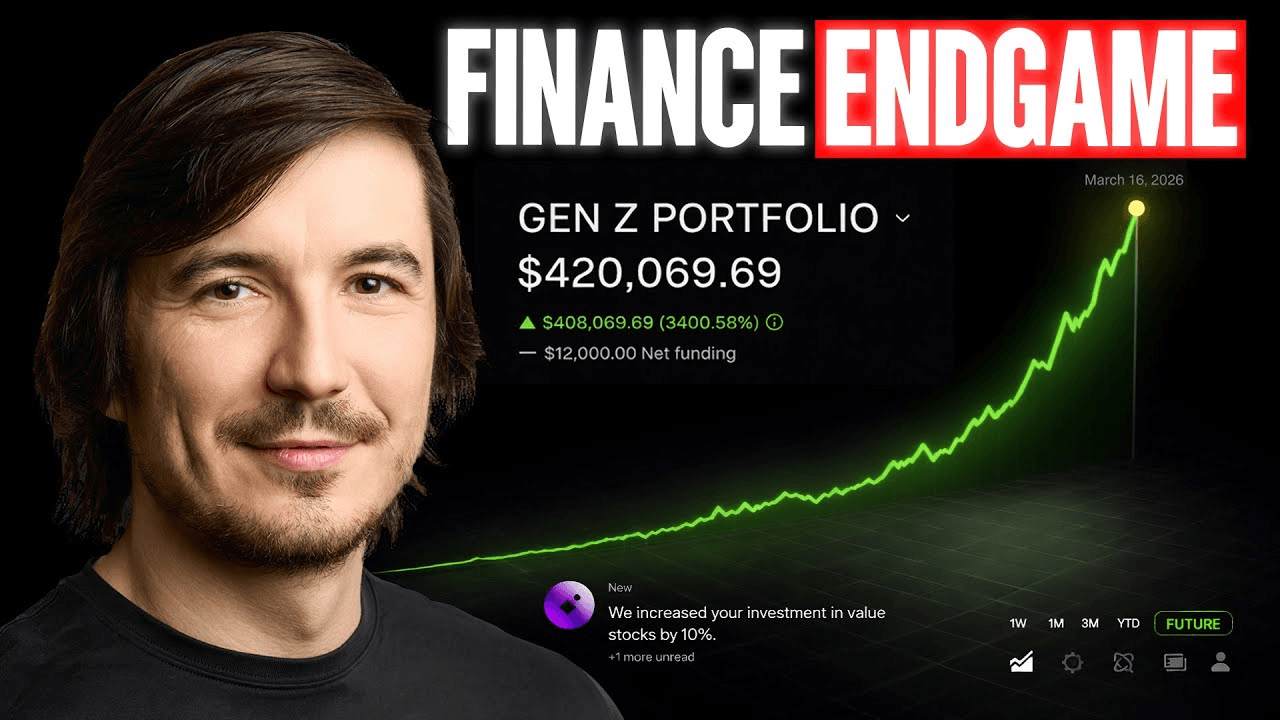
Did you think Generation Z (Gen Z) is just a bunch of "financial nihilists" splurging their youth on TikTok and blindly speculating in the crypto market? The data brought by Robinhood founder Vlad Tenev will completely overturn your perception. In the latest episode of the Bankless interview, Vlad revealed an astounding fact: Gen Z is the most hardcore long-termist generation in history, starting to plan for retirement on average at the age of 19.
As the $70 trillion “great wealth transfer” begins, this financial giant at the center of the storm is playing a major game: from 24/7 trading of tokenized U.S. stocks to enabling retail investors to get in early on unicorn funding plans for SpaceX and Stripe, to the imminent game-changing AI financial agents. Vlad not only responded to concerns about “financial entertainment,” but also deeply analyzed how Robinhood is reshaping traditional banking through DeFi frameworks. This is not just an interview about trading tools; it is a roadmap to the future finance of 2040.
The $70 trillion "great wealth transfer"
Host: Let’s start with the "great wealth transfer." Over the next few decades, as the Baby Boomers and Silent Generation pass their wealth to Generation X, Millennials, and Generation Z, it is estimated that $70 to $90 trillion of assets will undergo intergenerational transfer in the U.S. This is the largest wealth transfer in history. To what extent does this significant opportunity guide Robinhood's strategy?
Vlad: We think about it quite a lot. Many companies have begun discussing this topic, but our real transformation into concrete fintech actions can be traced back to last year when we launched Robinhood banking services at the Gold event. The core philosophy of Robinhood is: whether for individuals or institutions, whether domestic or international, Robinhood should be the best place for all your money and assets to be serviced. We believe that when the older generation experiences inheritance events, we have a tremendous opportunity. We don't just serve the young who are receiving wealth; we also need to attract the current asset holders—essentially the parents and grandparents—with rich products and features. Through credit and banking services, we can tap into substantial liquid assets stored in checking and savings accounts. This year, we also launched custodial accounts and trust accounts. We are not just waiting for people to inherit their wealth; we are striving to make the older generation realize that using outdated financial platforms today is actually a disadvantage. This positions us favorably for the wealth transfer peak expected in 8 to 10 years.
Finance in 2040: 24/7 markets and asset tokenization
Host: What will finance look like in 2040? What will stay the same, and what will change fundamentally? Will we have 24/7/365 markets? What role will AI play?
Vlad: I believe that 24/7/365 markets are inevitable. We launched a 24-hour stock market in 2022, and now the entire industry is following suit. The technology is already in place, and weekend trading will be realized sooner than expected. Tokenization is another core driver. Last year, we launched tokenized versions of thousands of U.S. stocks in the EU, including token giveaways for private companies like OpenAI and SpaceX. Although it's still early, I believe by the end of this year, tokenized stocks will begin to surpass traditional brokerage accounts in trading advantages. If you can solve the 24/7 liquidity issue for private equity, then essentially all assets could be traded around the clock.
Tech stack: The fusion of CeFi and DeFi
Host: Your Layer 2 chain, Robinhood Chain, has just launched its testnet. How do you position the technology stack you are building? Is it challenging the New York Stock Exchange, or is it building a new gateway to the crypto world?
Vlad: The tech stack is divided into two parts. One part is the CeFi component, which is the tradability of stock tokens on centralized exchanges like Bitstamp; the other part is the DeFi aspect, where we want users to participate in DeFi protocols through non-custodial wallets on Robinhood Chain or other chains. We don't see ourselves as chasing traditional providers; it’s more like a completely new species. In the crypto ecosystem, many tokens lack underlying utility, but when you bind technological power to real-world assets (RWAs) with genuine fundamental utility, the experience changes qualitatively. As for the U.S. market, although the regulatory environment is changing, the U.S. already has a nearly 24/5 mature structure, and the marginal benefits of tokenization may not be as evident in the short term as in the EU. However, as technology proves its superiority overseas, it will ultimately be transplanted back to the U.S.
DeFi strategies and "truth machines" for prediction markets
Host: Companies like Coinbase and BlackRock are moving towards DeFi; what is Robinhood's decentralized finance strategy? Additionally, regarding the recently popular “prediction markets,” do you think they are good or bad for society?
Vlad: Our strategy is "full-stack." We need to bring a large number of customers through the Robinhood App and Wallet while also building infrastructure like the Robinhood Chain. The activity level of the testnet exceeded my expectations, and developers are very interested. The future core is "curation"—how to help customers filter quality choices that fit their risk profiles among thousands of on-chain products. Regarding prediction markets, I think they are very beneficial for society. They are not just trading venues; they are “truth machines.” The business model of traditional news media sometimes delays the truth for traffic, while prediction markets fill the fundamental need for "real information."
Host: Will Robinhood enhance its media and content attributes? For example, becoming the homepage for prediction markets or adding social elements.
Vlad: Absolutely. We are about to launch Robinhood Social. We have a vast amount of assets, and prediction markets will be one of the "first-class citizens." Through user-generated content (UGC), we can capture breaking news faster than manual curation. Meanwhile, our media department, Sherwood Media, is also producing high-quality content and integrating prediction market data. In terms of execution, we are collaborating with Kalshi and ForecastX, and in the future, through the acquisition of Bitstamp, we will have our own trading platform to provide the best experience to customers.
Debunking the myth of “financial entertainment”
Host: Many people think the younger generation engages in finance for entertainment, with a tint of “financial nihilism,” believing they are just speculating and gambling. As a platform provider, how do you view this trend?
Vlad: I have a relatively “spicy” view: I don't believe entertainment drives the majority of financial activity. The reality is that no one wants to discuss the boring but important parts on social media. On Twitter, no one posts "My Robinhood retirement account just grew," because that’s not sexy and doesn’t go viral. But the data tells us that 40% of the platform's assets are in passive tools (like ETFs and cash). Even the most active options traders usually have larger passive investment portfolios. People are just operating with different accounts for different purposes.
Host: That’s a compelling counter-narrative. So Gen Z is not financially irresponsible, but rather more savvy?
Vlad: Exactly. As I mentioned earlier, they open accounts very early. Part of the reason is access convenience—just a few clicks on Robinhood can get you an account. Another part is economic incentives, like the 3% retirement account matching contribution we offer Gold members. In addition, today’s young people are more often independent contractors or gig economy participants, making it hard to rely on traditional employer 401k plans, so they need to actively manage their futures more. Currently, our retirement assets have surpassed $25 billion, showing explosive growth.
Trump Accounts and the future “Gen Beta”
Host: Let’s talk about younger groups than those aged 19. The recently mentioned Trump Accounts in the “Growth and Beautiful Act” have caught attention, where the government will provide $1,000 in initial investment funds for newborns. Why do you rate this highly?
Vlad: This is the first mechanism I can think of that truly “gives money back to the future.” Most current policies are borrowing against future debt. Trump Accounts are automated and teach children the value of long-term investing. By the time they reach 18 or 30, benefiting from compound interest, this money could grow to hundreds of thousands or even millions of dollars. Although newborns won’t directly operate phones, these accounts are managed by parents, and we will focus on creating a “children’s investment experience” that emphasizes financial education and literacy.
The future of super financial apps and payments
Host: Everyone is rushing towards “super financial apps.” Will Robinhood pack all functionalities into one app? Also, why have you not implemented peer-to-peer payments among users yet?
Vlad: We will adopt a flexible strategy. The main app will evolve to become more personalized, tailored for you like the homepage of social media. Meanwhile, we will also keep separate specialized apps, like a dedicated banking app or non-custodial wallets, connected through unified authentication. Regarding payments, we have experimented with it. However, we found that Robinhood users are primarily credit-driven rather than those relying on debit cards for early payday. Currently, Venmo and Cash App already have excellent peer-to-peer experiences, and we don’t want to just pile up mediocre commoditized features unless we can make significant improvements. Our current priority is to move the remaining banking functionalities onto the platform.
Stablecoins and regulation
Host: What are your views on stablecoins as banking products?
Vlad: Stablecoins face two challenges: one is FDIC insurance. U.S. consumers attach great importance to fund safety, especially in the wake of the 2023 banking crisis, and the risks of stablecoin de-pegging leave people wary. The second is competition for payment cashback. Currently, payments made with stablecoins do not offer the 3% cashback like credit cards do. Stablecoins are very useful in large B2B or cross-border payments, but more ecosystem maturity is needed in consumer scenarios like splitting the bill for pizza.
Host: How reliant are you on the passage of the Clarity Act regarding crypto regulations?
Vlad: The Clarity Act can clarify what constitutes a security and what constitutes a commodity, which could save us a lot of legal compliance costs. More importantly, it could prevent policy fluctuations caused by administrative changes. Regardless of whether the bill passes, we will implement the Robinhood Chain because it is global and permissionless. If the clarity is high in the U.S., we will push for the U.S. market; if the clarity is low, we will prioritize developing international business.
The next growth point: AI and private equity
Host: Looking ahead, what is Robinhood's third major opportunity?
Vlad: There are several directions. The first is the launch of social features; the second is the popularization of prediction markets. But the biggest transformation may come from AI. We are thinking about how an "AI agent," like a family office, can run your entire financial life? From automatically managing savings to executing complex trading strategies. Additionally, we are also addressing the issue of retail investors being unable to access growth stocks (like Stripe and SpaceX) through Robinhood Ventures. We allow retail investors to participate in IPOs through IPO Access and use our own capital to invest in later-stage projects. In the future, we hope that even seed round financing can include retail investors as part of it.
Host: Thank you, Vlad, for sharing. Robinhood has always been at the forefront of democratizing finance. The above content does not constitute financial advice, and cryptocurrencies come with risks. Thank you all for listening to Bankless.
This article link: https://www.hellobtc.com/kp/du/03/6255.html
Source: https://www.youtube.com/watch?v=0yIig3cpC1s
免责声明:本文章仅代表作者个人观点,不代表本平台的立场和观点。本文章仅供信息分享,不构成对任何人的任何投资建议。用户与作者之间的任何争议,与本平台无关。如网页中刊载的文章或图片涉及侵权,请提供相关的权利证明和身份证明发送邮件到support@aicoin.com,本平台相关工作人员将会进行核查。


