Original | Odaily Planet Daily (@OdailyChina)
Author | Wenser (@wenser 2010)
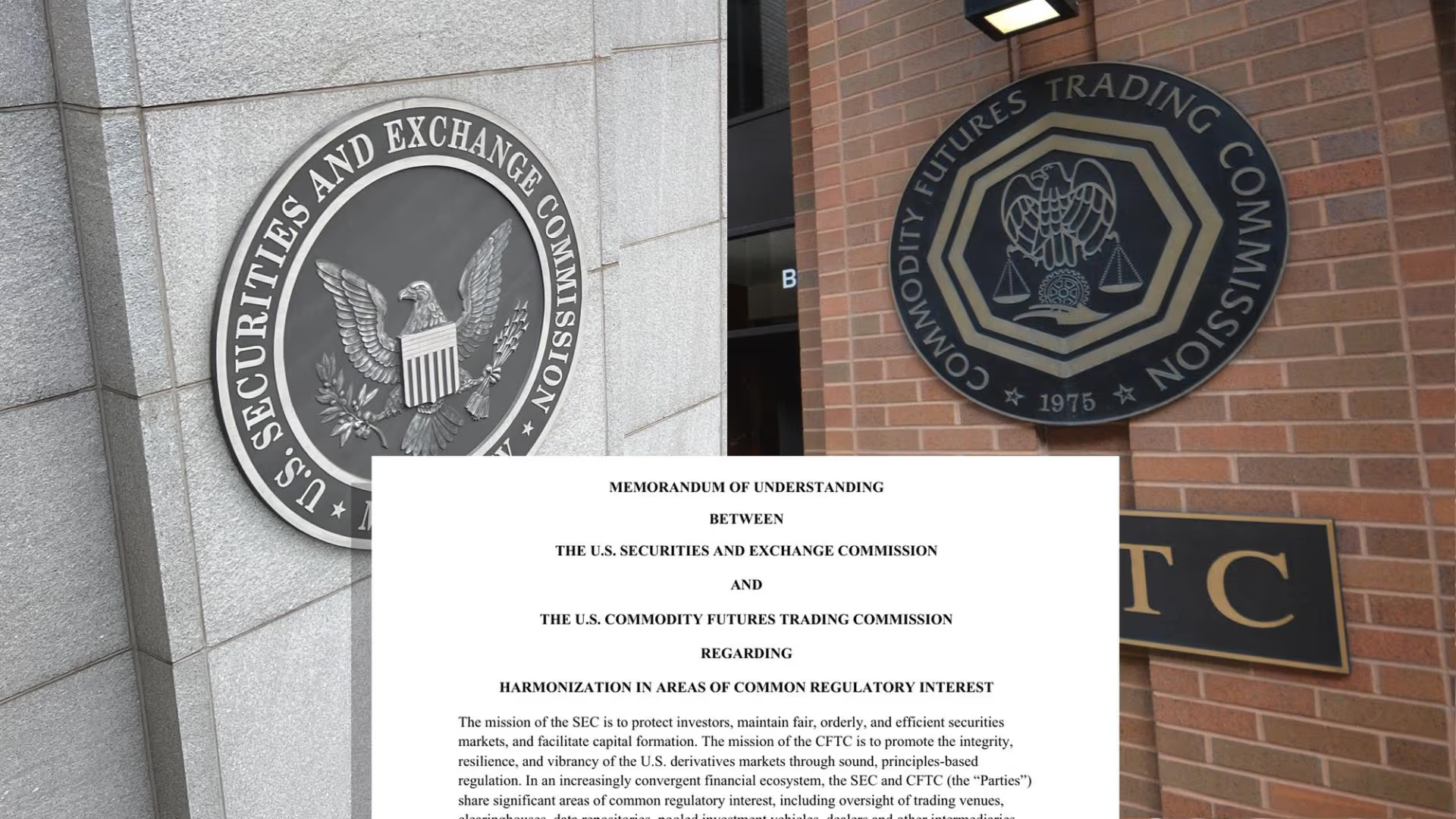
On March 17 local time, the U.S. SEC officially released its 30th press release of the year. In this explanatory document of less than 1000 words, SEC Chair Gary Gensler and CFTC Chair Rostin Behnam jointly untangled the tight restrictions that have been placed over the entire cryptocurrency industry for the first time: Most cryptocurrencies are not securities, but classified as "digital commodities, digital collectibles, digital tools, stablecoins."
On March 11 this year, the two agencies previously signed a Memorandum of Understanding (MOU), revealing a series of initiatives to "clarify product definitions, modernize clearing, margin, and collateral frameworks through joint interpretation and rulemaking." It is now evident that this latest explanatory document serves as the best proof of the two agencies working together to ease restrictions in the cryptocurrency market.
It is foreseeable that the impact of this document clarifying the classification of crypto assets extends far beyond this; subsequent intensive crypto IPOs, airdrops, DeFi mining, staking, and wrapped assets will all welcome new development opportunities. As for what lies behind this seemingly convenient door, whether it is the influx of institutional liquidity, countless retail investors, or the regulatory machine's hidden scythe, perhaps only time will tell us the answer.
Detailed Explanation of the SEC's Explanatory Document's 5 Classifications: Most Crypto Assets Are Not Securities
According to the SEC's released Fact Sheet, it provides clear regulations on the classification of 5 types of crypto assets:
- Digital Commodities — Not Securities — Their value is inherently linked to the programmatic operation of a certain "functional" crypto system and the dynamics of supply and demand, rather than derived from the expectation of profits from the efforts of others' core management.
- Digital Collectibles — Not Securities — Designed for collection or use, may represent or convey rights related to works of art, music, video, trading cards, gaming items, or the digital expression or reference of internet memes, characters, current events, and trends.
- Digital Tools — Not Securities — Crypto assets with practical functions, such as memberships, tickets, vouchers, property certificates, or identity identifiers.
- Stablecoins — Stablecoins that meet the definition per the GENIUS Act are not securities, and the issuers of stablecoins are explicitly prohibited from paying interest or yields to holders in any form (cash, tokens, or other considerations).
- Digital Securities (or "Tokenized Securities") — Are Securities — Financial instruments that are presented or represented in the form of crypto assets listed under the definition of "securities," with ownership records maintained entirely or partially on one or more crypto networks.
In the subsequent more detailed 68-page explanatory document, the SEC also defined airdrops, DeFi mining, staking, and wrapped assets:
- DeFi Mining (Protocol Mining): Not regarded as a securities issuance. (Note: There is no structure dependent on profits from others' core management efforts.)
- Staking: Does not constitute securities issuance. (Note: If the underlying asset is a digital security, or a non-security asset included in an investment contract, then that staking token is classified as a security.)
- Wrapped Assets: Not considered securities. (Note: The custodian of wrapped assets must not misuse the underlying assets and must not transfer, lend, stake, re-stake, or use them for any other purposes.)
- Airdrop Assets: Not regarded as securities. (Note: If the issuer actively announces an airdrop plan and requires users to complete specific tasks to receive the airdrop, there is an active labor exchange for assets, and a clear consideration relationship may established risks of an investment contract)
In simple terms, assets that are not considered securities include: Digital Commodities, which, like gold or oil, are tangible things whose prices are determined by market supply and demand. Bitcoin and Ethereum fall into this category; Digital Collectibles, which, like stamp collecting or painting buying, are for collection or appreciation. Popular NFT images and gaming props (including Meme coins) count as this type; Digital Tools, which are like membership cards, tickets, or certificates obtained for use, not for speculation; Stablecoins. Like a digital "shopping voucher," specifically used for payment, with stable and non-fluctuating value. But there is a hard rule: Issuers cannot pay interest to holders, once interest is paid, the nature changes and it may be considered a stock.
Digital Securities are essentially stocks but just repackaged in a digital form, so they still fall within the stock range.
Mining, aiding the network in bookkeeping to earn coins, does not count as issuing stocks; staking involves locking coins to help the network maintain security while earning rewards, which does not count as issuing stocks. However, if the coins locked are of stock nature, that is another matter. Wrapping is converting one coin into a format usable in another network, similar to exchanging change, which does not count as issuing stocks. Airdrops involve platforms giving out coins for free, which also does not constitute issuing stocks. However, if platforms require you to complete tasks first for you to receive coins, then it resembles an "employment relationship," and the nature may differ.
It is noteworthy that this document acknowledges for the first time that "investment contracts" can be terminated, meaning that a token, even if issued through financing (ICO) in the early days, can no longer be considered a security as long as it later achieves decentralization or possesses utility characteristics.
Although these remain at the level of "explanatory documents" and have not evolved into specific legal codes, they have preliminarily clarified the previously confused classification system of crypto assets, providing a certain level of evidentiary support for future regulation and enforcement. Subsequently, the potential impacts of this document may bring beneficial aspects to the market from the following angles.
Non-Securities Classification for Crypto Assets Released, 3 Major Benefits May Drive Market Recovery
Currently, the explanatory document jointly issued by the U.S. SEC and CFTC resembles a "new development declaration for cryptocurrency," which will directly drive explosive growth in prediction markets, crypto IPOs, and DeFi protocols.
New Explanation Clears Polymarket Airdrop Obstacles, Crypto IPO and Token Issuance Engaged
Following the SEC's latest regulatory explanation on crypto assets, crypto KOL @harrysew stated that this framework may open the doors wide for POLY token launches and airdrops, significantly reducing regulatory uncertainties. On one hand, Polymarket is able to utilize its real-time data prediction functionalities, and POLY token will become a utility token; on the other hand, mining, staking, and wrapped assets can also proceed smoothly, further expanding the application scenarios of POLY tokens.
In this way, Polymarket is expected to evolve from being an "illegal gambling hall" condemned by local regulatory authorities to a "global truth machine" predicting the future and substantiating event developments.
New Explanation Facilitates Crypto Exchanges’ IPOs in the U.S., Platform Tokens No Longer Negative Assets
For exchanges like OKX and Kraken aiming for crypto IPOs in the U.S. stock market, this explanatory document can be described as a timely pillow for those who were feeling sleepy.
Previously, exchanges were often limited by balance sheet constraints, making it difficult to clearly define and conduct compliance audits on platform tokens and assets held by the platform, as they feared regulators would label cryptocurrencies as stocks.
Now, thanks to this explanatory document, the auditing obstacles prior to an IPO have been swept away, and the previously problematic platform tokens no longer constitute obstacles to an IPO.
New Explanation Benefits DeFi Protocol Development, Massive Liquidity May Flow In
For many DeFi protocols, this explanatory document serves as a "get out of jail free card."
Previously, many DeFi protocols, including Uniswap, had received "regulatory subpoenas" from the SEC, but now staking, wrapped assets, and spot holdings are clearly not considered securities. In light of this, many institutional funds can now enter DeFi protocols in a compliant and large-capacity manner.
Of course, in areas such as liquidity mining, governance tokens promising yields, and yield aggregation protocols, asset management giants like BlackRock and Fidelity still cannot smoothly enter.
Conclusion: The Death of the Cryptocurrency Wilderness Era, Market Accelerates into the "Great Requisition Era"
Of course, just like the two sides of a coin, as the legal boundaries defined by the SEC and CFTC become increasingly clear, the "ambiguous dividends" and "grey areas" within the cryptocurrency industry will simultaneously face liquidation. To some extent, the cryptocurrency industry is becoming gradually incorporated into the regulatory system and compliance framework, just like past banking and credit industries; new crypto projects will need to invest more human and financial resources into regulatory compliance, airdrop distributions, staking designs, etc., which may somewhat affect crypto innovation.
However, for the currently liquidity-starved crypto market, every detailed explanation from regulatory agencies serves as a ticket invitation into the mainstream financial realm; although the ideal of decentralization seems to drift further away from us, what is more important is that the connection between the cryptocurrency industry and mainstream populations is becoming increasingly tight, securing its vitality and survival prospects to a certain extent.
Between disappearing in silence under pressure and living constrained, I think most people would choose the latter.
免责声明:本文章仅代表作者个人观点,不代表本平台的立场和观点。本文章仅供信息分享,不构成对任何人的任何投资建议。用户与作者之间的任何争议,与本平台无关。如网页中刊载的文章或图片涉及侵权,请提供相关的权利证明和身份证明发送邮件到support@aicoin.com,本平台相关工作人员将会进行核查。