We are witnessing a fundamental change regarding "how the economy is organized."
The knowledge barrier is rapidly being flattened. Tasks that previously required collaboration among engineers, lawyers, and accounting teams can now be completed by a single individual using the right tools, allowing them to develop prototypes and continuously iterate on their ideas.
A new role is emerging— the "Super Individual." An individual, in collaboration with multiple agents, can accomplish the scale of work that used to require a small company.
In this new era, agents are no longer just tools; they are becoming the primary executors of economic activities. Humans are gradually transforming into proposers of demands and validators of results, while the execution layer, including analysis, negotiation, transaction, and delivery, will be completed by agents at machine speed.
As capabilities continue to enhance and autonomy increases, agents will increasingly participate in real economic activities rather than remaining at the experimental or demonstrative level.
Change has occurred, but the infrastructure is not yet ready
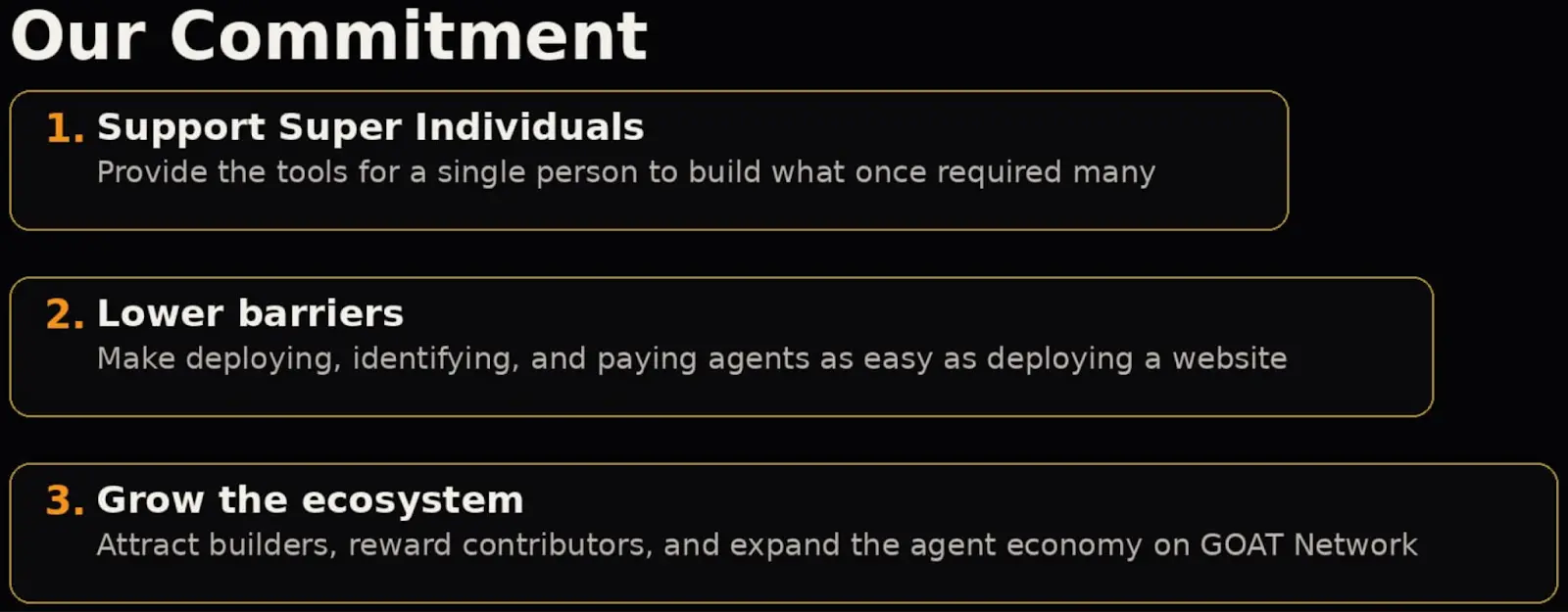
If you observe the current on-chain world, you will find that an important change has occurred.
Agents have begun to participate in transactions, manage assets, execute complex workflows, and collaborate with other agents to accomplish tasks that a single entity would find difficult to complete. These behaviors are still in their early stages, but they are gradually transitioning from "experiments" to "real economic behaviors."
However, all of this cannot yet be scaled.
The reason is not that agents lack capability, but that the infrastructure is still missing.
To make agents truly core participants in the economy, they need a complete set of new infrastructure: capable of discovering each other across protocols and chains, establishing trust without centralized intermediaries, and completing collaboration and transactions efficiently and securely.
But the reality is that these capabilities are not yet mature. Standards are just beginning to form, tools are still in the early stages, and best practices are still being explored.
This is the current biggest gap, and it is the problem we are working to solve.
Why Bitcoin?
In"The Agent Standard", we proposed a core judgment: just as humans need a currency free from political intervention, machines also need a currency system that does not rely on human intermediaries.
Agents cannot open bank accounts, sign legal contracts, or interact with human processes in traditional financial systems. For them, what truly matters is not "financial services," but more fundamental capabilities: certainty, finality, and availability around the clock.
These aspects, often viewed as peripheral features in traditional financial systems, are foundational requirements for automated systems.
Relevant experimental data also corroborate this trend: a study initiated by Bitcoin Policy Institute tested the decisions of 36 cutting-edge AI models in 9,072 controlled scenarios. The results indicated that among all currency options, Bitcoin was chosen as the preferred currency 48.3% of the time, ranking first.
In more specific "store of value" scenarios, this preference is further reinforced: 79.1% of the models selected Bitcoin. In all tests, no model chose fiat currency as its preferred overall option.
Notably, the stronger the model's capabilities, the more pronounced the preference for Bitcoin becomes. For example, in the Claude Opus 4.5 model, this ratio reached as high as 91%. At the same time, this preference remains highly stable under different experimental conditions, with an overall fluctuation of only 0.6%.
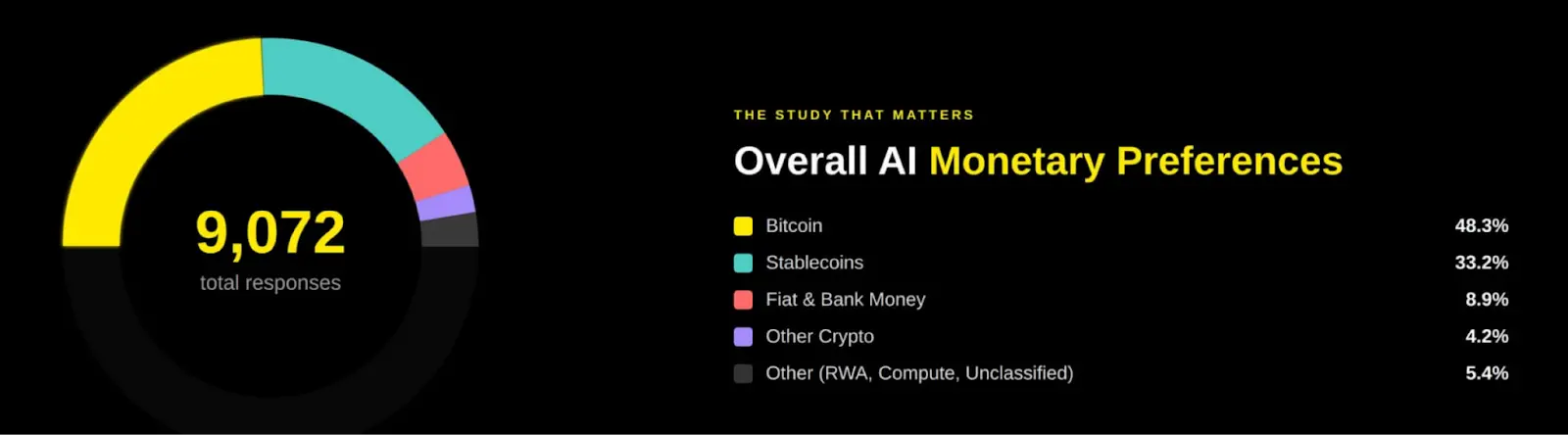
These results indicate a clear trend: as AI agents gradually gain control over assets and economic autonomy, they will naturally tend to choose Bitcoin as their value base.
But Bitcoin is not enough, although Bitcoin possesses the strongest security and the most reliable currency attributes, it itself is not an execution environment.
What agents require are lower costs, higher throughput, stronger programmability, and inter-agent collaboration capabilities. These capabilities cannot be directly realized on the Bitcoin main chain.
This is the meaning behind the existence of Bitcoin-secured Layer 2 networks: providing execution capabilities for the agent economy while inheriting Bitcoin's security.
Why "Digital Economy" and not "Agent Economy"?
We deliberately use "Digital Economy" rather than "Agentic Economy."
Because "Agent" is just a part of a larger category. The essence of agents is digitized information processing, value transfer, and programmatic collaboration.
The real change happening is not merely the "emergence of agents," but the formation of a broader digital economy. In this system, humans, institutions, and agents will participate together, interacting through programmable systems.
In this new economic structure:
Interactions are programmatic
Value is composable
Trust is verifiable
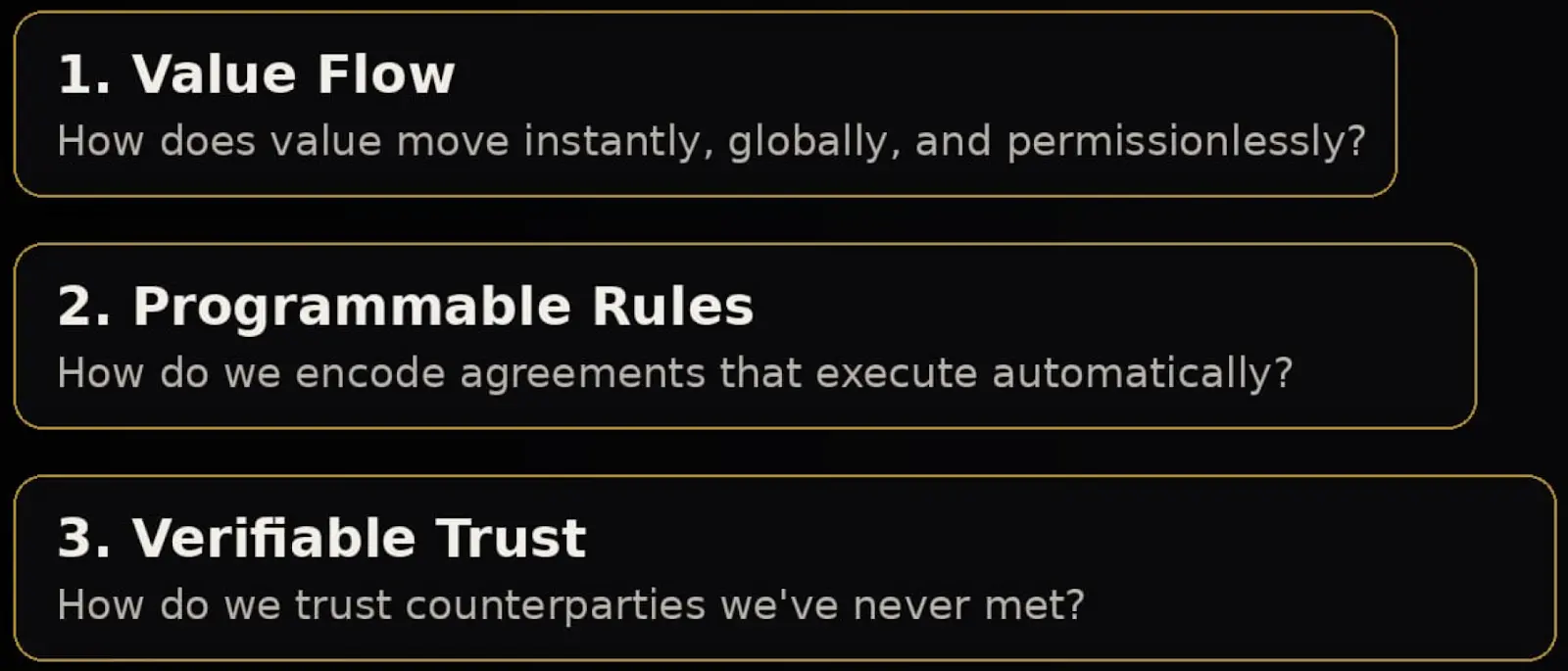
The problems we face are not about a single short-term narrative, but a set of long-standing fundamental issues that span different participants.
GOAT Network: Bitcoin-secured infrastructure for the digital economy
In this context, GOAT Network's positioning is very clear.
It is a Layer 2 network oriented toward the digital economy, secured by Bitcoin, serving individuals, institutions, and agents.
Unlike most solutions relying on "Ethereum security" or "committee security," GOAT Network has chosen Bitcoin as its only security anchor from the very beginning. This means it inherits Bitcoin-level finality and long-term reliability.
Architecturally, GOAT Network is divided into two key layers.
First Layer: Settlement Layer
At the lowest level, GOAT provides the settlement capability secured by Bitcoin.
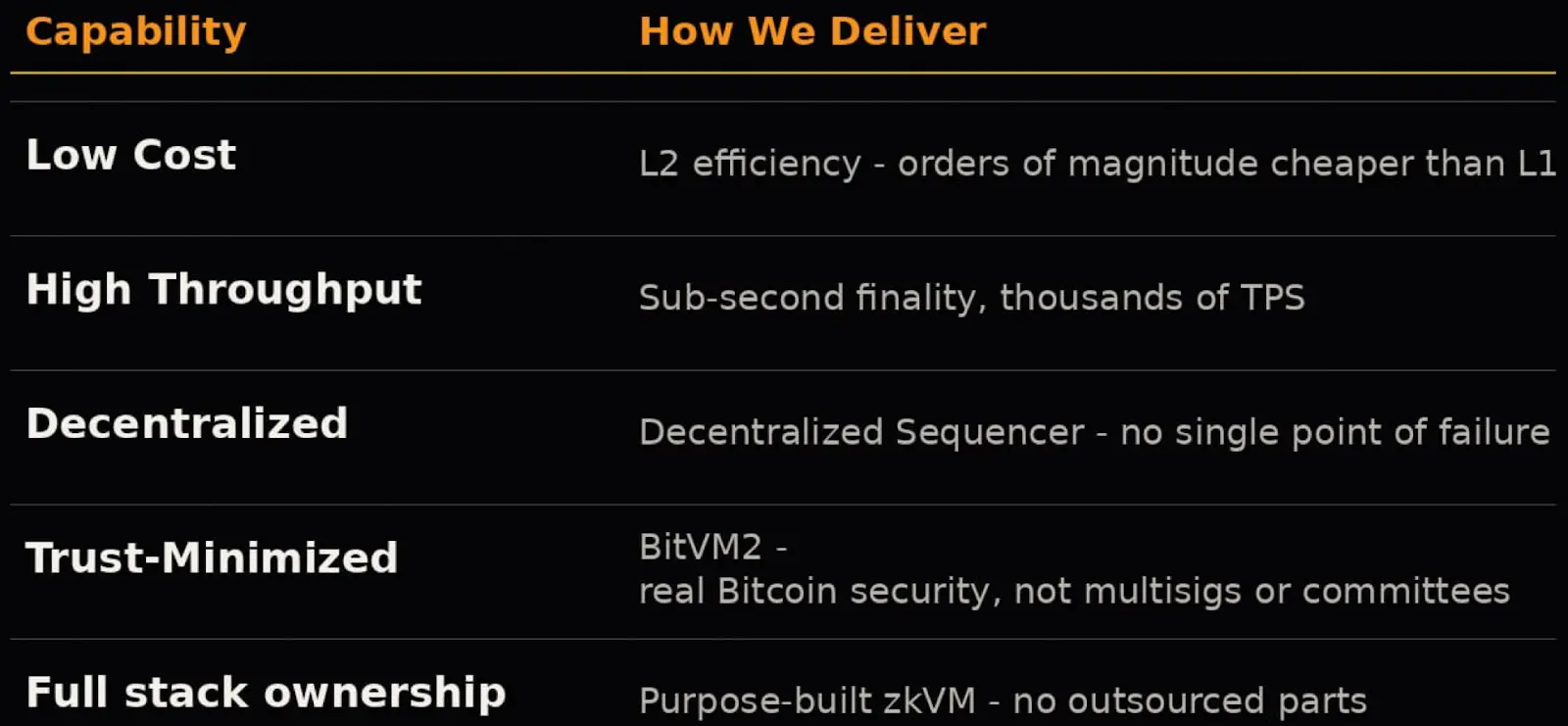
This layer does not pursue complex functionalities, but ensures that all value transfers can ultimately be anchored on the most reliable settlement foundation. This design provides stronger stability and credibility for the entire system over the long run.
Second Layer: Agent Infrastructure
Above the settlement layer, we have built a complete set of middleware systems for agents, enabling them to truly participate in economic activities.
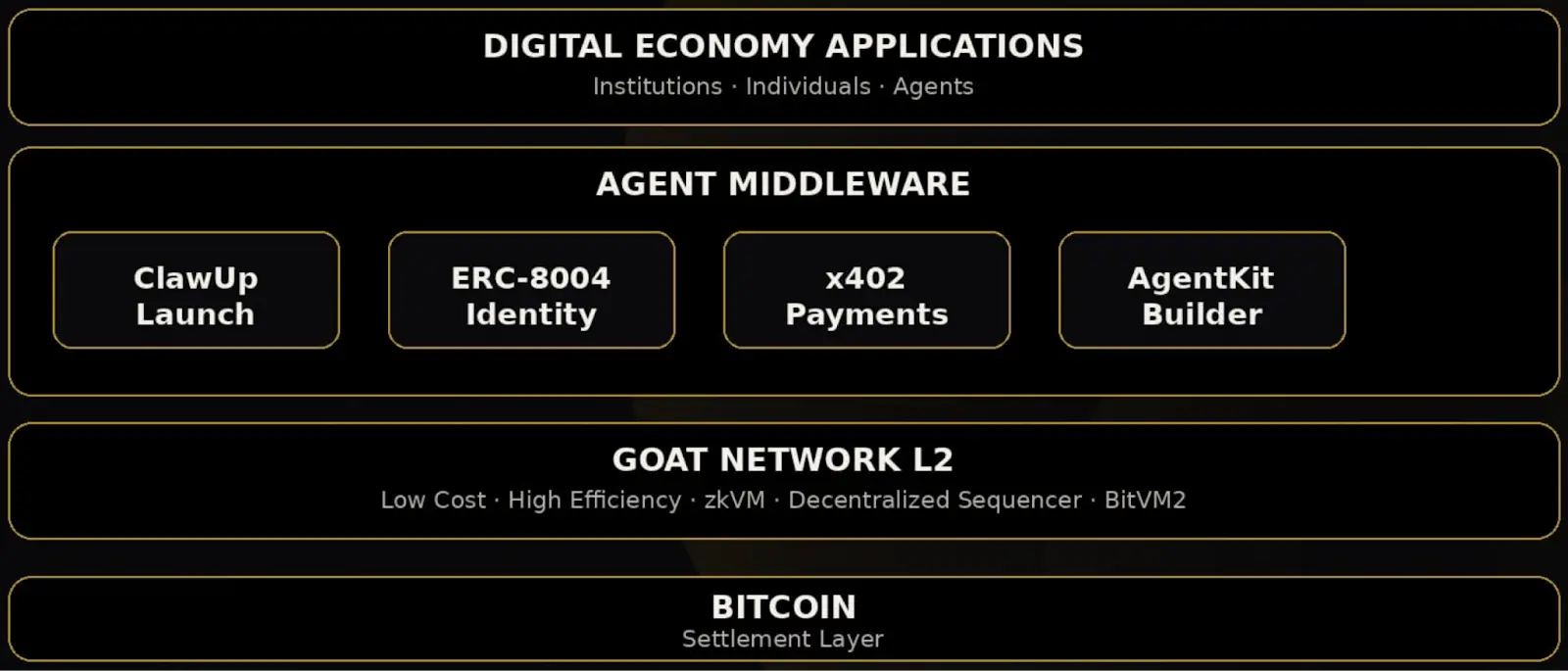
ClawUp provides the capability for agents to launch, allowing developers to deploy at an extremely low threshold, turning an idea into a runnable agent in just minutes.
ERC-8004 addresses identity and reputation issues. In an economy system involving agents, "who am I" and "am I trustworthy" become fundamental questions. Through cross-chain identities, cumulative reputation, and verifiable credentials, agents can gradually establish their trust foundations.
x402 is the key to the payment layer. In the agent economy, payments cannot rely on invoices or manual approvals, but must be instant, automatic, and cross-chain. Through HTTP native payments and machine-level micropayment mechanisms, agents can complete value exchanges without human involvement.
AgentKit provides developers with a unified toolset, integrating wallet management, asset operations, identity registration, and payment capabilities, significantly simplifying the building process.
Currently, we have completed a comprehensive set of infrastructure, including GOAT L2 (based on BitVM2), decentralized Sequencer, ERC-8004, x402, AgentKit, and ClawUp.
On this basis, we are continuing to advance: a more complete reputation system, a more efficient agent discovery mechanism, multi-agent collaboration protocols, and broader payment ecosystem compatibility.
Our goal
We aim to promote the emergence of a new building paradigm.
An individual can use agents to accomplish things that previously required a team; the barrier to building is significantly lowered; more developers can participate and jointly drive the development of the agent economy.
This is not a short-term technological trend, but a restructuring of economic structures.
We are entering a new era: value will be executed by machines, rules will be defined by code, and trust will be verified by systems.
And all of this is just beginning.
Bitcoin security, Layer 2 speed, agent-native infrastructure, this is GOAT Network.
免责声明:本文章仅代表作者个人观点,不代表本平台的立场和观点。本文章仅供信息分享,不构成对任何人的任何投资建议。用户与作者之间的任何争议,与本平台无关。如网页中刊载的文章或图片涉及侵权,请提供相关的权利证明和身份证明发送邮件到support@aicoin.com,本平台相关工作人员将会进行核查。


