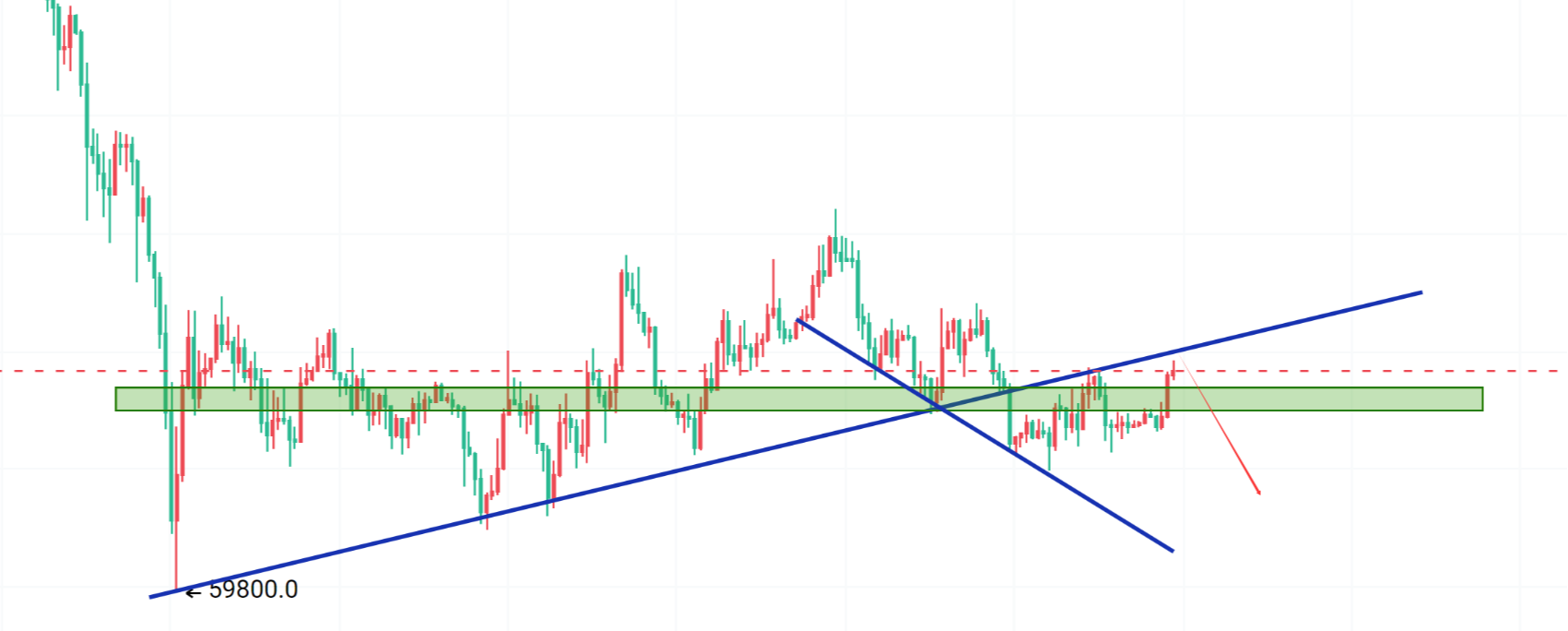
In early April 2026, the dialogue confrontation between the US and Iran surrounding the blockade issue in the Strait of Hormuz escalated: on one side, the office of Iran's Supreme Leader and its diplomatic system repeatedly sent strong signals of "continuing the blockade," while on the other side, US President Trump openly threatened to strike Iran's critical infrastructure. Meanwhile, the sentiment in the crypto market suddenly became imbalanced this week in the Eastern Eight zone, with the Fear and Greed Index dropping to 13, corresponding to the historical "extreme fear" range, and both trading volume and volatility expanded simultaneously. Geopolitical conflict has traditionally been the main battleground for commodities and stock exchange markets, but this time, the gunpowder smell on the tanker routes is rapidly affecting the pricing of crypto assets through the transmission chain of sentiment and capital — how every rumor about the Strait of Hormuz is interpreted by the market as a sharp revaluation of coin prices has become the most pressing issue.
The Throat-Holding Battle in Hormuz: Escalation of Confrontation in the 20% Oil Shipping Route
The Strait of Hormuz has long been regarded as the "throat" of global energy, responsible for approximately 20% of global oil transportation. Any statement regarding the blockade will be magnified by the capital market as a direct threat to the lifeline of energy. In early April 2026, Iran reiterated its stance of "continuing to block the Strait" based on information from a single source, pushing the safety expectations of this critical route into a higher uncertain range. For the global industrial chain, which relies on oil shipping in the Middle East, this not only implies the potential for sharp re-evaluation of oil prices but also signifies an overall rightward shift in the risk appetite curve.
In this context, a hedging pattern quickly formed around the control of the Strait between the US and Iran: Iran views Hormuz as a core chip for external pressure and security guarantee, while the US attempts to maintain the "unblockable" baseline of the shipping route through high-pressure deterrence and public statements. In early April, an Iranian permanent representative to the United Nations publicly stated that Trump was trying to "drag the Middle East into an endless war," directly targeting Washington's deterrence strategy; while Mojtaba Khamenei, a key figure in Iran's highest power circle, emphasized the need to adopt "effective and humiliating defensive actions," further strengthening the confrontational stance.
On the other side, US President Trump, in public statements, directed threats at critical infrastructure in Iran, including power plants and bridges. This threat, after cross-verification, indicates that the discourse has shifted from general diplomatic warnings to direct pressure on the "operating core" of the country. It should be emphasized that there is currently no reliable information regarding specific military deployments, troop movements, or timelines for military operations, and research briefs expressly prohibit any speculation about these details. For the market, what is truly being priced is the probability and impact imaginations of "critical energy channels being obstructed," not unverified tactical narratives.
Bluster or Pre-War? The Gunpowder Flavor in the Middle East and Market Black Swan Expectations
Looking back at the timeline from early April 2026, the rhetoric between the US and Iran regarding Hormuz is gradually sliding from traditional diplomatic confrontation to a more naked military threat context: Iran strengthens regional discourse power through the concept of "blockade," while the US elevates its deterrence limits with statements about "destroying infrastructure." For observers, these remarks still fall within the realm of "bluster," but for global funds accustomed to hedging against the worst-case scenarios, they are enough to be seen as a prelude to potential black swans.
When interpreting this round of conflict, the capital market compresses the core contradictions into two points: one is "control of energy passage" — who holds decisive influence over the actual usability of the Strait of Hormuz; the other is "effectiveness of military deterrence" — whether the US truly has the willingness and capability to bring the threats to fruition, thereby forcing Iran to concede on the blockade issue. The combination of the two is translated by the market into worries about significant fluctuations in oil prices, supply chain disruptions, and the consequent drastic drop in global risk appetite.
However, unlike the dramatization of crisis narratives, critical information remains severely lacking. Research briefs clearly point out that there are no publicly reliable records of the specific time points for what Trump calls an "ultimatum," and Iran's actual military deployment and preparedness status also lack verifiable data. In such an information vacuum, the market tends to respond with "compromised fear": traditional assets exhibit risk-averse behaviors and reduced positions, while high-volatility assets encounter greater sell-off pressure. Crypto assets, as part of risk assets, are often viewed as the "first batch to reduce positions" during periods of geopolitical tension, unless they are specifically packaged as "digital safe-haven assets." However, from the current price performance and level of the fear index, mainstream funds clearly place them on the "de-risking" side rather than "hedging."
Fear Index Drops to 13: Downward Pressure of On-Chain Sentiment
In early April in the Eastern Eight zone, the cryptocurrency Fear and Greed Index dropped to 13, falling into the officially defined "extreme fear" range. This value historically corresponds to two types of scenarios: either a sudden crash followed by a violent deleveraging resulting in a short-term emotional collapse, or a long period of market observation and reduced trading activities due to overlapping macro and policy uncertainties. From recent price performances, it is closer to the former — increased price volatility, rising trading volume, and sentiment displaying a typical "stampede" downturn.
Within the dimensions tracked by the index, media narratives, volatility, and trading volume are the three key inputs. Issues related to the geopolitical conflict in the Strait of Hormuz have dominated the news cycle, amplifying the weight of panic narratives; on the price level, significant intraday fluctuations and high implied volatility have heightened the perception that "risk events are brewing"; in terms of trading volume, increased volume during the decline indicates a blend of active selling and passive liquidations, thereby further suppressing sentiment. However, it is essential to clarify that this index itself originates from a single data source, providing an emotional profile rather than a standalone trade signal.
When the Fear and Greed Index approaches extreme values, the market's sensitivity to negative news is significantly amplified: the same political statement about Hormuz may only trigger short-term fluctuations when the index is in a neutral zone, but in an "extreme fear" environment at "13," it is more easily interpreted as a precursor to potential "systemic risk," leading to a chain reaction sell-off. This results in a typical behavioral finance positive feedback loop: low panic indicators → investor expectations worsen → selling pressure intensifies → prices fall → indicators weaken further, until some external favorable information or a structural cleansing of trades interrupts the cycle.
Whale Offloads 450,000 HYPE: The Self-Fulfilling Narrative of Smart Money Running Away
On-chain, a massive sell-off targeting small to mid-cap tokens has become a landmark event in this emotional storm. According to a single on-chain data source, one address offloaded 450,000 HYPE in early April, exchanging for about 15,012,000 USDC. In scale, this is a considerable profit-taking activity that could alter the short-term supply-demand dynamics of a single token. Although we cannot directly read the geopolitical judgment of the operator from on-chain records, under the dual pressures of the Hormuz conflict and panic index, this action is inevitably associated by the market as a "precautionary retreat against rising risk expectations."
Importantly, current information only shows the fact that "large sales have occurred" and does not provide definitive evidence proving its motives are causally related to the US-Iran standoff. It is more prudent to view it as a "potentially related action" to the intensification of geopolitical risks: in an environment of overall declining risk appetite and rising crypto volatility, large holders choosing to realize paper profits while liquidity is still feasible is itself a rational asset allocation move.
For mid-cap tokens like HYPE, weak liquidity is a structural issue: in conditions of relatively thin order books and limited market-making capital, a single sell-off of tens of millions of USDC can cause significant slippage, triggering a rapid "gap-down" in prices. This technical liquidity shock is often simplified by social media as "smart money running away," further amplifying retail panic and triggering follow-on sell-offs. The result is that whale actions not only change the on-chain chip distribution but also shape the emotional structure of "smart money running away first—retail investors realizing later" through discursive power, even to some extent actualizing the narrative of "running away."
From Tankers to Coin Prices: The Emotional Transmission Chain of Geopolitical Conflict
If this round of turmoil can be abstracted as a transmission chain, it starts from the expectations of the blockade in the Strait of Hormuz: once the market believes this critical shipping route may encounter sustained disturbances, the first thing to be priced is oil prices — expectations of supply contraction push up price volatility ranges, and the hedging demand for energy costs at the enterprise and national levels rises. Following this, the uncertainty in oil prices is amplified into concerns about the global economy and trade, leading to an overall decline in global risk appetite, with capital flowing out of high-beta assets.
Within the crypto market, this process is specifically reflected in the reallocation between assets: high-risk, low-liquidity tokens are the first to be reduced in positions, while funds flow towards more stable leading assets, with some funds further switching to accounting currencies like USDT, USDC, and even some flowing back into fiat assets off-market. On-chain data, sentiment indices, and media narratives interweave and amplify during this process:
● On-chain capital flows recorded the whale's sell-off of HYPE for 15.12 million USDC, providing visual evidence for "risk-averse reduction";
● The Fear and Greed Index dropped to 13, encapsulating market pessimism with a simple number;
● Media and social platform narratives continuously refresh investor risk perception with tags like "Hormuz blockade" and "the brink of war."
The combination of three forms a positive feedback loop of "extreme fear → sell-off → more extreme fear." It is crucial to be particularly vigilant about the fact that a significant portion of the information is still in a "to be verified" state. For example, various versions of Iran's denial of blocking the Strait of Hormuz have not formed a unified, credible official statement; criticism within the US of Trump's Middle East policy also lacks systemic, quantifiable data support. In the absence of firmly anchored facts, treating these controversial pieces of information as pricing references will only further amplify volatility and misjudgments.
The Hormuz Game is Not Over: Risks and Opportunities in the Crypto Market
Returning to a long-term perspective, the game between the US and Iran over the Strait of Hormuz is not a new story for 2026; rather, it is a concentrated manifestation of structural contradictions that have accumulated over many years in a new cycle. As long as this strait continues to undertake about 20% of global oil transportation, any signal regarding its "openness or blockage" will attach some form of geopolitical uncertainty premium to global assets, including crypto assets. For the crypto market, this means that the sensitivity of prices to the Middle Eastern situation will likely remain high in future similar events.
In extreme fear periods, such as when the Fear and Greed Index falls to 13, it becomes particularly critical to distinguish which are cross-verified facts and which are mere rumors from single sources. Trump’s threats to strike Iranian infrastructure, Hormuz's responsibility for 20% of global oil transportation, and the whale offloading of 450,000 HYPE for 15.12 million USDC are all "hard information" that can be confirmed; whereas many statements regarding Iran's denial of a blockade and internal US political wrangling remain in a verification state and are better suited as risk scenario assumptions rather than being the sole basis for trading decisions.
For investors, a more robust response strategy is to observe three clues comprehensively outside of single emotion indicators: first, on-chain capital flows, to gauge the real actions of large addresses and institutional funds; second, sentiment and volatility indicators, including the fear index and implied volatility, to assess in which emotional range the market is; third, the evolving path of macro and geopolitical situations, especially regarding the development and alleviation pace of "single-point risks" like Hormuz. Based on this, one should avoid absolutizing any single clue.
If in the coming weeks, the US and Iran release signals of de-escalation on the Hormuz issue or construct some form of consensus on a "minimum viable" shipping route through diplomatic channels, the risk assets currently suppressed by panic hold space for emotional recovery and technical rebounds — including some crypto assets that have been excessively sold off. However, at the same time, new rounds of geopolitical conflict or other macro black swans could explode at any time from different regions and topics; Hormuz is just one scene in this long-term uncertainty game. For crypto market participants who are accustomed to seeking opportunities in high volatility, what truly needs to be built is not a "perfect judgment" of any one crisis but a decision-making framework that maintains discipline and cognitive clarity amidst repeated shocks.
Join our community, let's discuss and become stronger together!
Official Telegram community: https://t.me/aicoincn
AiCoin Chinese Twitter: https://x.com/AiCoinzh
OKX Benefit Group: https://aicoin.com/link/chat?cid=l61eM4owQ
Binance Benefit Group: https://aicoin.com/link/chat?cid=ynr7d1P6Z
免责声明:本文章仅代表作者个人观点,不代表本平台的立场和观点。本文章仅供信息分享,不构成对任何人的任何投资建议。用户与作者之间的任何争议,与本平台无关。如网页中刊载的文章或图片涉及侵权,请提供相关的权利证明和身份证明发送邮件到support@aicoin.com,本平台相关工作人员将会进行核查。