Author: ChichiHong, ScalingX Labs Co-Founder
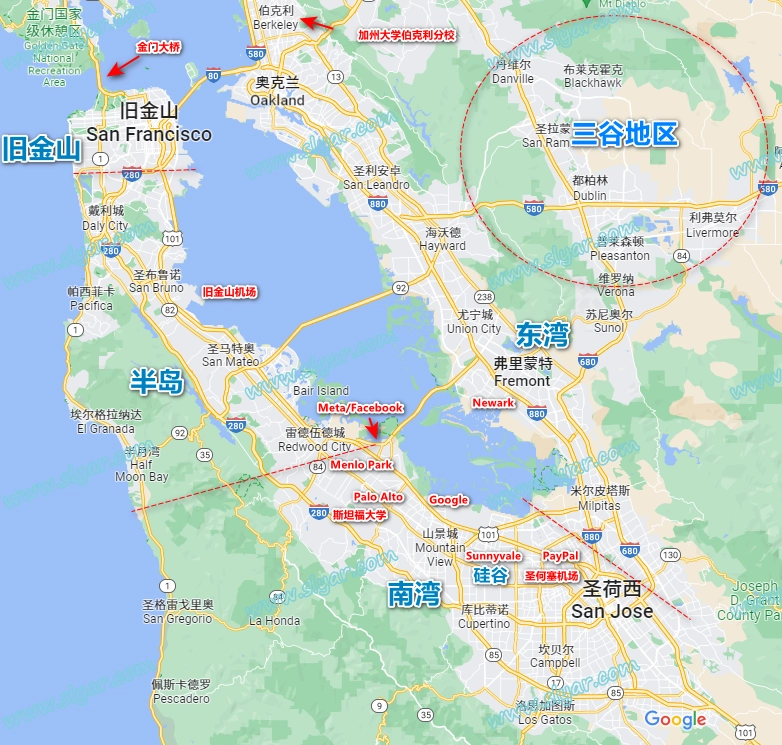
Between the hills of San Francisco and the sea mist, AI is rewriting the rhythm of the Bay Area at a visible pace. For Chichi, the co-founder of ScalingX, deeply rooted in Web3 and now in North America, the strongest feeling is not that one place is galloping ahead alone, but that the Bay Area is forming a "multi-point blossoming" pattern composed of San Francisco, the South Bay, and surrounding cities.
In her daily movements, San Francisco gathers large model and AI infrastructure companies, the South Bay still supports traditional giants and the engineering community, and nodes like Palo Alto are filled with various Demo Days, incubators, and entrepreneurial activities. As everything accelerates, changes, and reshuffles, what she contemplates repeatedly is not "where the center is," but rather: in such a multi-centered AI wave, what relatively certain things can people still grasp—whether it's geographic choices, track judgments, entrepreneurial paths, or their own lives and mindsets.
1. Geographic Choices: Multi-Sided Growth
In recent years, San Francisco has been reshaped into one of the densest stages for generative AI companies due to the headquarters and expansion of large model companies like OpenAI and Anthropic. Most new stories, new companies, and new AI narratives emerge from here.
Meanwhile, the South Bay remains the base for large tech companies like Google and Meta, as well as numerous chip and cloud infrastructure enterprises, gathering a large number of mature engineers and underlying technical teams, continuously absorbing and outputting global talent.
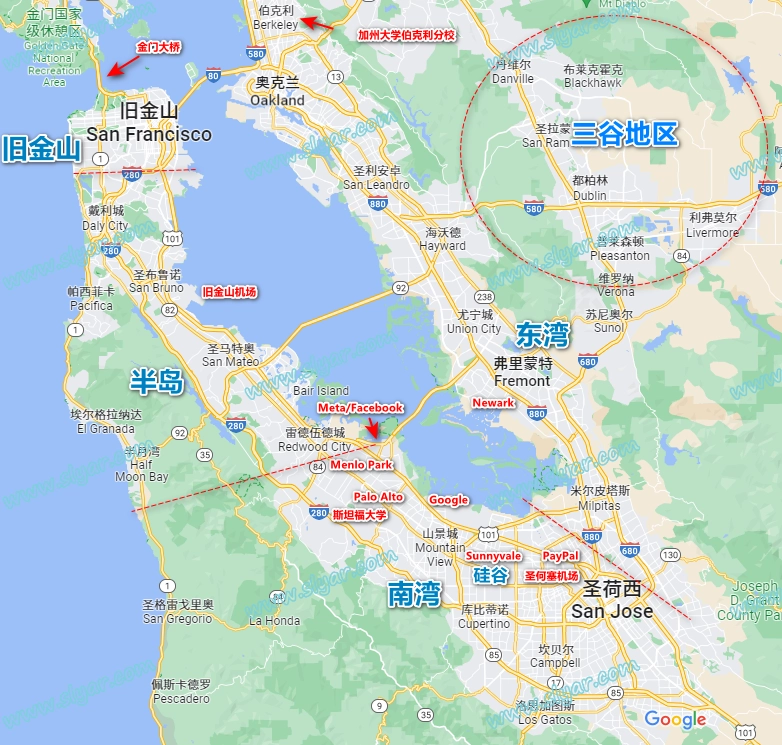
In the stories heard, two sets of images often appear simultaneously: some sell their companies, later buy multimillion-dollar houses in San Francisco, betting on AI and new wealth narratives; others, despite layoffs at their large companies, are quickly poached by other teams or startups, and the housing prices and community atmosphere in the South Bay have not significantly cooled due to "AI stealing the show."
For her, this state of "both old and new are growing" is itself a form of geographic certainty:
- San Francisco represents new stories, new companies, and new opportunities, being the densest stage for AI narratives;
- The South Bay represents the old system, mature engineers, and stable infrastructure, still absorbing and delivering talent;
- Neither side has losers; they simply play different roles.
In such a pattern, the question is no longer "Should I leave the South Bay and move to San Francisco?" but rather a more nuanced choice: which type of resources do you need to be closer to—new tech companies and capital networks, or mature giants and engineer ecosystems. For those looking to establish themselves in the AI wave, the reality of "both new and old thriving" actually provides a predictable sense of geographic security: regardless of which side you stand on, there are worthwhile connections and matters to engage with.
For her, the first layer of "certainty" is already quite clear:
- The geographic center is concentrating towards San Francisco;
- The South Bay still carries large companies and existing engineers, but the discourse power and imagination are moving north.
For entrepreneurs and investors wanting to stay close to the forefront of AI, "being in San Francisco" itself has become the most straightforward geographic certainty choice.
2. Track Choice: AI and Web3
As someone from a Web3 accelerator, Chichi cannot avoid being asked whether there are new and sufficiently certain directions in the combination of AI and Web3. Her answer differs from many optimistic narratives—over the past year, she has not seen anything that could be called a "paradigm shift"; most so-called "AI + Web3" projects still rely on stories that were already told last year.
In her view, the most honest judgment at this moment is:
- The certainty of AI is much stronger than that of Web3. Almost every industry is actively seeking places to apply AI; from development, marketing to customer service, AI has become infrastructure;
- Web3 has a clear demand for AI—on-chain projects need AI for automated operations, content production, and user engagement; even in risk control and data analysis, AI has obvious advantages;
- AI currently has no urgent need for Web3. There are no sufficiently convincing cases to prove that "without blockchain, AI cannot operate."
She summarizes this asymmetric relationship with a memorable phrase: "Everyone needs AI, Web3 also needs AI, but AI does not need Web3."
This does not mean Crypto has been completely marginalized. Over a longer period, many local U.S. investors still believe that the risk-reward ratio of crypto assets is not necessarily inferior to any single AI track; what is truly intriguing is that stablecoins have quietly entered the "backend systems" of AI.
According to Circle's data, in the past 9 months, about 400,000 AI agents completed 140 million transactions, totaling $43 million, 98.6% of which were settled in USDC, with an average transaction size of only $0.31—this means that microtransactions between machines are continuously occurring in a crypto-native way. In this respect, some AI industry practitioners are not merely verbally "believing in Crypto," but are treating stablecoins as the default payment layer for agents, connecting the two tracks on a behavioral level.
However, at this point in time, if we are to discuss "certainty on the track," Chichi still prefers to view AI as the foundation for all industries, while treating Web3/stablecoins as extremely suitable "infrastructure plugins" in certain scenarios, rather than forcibly tying the two together and using a composite narrative to explain all issues.
3. Certainty in Entrepreneurial Paths: Small Teams vs VC, Not an Either/Or
The impact of AI on entrepreneurial paths, Chichi summarizes as "threshold reconstruction."
What impresses her the most is the recent viral Medvi case—a telemedicine service company built around weight-loss drug GLP-1: the founder Matthew Gallagher comes from an ordinary background, not a top graduate from prestigious universities, and at his home in Los Angeles, with about $20,000 and a dozen AI tools, spent two months building up the website, appointment process, consultation questionnaires, advertising materials, and customer service replies layer by layer.
The emergence of such "one-person companies" or "tiny teams" has brought new certainty to entrepreneurial paths:
- It can be confirmed that utilizing AI effectively has greatly elevated the upper limit for small teams, and entrepreneurship no longer necessarily means forming a team of over a dozen people;
- It can also be confirmed that not all projects consequently "no longer need VC."
Chichi emphasizes that she sees two realities coexisting:
- On one side, there are increasing cases of "being able to build good companies without relying on funding"—a few tens of thousands of dollars can generate revenue, enabling sustainable development without following traditional funding rhythms;
- On the other side are those directions that truly require heavy resources and investments: computing power, hardware, complex infrastructure, and strong compliance scenarios; these projects find it hard to enter the window period without the funding and resources of VC.
This has directly changed her understanding of "VC certainty." In the past, it may have been "money first, then product," but now it seems more like:
- Truly outstanding entrepreneurs who can leverage AI have reduced their dependency on money in the early stages and do not need to compromise too much to "get off the ground";
- If VCs want to maintain their certainty, they must shift from "providing money" to "providing resources," such as GPUs, talent networks, channels, and brand endorsements.
She describes the current Silicon Valley: "There are Demo Days almost every day." Various incubators and activity spaces offer founders and investors almost limitless opportunities to connect; investors can leave direct messages saying "I want to invest in you" on X or Product Hunt, and some funds even intentionally seek out "high school prodigies" for early investments.
In such an extremely active and increasingly disintermediated funding environment, her advice to founders is:
- Do not rush to treat "whether to seek funding" as a binary choice;
- Use AI to get the product running first, then determine whether you need "money" or "resources + brand + ecosystem";
- Treat VC as an amplifier, not a starting point.
4. Conclusion: In Uncertainty, People Are Always Learning How to Adjust Themselves
Amid the increasingly exciting technologies and developments, Chichi sees the same force reflecting on different interfaces: AI is rapidly rewriting the existing order—company maps are shifting, track boundaries are blurring, entrepreneurial paths are being compressed, and the relationship between people and the world is being renegotiated.
A more concealed layer has nothing to do with cities and valuations. The people she met in HK and Silicon Valley—middle-aged finance professionals worried that "if they can't keep up with AI, it will be over," and engineers from large companies repeatedly hammered by layoff emails and visa deadlines—made her realize: Insecurity has become the background noise of modern people. It won't disappear based on your employment at a large company or how many stocks you hold; instead, it gets amplified in an environment where information density is heightened, and the pace accelerates.
Therefore, "searching for certainty in the AI wave" ultimately cannot just stay in the discussions of cities, tracks, or capital; it inevitably falls back to a more personal dimension: In such an environment, are people still willing and daring to actively adjust themselves.
免责声明:本文章仅代表作者个人观点,不代表本平台的立场和观点。本文章仅供信息分享,不构成对任何人的任何投资建议。用户与作者之间的任何争议,与本平台无关。如网页中刊载的文章或图片涉及侵权,请提供相关的权利证明和身份证明发送邮件到support@aicoin.com,本平台相关工作人员将会进行核查。


