Written by: APPSO
The world has long suffered from Company A.
This has been the most common reaction from readers in the comments section as Anthropic continues to launch various features while simultaneously tightening usage restrictions.
It is already the strictest among the three major players (OpenAI, Google, Anthropic) in terms of usage limitations, and now they have added identity verification— requiring real-name registration to use their services. Just early this morning, they cut Pro ($20/month) users' access to Claude Code.
Anthropic's growth leader responded, mentioning that they are conducting a small-scale test on about 2% of new professional user registrants, and existing Pro and Max users are not affected; and stated that the current subscription plans cannot cope with the large Token consumption of users, so they are researching new payment options.
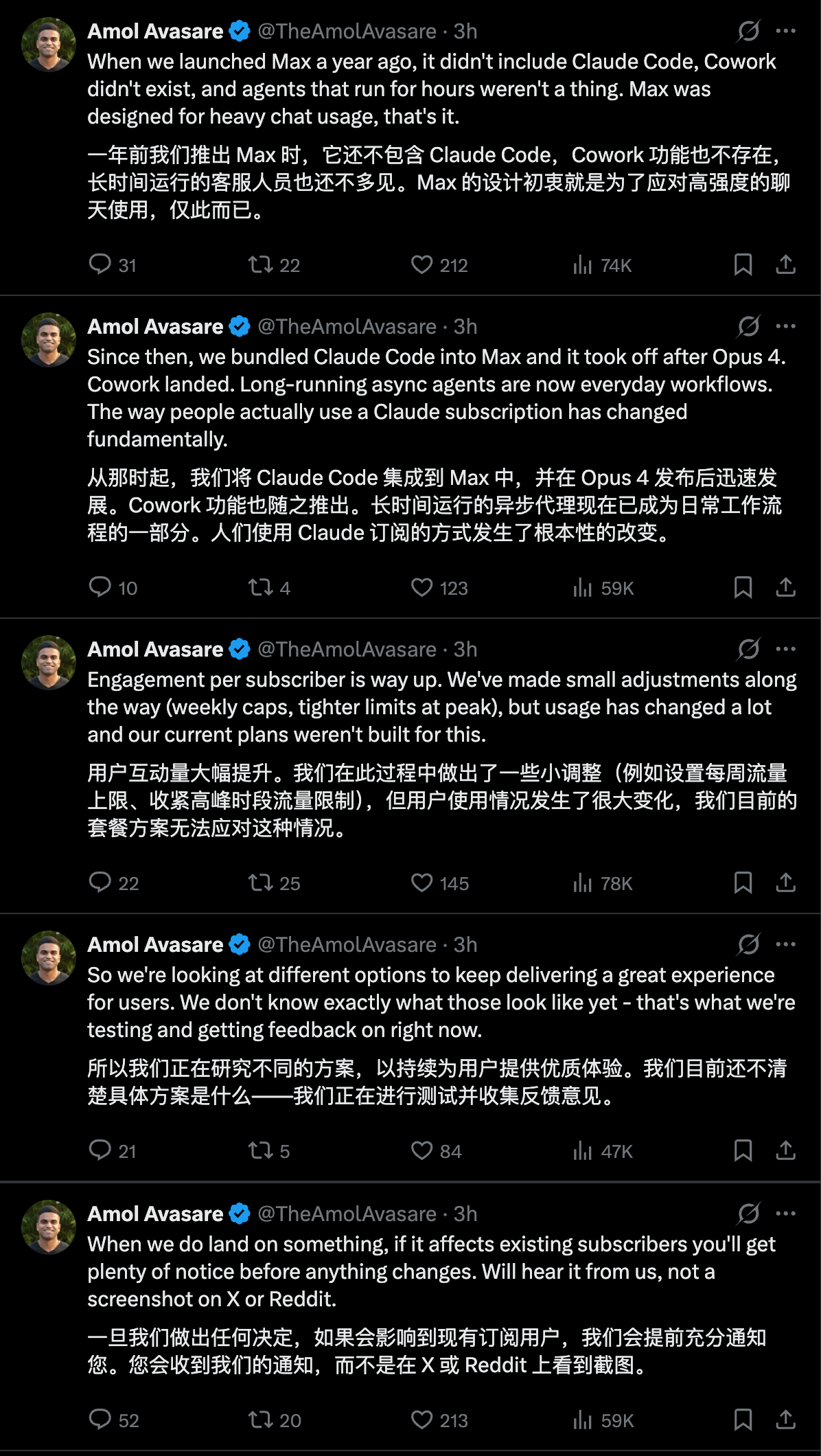
Source: https://x.com/TheAmolAvasare/status/2046724659039932830
OpenAI immediately responded to the controversy over Claude Code dropping Pro members, with a Codex leader, Rohan Varma, directly competing with Claude Code, even mimicking their post format.
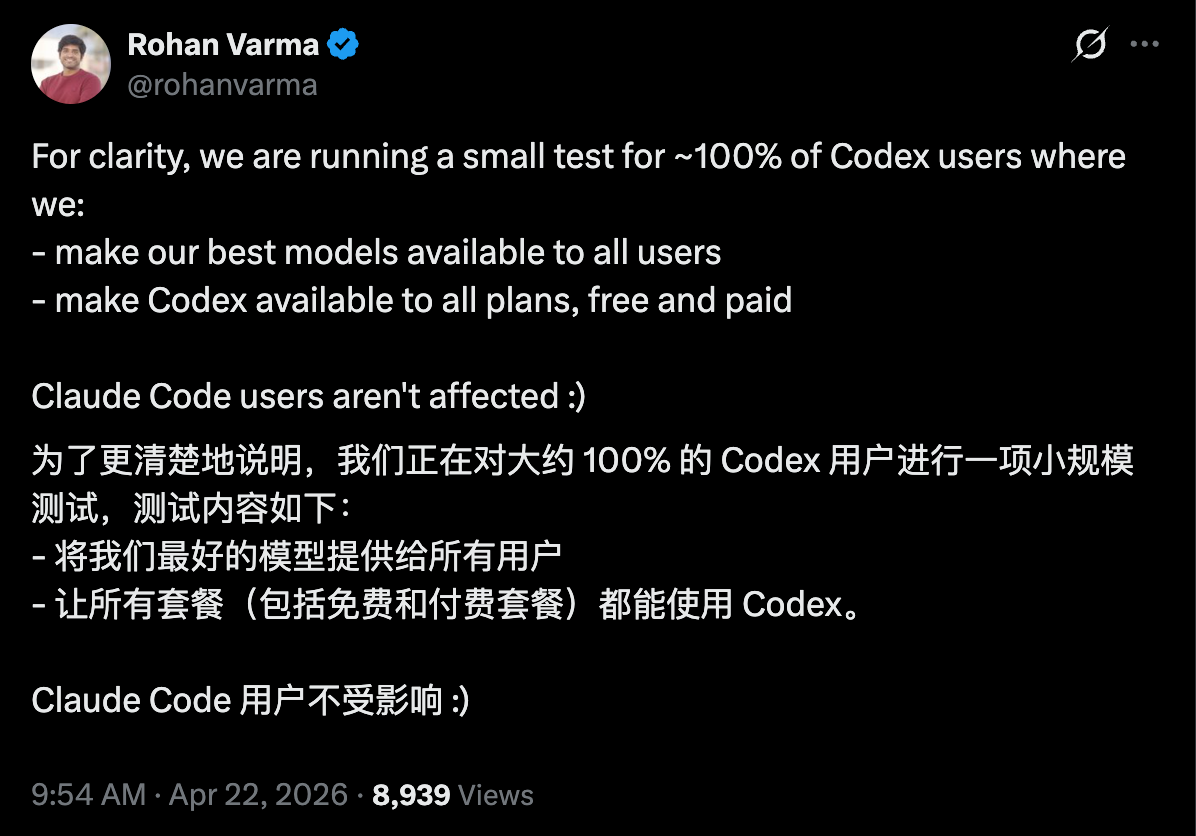
Source: https://x.com/rohanvarma/status/2046769635350241292
Anthropic is testing a more expensive plan for 2% of users, while Codex is offering a test for 100% of users, allowing both free and paid packages to access Codex. They cheekily added, "Claude Code users are not affected."
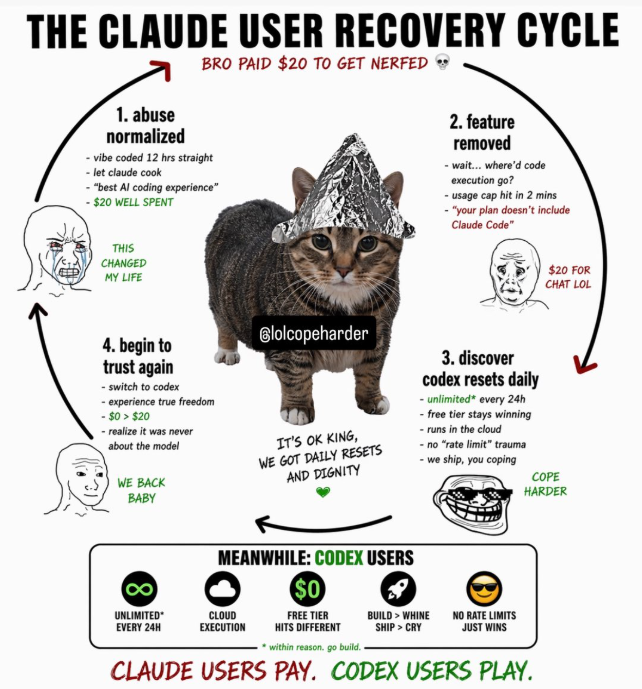
Claude Code users PAY, Codex users PLAY
Another Codex leader, Tibo, also posted on X stating that Codex will continue to offer a free version and PLUS version ($20/month), mentioning that OpenAI has enough computing power and powerful models to support Codex's operation.
Sam Altman also retweeted this, saying, "We hope you can have plenty of AI."

Source: https://x.com/sama/status/2046752492093165708
Codex's reputation on social media has not been too bad, especially recently when OpenAI "dropped money," first stating that they wanted everyone to experience the plugins related to Codex, resetting usage limits for all subscription plans.
At the beginning of April, Codex found that the frequency of users hitting usage limits had increased, and upon finding no underlying cause, simply reset the limits for all users. A few days ago, to celebrate Codex's anniversary and the launch of new features, they reset the usage limits for all packages once again.

Today, Codex’s leader and Sam Altman tweeted again, stating that in less than two weeks, Codex added one million new users, and to celebrate this, the rate limits of Codex were reset once again.

Source: https://x.com/sama/status/2046604989527912590
As early as last week on the day Anthropic released Opus 4.7, Codex updated a whole bunch of important features, including Computer Use, a built-in browser, persistent memory, and over 90 plugins.
These updates almost directly targeted the functionalities of Claude Cowork, transforming Codex from a tool that sounds like it was made for developers, back into an efficiency assistant suitable for all computer scenarios.
Yesterday, Codex launched a research preview feature called "Chronicle," building on the previously launched memory functionality, allowing the AI to read our screens and organize recent activities into memory.
Codex no longer relies solely on chat records to understand context; by combining recent screen content it reads, when we send it "this" or "that," Codex can know precisely what we are referring to.
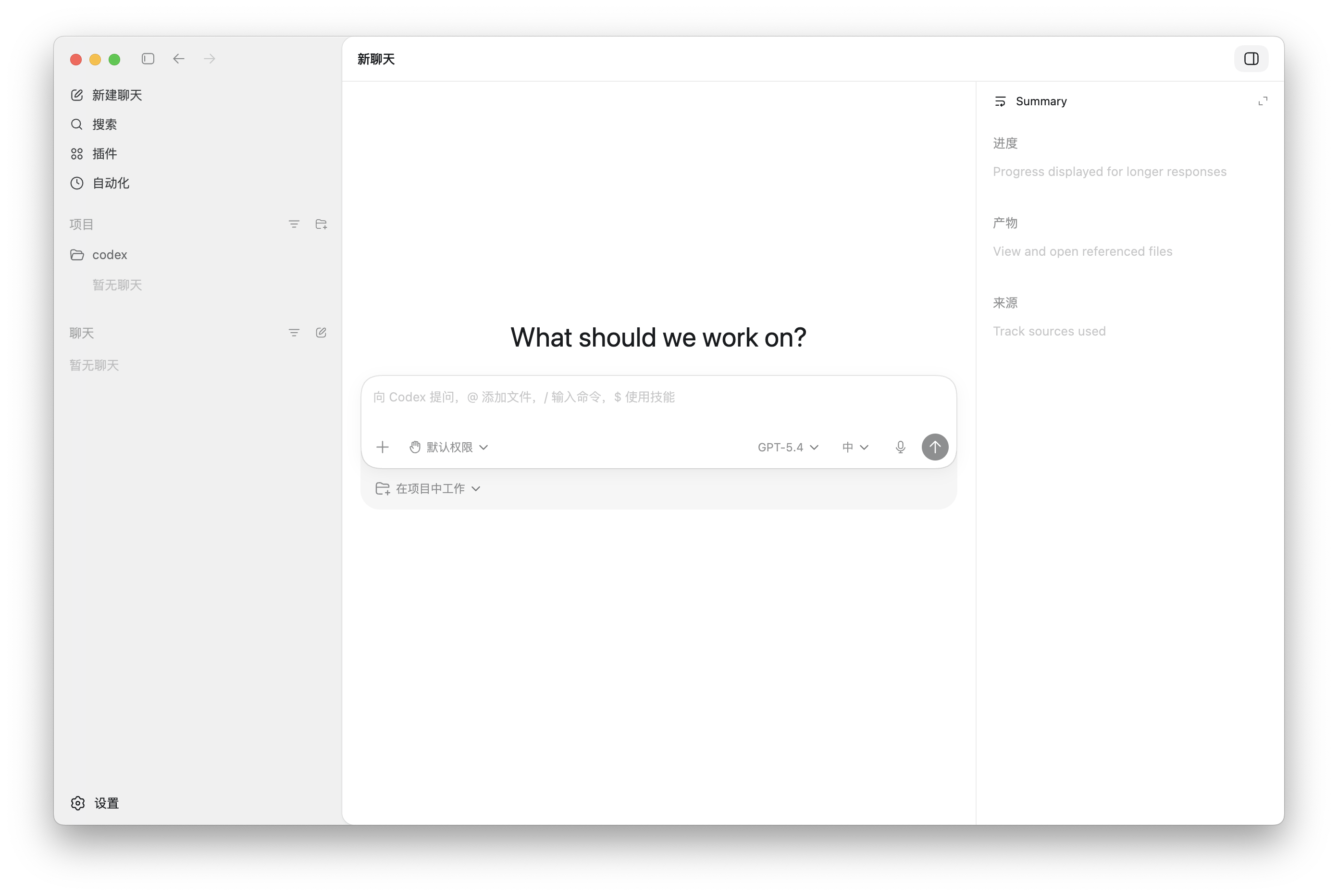
The newly released GPT Image 2 has also been integrated into Codex. We can generate and iterate images in Codex, using GPT Image 2 to quickly create visual elements within a workflow, from product prototypes and front-end designs to visual effects and game development tasks.
If your Claude account is always getting suspended, preventing you from using the official Claude Cowork or Claude Code desktop version, or you're among that 2% of new users who cannot use Claude Code even after subscribing to the $20/month Pro membership, you might want to give Codex produced by OpenAI a try.
From code tool to all-around assistant
The most important recent updates for Codex include the Computer Use feature released last week. This capability isn't entirely new; previously, the model had Computer Use abilities, but now the tools also need supportive integration to leverage the model's capabilities.
Essentially, it allows Agent tools to operate a computer like a human, through visual recognition, clicks, and input, autonomously controlling various applications on the computer.
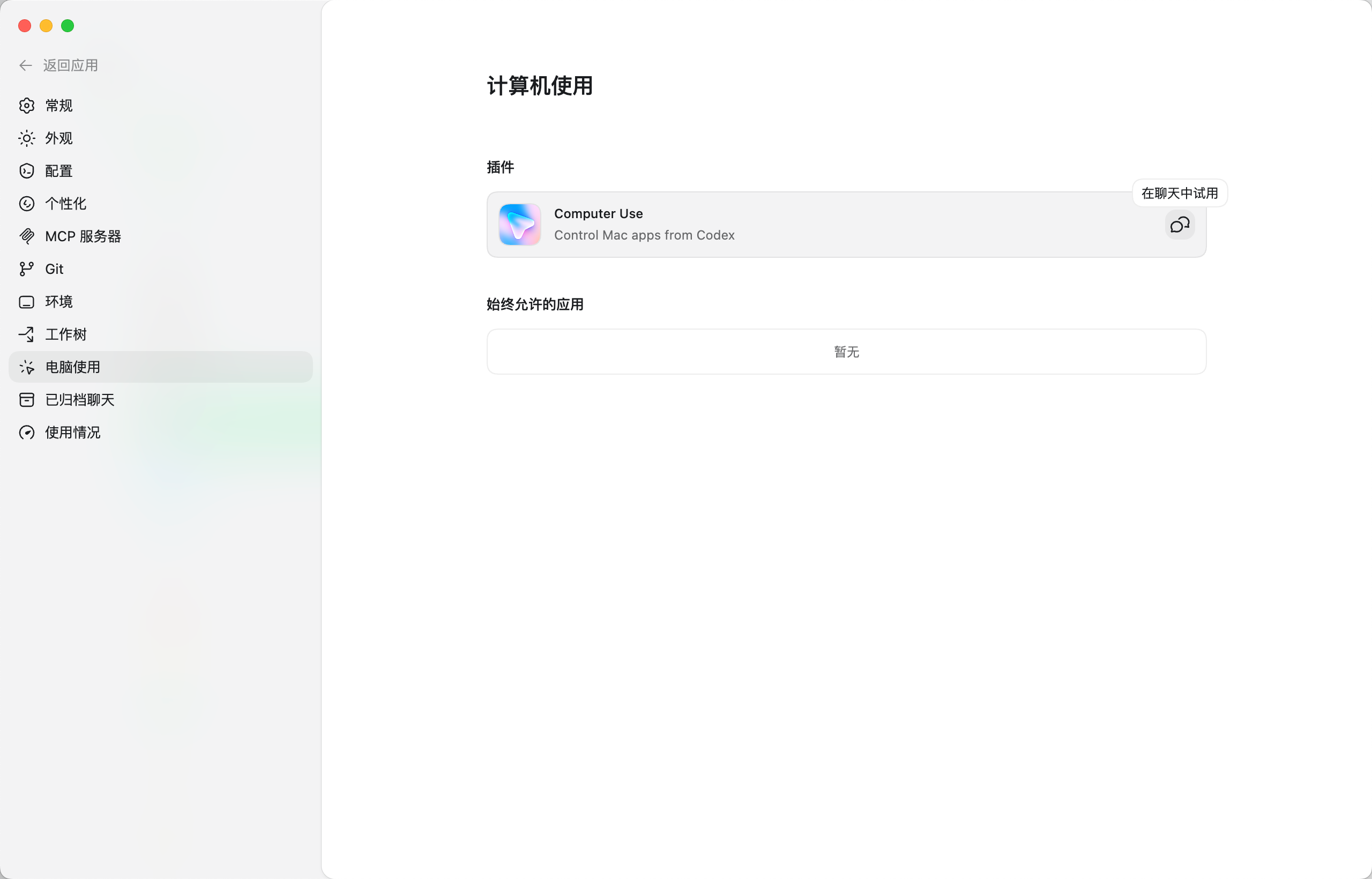
Previously, Codex operated applications on the computer by executing different tasks through commands, resembling us asking, "Siri, what's the weather tomorrow?" for these simpler tasks.
With the ability of Computer Use, it supports tools that call APIs or terminal commands and can genuinely assist us in performing actual operations, particularly well-suited for front-end debugging, application testing, and operating software without open APIs.
Additionally, it supports multiple agents working in parallel on a Mac without affecting normal use of other applications.
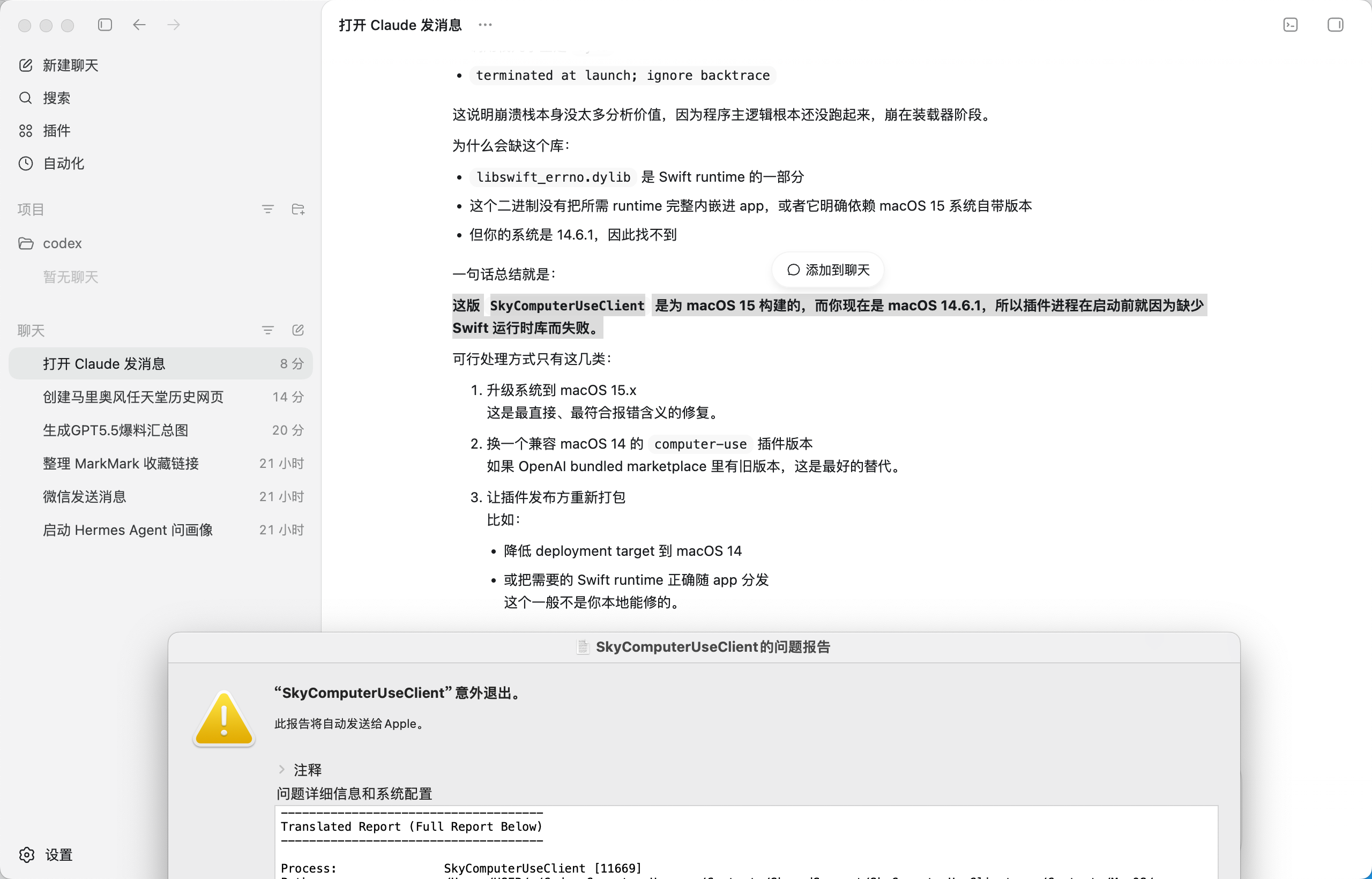
It's important to note that the Computer Use ability only supports macOS versions 15 and above; during tests of Codex on our computer (macOS 14.6.1), a problem report for SkyComputerUseClient pops up automatically.
Furthermore, Codex now supports a built-in browser, enhancing its ability to handle web scenarios. The web pages generated in Codex can be directly annotated, providing Codex with more precise operational instructions, which is very useful for rapid iterations in front-end, applications, and game development.
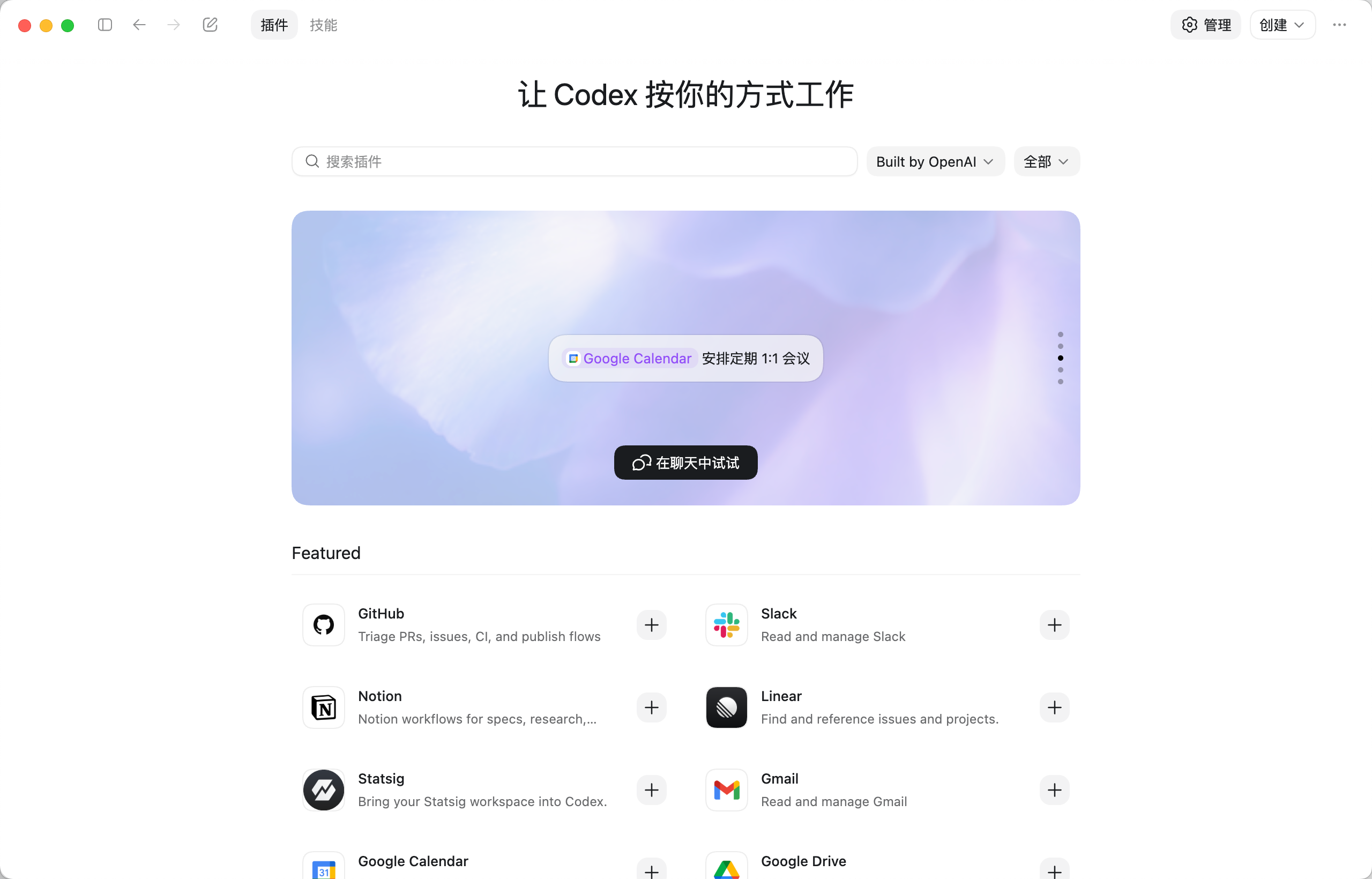
From coding, design, lifestyle, productivity to research, Codex now has a rich plugin system to handle various tasks.
This update has also added over 90 plugins and a more comprehensive tool integration, allowing Codex to connect to more tools, gather more context, and perform operations cross-platform. Notable mentioned plugins include Atlassian Rovo (JIRA), Microsoft Suite, Neon by Databricks, Remotion, Render, Superpowers, and others.
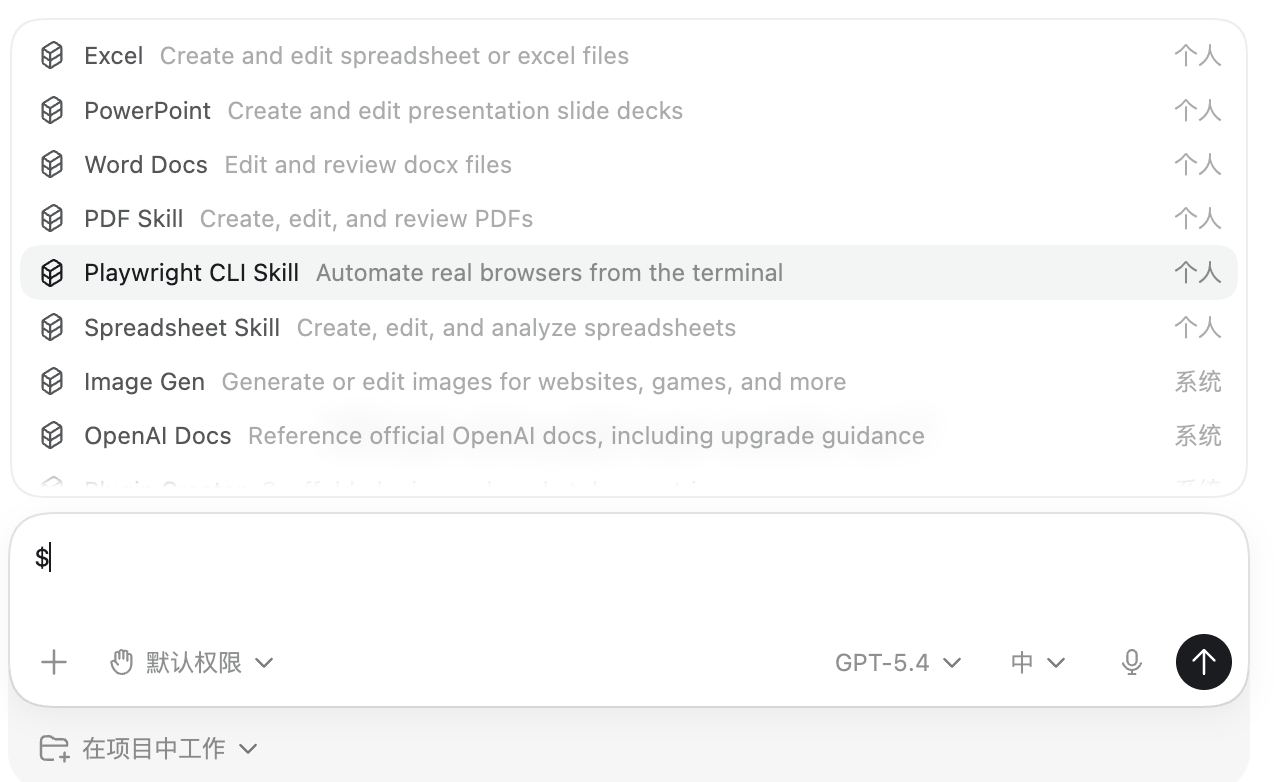
In the Codex app, we can quickly enter some configurations related to Codex by inputting a slash; typing $ allows us to choose from different Skills, including various Skills we have installed locally.
Simultaneously, in automation tasks, the Automation feature of Codex has been upgraded to reuse previous conversation threads, retaining existing context. The new automation also supports Codex to autonomously plan subsequent work, automatically execute tasks at a future time, and support long-term tasks lasting days or even weeks.
The official mentioned that this update is mainly used for code merging, following up on daily work and personal to-do lists, and information tracking across different platforms and tools.
There are also some small updates regarding desktop application interaction, such as adding multi-tab terminal windows, sidebar access for opening files, and previewing documents such as PDFs, spreadsheets, and PPTs.
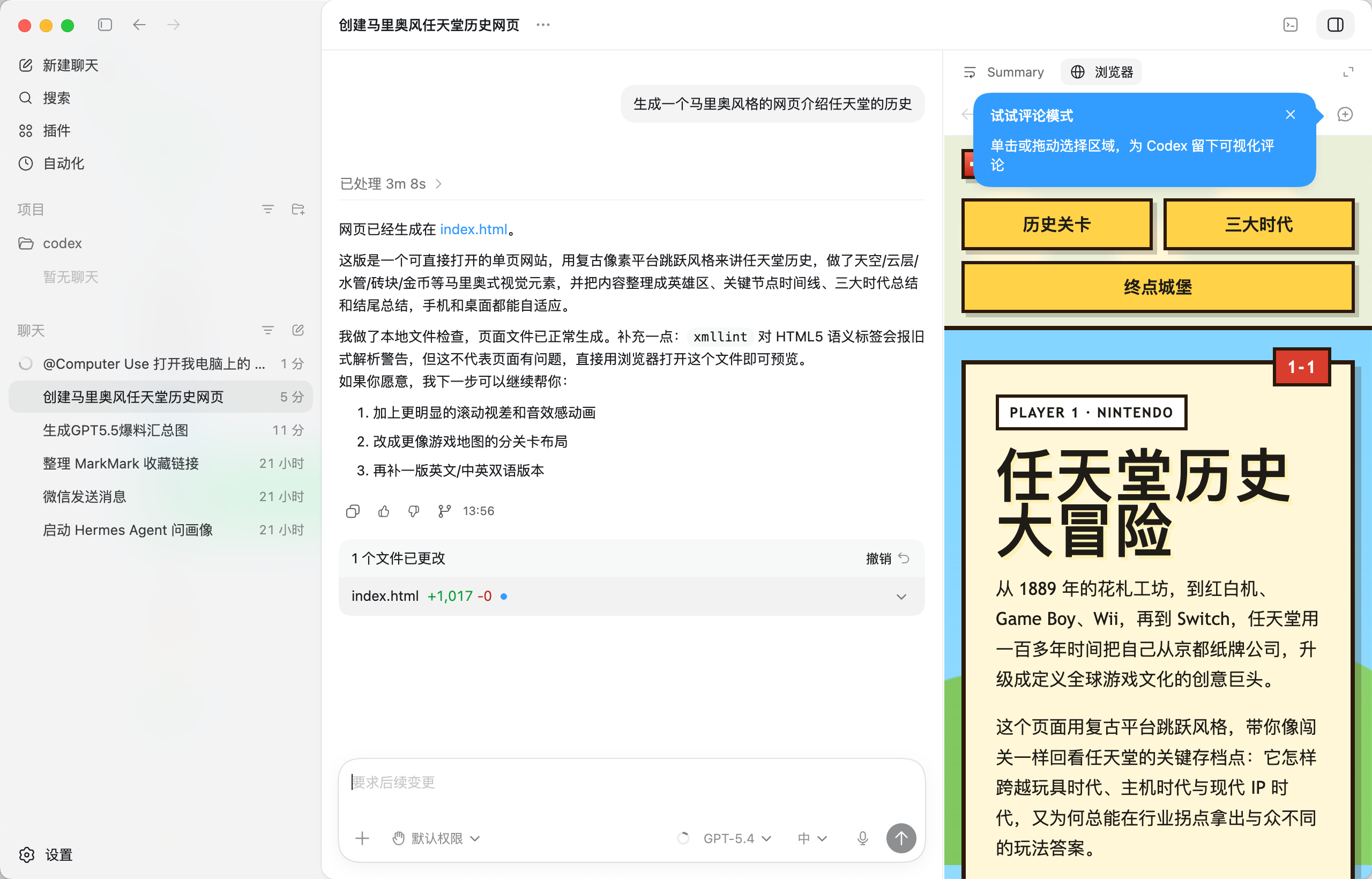
The new summary panel can also continuously track the plans and progress of current tasks, reference sources of information, and output results. These enhancements in application have also made Codex more like a unified workspace overall, rather than just a single conversation window.
Using timed screenshots to maintain Agent memory
Personalized memory features have long been a significant challenge for AI; although AI has vast knowledge, processing personal memories for each user and working memory requires AI to handle daily conversations in a manner that doesn’t consume excessive Tokens while being able to remember things accurately.
Especially now, with tasks like Agents consuming massive amounts of Tokens, the daily context generated by each user would be challenging for the Agent to remember entirely; even a million Tokens worth of context would likely not be enough.
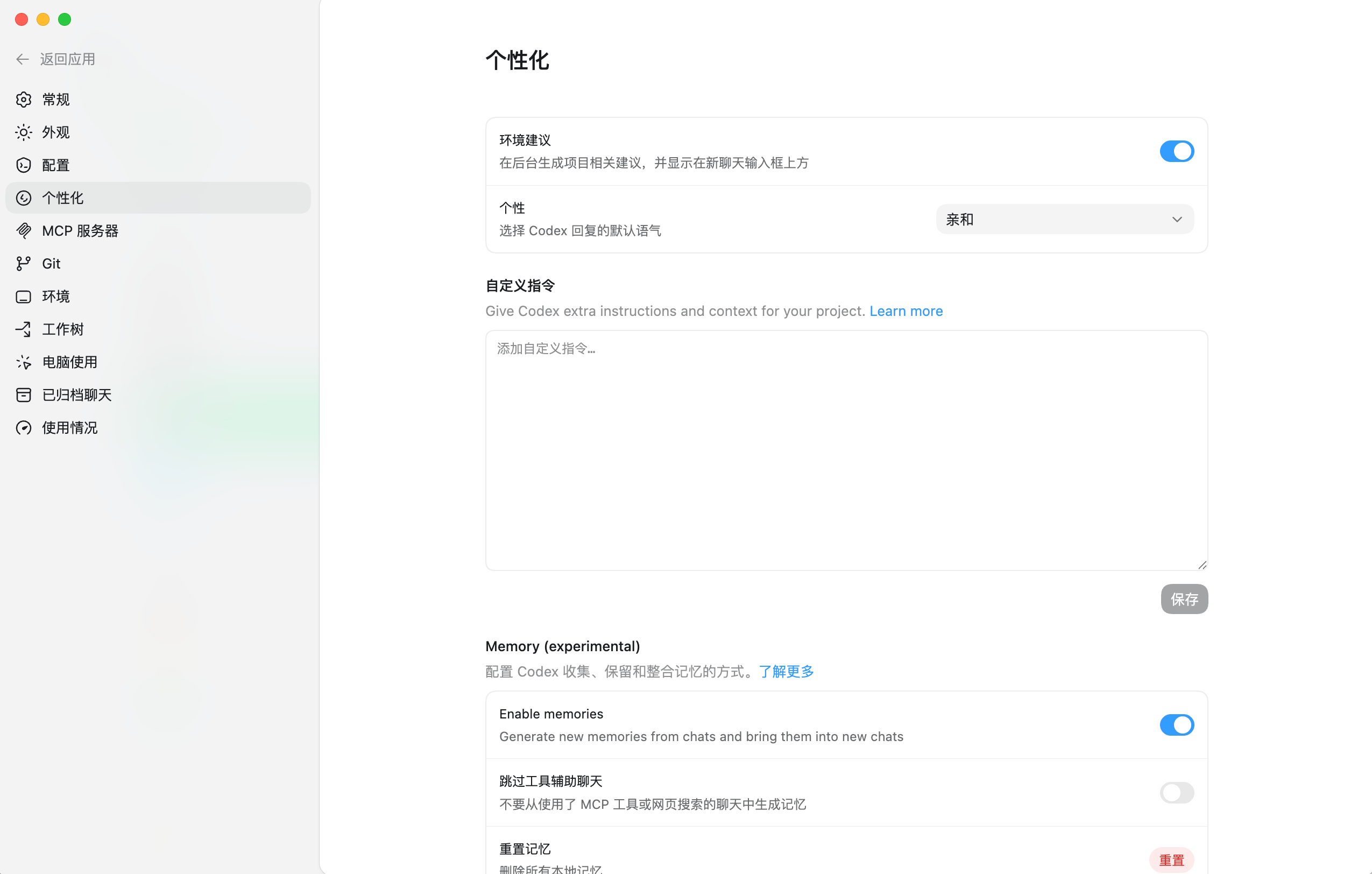
Last week, OpenAI already brought the memory function to Codex, which can remember our preferences, previous corrections, and other important yet hard-to-acquire information.
To acquire more memory and process our workflows faster, Codex's newly launched Chronicle feature simply observes our screens, remembers our work, and feeds this memory to the AI.
Specifically, in Codex settings under > personalization, after enabling the Chronicle feature, it will automatically execute these actions: screen context capture → local temporary screenshots → background agent analysis → temporary Codex session summarization → generate local Markdown memory → use as context in subsequent sessions.
Once Codex acquires screen recording and accessibility permissions, Chronicle runs a sandbox Agent in the background, using the default model GPT-5.4-mini; based on captured screen images, it periodically initiates a temporary Codex session to organize the recent screen context into memory.
Screen snapshots are temporarily stored locally; Codex mentions that during operation, screenshots older than 6 hours will be automatically deleted.
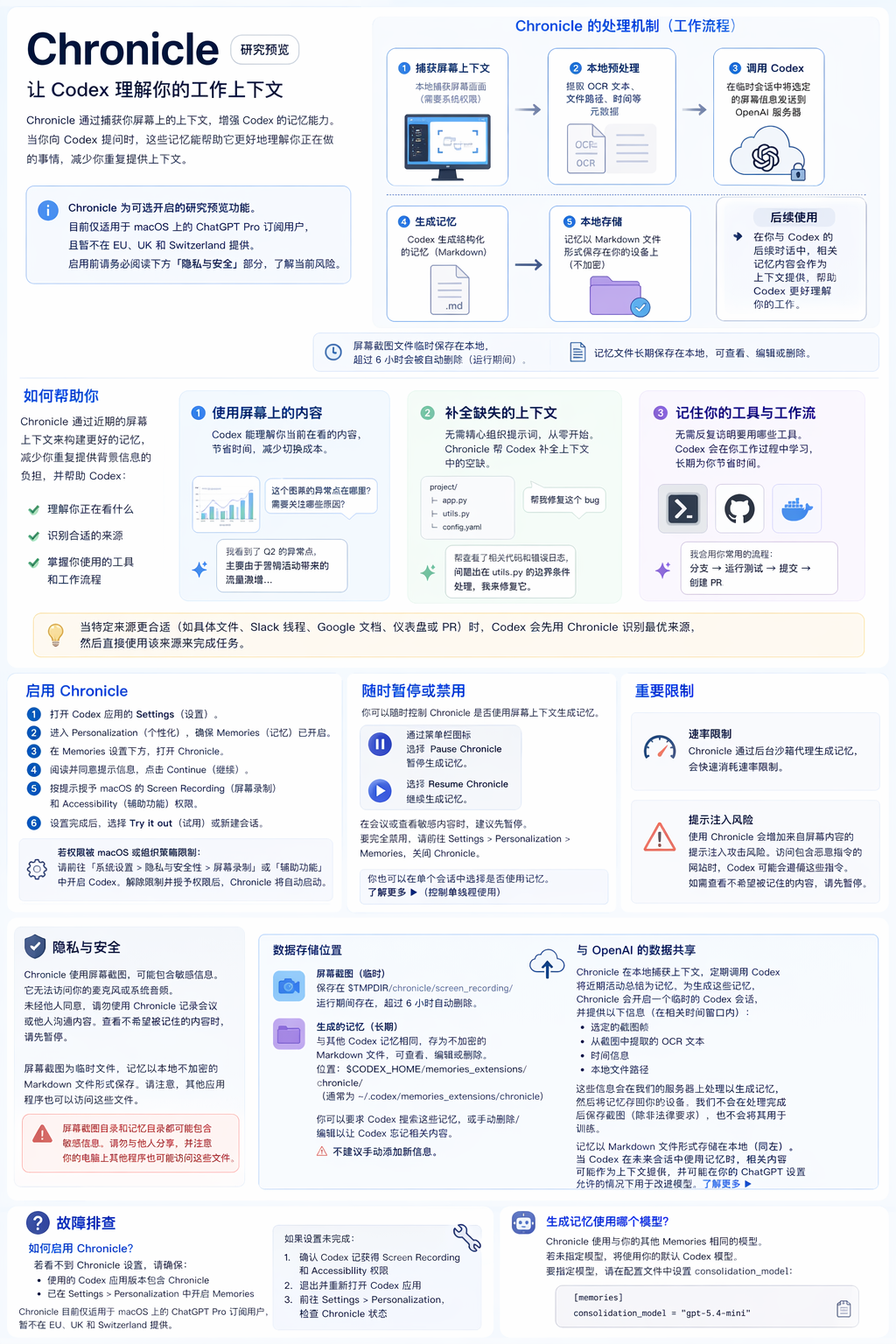
Information graphics generated by GPT Image 2
In the future, when we talk to Codex, it will automatically retrieve these memory files to use as context, reducing the need for us to repeatedly describe background information.
OpenAI officials have also provided several examples, such as if Chronicle is not enabled, Codex won't know what we mean by "this will fail."
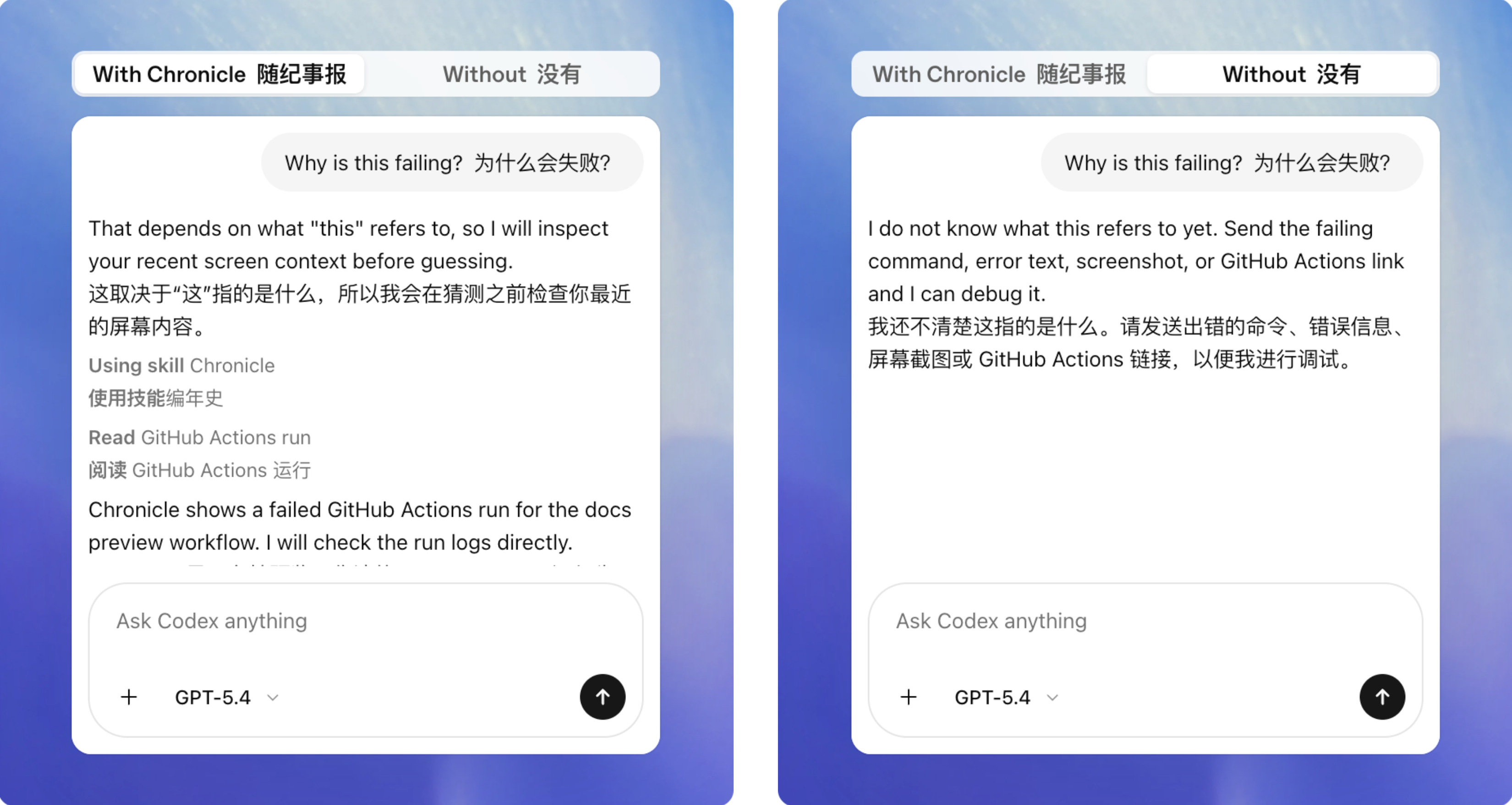
And for certain personal tasks where names, project names, etc., appear, outside of general knowledge, Codex will also automatically supplement context based on the information acquired from Chronicle.
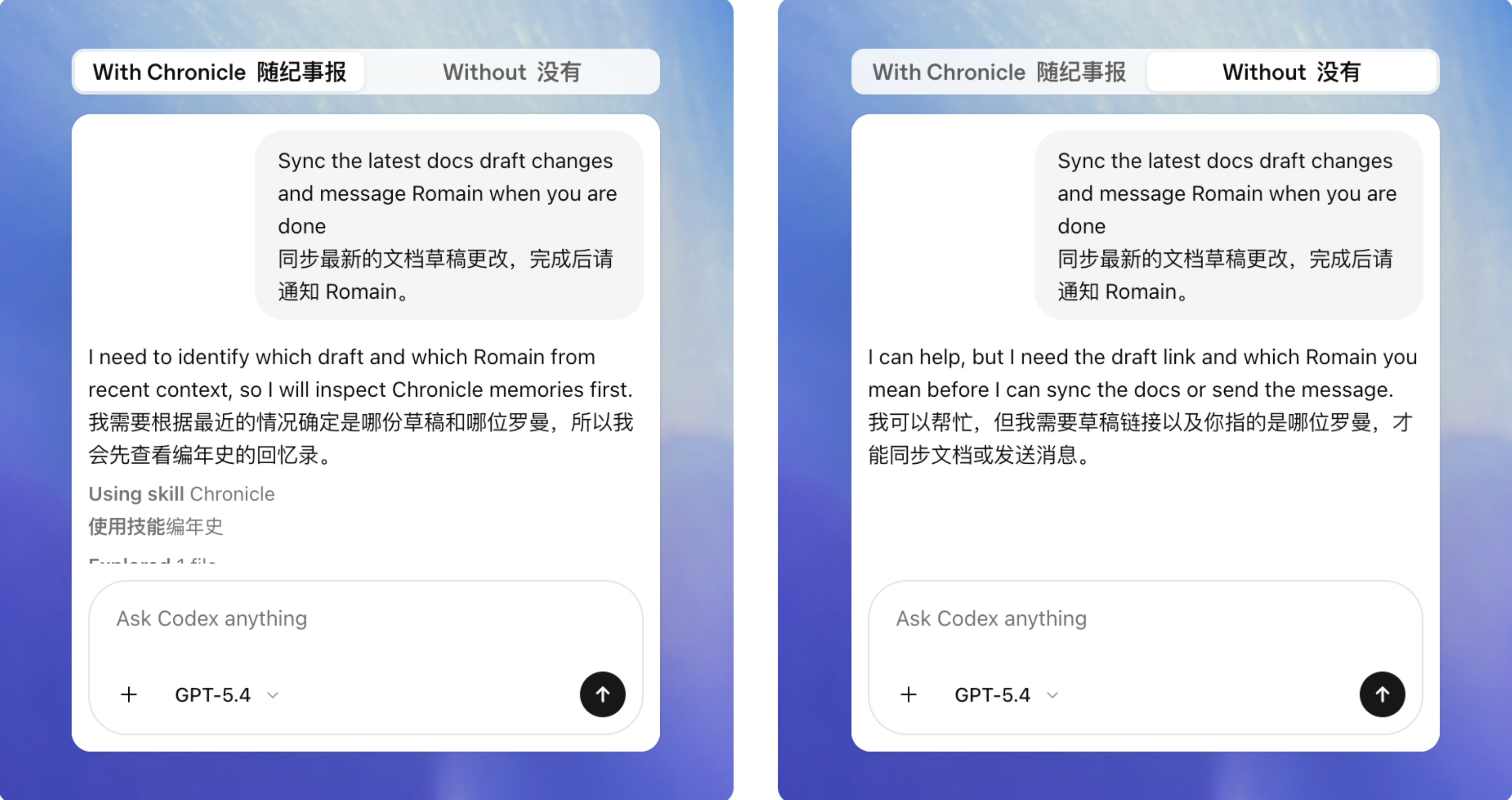
Being able to capture screen images also means that Chronicle can remember the entire process of using Codex to handle tasks, including our workflows and commonly used tools. In the example below, Codex using Chronicle can know what format this promotional material uses and which tools, whether it’s Google Docs or Markdown documents.
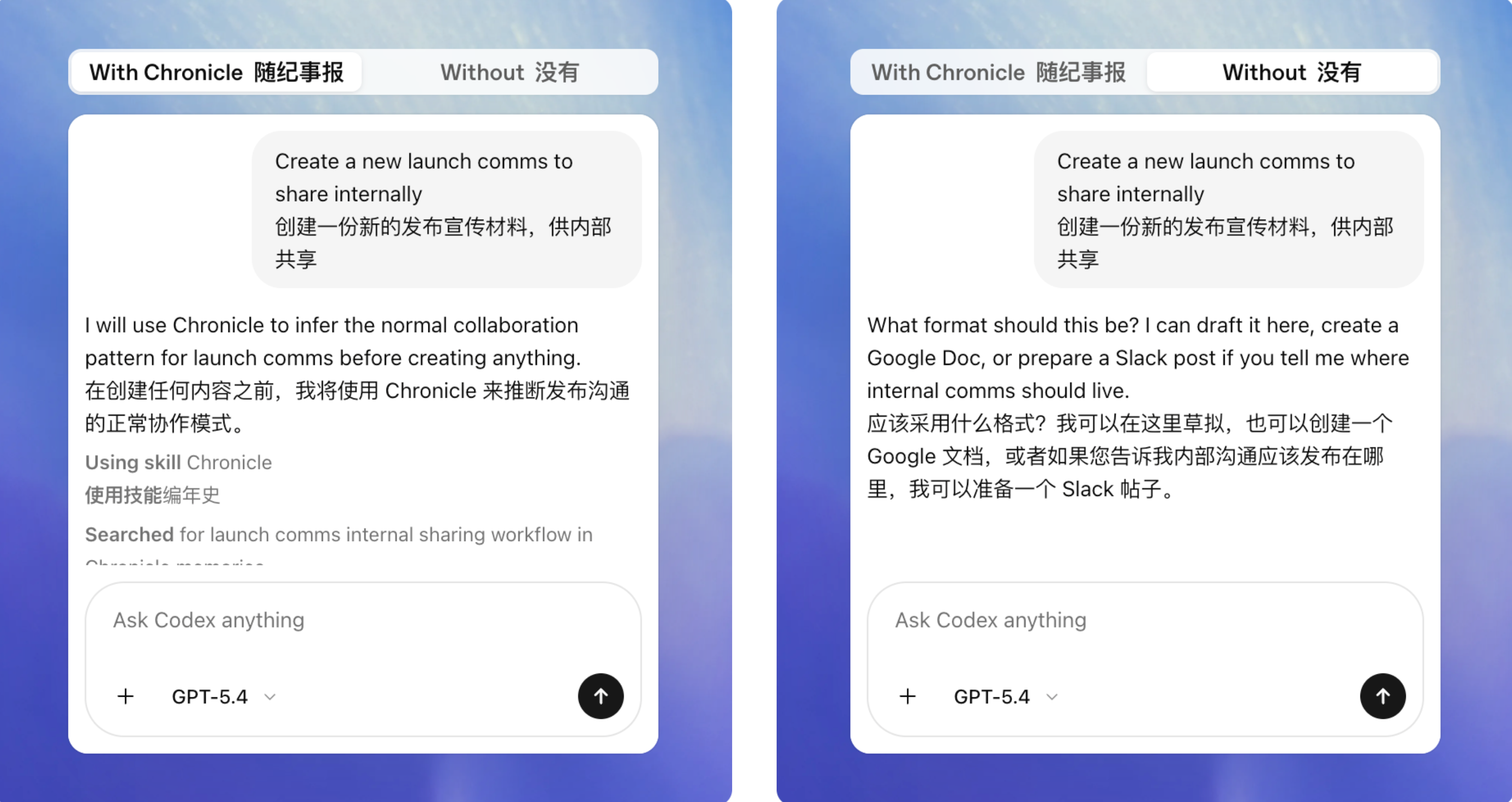
However, this functionality also faces some controversies, such as the method of visual recognition consuming substantial tokens, and more seriously, these screenshots may contain sensitive information visible on our screens.
Although OpenAI states that all saved memories will be stored in local markdown documents, allowing users to review them at any time, and Codex acquiring information from these screenshots, they also remind users that when Chronicle captures screenshots of certain risky websites, those sites might inject malicious instructions through prompting techniques that could cause Codex to execute them.
The Chronicle feature is currently only available to ChatGPT Pro ($200/month) users, supporting the macOS version of the Codex application, and is launched as a research preview version. Once Chronicle officially launches, it is expected that Codex will open it to more users.
Mobile remote control, electronic pets, and "Hermes Agent" may soon launch
Recently, Codex has been described by netizens as a product striving to catch up with Claude. On one side, this indicates that OpenAI lacks initiative and simply follows the crowd. However, on the other hand, witnessing competition among good products is not a bad thing for users.
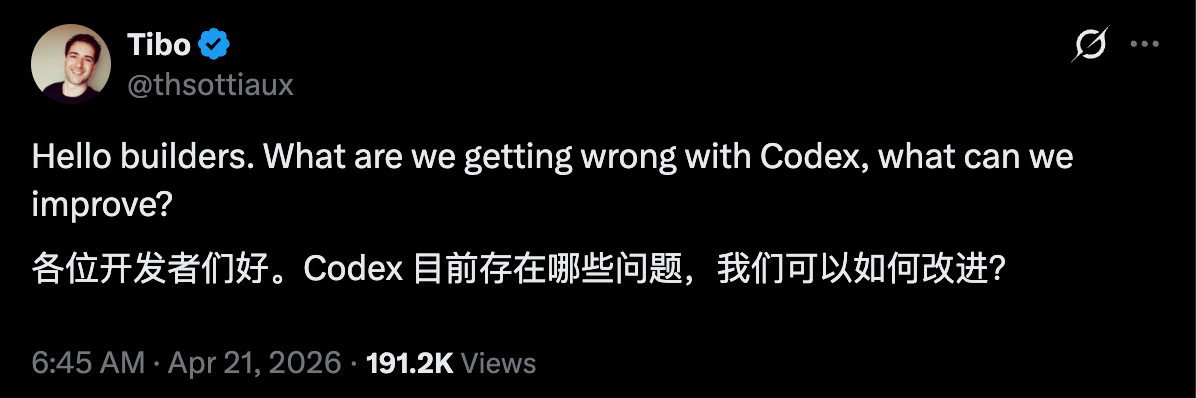
Codex developers asked everyone on X for their opinions on Codex, and netizens actively responded, suggesting to add a mobile control feature, with others mentioning that Codex should also be accessible from the ChatGPT App. These are all functionalities that Claude currently has.
Some netizens also provided feedback on various bugs existing in Codex, such as memory leaks and the issue that conversations can only be archived and not deleted.
In the latest Codex update leaks, it's mentioned that Codex is also planning to develop a small electronic pet to sit on the Codex desktop, indicating the current session's various states to the user.
This electronic pet will feature 8 preset images, and users can create and use their own virtual images.
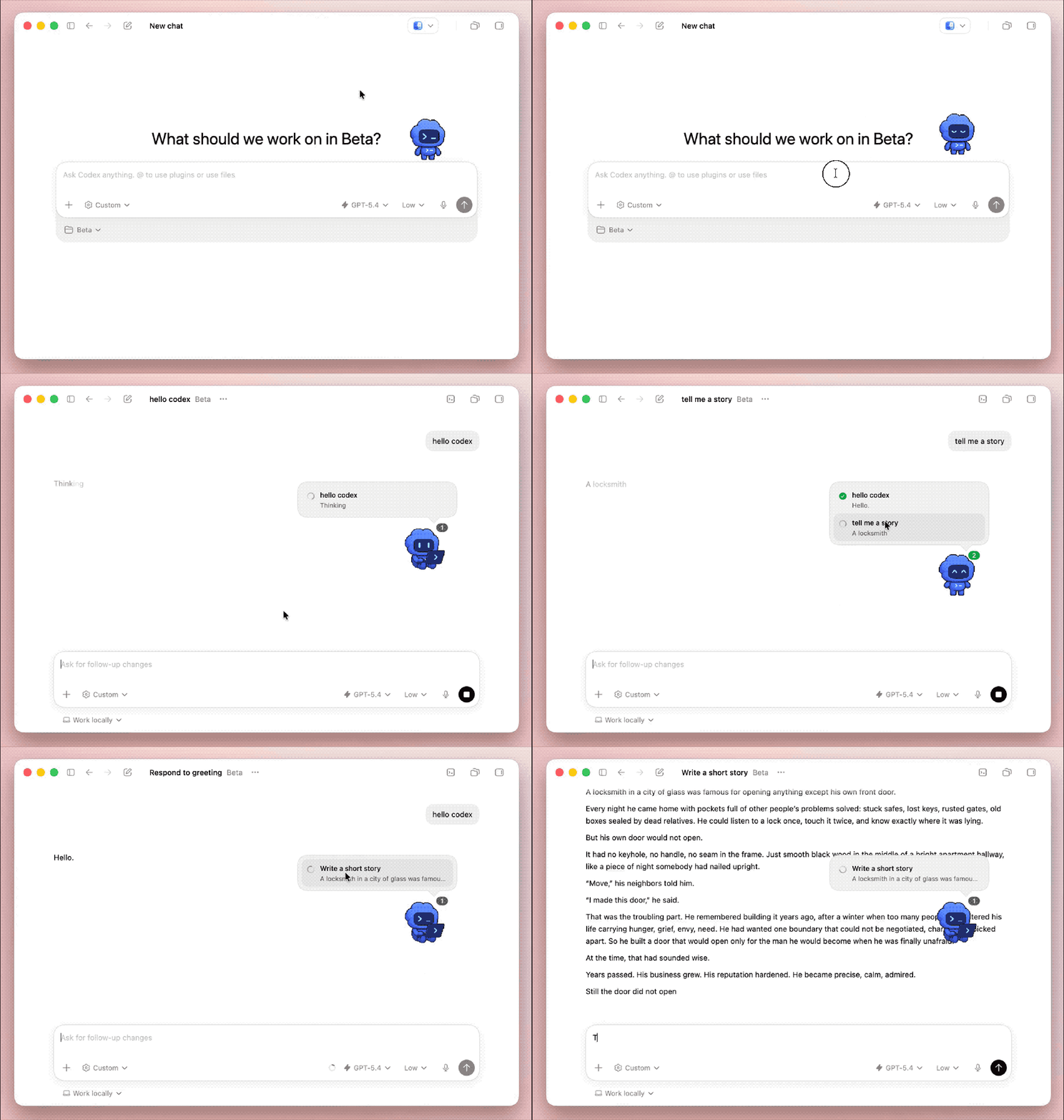
Source: https://x.com/testingcatalog/status/2046366630528143827
Another leak mentions that OpenAI is developing an agent for ChatGPT (codenamed Hermes), which includes agent builders, templates, scheduling, options for using the agent in Slack, and adding applications, Skills, documents, memory, instructions, and other functionalities.
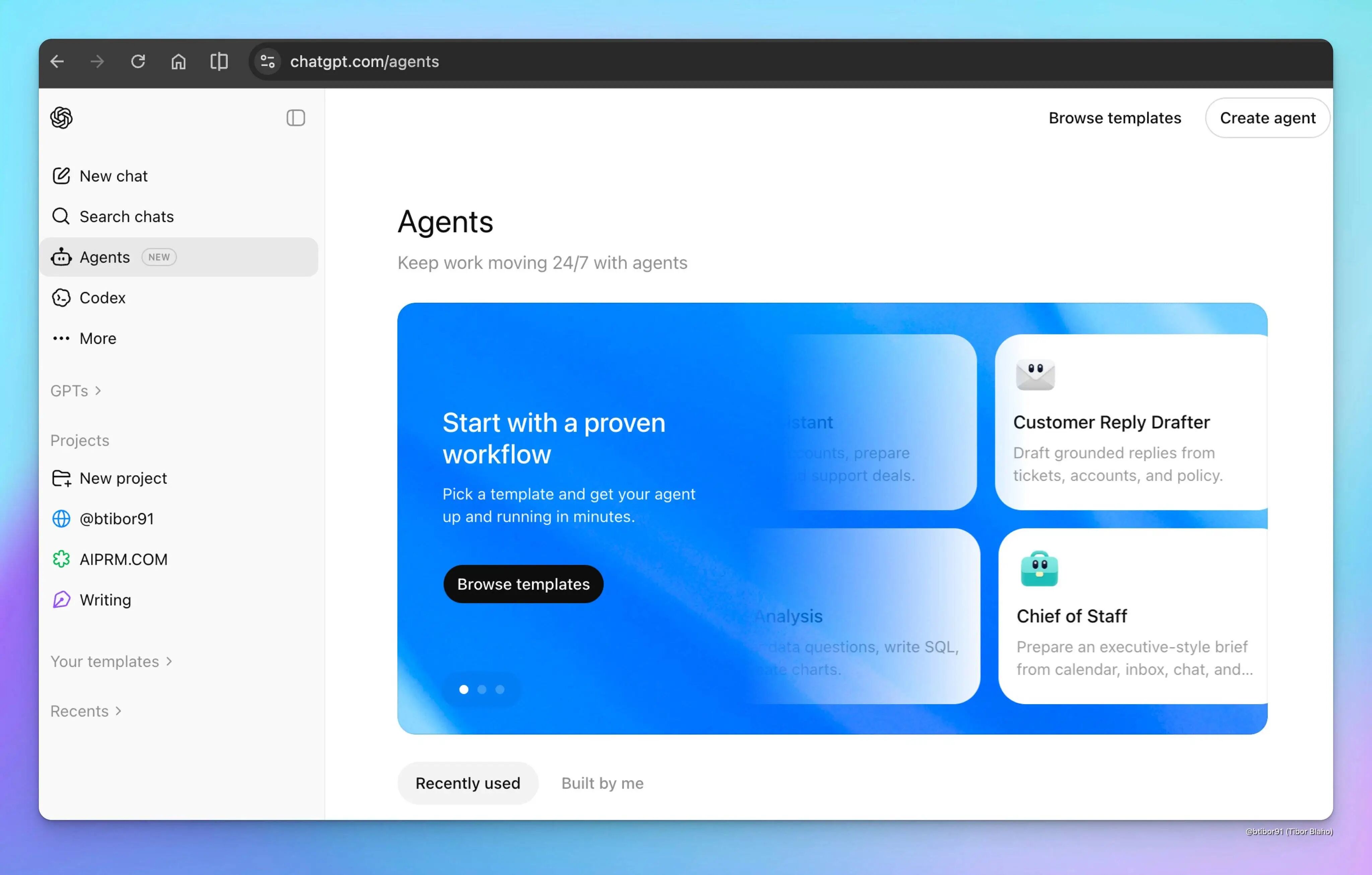
Source: https://x.com/btibor91/status/2046545878538961304/
Currently, Codex is an actively developed product, and OpenAI certainly will not willingly give up the market for local Agent products to Claude.
Not to mention OpenAI, the elder brother in the AI field; just a few days ago, Gemini quietly released a desktop application that was criticized as "terrible" by many netizens.
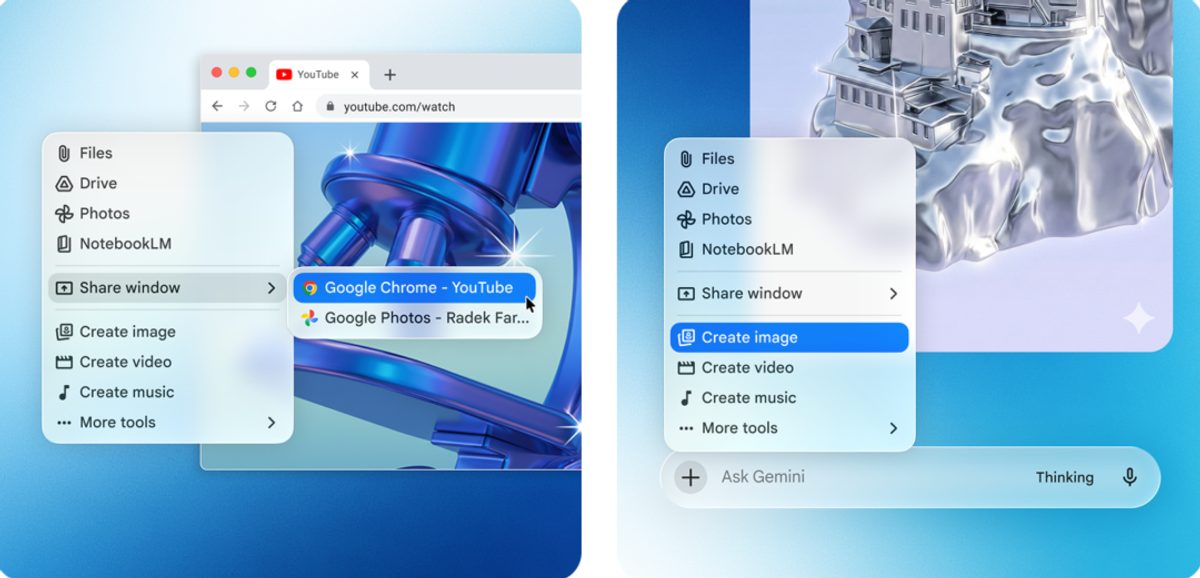
We can only encourage OpenAI and Gemini to quickly end Claude's leading position in the local Agent assistant and coding space.
The world has long suffered from Company A.
免责声明:本文章仅代表作者个人观点,不代表本平台的立场和观点。本文章仅供信息分享,不构成对任何人的任何投资建议。用户与作者之间的任何争议,与本平台无关。如网页中刊载的文章或图片涉及侵权,请提供相关的权利证明和身份证明发送邮件到support@aicoin.com,本平台相关工作人员将会进行核查。


